
Compliance & Food Safety
Reusable vs Disposable Food Containers: Which Factory Type Your RFQ Is Actually Aimed At
A disposable-food-container RFQ can land at five factories. See how tooling, wall class, carton data and the compliance file change with the plant type.
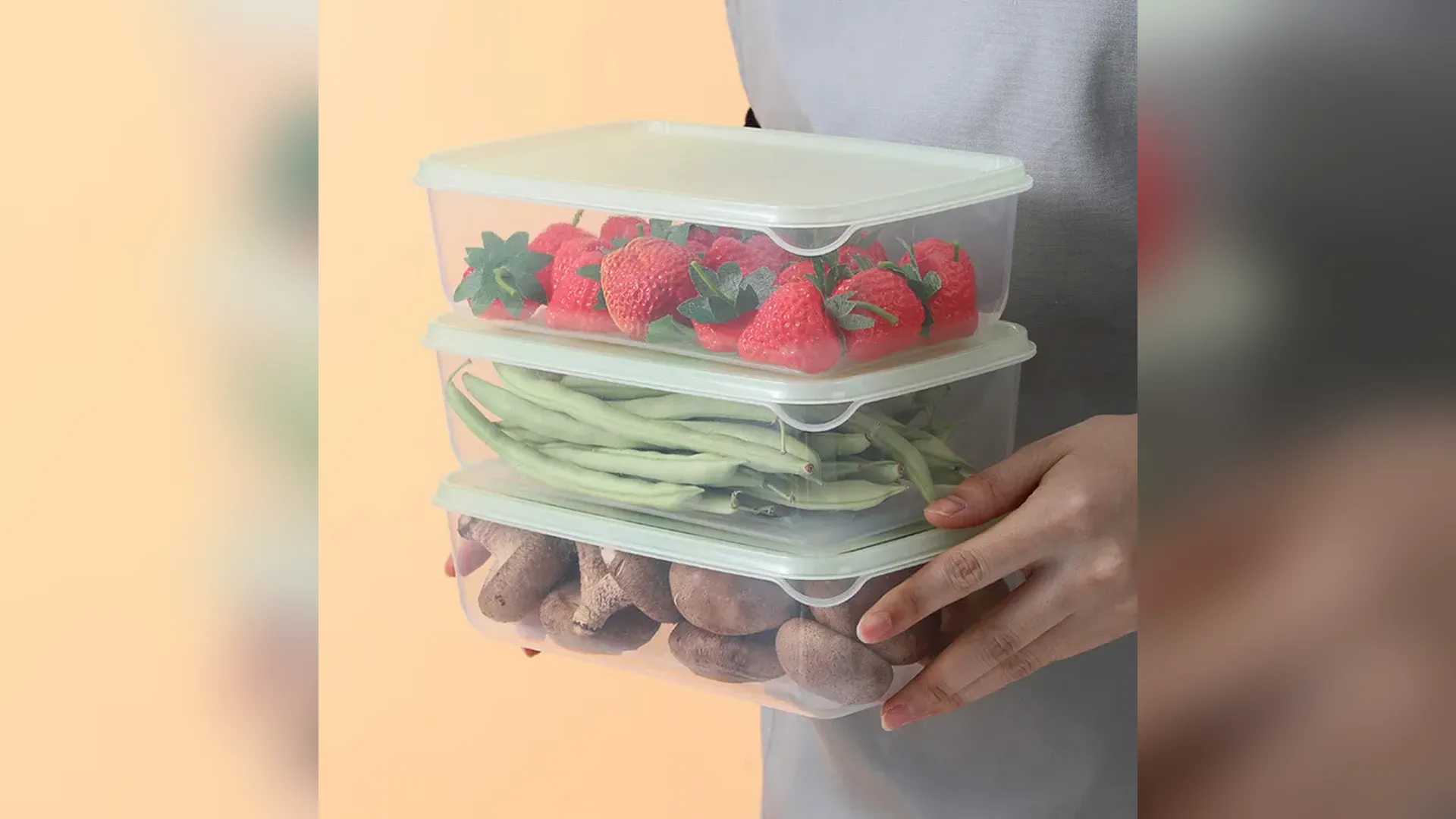
"Disposable food storage container" is four words that name a product. They do not name a factory — and five different plants could answer that RFQ with five different tools, wall structures and compliance files. The expensive mistake is not choosing the wrong supplier; it is writing a technically complete brief and sending it to the wrong type of plant.
We should be positioned honestly in that field before you read on. This is a Jieyang injection-moulding plant: thick-wall, reusable PP containers, with published figures of a plant established in 2000, 15,000 m² and 30+ injection moulding machines serving buyers in 60+ countries. We do not run a thermoforming line, an EPS foam line or a moulded-fibre line, and we do not make single-use containers. If your RFQ is a 500 ml takeaway clamshell, most of this page is the map of where to send it instead, and the section Where a Reusable Injection Plant Is the Wrong Answer names those plant types.
That is the whole argument: the compliance file a plant can hand over is decided by the factory type long before it is decided by customer service — which is why we map the reusable-container document set market by market separately from container geometry.
Why One Search Term Lands at Five Different Plants
An RFQ is written from a product noun: "disposable food storage container, 750 ml, with lid, food grade, 30,000 pcs per year." Every line of that is a product line. The plant reads it as a process line, and the process is usually the one thing that was never specified.
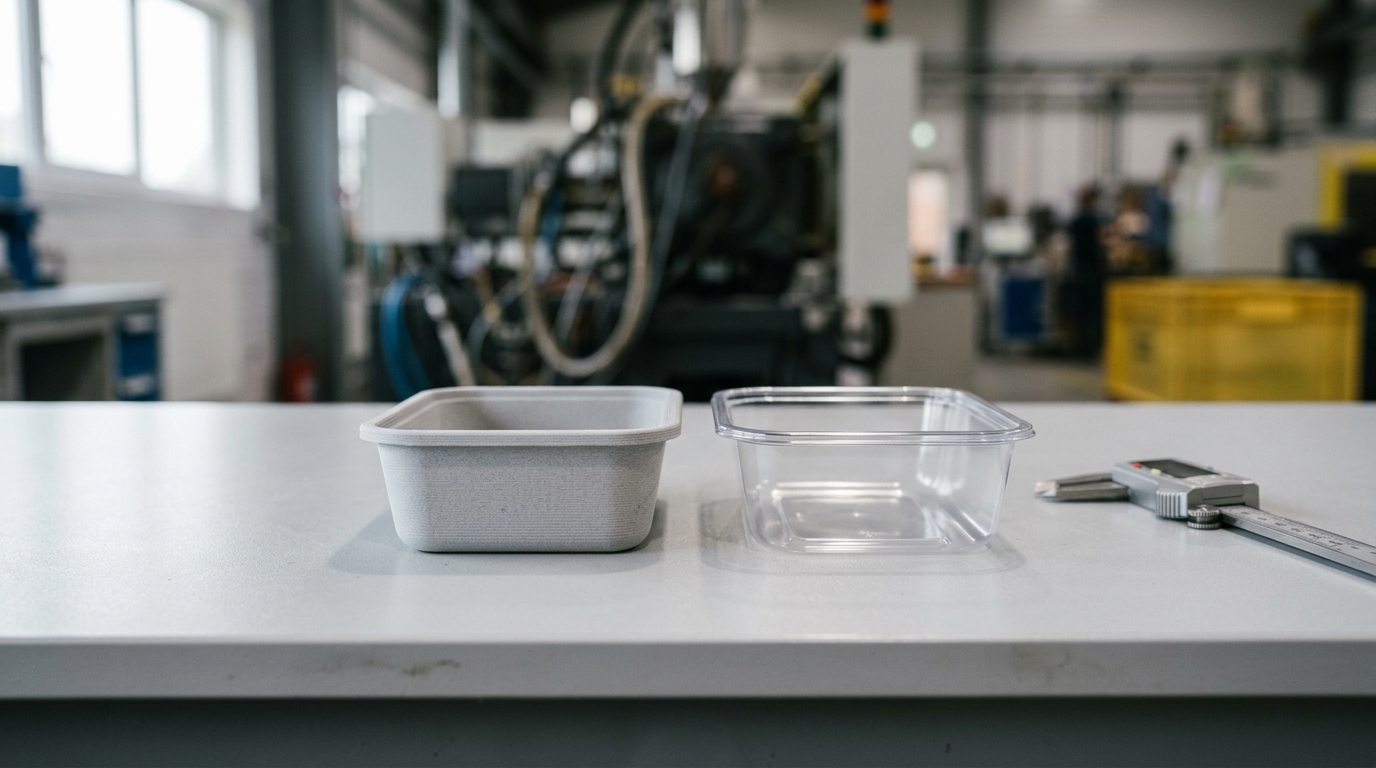
The four words have to cover a 750 ml PP container that is vacuum-formed from sheet; injection-moulded thin-wall at high cavitation; EPS foam-moulded; moulded from fibre; or injection-moulded thick-wall as a reusable box with a gasket lid. Those are not five vendors of one thing — they are five capital structures. Different tooling, different resin handling, different minimum runs, and different answers to the question buyers reach last: "can you send the declaration of compliance?"
The document set follows the process. A plant running one material class at one wall class reproduces its test evidence quickly, because the product it tested is the product it sells. A plant running four processes can also answer — from a sister line, a bought-in line or a subcontractor, which is exactly what you meet in the paperwork.
What the Search Data Says About the Buyer Behind the RFQ
The keyword itself explains why RFQs reach the wrong plant.
Keyword (United States, en) | Volume / mo | Difficulty | Main intent | CPC |
|---|---|---|---|---|
disposable food storage container | 3,600 | 0 | transactional | $1.01 |
disposable food containers | 3,600 | 0 | transactional | $1.01 |
reusable food storage containers | 2,400 | 19 | transactional | $1.01 |
plastic food container manufacturer | 30 | 0 | commercial | $6.96 |
takeaway food container manufacturer | 10 | not reported | commercial | not reported |
DataForSEO Labs, location 2840 (US), language en, September 2026.
Read the halves together. The phrase buyers type is transactional and huge at zero difficulty — 3,600 searches a month. The phrase describing what they need is commercial and tiny — 30 searches, at a $6.96 CPC, more than six times the transactional cost per click. Volume sits in the category noun; value sits in the manufacturing intent. Anyone writing a category-term brief is working from the left column of that table and buying from the right one.
The organic results show the same split. A US SERP for the primary keyword is mainly retail and social — Amazon, Walmart and Target listing pages, an Instagram reel, two YouTube videos, one TikTok clip — with a single editorial guide in the ranked set. The searcher most likely to land on a "disposable container" page is therefore the one least likely to be served by a general page: buying ten pieces for a kitchen and buying 30,000 to a specification are opposite intents. The demand-side view of the same market is in our container market trend read.
So the reader here is not the household buyer in that SERP. It is a buyer or brand owner who typed the term they sell under and then wrote a manufacturing request against it.
Five Factory Types That Answer to "Disposable Food Container"
The same RFQ, read five ways. Each column is a production system with its own tooling, wall class and document file — not a marketing tier.
Thermoform (sheet) | Thin-wall injection | EPS foam mould | Moulded fibre | Thick-wall injection | |
|---|---|---|---|---|---|
Feedstock | PP / PET / PS sheet | PP, PS, PET pellets | Expandable PS beads | Pulp or bagasse | PP, PET pellets (± silicone) |
Tool | Forming tool + cut die | High-cavity steel mould | Aluminium cavity, steam | Forming tools on wire mesh | Steel mould, family cavity |
Wall | Very thin, single-use | Thin, single-use | Foamed, insulating | Semi-rigid fibre | Thick, load-bearing |
Lid | Formed lid, film or board | Snap-on lid (own tool) | Foam or board | Fibre, friction-fit | Gasket-assisted lid |
Typical unit | 300–1,500 ml tray | 200–1,500 ml | 500–2,000 ml clamshell | 400–1,200 ml | 300 ml–3,050 ml box |
Trips | One | One | One | One | Multi-trip |
Documents | Material declaration, migration test on the sheet | Material declaration, migration, food-contact statement | Material declaration, styrene questions | Fibre and coating declaration, PFAS questions | Material declaration, migration, use-condition claims |
Cannot do | Thick walls, gasket seals | Reusable walls at retail prices | Deep-draw clarity | Liquid-tight sealing | Single-use economics at volume |
Two conclusions matter more than the rest.
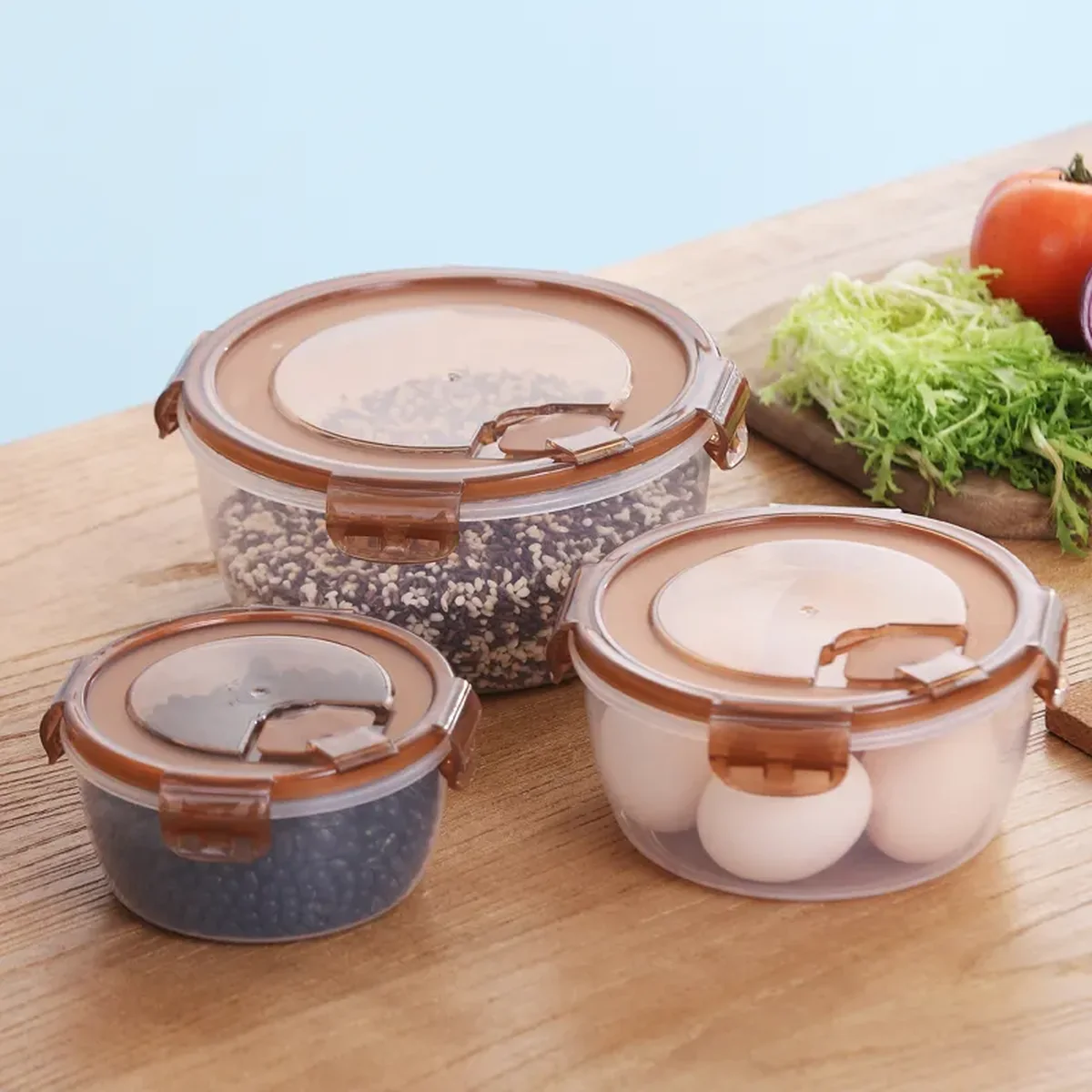
The lid decides the family. Formed trays, foam clamshells and fibre items are usually packaging — one trip, one hinge or one friction fit. A gasket-assisted, multi-trip lid is an injection-moulded assembly: two rigid parts plus an elastomer, toleranced for repeated dishwasher cycles at the conditions the buyer specifies — the cycle count is a test result the plant has to produce, not a number this page can assert for you. If the brief says "leak-proof lid" and the sample budget is set for a formed tray, the mismatch is structural, not commercial.
The material story is not the plant story. Whether a container is mechanically recyclable depends on the format and the local stream, and recycled content is a feedstock decision at the plant gate — the same PP can be specified single-use or reusable. Our recyclability note and the recycled-content programme piece take those two questions separately from container geometry.
The Spec Lines That Decide Which Plant You Are Writing To
You do not need process knowledge to route your own RFQ. You need six lines, and most describe use rather than product.
- Reuse or single trip. One word removes four of the five plant types above.
- Wall class in use terms. "Rigid enough for a full 1 L without drumming" and "as thin as economics allow" are different plants.
- Lid mechanism. Friction, snap-lock, gasket, film, hinge — a snap-lock implies an injection tool for the lid as well as the body.
- Claims you intend to print. Microwave, freezer, dishwasher and recyclability are claims, each backed by evidence; our notes on microwave-claim failure modes in contracts and the dishwasher-safe purchase specification show what a claim has to sit on.
- Capacity ladder, not one size. A reusable line usually sells as a stack; six capacities can mean six tools or one family tool set, which changes the tooling budget by an order of magnitude. Our SKU-mix and capacity-ladder article works that through for a first order.
- Non-plastic parts named. Gaskets, latches and inserts are separate materials with separate declarations — the trap our non-PP components note sets out.
Add the packing basis — piece, carton or pallet — or the quoting plants will each assume the cheapest one for themselves and your quotes will not be comparable.
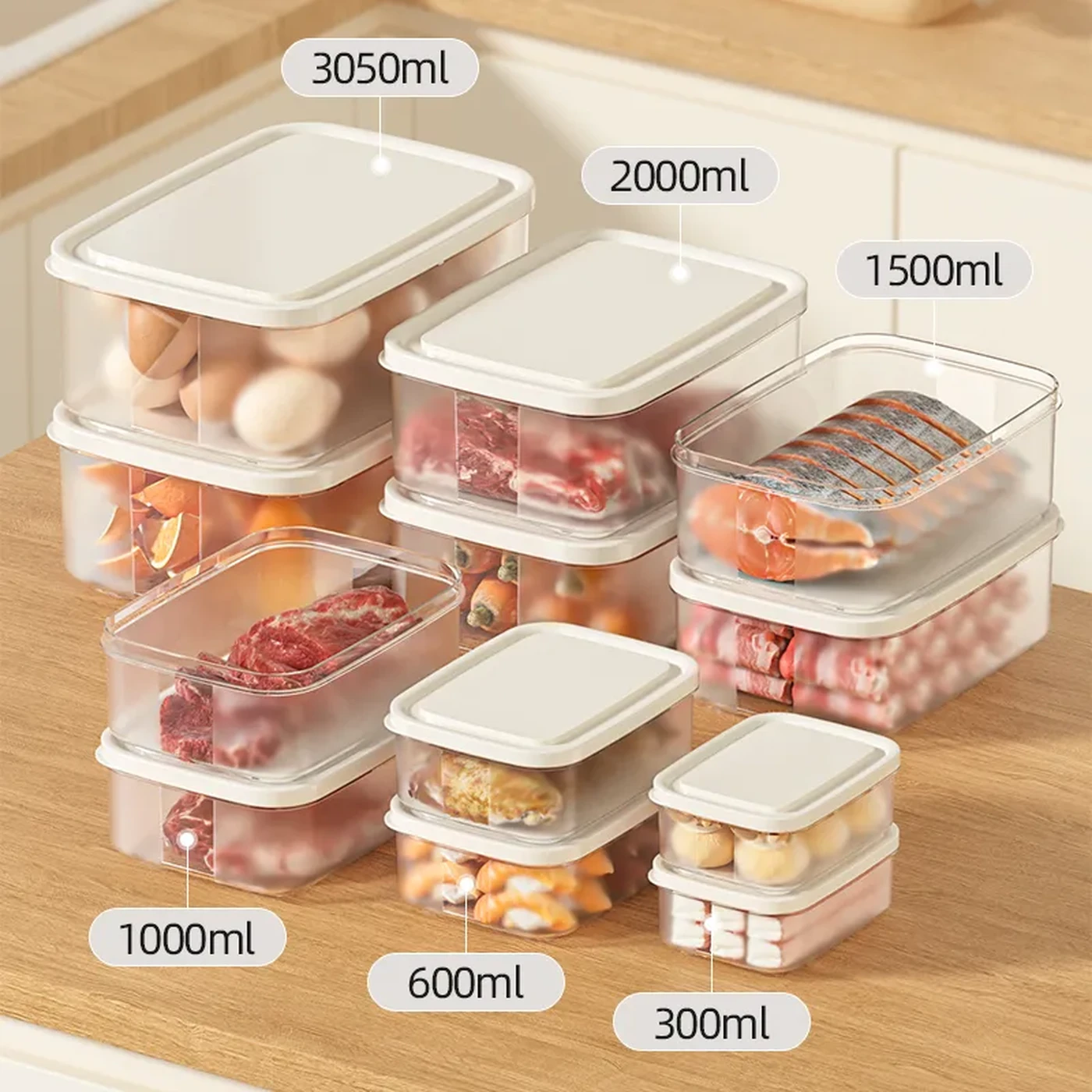
That ladder is why a disposable brief and a reusable brief cannot be priced on the same line: a 3,050 ml thick-wall box and a 750 ml formed tray share no tooling budget, cycle time or carton.
Tooling: Sheet, Foam and Injection Are Three Different Purchases
Tooling makes the factory type visible in your budget, and the mistake is to compare these numbers instead of their scopes.
- A forming tool produces a shape from sheet — one nest plus a mating cut die. The cheapest and fastest build here, which is why single-use formats iterate quickly; it cannot produce a thick wall or a moulded gasket groove.
- A foam mould is an aluminium cavity worked with steam and beads. Cost sits near a forming tool, but the material system and finish are a different discipline.
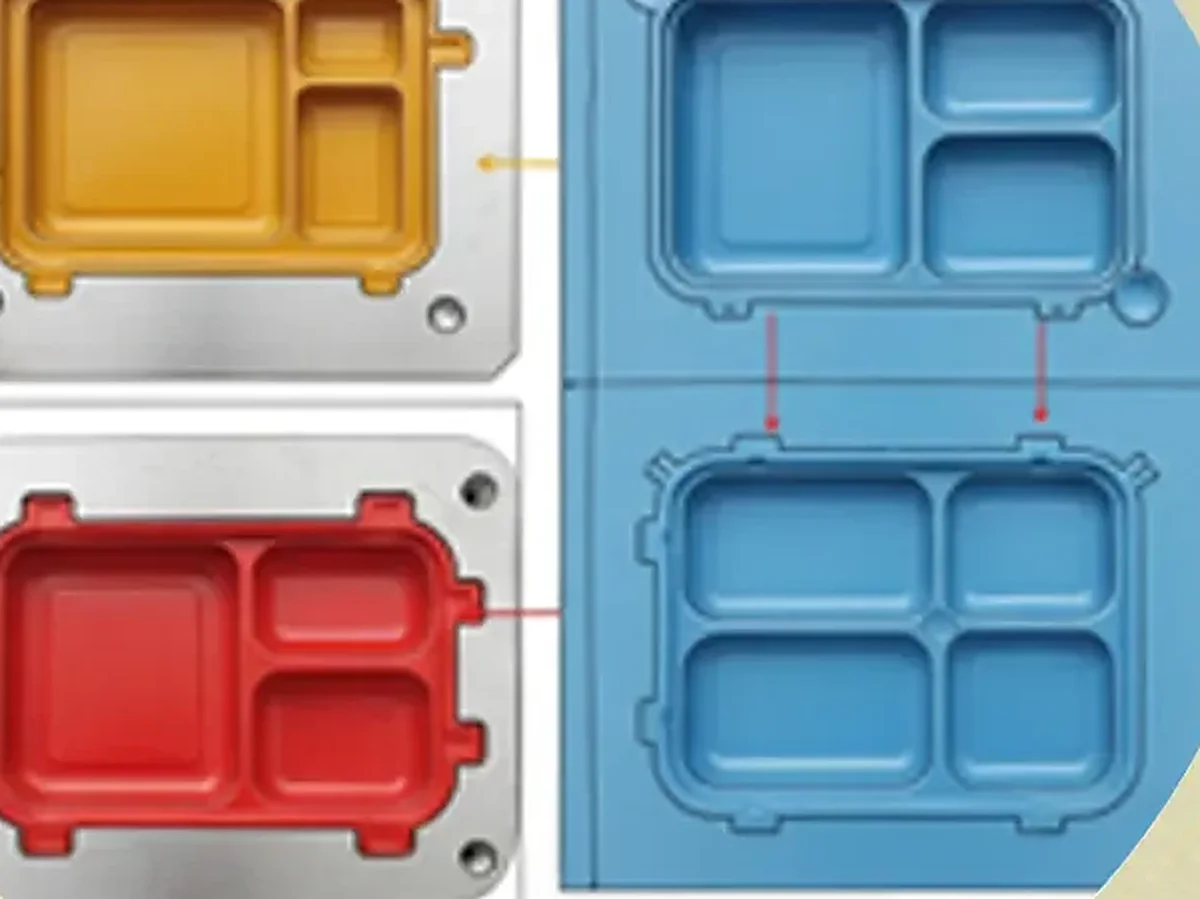
- An injection mould is the expensive, durable purchase. A thin-wall single-use tool buys speed through cavitation. A thick-wall reusable tool buys wall and seal quality, sized for a part that stays dimensionally stable — and a family tool can mould several capacities of one line in a single shot, so a six-size ladder need not mean six moulds.
- Modifying an existing mould is the fourth purchase and the most often missed. Colour, lid variant, logo or a small internal change against an existing tool is engineering time and a cavity insert. Change the wall, the seal or the size and it is new steel, and no amount of goodwill changes that. Our modify-or-build-new article draws that line, and the mould-development page shows the process we actually run.
Ask every quoting plant the same question: is this new steel, a cavity insert, or a setup change on a tool you already run? If two plants answer differently for the same part, one of them is not quoting the same process.
Compliance Documents Change With the Factory Type
Read this as a map of who can give you what — not as legal advice, and not as a claim about anyone's certificates.
- United States — food-contact plastic is regulated through the food-additive route; for the PP (olefin) family the polymer's status sits in 21 CFR 177.1520.
- European Union — plastic food-contact materials are governed by Regulation (EU) No 10/2011, which sets the migration framework behind a declaration of compliance.
- Single-use items — if the product is single-use, market rules may reach it separately from food-contact law: Directive (EU) 2019/904 restricted a named list of single-use plastic items in the EU, which is one more reason "disposable" is not a neutral word in a European programme.
- Packaging — food packaging now also sits inside Regulation (EU) 2025/40, whose recyclability and design requirements are staged on the timetable the regulation itself sets out.
What that means for the RFQ is concrete. A single-use plant typically answers on the sheet or the resin it bought; a reusable injection plant answers on the resin grade and the use conditions it tested; a fibre plant answers on fibre and coating. Which documents follow from those answers — declarations of compliance, migration reports, and what each market expects you to hold on file — is the subject of our five-market document map; the shorter request list for a factory is the version to paste into an email, and the certification checklist explains what each document is for.
Two disciplines whichever plant type you use. Ask for the document that names your product — a company certificate and a product test report are different objects. And never let a document become a use claim you did not test: "microwave safe" on a carton is a claim about behaviour.
Where a Reusable Injection Plant Is the Wrong Answer
Send your brief elsewhere if you need a single-use item (a takeaway tray, a deli box, a clamshell, a film-lidded portion cup); if your volume needs sheet-forming economics, with thin walls, short cycles and tooling counted in the low thousands rather than the tens of thousands; if you need EPS foam and its insulating bead-moulded walls; if you need moulded fibre, bagasse or coated board, where the material story is the product; or if you need several of those in one order on one invoice.
We run none of those processes. Our plant is injection moulding, and the honest version of "we could try" on a thermoform brief is that we would subcontract it and mark it up — worse for you than going direct. The point is not that PP is single-use; it is that the same polymer run thick is a multi-trip container, which is what our PP lunch box line exists to show.
Where It Is the Right Answer: Reusables Off the Same Mould Base
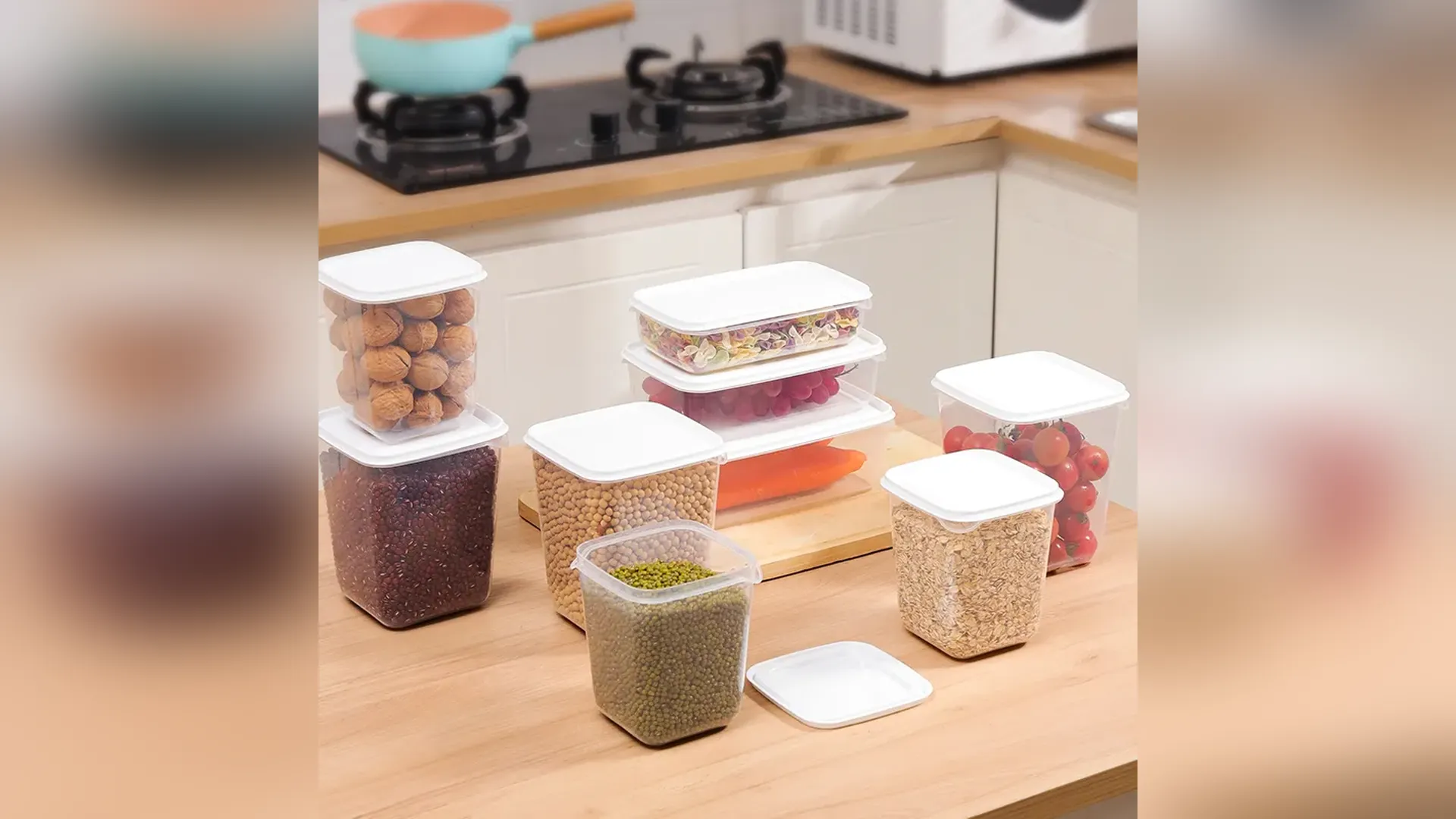
If the brief says reusable, with a lid, stackable, freezer and dishwasher, at 300 ml–3 L, you are in the family we mould — and it can usually be answered against an existing model rather than new steel.
The published line is wider than most buyers expect: gasket-assisted round and rectangular boxes (BX1041–BX1043, BX1044–BX1046, BX1047–BX1049, BX1052, BX1053); 1.4 L freezer storage boxes (BX1094–BX1099, PP, 20.3 × 15 × 6.5 cm); stackable transparent kitchen containers (3332); freezer and storage sets in PP + PET (BX1131–BX1136) and the 3320–3323 / 3328–3329 rectangular families; and tall square boxes (3334, 3335–3338).
What that list shares is the property that decides its economics: it is reusable, so the wall is load-bearing, so the tool is steel, so the tooling question becomes "which existing family fits" rather than "what does a new tool cost". Colour, size variant, logo and packing are settable per record, and the OEM route runs through the same process as any private-label programme.
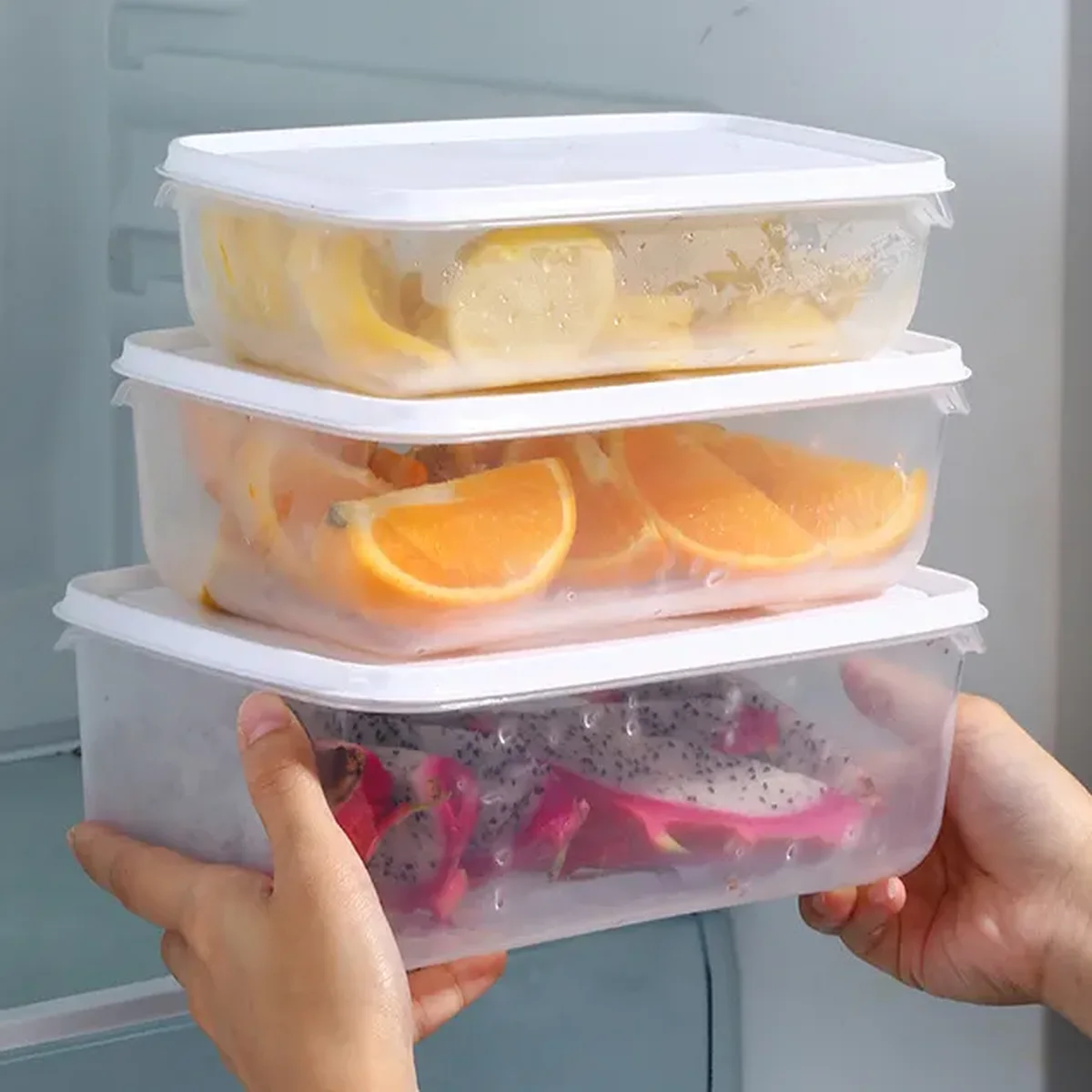
Browse the food storage container range, or go straight to the two models worked through in this piece: the 1.4 L freezer storage box and the round snap-lock reusable container.
Unit Weight and Carton Maths: The Cost Line Most RFQs Miss
Freight is charged on volume and weight, and both are set by the carton the plant packs into — so a plant-type comparison that stops at unit price stops before the expensive part. Real carton data from our own records, as published:
Model | Product | Carton (cm) | pcs / carton | Carton volume | Gross weight |
|---|---|---|---|---|---|
BX1094–BX1099 | 1.4 L freezer storage box, PP | 59.5 × 43.5 × 53.5 | 72 | 0.1385 CBM | — |
3332 | Kitchen / frozen container, PP | 64 × 49 × 56 | 56 | 0.1756 CBM | 16.1 kg |
BX1051 | 1.3 L lunch box, PP + silicone, 182 g unit | 62 × 47.5 × 58.5 | 72 | 0.1723 CBM | 14.3 kg |
Two pieces of arithmetic fall out, and both belong in your RFQ rather than in the supplier's reply.
Carton volume per piece. BX1094–BX1099 takes 0.1385 CBM for 72 pieces — about 1.9 litres of carton space per container. The 3332 line takes 0.1756 CBM for 56 pieces — about 3.1 litres each. Same rough container class, a 60% difference in the freight volume you are buying: on a 40-HQ with about 67 CBM usable and no pallets, roughly 483 cartons of the first against 381 of the second — about 34,800 pieces against about 21,300. Illustrative arithmetic on our own cartons; palletising and the forwarder's stow decide the real number.
Packed weight per piece. Where a gross weight is published it divides cleanly: 16.1 kg over 56 pieces is about 288 g of packed weight per container, and 14.3 kg over 72 pieces is about 199 g — nearly half again as much per piece (288 g against 199 g).
That is why "which plant type" is a cost question and not only a process one: a reusable box shipping at 1.9 litres of carton per piece can beat a lighter single-use tray that ships inefficiently, and the reverse holds too. The geometry behind it is in our stacking, nesting and carton-math note, with a worked case in the tall storage box guide.
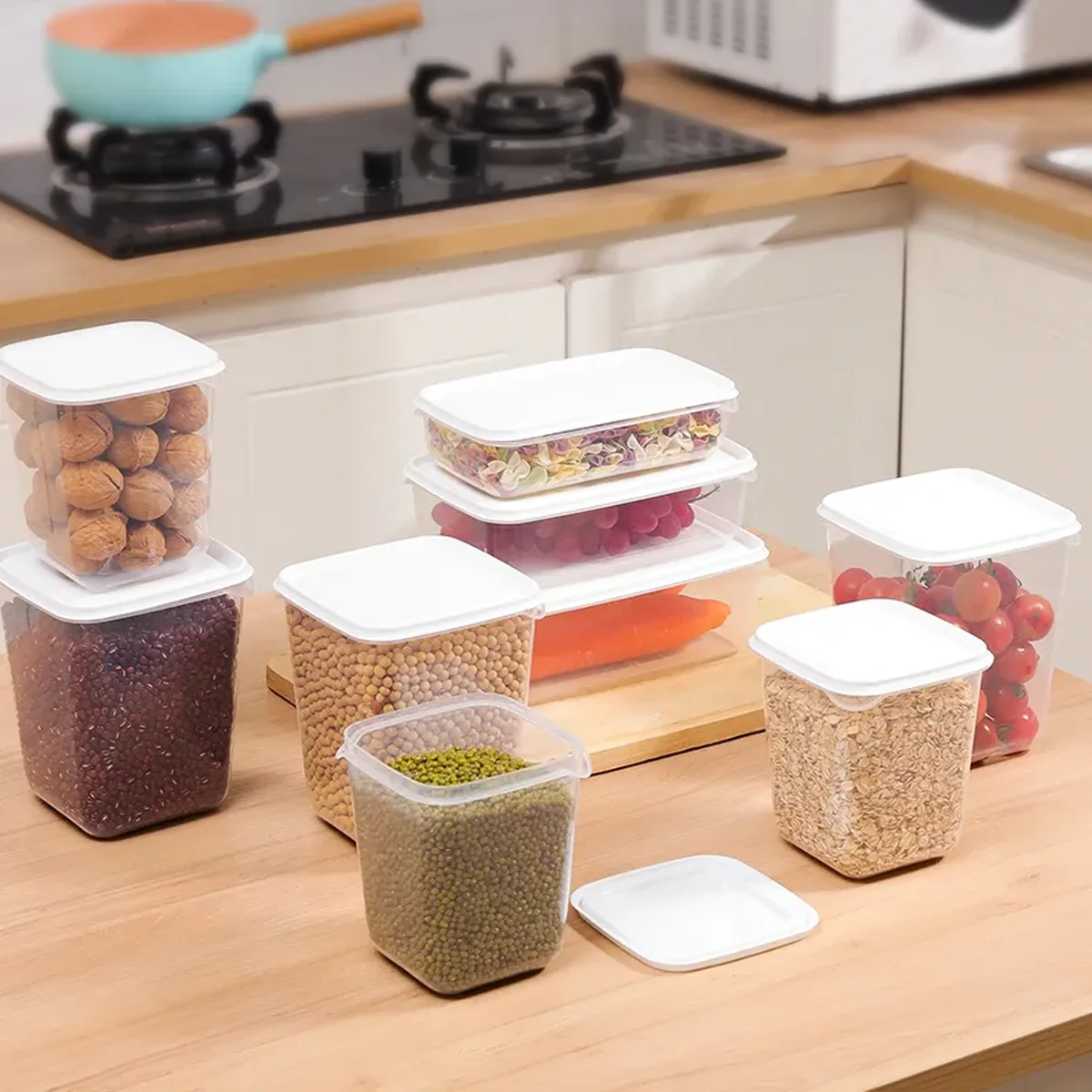
Ask for carton dimensions, pieces per carton and gross weight before unit price. Without them you are comparing a price per piece against a price per piece plus an unspecified freight.
Sample, MOQ and Lead Time by Factory Type
- Forming tools and foam moulds sample quickly and cheaply, and minimum runs are usually expressed in thousands — single-use volumes are large by nature.
- Injection tools take longer to first sample because the tool must be cut and trialled, and the mould cost is the entry ticket. Our published record for the 1.3 L lunch box line states a sample lead time within three days from an existing tool; a new tool is measured in engineering before it is measured in days.
- Moulded fibre lead times track the tool and the drying trials, and the sample you approve is often made on a pilot tool — worth asking explicitly.
On MOQ, the number follows the tool: an existing family can run far lower quantities than a new cavity set, because nobody amortises steel. That is why a first order below catalogue quantities is usually planned around what exists — the reasoning in our wholesale container sourcing overview and, from the custom side, the custom container manufacture guide. Where a tool must be built, the fastest legitimate shortcut is a verified prototype: our 3D-printed verification sample tests fit and clearance before steel is cut.
How to Rewrite the RFQ So It Lands at the Right Plant
Add six lines to the brief you already have.
- Reuse or single trip — one word routes the RFQ to two of the five plant types.
- Wall class in use terms — rigid for re-use, or as light as the format allows.
- Lid mechanism, and who owns its tool — snap-lock and gasket lids are separate moulds.
- Claims you intend to print — microwave, freezer, dishwasher, recyclable, recycled content.
- Capacity ladder — one size or a family, with the full list.
- Packing basis and the carton figures you expect quoted — pieces per carton, carton dimensions, gross weight.
Add a seventh if the programme is serious: name the markets, because that is what sets the document file, and the difference between a US and an EU programme is not the container. Before you commit, the quality-side checks in our how to check container quality note and the shortlist criteria in looking for reliable suppliers apply whether or not the product is a lunch box.
Questions Buyers Ask Before the RFQ Goes Out
Are disposable plastic food containers safe?
That is a question about a specific item in a specific use, answered by a document rather than a category: the polymer's food-contact status in your market plus a migration test on the finished article, with the answer changing on fat content, temperature and contact time. Our safety overview for plastic food storage containers and the PP-specific note show what those tests cover.
How do I compare cost per container between disposable and reusable?
Not on unit price. Compare carton volume per piece and packed weight per piece — the two derived numbers above — plus whether tooling is amortised or charged once, and the replacement cycle. A reusable box shipping at about 1.9 litres of carton per piece is a different cost object from a single-use tray, and the answer flips with the freight lane.
Why do buyers say not to store food in plastic containers?
Usually because someone is describing a misuse rather than a material: a container used outside its tested conditions, or a polymer chosen for a temperature it was never specified for. Buy material for the use — see which plastic containers are safe for food — and keep claim, test and use aligned.
What to Do Next
If the RFQ is for a reusable container with a lid, in a PP family, at 300 ml–3 L, send the six lines above plus your capacity list; the answer will be an existing model family with its carton data, or a tooling conversation if the geometry is genuinely new. The range page is the fastest way to see whether the geometry already exists, and our wholesale lunch box programme is the closest published example of how a multi-model order is assembled.
If the RFQ is single-use, take the five-factory-type table above as the shortlist, approach a thermoforming, foam or fibre plant directly, and ask each of them the same document question with your market named.
Continue reading
Related sourcing guidance
More practical context for your food storage container sourcing conversation.
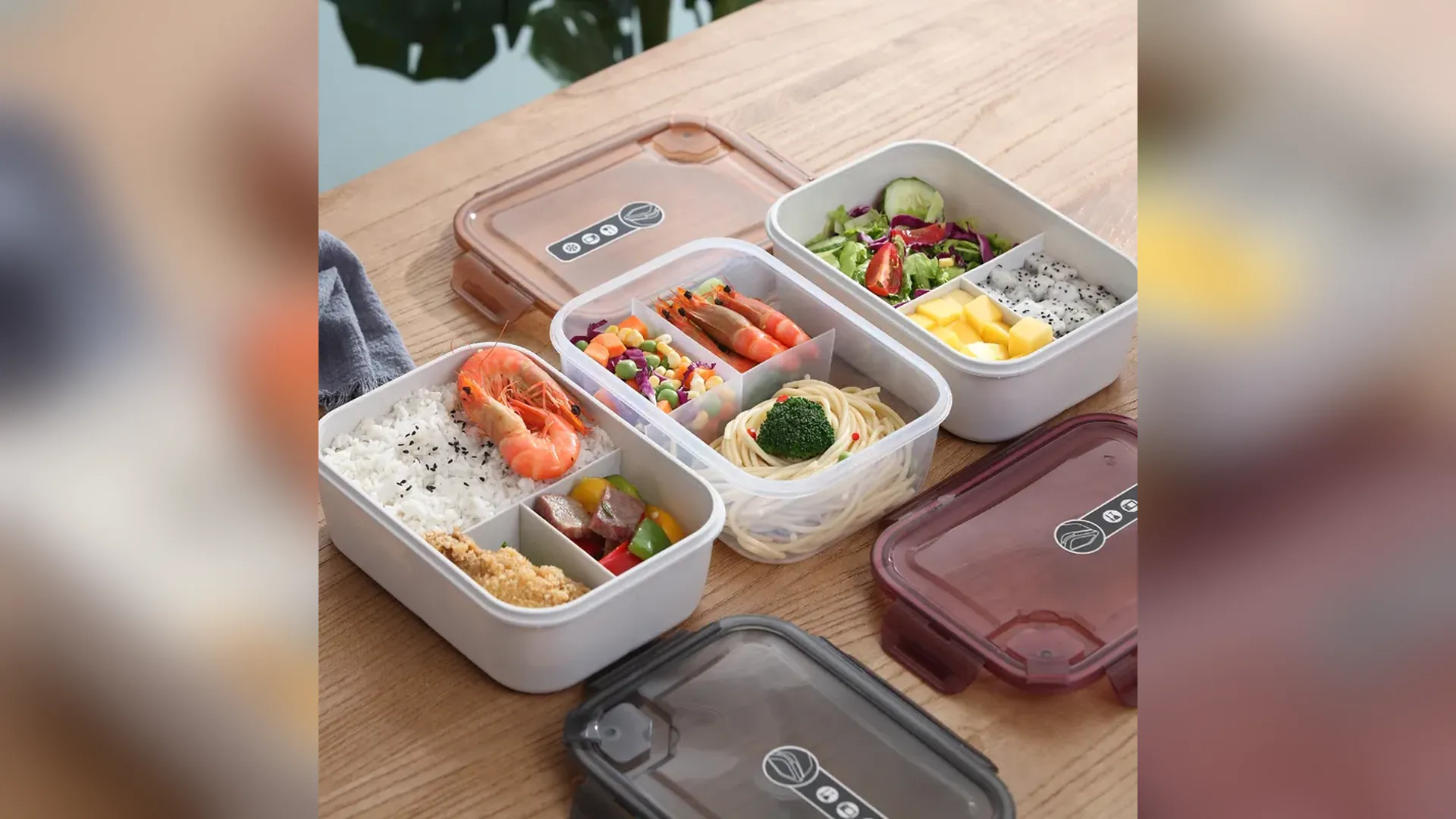
Discuss your product range
Need help selecting or customising containers?
Share the product type, market and sourcing requirements with the Xinghui team.