
Food Storage Guides
Compliance Documents to Request from Food Container Factory
Sourcing guide for private label brands: FDA DoC, 21 CFR 177.1520, SGS migration test reports, BPA-free lab certificates, and ISO/BSCI audits.
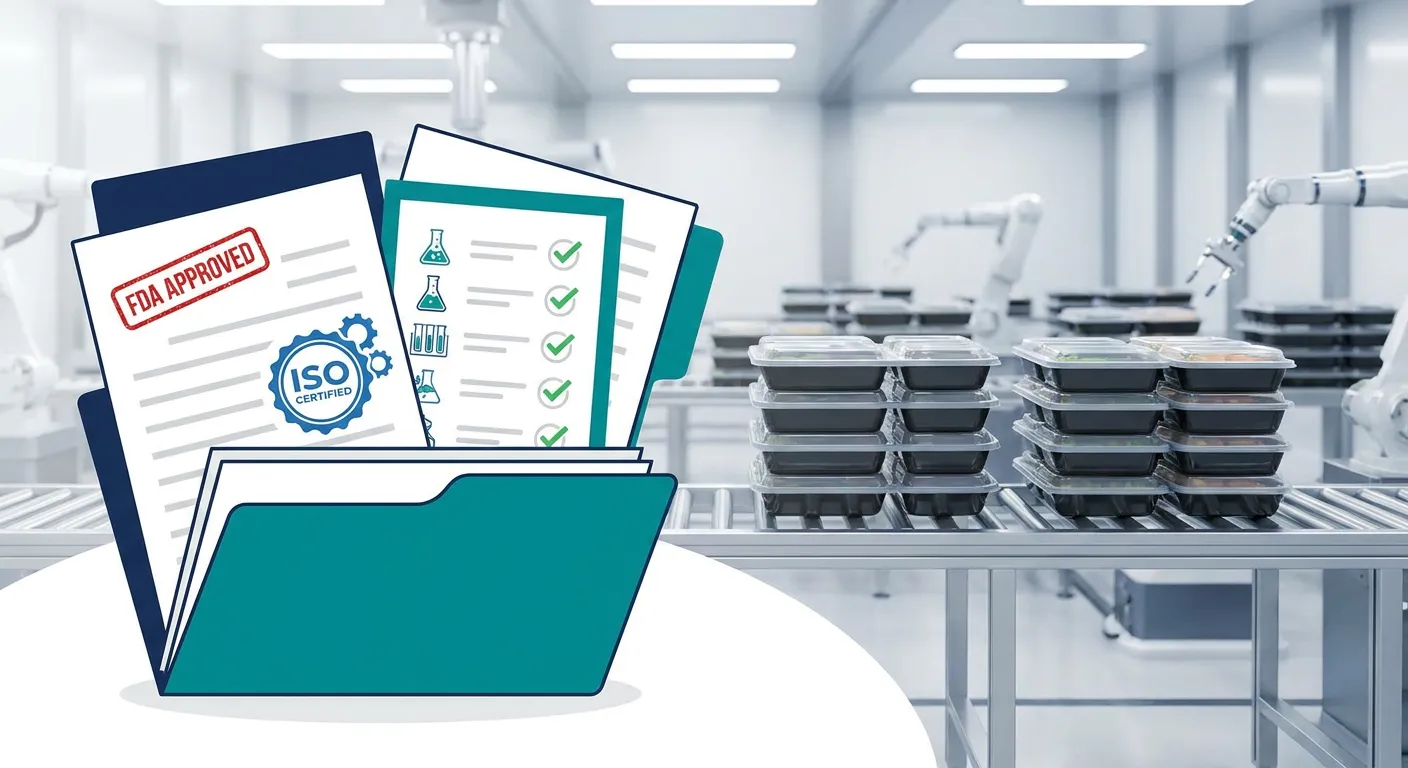
Importing custom plastic food containers or launching a private label kitchenware brand on Amazon FBA, Shopify DTC, or TikTok Shop comes with significant regulatory responsibility. A single missing compliance certificate or an unverified food-contact report can trigger disastrous consequences: US Customs border holds, severe fines, Amazon listing suspensions, or costly product recalls.
When sourcing from overseas OEM/ODM suppliers, asking a manufacturer whether their containers are “food-grade” or “FDA compliant” is never enough. Verbal assurances hold zero legal weight during a regulatory audit or platform compliance review. E-commerce brand owners and sourcing managers must secure a verifiable, product-specific compliance document package before issuing a Purchase Order (PO) or wiring a deposit.
Key Takeaway : Never rely on a supplier’s logo or sales pitch alone. A complete compliance package requires four distinct document tiers: mandatory US FDA food-contact safety declarations, accredited third-party lab test reports (SGS/Intertek), factory quality/social audit credentials (ISO 9001/BSCI), and e-commerce packaging readiness reports.
Table of Contents
• Tier 1 — Mandatory Food Contact Safety Documents (US FDA & Materials) 1. Declaration of Compliance (DoC) & Letter of Guaranty
• 2. Product-Specific Third-Party Lab Test Reports (SGS / Intertek / TÜV)
• 3. Analytical BPA-Free Test Report
• 4. Material Technical Data Sheet (TDS) & Virgin Resin Declaration
• Tier 2 — Factory Quality Management & Food Hygiene Certifications
• Tier 3 — Social Responsibility & Ethical Compliance Audits 1. BSCI (Amfori) Audit Report
• 2. SMETA (Sedex) 4-Pillar Audit
• Tier 4 — E-Commerce & Amazon FBA Packaging Readiness 1. ISTA 1A / 3A Transit & Drop Test Reports
• 2. FBA Polybag & Suffocation Warning Compliance
• 3. Lot & Batch Traceability System Document
• 5-Step “Red Flag Audit” — How to Spot Fake or Invalid Test Reports
• Supplier Compliance Request Email Template (Copy-Paste RFQ)
• Next Steps — Partnering with an Audit-Ready OEM/ODM Manufacturer
• Frequently Asked Questions (FAQ) Q1: Is a raw resin supplier certificate enough to prove FDA compliance for finished plastic food containers?
• Q2: How often should e-commerce brands request updated compliance test reports from their factory?
• Q3: What happens if US Customs or Amazon requests compliance documents and my supplier cannot provide them?
Tier 1 — Mandatory Food Contact Safety Documents (US FDA & Materials)
Food contact materials (FCM) intended for the United States market fall under strict federal oversight by the U.S. Food and Drug Administration (FDA). When sourcing polypropylene (PP), polyethylene (PE), or Tritan food storage containers, you must collect the following foundational legal and material safety declarations.
1. Declaration of Compliance (DoC) & Letter of Guaranty
A Declaration of Compliance (DoC) is a legally binding statement issued by the food container manufacturer confirming that the finished product complies with applicable federal food-contact regulations.
For the US market, ensure the factory provides a formal Letter of Guaranty referencing US FDA 21 CFR food contact regulations . Specifically:
• Polypropylene (PP) Containers : Must cite 21 CFR §177.1520 (Olefin Polymers), which establishes strict extraction limits for food-grade polypropylene.
• Resinous & Polymeric Coatings / Gaskets : Must cite 21 CFR §175.300 if the container includes internal linings or specialized sealing surface coatings.
2. Product-Specific Third-Party Lab Test Reports (SGS / Intertek / TÜV)
A DoC states the factory’s commitment, but a third-party laboratory test report provides scientific proof. Demand lab testing performed by an accredited independent testing agency such as SGS, Intertek, TÜV Rheinland, or Bureau Veritas.
The lab report must demonstrate compliance with key chemical migration tests:
• Overall Migration Testing : Simulates real-world food contact using solvents such as n-hexane (for fatty foods), 3% acetic acid (for acidic foods), and 10% ethanol (for aqueous foods) to verify that chemical leaching remains within safe thresholds.
• Heavy Metal & Phthalate Screening : Confirms lead, cadmium, mercury, hexavalent chromium, and restricted phthalates remain below regulated limits.
3. Analytical BPA-Free Test Report
“BPA-Free” is one of the most critical marketing claims on e-commerce product listings. However, claiming BPA-free status on Amazon or retail packaging without lab proof leaves your brand exposed to legal liability under California Proposition 65.
Request a quantitative lab test report utilizing Gas Chromatography-Mass Spectrometry (GC-MS) or High-Performance Liquid Chromatography (HPLC). The test report must explicitly confirm non-detectable levels of Bisphenol A (typically below 0.1 ppm / limit of detection) for both the primary plastic container body and the silicone sealing rings.
4. Material Technical Data Sheet (TDS) & Virgin Resin Declaration
Always request the Technical Data Sheet (TDS) and Material Safety Data Sheet (MSDS) for the raw polymer resin. Ensure your contract specifies the use of 100% virgin food-grade resin. If a supplier secretly blends post-industrial or uncertified regrind plastic into the molding process, the container’s structural integrity weakens and chemical migration risks spike.
Tier 2 — Factory Quality Management & Food Hygiene Certifications
While product test reports validate the physical sample, factory quality management certifications prove that the supplier maintains consistent quality and sanitary controls across high-volume production runs.
Certification / Audit Standard
Regulatory Focus
What it Proves for E-Commerce Buyers
ISO 9001:2015
Quality Management System (QMS)
Proves standardized mold development, raw material inspection, and defect tracing protocols.
ISO 22000 / HACCP
Food Safety Management System
Guarantees cleanroom injection molding, dust control, pest management, and hygienic packing environment.
GMP (21 CFR Part 110/117)
Good Manufacturing Practice
Validates operational sanitation standards during container molding, assembly, and bulk cartoning.
Pro Tip : Reviewing factory credentials is essential when scaling bulk orders. Learn how to audit manufacturing facilities in our detailed food-grade factory inspection checklist .
Tier 3 — Social Responsibility & Ethical Compliance Audits
Major US e-commerce platforms, retail buyers, and enterprise sales channels increasingly require suppliers to pass rigorous social compliance audits. If you plan to scale beyond DTC into retail chains or Amazon Vendor Central, request one of these recognized ethical audit reports:
1. BSCI (Amfori) Audit Report
The Business Social Compliance Initiative (BSCI) audit evaluates workplace health and safety, fair compensation, working hours, and environmental management. Request the factory’s latest BSCI audit summary report and verify its overall rating (Grade A or B preferred).
2. SMETA (Sedex) 4-Pillar Audit
SMETA (Sedex Members Ethical Trade Audit) is one of the most widely used ethical audit formats in the world. A 4-Pillar SMETA audit covers labor standards, health and safety, environmental practices, and business ethics. Holding a valid SMETA audit demonstrates that the OEM factory meets international retail compliance baselines.
Tier 4 — E-Commerce & Amazon FBA Packaging Readiness
Fulfilling orders through e-commerce fulfillment networks requires specialized packaging compliance to prevent item damage and warehouse rejections.
[Supplier Factory QC] ➔ [Drop Test (ISTA 1A/3A)] ➔ [FBA Labeling & Polybag Compliance] ➔ [Customs Release]
1. ISTA 1A / 3A Transit & Drop Test Reports
Lids that crack or snap locks that pop open during transit generate negative product reviews and high return rates. Request an International Safe Transit Association (ISTA) drop test report demonstrating that the packaged container set survives multi-angle drop impacts without seal failure or lid fracturing.
2. FBA Polybag & Suffocation Warning Compliance
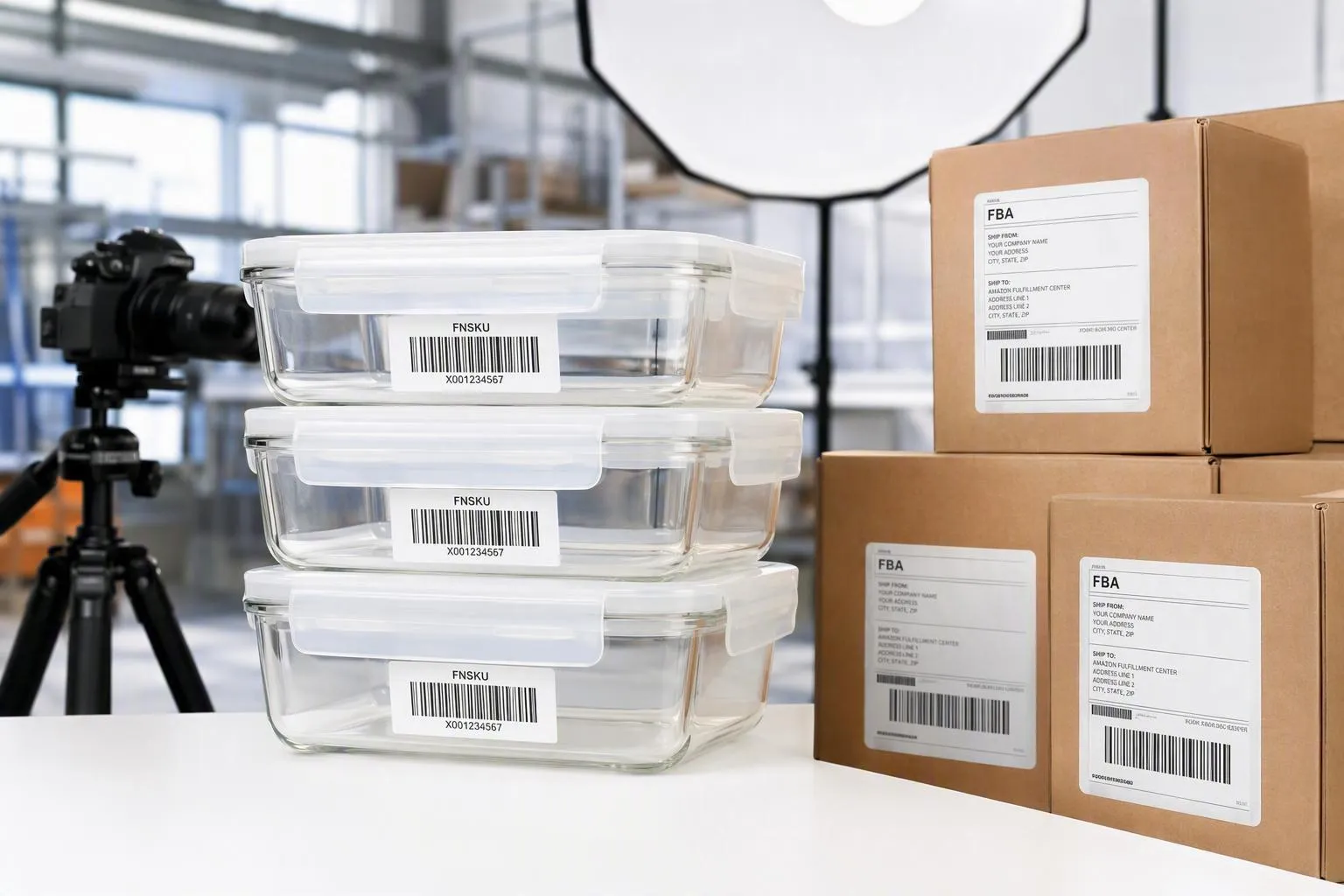
Amazon FBA mandates suffocation warning labels on all polybags with openings of 5 inches or larger. Require your manufacturer to provide a written packaging declaration confirming that unit polybags, barcode labels, and master carton markings strictly comply with FBA Prep Guidelines.
3. Lot & Batch Traceability System Document
In the event of a quality defect or customer complaint, rapid batch tracing is vital. Verify that the factory stamps lot/batch numbers on master cartons and individual packaging, allowing seamless identification of the exact production date, mold line, and raw material batch.
⚠️ Warning : Never assume an OEM factory automatically applies FBA-compliant barcoding or drop-tested packaging unless it is explicitly documented in your initial specification sheet and contract agreement.
5-Step “Red Flag Audit” — How to Spot Fake or Invalid Test Reports
Supplier fraud and outdated compliance documents are common challenges when sourcing overseas. Unscrupulous suppliers or trading intermediaries may send falsified, expired, or irrelevant certificates. Follow this 5-step red-flag audit to verify document legitimacy:
• Verify Report Numbers on Official Testing Portals : Copy the report number from SGS, Intertek, or TÜV documents and verify it on the testing agency’s official online verification portal.
• Cross-Check the Factory Name and Address : Ensure the company name on the test report matches the actual legal manufacturer name on your contract—not a third-party trader or sub-supplier.
• Inspect the Sample Photos in the Lab Report : Accredited lab reports always include photographs of the tested article. Confirm that the photo in the report shows the exact shape, color, and lid structure of the container you are purchasing.
• Check the Report Date : Test reports older than 12–24 months are considered outdated. Material formulations change over time; demand reports issued within the past 12 months.
• Match the Resin Specification : Compare the resin model code on the lab report against the raw material specification listed on your product sheet (e.g., specific food-grade PP resin grade).
To understand broader compliance standards across major export markets, consult our comprehensive guide on essential certifications for plastic food containers .
Supplier Compliance Request Email Template (Copy-Paste RFQ)
When initiating inquiries with OEM/ODM container manufacturers, send this professional compliance document request template to set clear expectations early:
Subject: Compliance Document Package Request — [Your Brand Name] / [Product Name / SKU] Dear Sourcing / Sales Team, We are preparing a purchase order for [Product Name / Container SKU]. Before issuing our Purchase Order (PO) and deposit, our Quality Assurance team requires the following compliance document package for our US market review: 1. Declaration of Compliance (DoC) & Letter of Guaranty citing US FDA 21 CFR §177.1520 (for Polypropylene). 2. Third-Party Lab Test Report (SGS, Intertek, or TÜV) for the finished article, including Overall Migration and Specific Migration test results (issued within the last 12 months). 3. Analytical BPA-Free Lab Test Report (GC-MS/HPLC) for the container body and silicone seals. 4. Material Technical Data Sheet (TDS) confirming 100% virgin food-grade resin formulation. 5. Copy of your current ISO 9001 and ISO 22000 / HACCP / BSCI certificates. 6. Confirmation of Amazon FBA packaging readiness (polybag suffocation warnings & ISTA drop-test compliance). Please confirm if all requested documents are available for this specific product SKU and attach them in your reply. Best regards, [Your Name] [Sourcing Manager / Founder] [Your Brand Name]
Next Steps — Partnering with an Audit-Ready OEM/ODM Manufacturer
Navigating international supply chain compliance is significantly easier when you partner with an experienced, export-focused manufacturer.
At Xinghui Plastic Products , we draw on over 30 years of specialized OEM/ODM manufacturing expertise to deliver safe, premium plasticware to global e-commerce brands and retailers across 60+ countries. Located in Jieyang, China, our modern manufacturing facilities operate under strict ISO 9001 quality standards and maintain 100% food-grade, BPA-free compliance across our full product line.
Whether you need rapid 72-hour custom sample proofing, tailored private-label branding, or comprehensive FBA-ready packaging, our engineering and QA teams provide complete compliance transparency from raw resin selection to final shipment. Explore our factory certification and patent credentials or review our comprehensive food-safe plastic container buyer guide to streamline your next sourcing project.
Frequently Asked Questions (FAQ)
Q1: Is a raw resin supplier certificate enough to prove FDA compliance for finished plastic food containers?
No. A raw resin supplier certificate only proves that the plastic resin chips were compliant when leaving the chemical plant. During container manufacturing, additives, masterbatch colorants, mold release agents, and thermal stress can introduce impurities or chemical changes. US FDA compliance requires documentation and migration testing performed on the finished container article.
Q2: How often should e-commerce brands request updated compliance test reports from their factory?
Request updated third-party lab test reports at least once every 12 months, or immediately whenever the factory changes raw material suppliers, color masterbatch formulations, or mold tooling.
Q3: What happens if US Customs or Amazon requests compliance documents and my supplier cannot provide them?
If US Customs detains a shipment due to unverified food-contact safety, your cargo may face customs hold fees, mandatory laboratory testing at your expense, or outright destruction. On Amazon, failing to submit valid FDA DoC or safety test reports when requested will result in immediate product listing suspension and inventory suppression at FBA warehouses.
Continue reading
Related sourcing guidance
More practical context for your food storage container sourcing conversation.

Discuss your product range
Need help selecting or customising containers?
Share the product type, market and sourcing requirements with the Xinghui team.