
Lunch Boxes & Bento
Wholesale Lunch Boxes from China: 12 Models, 800-1,400 ml
Compare the 12 lunch box lines we make in Jieyang, China: 304 stainless steel bento boxes, 800-1,400 ml, PP lunch boxes and a ramen bowl, with carton data.
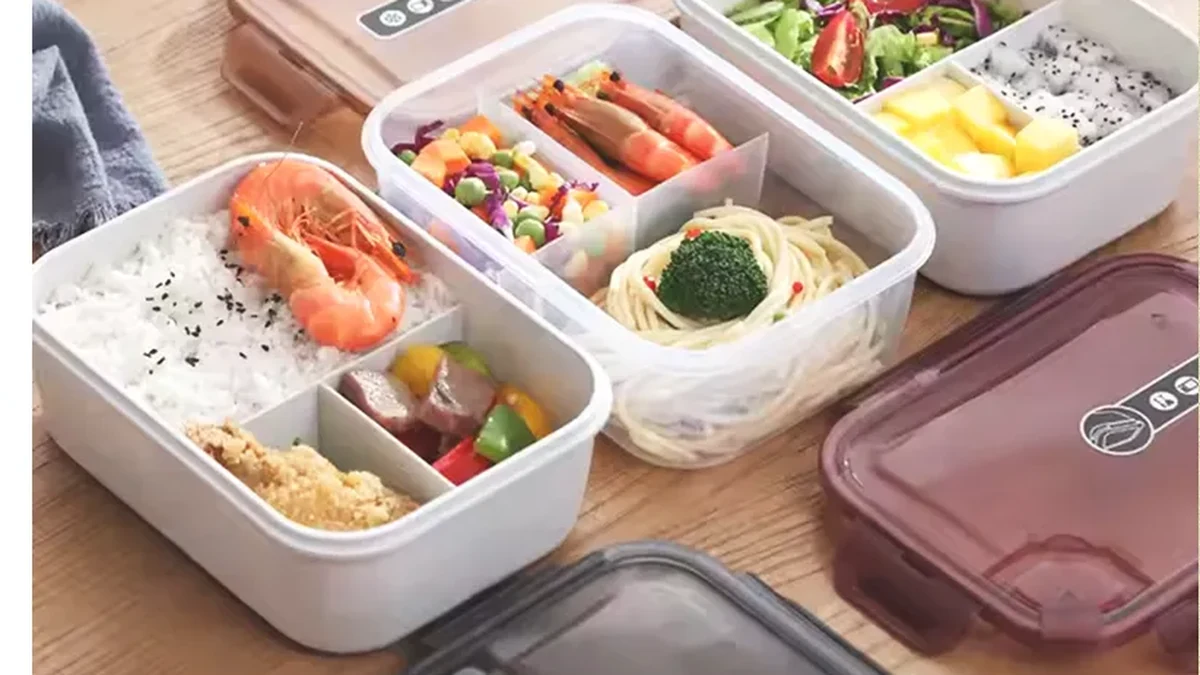
We are a food-container factory in Jieyang, Guangdong: our own site publishes figures of a plant established in 2000, 15,000 m² of floor space, 30+ injection molding machines and buyers in 60+ countries. This page covers the twelve wholesale lunch boxes we publish — 800 ml to 1,400 ml in PP, 304 stainless steel and borosilicate glass — for importers, distributors and private-label buyers. Where a record is blank, we say so.
Lunch Box or Lunch Bag? Settling the Term First
A large share of what ranks for this phrase is not a container at all: sellers of insulated lunch bags and cooler bags compete for the same words. If your program needs a bag, this page will not help you — we do not make insulated lunch bags, cooler bags, paper lunch boxes or tin boxes. We run rigid containers in three material stacks: PP with silicone seals, PP with silicone and 304 stainless steel, and borosilicate glass.
The second naming issue is regional. Buyers in South Asia and the Middle East call a rigid, multi-compartment meal container a tiffin box — the same object as the two- to five-compartment lines below.
Buying Wholesale Lunch Boxes From a Chinese Factory vs. From a Distributor or a Marketplace
Three different businesses label themselves with "wholesale lunch boxes": a domestic wholesaler attaching "no minimum" to retail packs, a promotional-products distributor printing your logo on a stock item at a few dozen units and selling the result to a marketing budget rather than a retail shelf, and a wholesale marketplace listing thousands of sellers with prices behind a login.
None of those three is factory-direct. The color assortment, the packaging form and the carton count are set against the model you pick, and one party answers for the specification.
Factory-direct is not always better: if you are restocking a local channel this month, a domestic distributor will serve you faster than an export order can. What no distributor hands you is the record behind the model — capacity, carton dimensions, units per carton and the material stack. What is moving in the category this year is our wholesale lunch box trends review for 2026; if you are still choosing between plants, our guide to choosing a reliable lunch box factory covers the checks on site.
The 12 Lines We Publish: Side-by-Side Specification Table
Twelve records in our published product data cover the range: 800 ml to 1,400 ml, PP with silicone, PP with silicone and 304 stainless steel, plus borosilicate glass from 320 ml to 1,040 ml. Compartment layouts run from two to five, across kids' lines and adult bento boxes — the part a distributor listing cannot give you.
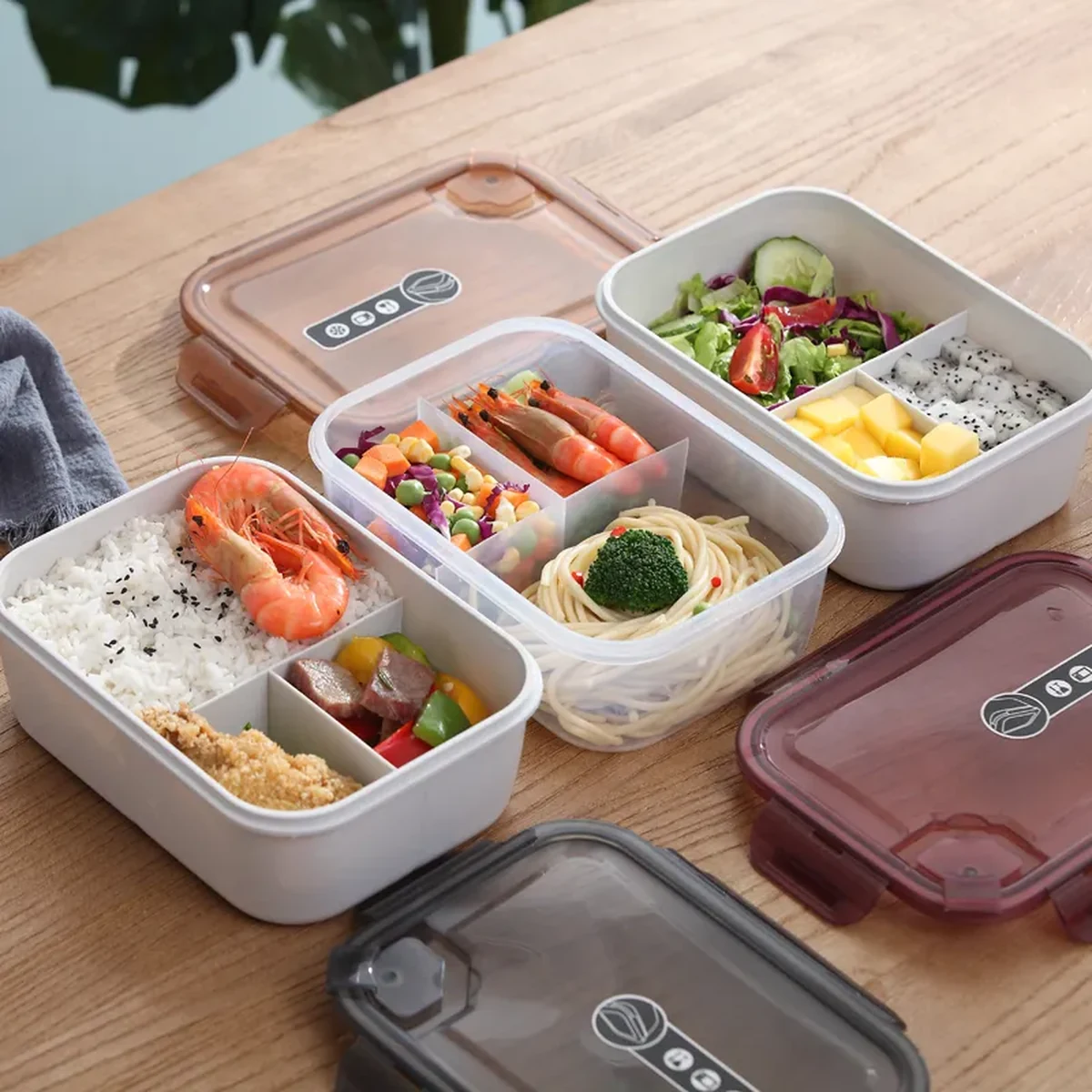
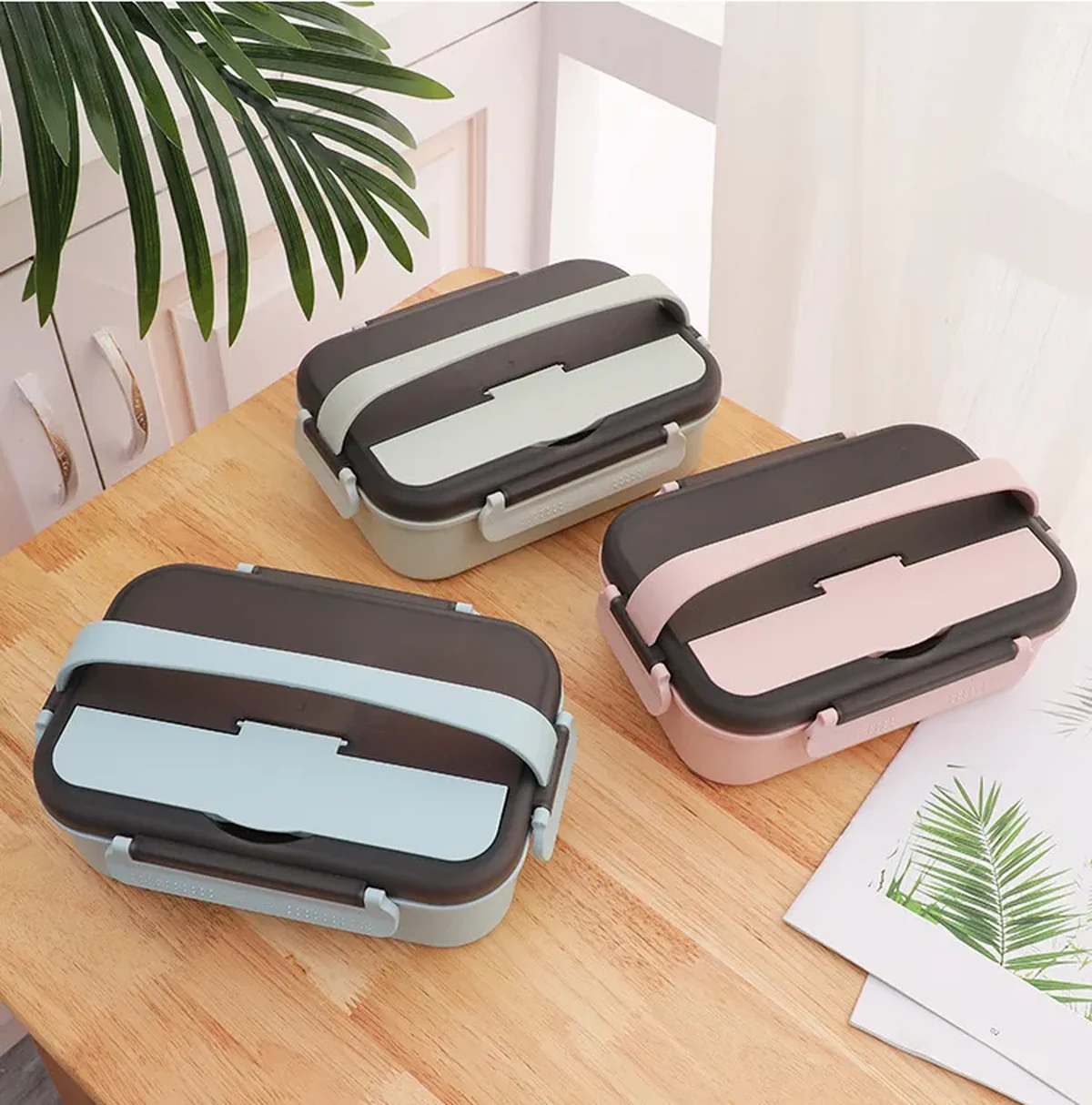
PP boxes from the range with clip-on lids, in the translucent lid tints shown.
Model | Material (as recorded) | Capacity | Units per carton | Carton size (cm) | Carton gross weight (kg, as recorded) | MOQ (as recorded) |
|---|---|---|---|---|---|---|
PP + silicone + 304 stainless steel | 1,400 ml (47.34 US fl oz) | 18 pcs | 47 × 31 × 73 | 15.2 kg | 2,000 Pieces | |
PP + silicone + 304 stainless steel | 1,100 ml (37.2 US fl oz) | 24 pcs | 54 × 32 × 60 | 14.5 kg | 2,000 Pieces | |
PP + silicone + 304 stainless steel | 800 ml (27.05 US fl oz) | 24 pcs | 54 × 32 × 50 | 11.5 kg | 2,000 Pieces | |
PP + silicone + 304 stainless steel | 1,300 ml (43.96 US fl oz) | 24 pcs | 51 × 46 × 62 | 11 kg | 2,000 Pieces | |
PP + silicone | 1,300 ml (43.96 US fl oz) | 48 pcs | 51 × 46 × 62 | 15 kg | 2,000 Pieces | |
PP + silicone + 304 stainless steel | 1,100 ml (37.2 US fl oz) | 24 pcs | 50 × 36 × 47 | 13 kg | 2,000 Pieces | |
PP + silicone + 304 stainless steel | 1,100 ml (37.2 US fl oz) | 24 pcs | 47 × 34 × 47 | 11 kg | 2,000 Pieces | |
PP + silicone + 304 stainless steel | 850 ml (stated in the product description; the specification record has no capacity) | Not recorded | Not recorded | Not recorded | 2,000 Pieces | |
PP + silicone | 1.3 L (43.96 US fl oz) | 72 pcs | 62 × 47.5 × 58.5 | 14.3 kg | Not recorded | |
PP + silicone | 1,200 ml (40.58 US fl oz) | 60 pcs | Not recorded | Not recorded | Not recorded | |
High borosilicate glass + plastic | 320–1,040 ml | Not recorded | Not recorded | Not recorded | Not recorded | |
PP + silicone + 304 stainless steel | Not recorded | Not recorded | Not recorded | Not recorded | 2,000 Pieces |
Three notes. Where a cell reads Not recorded, the value is not in our published product data; it is confirmed per model at quotation. The carton weight column carries the figure recorded against each product page, labeled "Gross Weight (confirm packing scope)", and BX1051's dimensions come from the field its record labels "Box Size". And the material column is copied from the records as they stand: only the 6536 description spells out a 304 stainless steel inner liner, so the rest are written as PP, silicone and 304 stainless steel construction.
How to Choose the Material: PP, 304 Stainless Steel or Borosilicate Glass
PP with a silicone gasket is the lightest route: injection molding puts compartment walls where you want them without adding parts, and holds carton weight down. 6529 ships 48 units in a carton of 15 kg; 6527 — the same 1,300 ml capacity in the same 51 × 46 × 62 cm carton — ships 24 units in 11 kg.
304 stainless steel costs more, and the reasons are structural: the steel surface is a formed part rather than a molded wall, the lid needs its own clamping hardware, and the same capacity carries more weight per unit — 0.46 kg gross against 0.31 kg for the PP box in the table above.
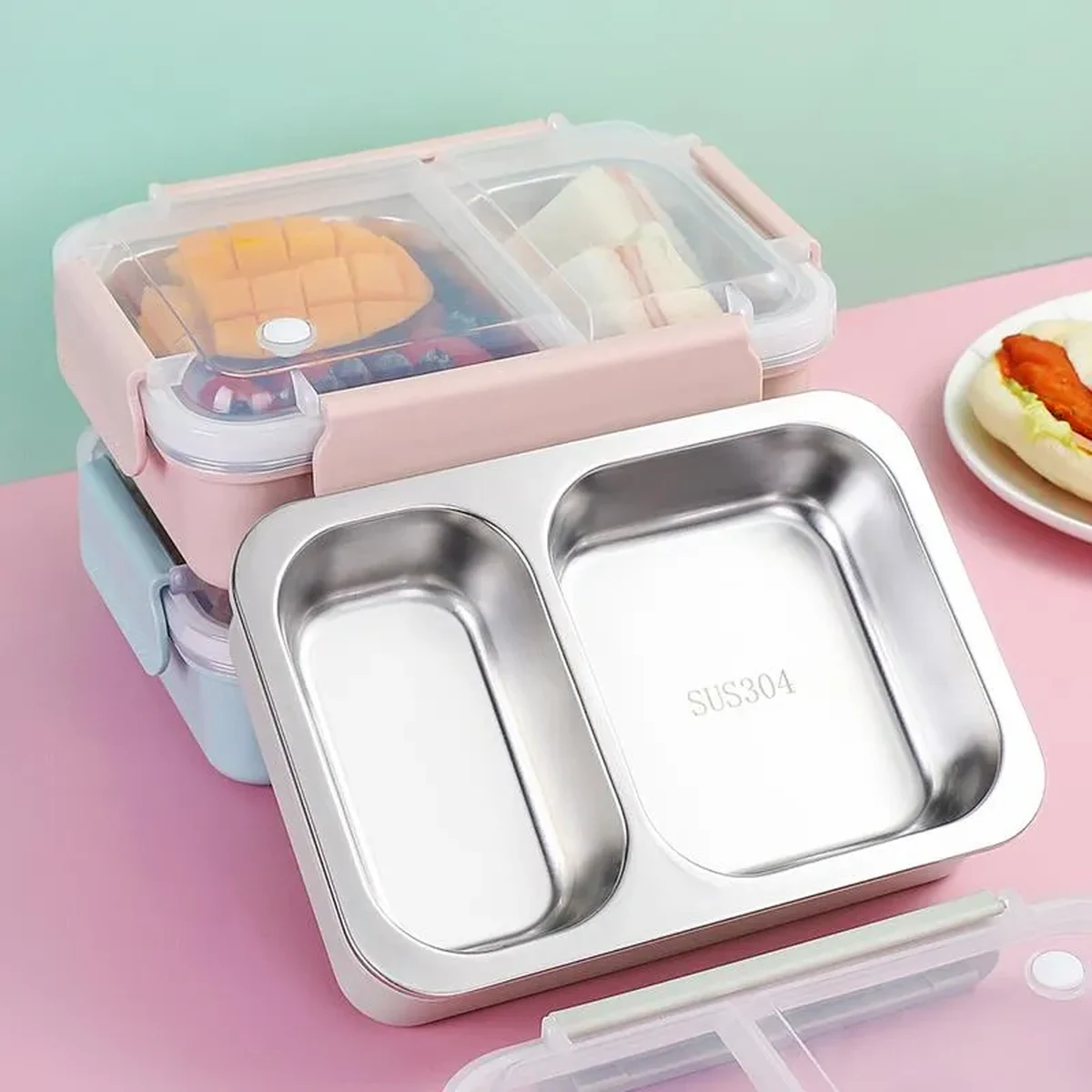
A 304 stainless steel tray with two compartments under a PP clip lid with a silicone seal.
Borosilicate glass is the line to pick when the buyer wants to see the contents; meal prep and leftovers read better through glass than through opaque PP. The product description records resistance to high and low temperature shock and mentions microwave, freezer and dishwasher use, to confirm for the model you select.
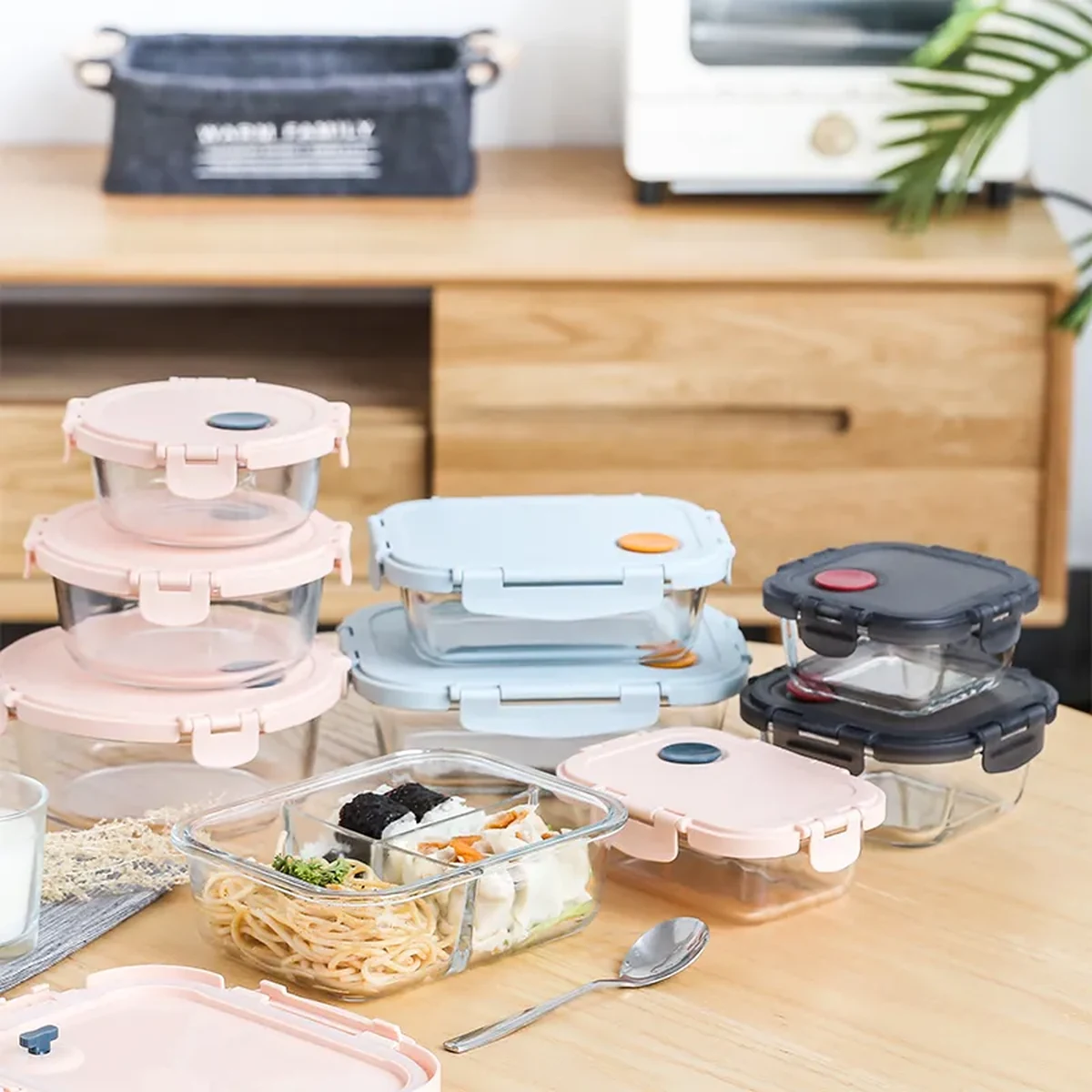
The borosilicate glass line, BX1021–BX1029, in the pink, blue and black recorded for it.
Material stack (as recorded) | Lines in this range | What it suits | What to check |
|---|---|---|---|
PP + silicone | 6529, BX1051, BX1069 | Everyday commuting and school use, where carton weight and molded compartment layouts matter | The closure and the silicone seal, since they decide whether it travels well in a bag |
PP + silicone + 304 stainless steel | 6521, 6522, 6523, 6527, 6533, 6536, 6639, and the unnumbered line | Buyers who want a steel food surface inside a molded outer body | How many parts the assembly has, and the carton weight |
High borosilicate glass + plastic | BX1021–BX1029 | Meal prep and leftovers where the contents should be visible | The color-box packaging, and transit breakage |
Capacity and Compartments: Which Size Fits Which Buyer
The recorded capacities step from 800 ml through 1,100 ml and 1,200 ml to 1,300 ml and 1,400 ml, with 6639 at 850 ml in its description and the glass line spanning 320–1,040 ml. Compartment counts are recorded for five models: 6521 has five, 6522 four, BX1051 three, and 6527 two, as does 6639.
Capacity (as recorded) | Models | Compartments (as recorded) | Typical brief |
|---|---|---|---|
800 ml | 6523 | Not recorded | A smaller adult portion, or a kids' main box |
850 ml | 6639 (stated in its product description) | 2 | A kids' box |
1,100 ml | 6522, 6533, 6536 | 4 for 6522; Not recorded for 6533 and 6536 | School lunch and lighter adult use |
1,200 ml | BX1069 | Not recorded | Soup-and-rice lunches; a round bowl with a handle |
1,300 ml | 6527, 6529, BX1051 | 2 for 6527; 3 for BX1051; Not recorded for 6529 | A full adult meal |
1,400 ml | 6521 | 5 | The widest layout we publish |
320–1,040 ml | BX1021–BX1029 (glass) | Not recorded | Meal prep where the contents should be visible |
For a school or daycare program, 6533, 6536 and 6639 are the lines recorded as kids' boxes; the 1,300 ml and 1,400 ml lines carry a full meal for adult commuting.
Kids' lunch boxes from the range, with clip closures, in the colorways shown.
BX1069 sits slightly apart: a 1,200 ml round bowl with a lid and an integrated handle, one product line for soup-and-rice lunches rather than a category of its own, described on its page as microwavable.
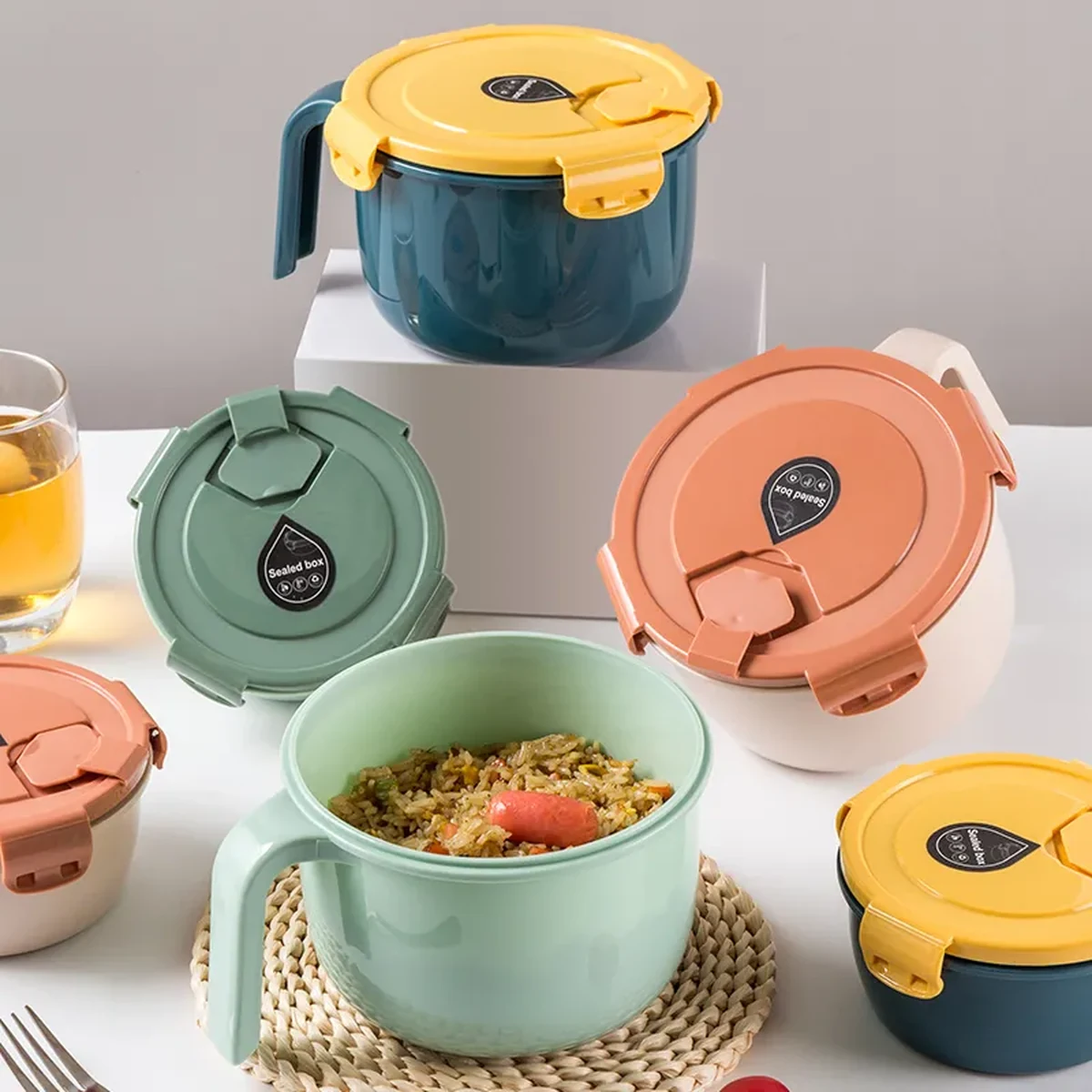
The 1,200 ml round ramen bowl from the range: a clip lid and a side handle.
Packing, Cartons and Container Planning
Eight of the twelve records carry carton dimensions; the other four do not, and we have not filled them in. The table below is indicative: it converts those dimensions into container loading.
Model | Units/carton | Carton size (cm) | CBM / carton | Cartons per 20GP | Units per 20GP | Cartons per 40HQ | Units per 40HQ |
|---|---|---|---|---|---|---|---|
6521 | 18 | 47 × 31 × 73 | 0.1064 | 263 | 4,734 | 639 | 11,502 |
6522 | 24 | 54 × 32 × 60 | 0.1037 | 270 | 6,480 | 655 | 15,720 |
6523 | 24 | 54 × 32 × 50 | 0.0864 | 324 | 7,776 | 787 | 18,888 |
6527 | 24 | 51 × 46 × 62 | 0.1455 | 192 | 4,608 | 467 | 11,208 |
6529 | 48 | 51 × 46 × 62 | 0.1455 | 192 | 9,216 | 467 | 22,416 |
6533 | 24 | 50 × 36 × 47 | 0.0846 | 330 | 7,920 | 803 | 19,272 |
6536 | 24 | 47 × 34 × 47 | 0.0751 | 372 | 8,928 | 905 | 21,720 |
BX1051 | 72 | 62 × 47.5 × 58.5 | 0.1723 | 162 | 11,664 | 394 | 28,368 |
The arithmetic: cartons per container = usable volume ÷ carton volume (length × width × height in meters), rounded down to whole cartons; units per container = cartons per container × units per carton. The figures assume that carton alone in the container, with no pallets, slip sheets or mixed-carton ratio. The usable volumes of 28 m³ for a 20GP and 68 m³ for a 40HQ are the commonly used industry values, and the final stow is set by the forwarder and the loading plan.
Two lines in the same capacity load very differently: 6527 and 6529 share the 1,300 ml capacity and carton, but 6529 packs 48 pieces against 6527's 24, so the same 20GP carries 9,216 units of one and 4,608 of the other. The carton, not the box, decides per-unit freight. Our guides on stacking and nesting carton math and building a first order from a capacity ladder go further.
What We Need From You to Quote Accurately
Send these and the quotation is built against a specification rather than an assumption.
Item | What to send |
|---|---|
Model or use case | The model number you want, or the use case (school lunch, office meal, meal prep, delivery) and the capacity you need |
Market and channel | The country you sell in, and whether you sell retail, on a marketplace, to caterers or to schools |
Quantity | Units for the first order, and the annual volume you expect |
Color | A recorded color for the line, or one of your own |
Logo and print | Your logo files, the print method you have in mind, and where the mark goes |
Packaging form | OPP bag, OPP bag with a color carton, kraft paper box or color box — or artwork of your own |
Samples | Whether you need a sample before the order, and what it should match |
Delivery and terms | Destination port, the trade term you work on, and the date you need the goods |
No response-time commitment goes with that list.
Documents and Compliance: What to Ask a Supplier For
We make no certification claims on this page; a supplier page that makes them without a file behind them is worth less than it looks. Four things decide whether a food-contact document is useful: who issued it, which test it reports, which model it covers, and when.
Ask any factory for a food-contact declaration covering the material in the specific model; migration test reports from a third-party laboratory rather than the factory's own bench; a material declaration covering heavy metals and a BPA statement if your market expects one; and the plant's quality-management certificate. If you sell into the EU, ask which European framework the document was written against: a report prepared for one market may not answer a question asked in another. For the PP parts, the US reference a laboratory report should cite is 21 CFR 177.1520 for olefin polymers; on the European side, the European Commission's food contact materials pages set out the framework the declaration has to sit inside.
Our guides cover the market side: the documents to request from a food container factory and the certifications plastic food storage containers are commonly checked against.
Color, Logo and Packaging: What Is Customizable
All twelve records carry the same two lines: Customized Option: Color/Size/Logo/Package, and OEM/ODM: Available. Colors recorded are pink, blue and green for 6521, 6522, 6523, 6527, 6529, 6533 and 6536; black, red and khaki/transparent for BX1051; green, blue and pink for BX1069; white and blue for 6639; blue, pink and green for the unnumbered line; and pink, blue and black for the glass line.
Packaging appears in five recorded forms: an OPP bag on four records (6527, 6533, 6536 and 6529), an OPP bag with a color carton on four (6521, 6522, 6523 and the unnumbered line), a kraft paper box for BX1069, a color carton for 6639 and a color box for the glass line. BX1051's record carries only its 72-piece carton count and no packaging form.
Customizing a line in the range and running OEM/ODM differ in how much of the product changes: a different color, a logo and a retail carton on an existing model keeps its recorded data valid, while a new compartment layout or a capacity outside the 800–1,400 ml range means tooling. Our guide to custom plastic lunch box manufacturing walks the sequence from artwork to a production mold.
Minimum Order Quantities and Trial Runs
Nine of the twelve records state MOQ: 2,000 Pieces; the other three leave the field blank, so the quantity is confirmed per model at quotation. We would rather say that than set a blanket minimum across a range mixing an 18-piece carton with a 72-piece carton.
Below the recorded quantity, stock items, samples and trial runs can be discussed: a conversation rather than a published figure, and it depends on the model and the packaging.
Settle the model and the packaging form first, then quantity. If you are still comparing factories, what importers check in a reliable lunch box supplier sets out the separating questions.
FAQ
Where can I find the cheapest lunch boxes?
There is no single cheapest place. A rigid container's unit cost is set by its material stack, capacity, structure, packaging form and units per carton — and the last decides most of your freight. Two 1,300 ml boxes in the same range load 24 and 48 pieces to a carton of identical size, so landed cost per unit moves without the box changing. Compare quotations on the same specification, carton count and packaging form.
Where is the best place to buy a lunch box?
It depends on who you are. A retailer restocking a shelf, or a buyer assembling a small event order, is usually better served by a domestic distributor or a marketplace. An importer, a distributor building a range or a brand owner with packaging of their own is better served by the factory, where the specification and carton data are negotiable.
Does Costco sell lunch boxes?
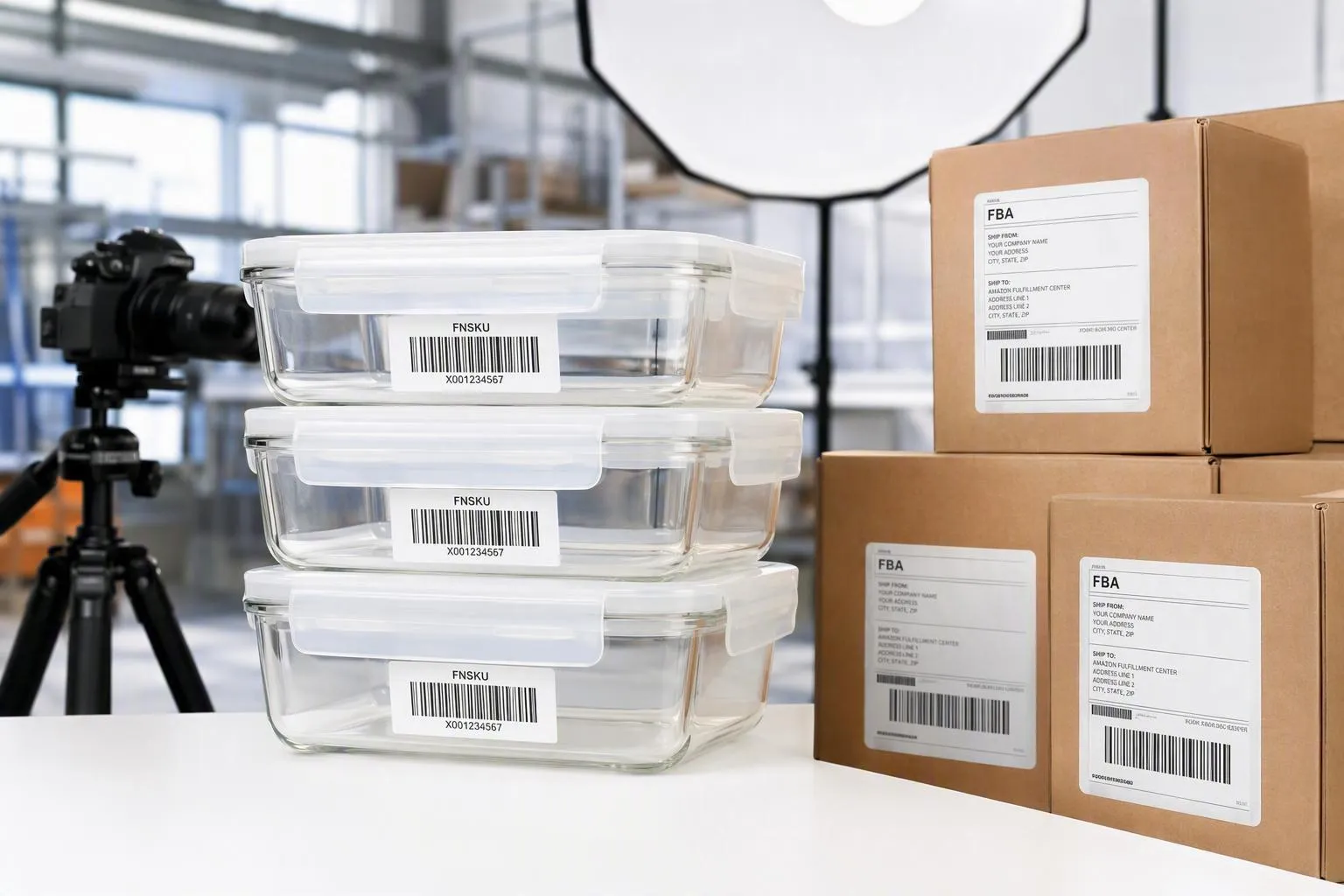
Warehouse clubs do sell rigid lunch boxes, and that is a retail sales channel rather than a wholesale source. To supply that kind of channel you need retail-ready packaging from the factory: a printed box, a barcode and carton markings matching the channel's requirements. Ask for those before you price a shelf, and check the recorded carton dimensions against the pallet and shelf rules the channel gives you.
Which company makes the best lunch boxes?
There is no single answer, and anyone who gives you one without asking about your market is guessing. A workable test: does the supplier publish specification records you can check; does it give units per carton and carton dimensions; does it state the material stack plainly; and will it document a sample approval before production? Our twelve lines can be checked against all four.
What is a tiffin box — is it the same as a lunch box?
A tiffin box is the name used across South Asia and the Middle East for the rigid, multi-compartment container a meal is carried in — the same category this page covers. Our lines run from two to five compartments, so the 5-compartment 6521 and the 4-compartment 6522 are tiffin boxes in that usage. The name changes with the market; the specification does not.
What is the minimum order?
Nine of the twelve published records state 2,000 pieces. The other three have no recorded quantity and are confirmed per model at quotation. Below the recorded figure, stock items, samples and trial runs can be discussed; we publish no smaller number, because it depends on the model and the packaging.
Next Step
Send the list above — model or use case, market and channel, quantity, colors, logo, packaging, samples and trade terms — and we can quote against a specification. If you have not settled on a model yet, the lunch box category page carries all twelve lines with their recorded data.
Continue reading
Related sourcing guidance
More practical context for your food storage container sourcing conversation.
Discuss your product range
Need help selecting or customising containers?
Share the product type, market and sourcing requirements with the Xinghui team.