
Lunch Boxes & Bento
Branded Kitchen Canister Gift Sets for Member Rewards: Piece Count, Retail Box vs Gift Box, and What Each Adds to the Timeline
How to buy branded kitchen canister gift sets as member rewards: piece count, retail vs gift box, carton maths per 500 units, and documents to request.
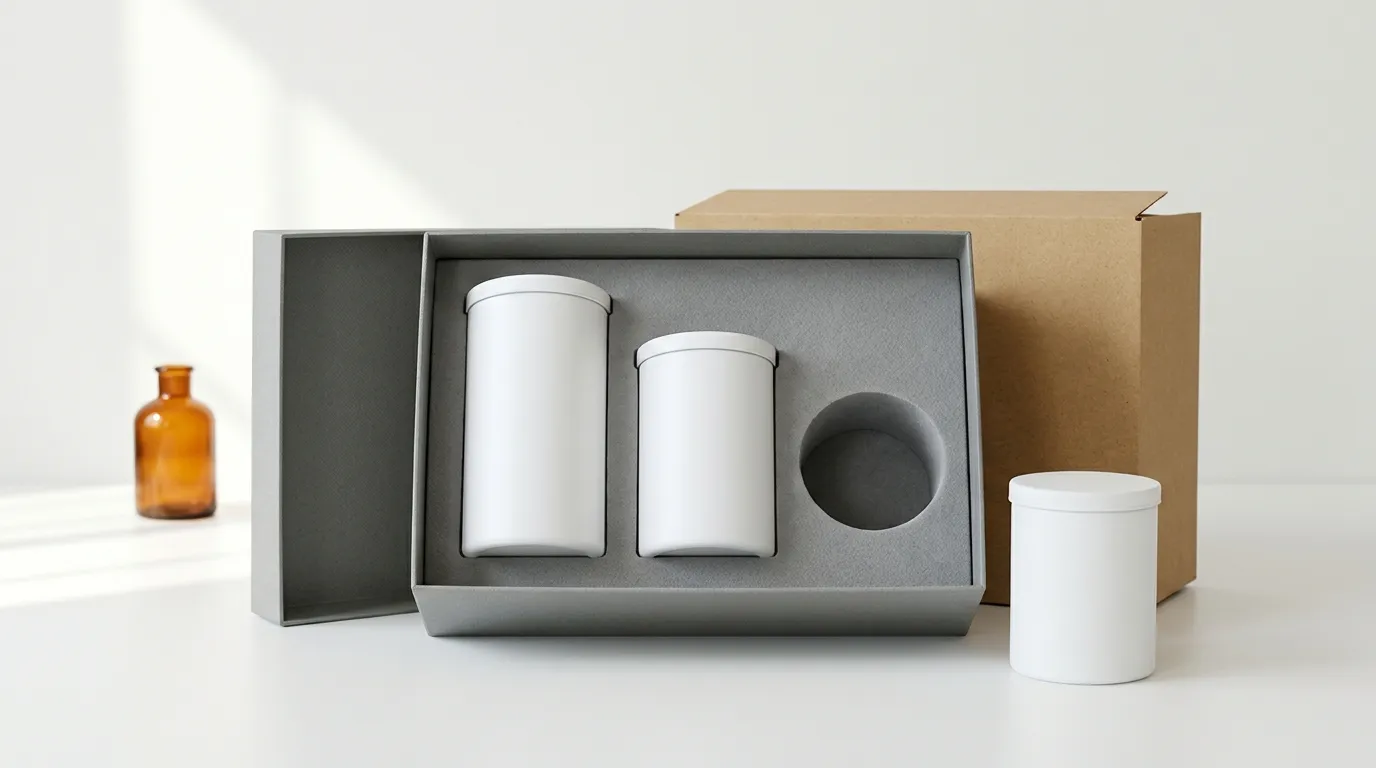
A promotional food storage container programme and a container order are not the same purchase, even when the carton on the pallet is identical. The order is a quantity of a product. The programme is a quantity of a product plus a box, plus artwork, plus an insert, plus a date that does not move — and the box is where most of the schedule goes.
That distinction is why a sourcing or promotional buyer can get three quotes for "500 canister sets, logo on the lid" and find they are not comparable at all: one supplier is quoting a shrink-wrapped set in a master carton, one is quoting a printed retail carton, one is quoting a rigid gift box with a foam insert. Same container, three different programmes, and only one of them arrives in time for the event it was bought for.
This guide is written for the buyer who has to come back with a number, a pack format and a date. It covers what actually goes inside one gift unit, the specification data behind the canister lines a set is built from, the real difference between a retail box and a gift box, the carton arithmetic per 500 and per 1,000 units, and a week-by-week view of where each format spends its time. Where a number is not published for a line, it says so rather than filling the gap.
Why a Canister Gift Set Is a Packaging Programme, Not a Product Order
Three variables decide everything downstream: how many pieces go in the gift unit, what the unit is packed in, and when it has to be in someone's hands. A buyer who fixes all three before asking for a quote gets comparable quotes. A buyer who fixes only the first gets quotes that differ by weeks and by a third of the freight.
The container is the easy part. We run square tall canisters, round snap-lock containers, round airtight sets in two configurations, and pantry boxes in PP and PP with a silicone gasket — all of them run on existing moulds, so none of them needs a tooling decision — though, as the table in section four shows, published carton data exists for some lines and not for others. The moment the programme becomes a gift, three new objects enter the bill of material:
- An outer box, which is either a retail carton (printed board, shelf-ready, barcoded) or a gift box (rigid or heavy folding board, an insert, no barcode).
- A second artwork job, because the box is a different print surface with a different dieline, approved by a different person at the buyer's end.
- A pack-out step, because loose containers go into a master carton by the dozen while gift units go into an individual box first, which changes how many units fit per carton and therefore the cube you pay freight on.
Each of those three adds time. None of them adds time to the container's own production run. That asymmetry — the container is ready, the programme is not — is the single most common surprise in this category, and it is why the same 500 units can ship in five weeks or in nine. If you have already run a similar programme on a different product, the lunch-box version of this same problem is written up in the meal-prep gift programme note, and the shape of the decisions is identical.
There is also a commercial reason to separate the two. A container order is judged on unit price. A gift programme is judged on cost per recipient — and those two numbers do not move together, because the box, the insert and the pack-out sit outside the container's price. A programme that looks 8% cheaper per piece can be more expensive per gift once the individual box and the extra cartons are counted. Section six works that arithmetic on real carton packs.
How Promotional Food Storage Containers Reach a Member Reward — or a Client Gift
The two most common programme types look similar in a brief and behave completely differently in production. Corporate gift food containers and reward-programme units are usually ordered by someone who has never specified packaging before and does not yet know that the box is a separate line item — which is why the type is settled here, before the specification table. Getting it right before the box is specified saves a re-quote.
A member reward or loyalty redemption is usually one unit per member, shipped in bulk to a fulfilment house or a regional warehouse, then mailed out or collected. That has three consequences:
- The unit does not need a retail barcode, and it usually should not have one — a retail carton invites a scanner question nobody wants to answer.
- The unit does need to survive a second journey inside someone else's mailer, so the box's job is protection first and presentation second.
- You will be asked for a unit-level label or a sticker sheet, not just a carton mark, because the fulfilment partner applies the last mile of labelling.
A client gift is usually fewer units, shipped to named addresses or hand-delivered at an event. That flips the priorities:
- Presentation moves to the front. Rigid board, an insert that holds the canisters still, and a lid that lifts cleanly matter more than carton density.
- Quantity per carton falls, because individual boxes are bulky and nobody wants a pallet for 200 units.
- The box carries the message — a printed sleeve or a foil-blocked lid is doing the work a brochure would do in a retail programme.
A third pattern is worth naming because it is increasingly common: the same programme with two tiers, where a distributor supplies 2,000 redemption units in retail cartons and 150 executive gifts in rigid boxes. Those two lines should be quoted separately and specified separately, even when the container inside is the same model. Suppliers that get handed a blended brief like this and quote one number are guessing about which pack format the number refers to — and the guess is usually the cheaper one.
What One Gift Unit Actually Contains
Piece count is the first lever on perceived value, and the cheapest one to move, because it changes the container count without adding a new artwork job.
Set composition | What the recipient sees | Effect on the programme |
|---|---|---|
2 pieces (one tall, one medium) | A pair — reads as a considered small gift | Lowest container cost and the smallest box; the height of the pair sets the box depth |
3 pieces (two tall, one medium, or three graduated) | The classic pantry set; still reads as a set rather than a sample | The most common gift configuration; box becomes a proper two-row insert |
4 pieces (three graduated plus one small) | Generous; needs a wider box and a heavier insert | Best presentation per unit, worst carton density per unit of value |
Set plus accessory (a scoop, a measuring cup, a chalk label) | Feels curated | Adds a third supplier and a third lead time to the programme — usually not worth it for a first run |
Two honest notes on this table. First, the piece count interacts with the height of the canisters, not just the count: three tall canisters in a row need a long box, three graduated canisters need a deep one, and the two are not interchangeable when it comes to insert tooling and carton density. Second, our product records do not publish usable volume figures for these canister lines, so this article does not quote them. Capacity is confirmed per model on the specification sheet at quotation stage — a number invented here would be worse than an empty field, because it would end up in the buyer's own brief.
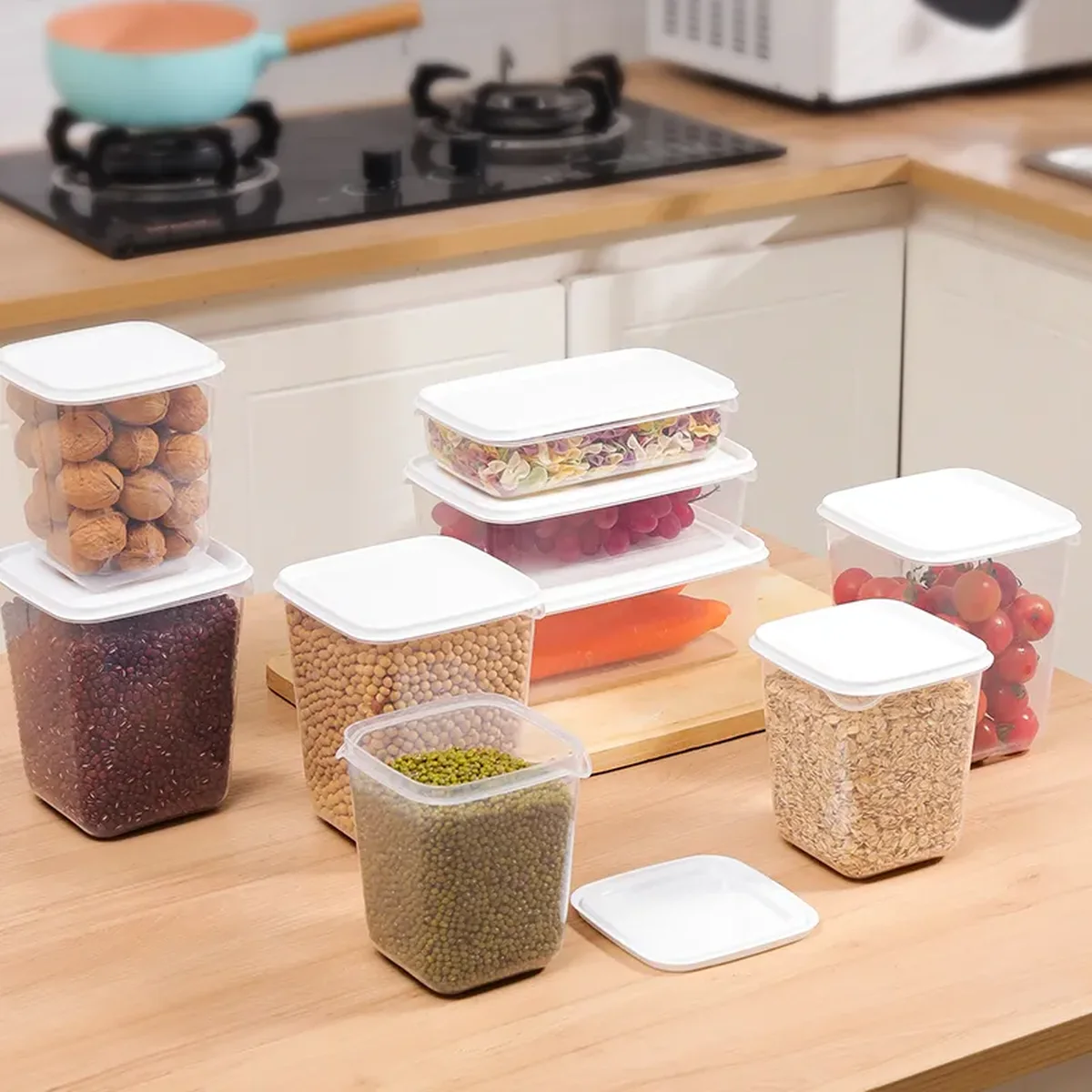
What the recipient actually judges is not the count but whether the set looks complete in the box. A three-piece set with two empty insert cavities looks like a set that is missing something; a two-piece set in a box sized for two looks deliberate. That is the argument for specifying the box after the set, never before — and for buying the insert to the set rather than buying a stock box the set has to fit into.
One argument belongs in the proposal to whoever signs the budget, and it is not about the container at all. A canister is reusable in the plain sense: it goes into a kitchen and stays there, holding rice, pasta or coffee for years, in front of the person who received it. A promotional lunch box or a branded tumbler gets used and then put away in a cupboard; a canister sits on the worktop. If the purpose of the programme is reminder value rather than a one-off thank-you, that is the sentence that justifies the spend.
The Specification Table: The Lines a Kitchen Storage Container Set Is Built From
These are the fields we hold for the canister and pantry lines a gift set is usually built from. They come from our own product records, not from a catalogue estimate. Carton dimensions and gross weight are recorded per carton as published for the line — confirm the packing scope behind them on the quotation, because a carton that holds 48 bare pieces holds fewer once every piece is boxed.
Line | Model | Material | Unit weight | Pieces per carton | Carton dimensions | Carton gross weight |
|---|---|---|---|---|---|---|
Round container set | BX1052 | PP + silicone | 298 g | 48 | 68 × 36 × 56.5 cm | 16.2 kg |
Airtight round set, 3-piece | BX1053 | PP + silicone | 425 g | 24 | 61 × 30 × 57 cm | 12.4 kg |
Kitchen / pantry container | 3332 | PP | not published | 56 | 64 × 49 × 56 cm | 16.1 kg |
Tall square canister | 3335–3338 | PP | not published | not published | not published | not published |
Airtight grain jar | 3040–3043 | PP | not published | not published | not published | not published |
Colours run as listed per line in our records — the round sets in black, red and khaki-transparent; the kitchen container and tall canisters in white with a transparent body; the grain jars in pink and blue. Colour is a specification, not a preference: it determines whether the print method you want will read on the surface, and whether a transparent body shows the contents or fights them.
Three things to notice about that table, because they are the same three things to check in any supplier's sheet:
- Two of the five lines carry no published carton data. The tall square canister (3335–3338) is the most gift-friendly shape we run — it shows contents, it stacks, it photographs well — and the grain jar line is the closest thing to a classic pantry jar. Neither has a published pack count in our records. If you are building a programme on one of them, the first question to ask is the carton pack and the carton dimensions, because everything in section six depends on those two numbers.
- Pieces per carton varies by more than 2× across the range (24 to 56). For 1,500 pieces, the 24-per-carton line needs 63 cartons against 27 for the 56-per-carton line — more than twice as many, for the same piece count. That is a freight decision disguised as a specification decision.
- Unit weight is only published for two lines, and it is the weight of the piece as packed, not of a gift unit. A three-piece set weighs what three pieces weigh plus the box and insert — so the programme weight always exceeds the sum of the parts you see in a table like this.
If the gift set is being positioned as a pantry starter rather than a kitchen accessory, the buying logic behind bulk airtight storage is the closer reference, and the tall canister line is covered in more depth in the tall food storage container guide.
Quoting a kitchen canister set wholesale starts with these fields, not with a photograph: model, material, unit weight, pack count and carton dimensions. The round set and the airtight set each have their own page, at the round container set and the airtight round set. And if a buyer is comparing a kitchen storage container set from a retail shelf against what a gift programme needs, the gap is almost always the carton and the box, not the container.
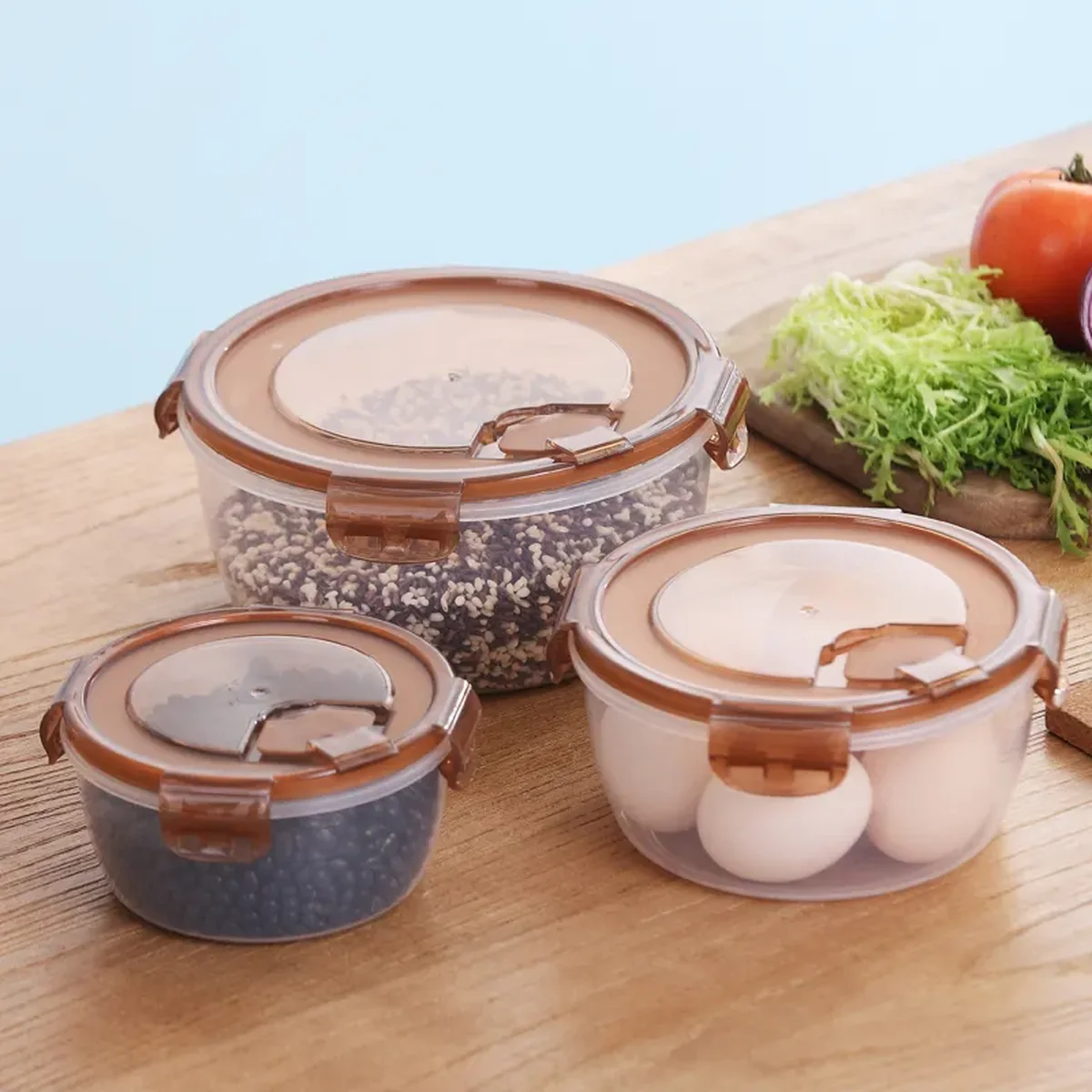
Retail Box vs Gift Box: What Each One Adds
This is the decision the rest of the programme hangs on, and it is the one most briefs leave blank. The two formats are not a quality upgrade of one another; they are different objects with different bills of material — a retail box (the printed folding carton that sits on a shelf, called a retail carton from here on) and a gift box (rigid or heavy folding board, with an insert). In most programmes the box is made by a packaging converter rather than by the container factory, which is exactly why the box schedule sits outside the container's production run — and why a supplier quoting both is quoting two different plans, not one price with an upgrade.
Retail box | Gift box | |
|---|---|---|
Board | Printed folding carton board, typically lighter | Rigid board (greyboard wrapped in paper) or heavy folding board |
Structure | Sleeve, tuck-end or crash-lock carton; ships flat | Set-up box or a heavy folding box with a separate lid; ships assembled |
What it protects | The product, for shelf and transit | The product plus the presentation, for a handover |
Insert | None, or a simple corrugated fitment | Moulded pulp, EVA or PET insert, cut to the set |
Artwork | One artwork on a dieline, usually 4-colour | Lid artwork, optional inner-lid print, insert card, ribbon |
Barcode | Required if it is sold at retail (see GS1's EAN/UPC guidance) | Normally absent — and adding one changes the artwork job |
Approval | One printed proof against the dieline | Proof plus an assembled white sample before print |
Pack density | High — boxes ship flat and pack tight | Low — assembled boxes and inserts take volume before they hold anything |
Cost driver | Board weight, print coverage, die | Board weight, insert tooling, hand assembly |
Weeks added to the programme | Few | Several — see the next section but one |
Right for | Redemption units, retail SKUs, high-volume programmes | Client gifts, executive tiers, event handovers |
The cost trap is comparing the two on box price alone. Gift box packaging for food containers is quoted per unit, and that per-unit number is usually where buyers stop looking — but a rigid gift box can cost several times a printed folding carton while still not being the largest new line in the programme. The insert tooling and the hand assembly usually are, and both are one-off or per-unit costs that a box quote does not show. Ask for the insert and the assembly quoted separately, then compare.
The density trap is the one that surprises importers. A retail carton ships flat and packs tight; a set-up gift box arrives assembled, and an insert arrives as its own carton. For a 500-unit programme the gift-box version can occupy meaningfully more cube than the retail version before a single canister is packed — and that cube is what your forwarder charges for. If the two formats are being compared as freight-equivalent, they are not.
The artwork trap is a calendar problem more than a cost problem. A retail carton needs one artwork approved against a dieline you already have. A gift box needs the dieline designed first, then the lid artwork, then an assembled white sample, then a printed proof. Those are four approval events where the retail route has one, and each one sits on the buyer's side of the table, not the factory's.
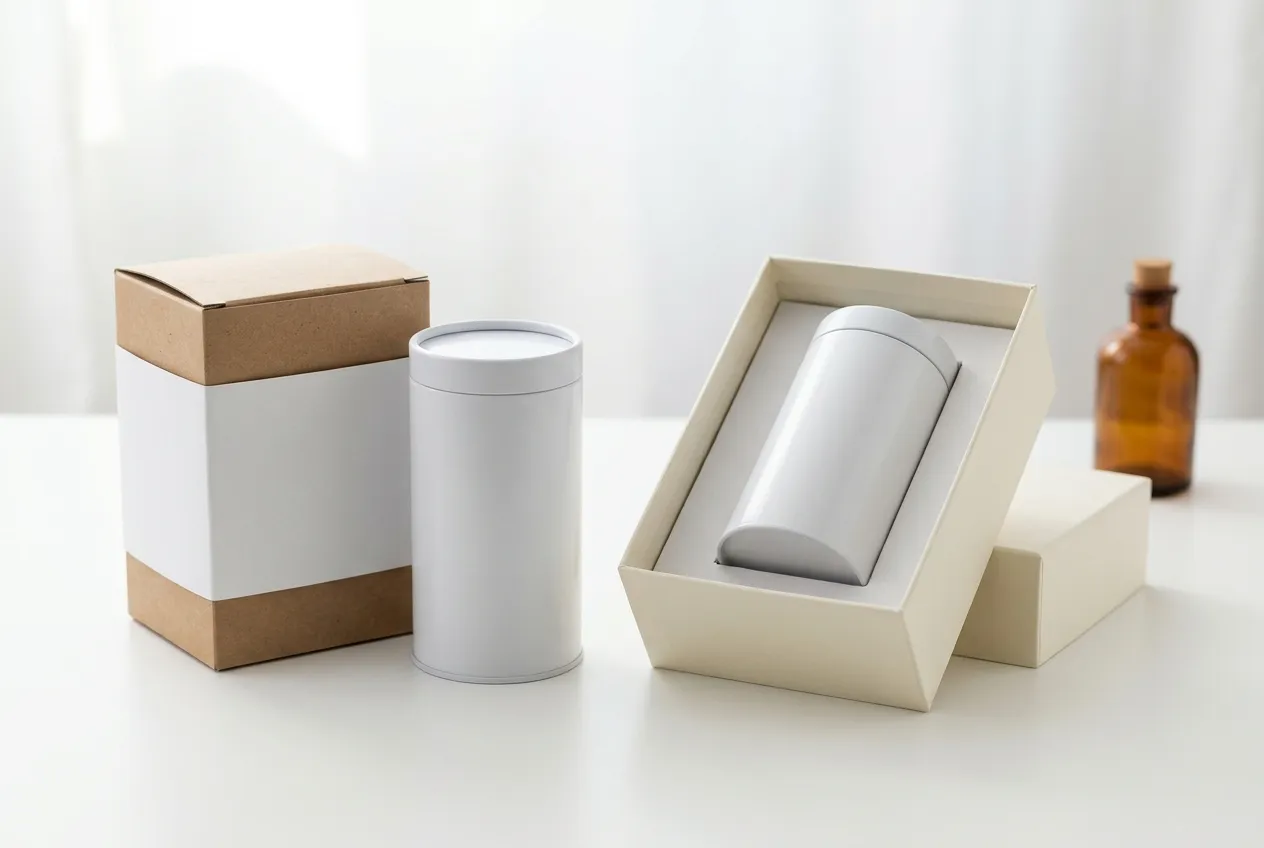
There is a packaging-compliance layer that now sits on top of this choice, at least for programmes distributed in the European Union: packaging itself is regulated separately from the product inside it, and the EU packaging and packaging waste regulation sets design, recyclability and labelling expectations for packaging placed on that market. The practical version for a buyer is a question, not a claim: does the board and any plastic insert in this box fall inside the packaging declaration you can give me, and which obligations and dates apply to this format? If the answer is vague, that is a supplier-side gap worth knowing about before print, not after.
If the programme is closer to a private-label retail launch than to a gift handover, the retail packaging route is written up in the private-label retail packaging note, and the label-and-barcode mechanics live in the private-label bento programme.
From Pieces per Carton to Cost per Gift Unit
Once the set and the box are fixed, the programme becomes arithmetic. In a promotional food storage container programme, the number that decides whether it was a good buy is cost per gift unit, not price per piece. Two numbers drive all of it: pieces per carton (from the specification table) and the carton's outside dimensions (which give you the cube).
Worked example, clearly hypothetical and using our published carton data for illustration only: a three-piece set built from BX1052 (48 pieces per carton, carton 68 × 36 × 56.5 cm, gross 16.2 kg).
Programme size | Pieces needed | Cartons | Carton cube total | Gross weight |
|---|---|---|---|---|
500 gift units | 1,500 | 32 | ≈ 4.43 m³ | ≈ 518 kg |
1,000 gift units | 3,000 | 63 | ≈ 8.71 m³ | ≈ 1,021 kg |
Same arithmetic on BX1053 (24 pieces per carton, carton 61 × 30 × 57 cm, gross 12.4 kg):
Programme size | Pieces needed | Cartons | Carton cube total | Gross weight |
|---|---|---|---|---|
500 gift units | 1,500 | 63 | ≈ 6.57 m³ | ≈ 781 kg |
1,000 gift units | 3,000 | 125 | ≈ 13.04 m³ | ≈ 1,550 kg |
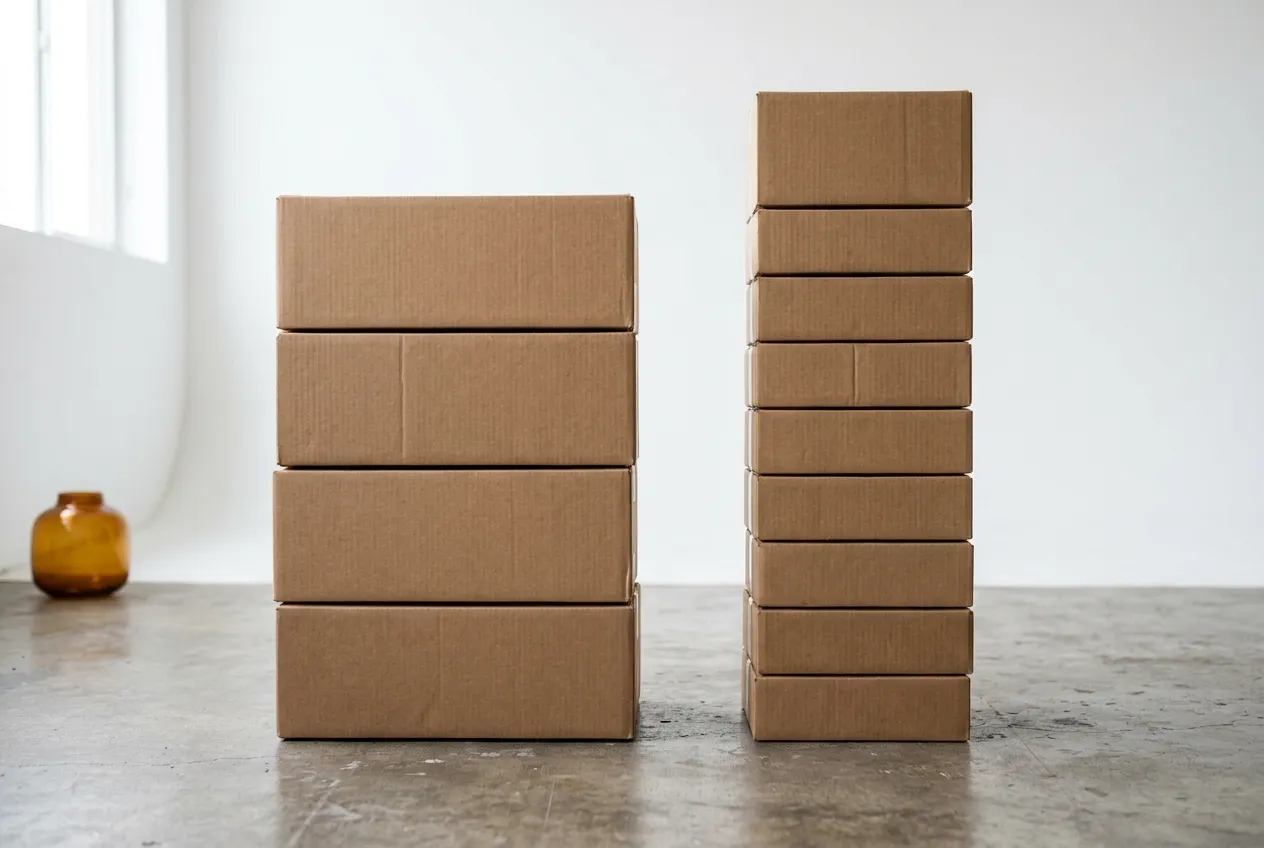
The comparison is the point. For the same 500 gift units, the 48-per-carton line needs 32 cartons and about 4.4 m³; the 24-per-carton line needs 63 cartons and about 6.6 m³ — roughly twice as many cartons (97% more), 48% more cube and 51% more gross weight, for a programme of the same size. Nothing about the container changed. The pack count did.
That is why "price per piece" is a misleading number in a gift programme and "price per gift unit landed" is the one to ask for. The landed number has to absorb:
- the pieces, at whatever the carton pack makes them cost in freight;
- the box, per unit, plus its own carton and cube;
- the insert, per unit or amortised over the insert tool;
- the pack-out labour, which is per gift unit and does not exist in a loose-carton order;
- the duty and freight on a cube that is now larger than the product alone implies.
A quick sanity check before you ask for a formal quote: take the carton pack from the specification table, divide your piece count by it, round up (you cannot buy 31.25 cartons), multiply by the carton cube, and compare that volume against what your forwarder's quote implies. If the two differ by more than the rounding, the quote is built on a different pack format than the one you specified — which happens most often when a supplier silently quotes the retail carton because it is easier to pack.
Two further variables belong in the same conversation rather than a later one. Minimum quantities are often counted per order, per colour or per model rather than per programme — the note on how MOQ is actually counted covers how that changes a two-colour gift programme. And if the programme shares a container with other lines, mixed container loading is where the carton counts from this section become a loading plan.
The Timeline: Which Stage Each Format Adds Weeks To
Weeks, not dates — because dates are commercial commitments and weeks are what a planner needs. The schedule below is illustrative: it is a planning shape for a decorated gift programme, not a quoted lead time, and it starts from the day artwork is approved rather than from the day the brief lands.
Stage | Retail carton route | Gift box route |
|---|---|---|
Dieline and structure | 0–1 week (adapt an existing die) | 1–2 weeks (new die, board and insert design) |
Artwork and pre-press | 1 week, buyer-side approval | 1–2 weeks, two approval events (lid, insert card) |
White sample / assembled dummy | usually skipped | 1–2 weeks, and it is the step that reveals insert fit problems |
Printed proof | 1 week | 1 week, plus one round of colour correction typical |
Container decoration (print on the piece) | 1–2 weeks after proof approval | 1–2 weeks, runs in parallel with box production |
Box production | 1 week (sleeve/carton print and die-cut) | 2–3 weeks (board, wrap, assembly) |
Pack-out and QC | 1 week | 1–2 weeks (hand assembly of insert plus unit) |
Total from artwork approval to ex-works | ≈ 5–7 weeks | ≈ 8–12 weeks |
The two totals assume the stages that can run in parallel do: container decoration overlaps box production, and the printed proof overlaps the white sample once the dieline is signed. If a programme insists on seeing a white sample before artwork starts, the gift-box column grows by one to two weeks — which is usually the right call for a first programme and the wrong one for a repeat.
Read the table as a list of places a date can be lost, not as a promise. Three of the rows sit on the buyer's side: dieline approval, artwork approval, and the white-sample sign-off. In practice those three consume more calendar time than the factory's production run, because they involve someone in marketing, someone in procurement and often a client who is not in the meeting.
The planning rule that follows is simple: work backwards from the in-hands date and put the gift-box decision at the front of the conversation, not the end. A programme that decides on a rigid gift box in week six of a twelve-week run has already spent the buffer.
Two stage-specific notes:
- Member-reward programmes have a second date that is easy to forget: the date the units must reach the fulfilment partner, not the date the member receives them. Fulfilment houses book capacity, and a late pallet can miss a mailing wave even when the factory shipped on time.
- Client gifts have a distribution risk instead of a mailing risk: individual boxes shipped to named addresses need an address file, a packing list per box, and a decision about whether the factory ships direct or the distributor re-packs locally. Re-packing locally means the units must ship in a way that can be re-opened and re-closed without damage — which pushes the box specification back toward a heavier folding box rather than a glued rigid one.
The sample round is where this schedule is either locked or lost, and the mechanics of a golden sample and mass production are set out in the golden sample note. If the programme also has to arrive retail-ready at an e-commerce fulfilment centre, FBA prep, labelling and photography adds its own stage to the same calendar.
Where the Logo Goes, and What That Does to the Box
Most briefs for custom logo food storage containers arrive as one line: "our logo on the product". In a gift programme there are two print surfaces, and choosing the wrong one is how a programme pays twice.
On the container. The flat lid face is the natural place: it is large, flat, and readable when the unit sits on a shelf or in a photograph. Pad print and screen print are the usual routes for one or two colours; heat transfer and UV print carry more colours and finer detail; laser engraving works on the stainless lines but not on PP. What decides the method is not taste but the surface: a frosted or textured lid takes a pad print cleanly and a UV print less predictably, and a transparent body shows a print on the inside face through the wall.
On the box. A printed sleeve over a plain carton is often the cheapest way to make a gift unit look branded, because the sleeve is a single printed sheet and the carton underneath can be a stock size. The trade-off is that a sleeve is a second component to pack and a second thing to get wrong at pack-out. A printed lid on a rigid box is more expensive and reads better at handover.
Inside the box. An insert card is the cheapest personalisation in the whole programme — a printed card under the canisters carries the message, the instructions for use, and any wording the buyer's legal team wants, without touching the container or the box artwork. For a member-reward programme where the same gift goes to thousands of people, the card is also the easiest thing to version without re-quoting.
Three practical constraints, all of which show up in the sample round rather than the quote:
- The lid is the print area, so the lid cannot also be the closure that gets scratched. A pad print on a lid face rubs against the box insert in transit. If the print is important, specify a protective sheet or an insert that holds the unit off the print surface.
- A logo on a transparent body is a different job from a logo on a lid. Print on the wall of a transparent container reads through the contents, which is sometimes the desired effect and sometimes unreadable once the recipient fills it with rice.
- Box artwork is not container artwork. Different substrate, different colour profile, different proof. Approving a container print does not approve the box, and a programme that assumes it does will reprint.
If the programme is considering a change to the container itself — a different lid, a new size, a branded emboss on the base — that is a mould question, not a print question, and the note on modifying an existing mould versus building a new one covers what that does to cost and timing. For a first gift programme the answer is almost always: print, do not tool.
The Documents to Ask For Before You Print
Nothing in this section is a claim about what we hold, and it is not legal advice. It is the list of questions to put to any supplier — including us — before a gift programme goes to print, because the buyer is the party who has to answer for the product and the packaging afterwards.
On the container and the food-contact side:
- Which declaration covers these production materials? Not "a certificate" — a declaration of compliance naming the materials actually used on this line, with its date and the models it covers. For polypropylene in the US market the reference point is the food-contact provision for olefin polymers, 21 CFR 177.1520, and the FDA's inventory of effective food-contact substance notifications is the public record for cleared substances. For the EU the framework is Regulation (EU) No 10/2011 on plastic materials and articles intended to come into contact with food.
- Does the test report cover the model you are buying, or a sibling model? A report for a 3-piece set is not automatically a report for the tall canister. Ask for the model list on the report.
- What is the gasket made of, and is it covered by the same documents? On our round lines the seal is silicone; a silicone gasket and a PP body are usually covered by different parts of a declaration, and the seal is the part most often left out of a document pack. The note on silicone versus compression-moulded seals explains why the construction matters to fit as well as to paperwork.
- Which claims can I print, and which ones need their own report? "Microwave safe", "dishwasher safe" and "freezer safe" are three separate claims with three separate evidence trails. If the gift card is going to say any of them, the report behind that specific claim has to exist first.
- Where do I get the full request list? The document pack guide sets out the whole list in the order a buyer usually needs it.
On the packaging side:
- Board specification and recycled content for the carton or gift box, in writing — because the packaging declaration for an EU programme is about the box, not the canister.
- Whether the insert is plastic or moulded fibre, and if plastic, what polymer and whether it is covered by a declaration.
- Barcode ownership and printing: the buyer supplies the number, and the supplier prints it. Ask who proofs the barcode and who is responsible if the scan fails at the retailer — this is the single most common post-print dispute on a retail carton.
- Carton marking: what is printed on the master carton, whose reference it is, and whether the fulfilment partner's own label can be applied over it.

One structural point about this list: it is buyer-side. A supplier can give you a folder; only you can decide whether the contents satisfy your own compliance function, your customer's procurement questionnaire, or the market you are shipping into. A page that answers these questions on the buyer's behalf is not being helpful, it is taking on a liability it cannot discharge.
What to Settle in the Sample Round, and a Brief Checklist
The sample round is where a gift programme either becomes predictable or becomes a sequence of surprises. Five things to settle before approving, in this order:
- The golden sample of the container, signed and dated, with the colour reference — this is the piece that mass production gets measured against.
- The assembled gift unit, box closed, insert loaded, in the buyer's hands. Not a flat proof: an assembled unit is the only thing that reveals whether the insert holds the canisters still and whether the lid print survives the journey.
- The dieline proof, signed, including every panel that carries print — lid, sides, base, and the insert card.
- A drop and stack test on the packed carton, in the configuration it will actually ship. Individual gift boxes change how a carton behaves under load, and the test is cheap compared with a re-run.
- A written packing specification: pieces per gift unit, units per carton, carton dimensions and gross weight, and the carton mark. Every later dispute about "that is not what we ordered" traces back to this document.
Then the brief itself. A single page, five lines, is enough:
- Programme type: member reward / client gift / retail SKU (and whether there are two tiers).
- Set composition: two, three or four pieces, and which models from the specification table.
- Pack format: retail carton or gift box, with insert and sleeve decided, not "TBC".
- Quantity: total units, plus the colour split, plus whether MOQ is counted per colour.
- Drop-dead date: the date it must be in hands — and, separately, the date it must leave the factory.
A brief in that shape gets comparable quotes. A brief that says "500 canister sets with our logo, gift packaging, as soon as possible" gets three numbers that mean three different things, and the cheapest of them is usually the one that quietly dropped the insert.
If the gift programme is being built for a canteen, staff kitchen or a site handover rather than a pantry gift, the stainless route described in the canteen fit-out note is the closer fit and changes both the box and the timeline. If what is being priced is really a private label canister set that anchors a small range rather than a one-off gift, the note on canister niches worth private-labelling is the next read — the box decision there becomes a range decision, and the arithmetic in section six becomes a range-planning exercise rather than a single programme.
The set, the box, the date. Everything else in a branded canister gift programme — the print method, the insert, the documents — is downstream of those three, and the programmes that run smoothly are the ones where the buyer fixed all three before the first quote was requested.
Xinghui Plastic Life moulds and decorates branded kitchen canisters at its own plant in Jieyang, and the round set and the airtight round set linked in section four are the two lines a gift programme usually starts from. Take Table 1, add the five-line brief above, and send it through as an enquiry: the reply comes back as a carton count, a box option and a number of weeks, which is a shorter conversation than three quotes for three different programmes.
Continue reading
Related sourcing guidance
More practical context for your food storage container sourcing conversation.
Discuss your product range
Need help selecting or customising containers?
Share the product type, market and sourcing requirements with the Xinghui team.