
Food Storage Guides
Custom Food Containers: Modify a Mold or Build New?
Modifying an existing food storage container mold handles branding and small changes fast and cheap. Learn when a new OEM mold is worth the cost.
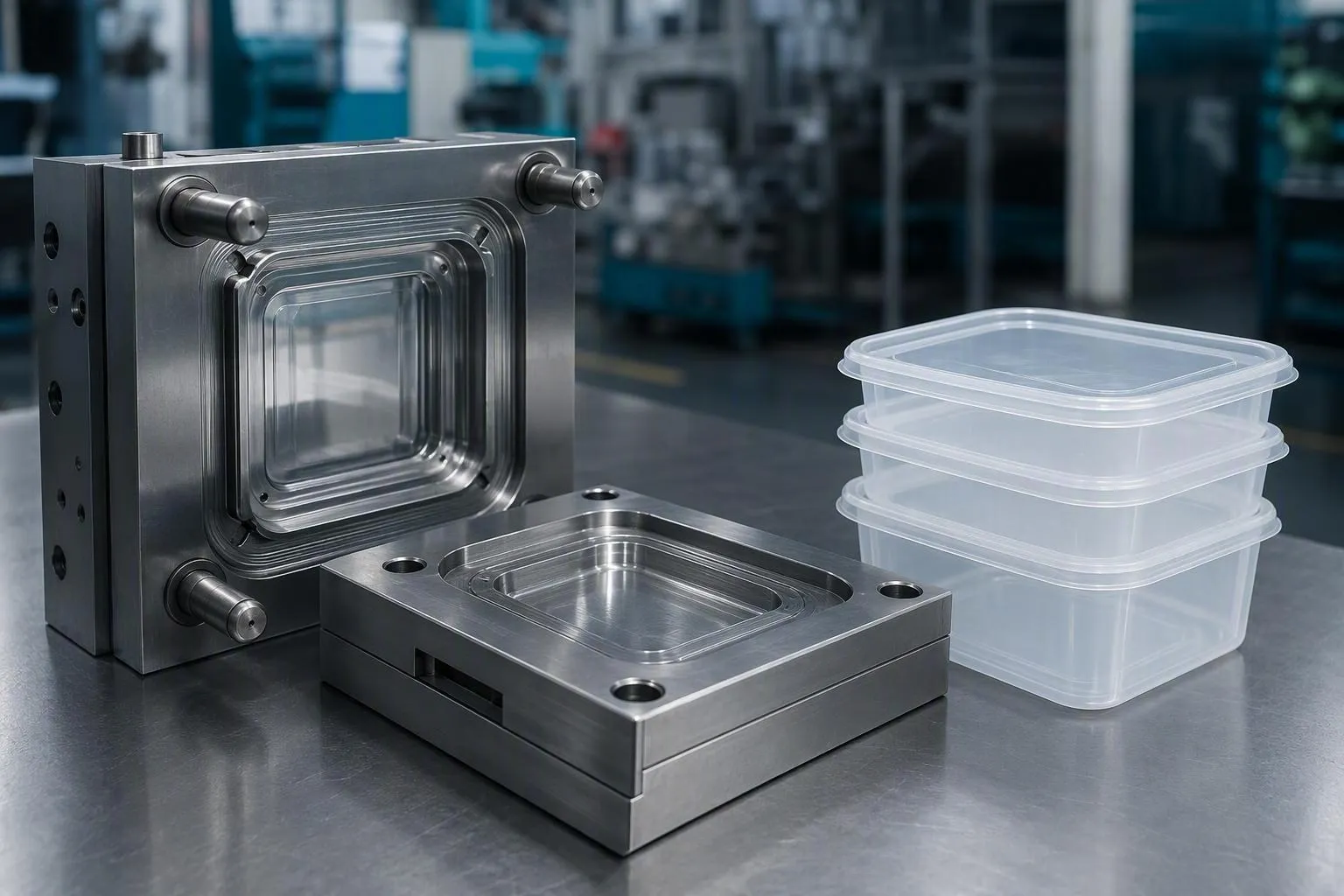
A custom food storage container brief almost always lands on one fork in the road: reuse an existing mold with minor changes, or pay for brand-new tooling. Both roads are legitimate, and the right one depends less on the factory’s sales pitch than on your own product strategy.
Here’s the honest position most suppliers won’t put in writing: modifying an existing mold is faster and cheaper, but it is bounded by the mold’s design. A new mold unlocks exclusivity, structure, and scale, but it costs more and takes longer. The difference between a smart tooling decision and a costly one usually comes down to four questions you should answer before you negotiate — volume, exclusivity, budget, and timeline.
Key Takeaway: Modifying an existing mold handles branding, finish, and small feature changes affordably and quickly. A new mold becomes the better call when you need exclusivity, major geometry, new material, or a cavity count your current tool can’t support — and any change to a food-contact mold should trigger a compliance re-validation first.
Table of Contents
• Start With a Needs Assessment, Not a Quote
• What You Can Usually Change on an Existing Mold
• What Genuinely Requires a New Mold
• Cost and Lead Time: The Benchmark Table
• ODM Existing Mold vs OEM Exclusive Mold: What Ownership Changes
• The Compliance Step Most Buyers Miss
• Decision Matrix: Modify or Build New?
• Red Flags and Deal-Breakers
• How to Use These Criteria With a Supplier
• FAQ
Start With a Needs Assessment, Not a Quote
Every good sourcing conversation starts upstream of the mold. Before you ask a factory to modify or rebuild anything, lock down four numbers on your side:
• Expected annual volume. A steady 200,000 units a year justifies tooling you own. A 5,000-unit test launch does not.
• Exclusivity requirement. If another brand can sell the same shape tomorrow, you’re not building a defensible listing. Decide whether shared is acceptable.
• Total tooling budget. New molds for food containers commonly run from a few thousand dollars to six figures depending on cavity count and complexity.
• Time to market. If you need a listing live within weeks, an existing mold wins on lead time almost every time.
Get those answers written down first. They let you filter every option below through your constraints instead of the factory’s catalog.
What You Can Usually Change on an Existing Mold
Most “customization” for food storage containers doesn’t require new tooling at all. A well-built mold can absorb a surprising amount of change, especially when the work is steel-safe — meaning the tool is machined to remove material or accept interchangeable parts rather than being re-engineered.
Common modify-in-place options include:
• Branding. Embossed, debossed, or laser-engraved logos and brand marks.
• Color and surface finish. Pantone color matching, plus matte, gloss, or textured cavity finishes.
• Gate and vent work. Repositioning or resizing gates and vents to fix fill balance, weld lines, or burn marks.
• Cooling upgrades. Adding beryllium-copper inserts or optimizing cooling channels to shorten cycle time and steady part quality.
• Ejector adjustments. Repositioning ejector pins to reduce sticking, deformation, or cosmetic marks.
• Interchangeable inserts. Swapping inserts to create different lid styles, closure forms, or compartment layouts on the same mold base.
• Limited size tweaks. Enlarging a feature by removing steel, where the surrounding geometry allows it.
The reasoning rule is simple. Removing steel opens the cavity up, which makes a part slightly larger or more forgiving, and that is cheap and low-risk. Adding steel closes the cavity down, which needs welding or new inserts, and that is costlier and riskier. Mold engineers sum this up as the difference between steel-safe and non-steel-safe changes, a principle explained in depth by Protolabs’ guide to planning design changes .
As a practical rule for food containers, you can typically modify an existing mold for lid-seal tuning, logo work, finish changes, and modest dimension adjustments — exactly the kind of differentiation a private-label brand needs on day one.
Pro Tip: Ask for the mold’s full modification history before you commit. If a tool has already been altered several times, the next change may hit steel that’s running thin or compromise the parting line.
What Genuinely Requires a New Mold
There’s a point where polishing an old tool costs more than starting over. Build a new mold when the change crosses into any one of these:
• Adding steel (making the part smaller or thinner). Closing a cavity needs welding or entirely new inserts and quickly becomes uneconomical.
• Major geometry or parting-line change. A larger footprint, a different rim profile, or a moving parting line usually means new tooling.
• A material switch. Different resins shrink and cool differently. Moving a PP container to PET or HDPE can demand a mold engineered for that material’s behavior.
• New undercuts or side actions. Features the current mold can’t release cleanly require a redesigned tool.
• A different cavity count. Scaling from single to multi-cavity to hit high volume is a new tool by definition.
• Exclusivity and ownership. The only reliable way to keep a design exclusive to your brand is to own the tool, which means paying for a mold built to your spec.
The decision framework behind this is well documented. Contract manufacturers like SyBridge’s mold modification vs. new-build article walk through exactly when a change becomes too large or too material-specific for rework, and manufacturing guides such as BOYI’s injection mold modification or new build analysis lay out ten concrete triggers for a new tool, from persistent flash and dimensional drift to regulation changes and lifecycle exhaustion.
Bottom line: if the change touches the container’s fundamental shape, material, or scale, or if you need a design you can protect, plan for a new mold.
Cost and Lead Time: The Benchmark Table
Numbers anchor the decision. The figures below are broad industry planning ranges from 2024–2026 sourcing data — actual quotes depend on mold size, cavity count, steel grade, and complexity, so treat them as a starting point, not a bid.
Option
Typical cost
Typical lead time
Best when
Mold modification, minor (logo, finish, gate/vent, small feature)
~$300–$1,500
3–7 days
Branding and surface differentiation, no geometry change
Mold modification, complex (inserts, cooling, limited geometry)
~$2,000–$10,000
1–3 weeks
Meaningful feature changes on a sound tool
Major mold rebuild
Up to 40–70% of a new mold’s cost
weeks
Fixing worn steel or a larger rework
New mold, small/simple
~$2,000–$6,000
~4–8 weeks
Dedicated simple SKU, low-to-mid volume
New mold, large/complex multi-cavity
Tens of thousands to $100,000+
~70–90 days
Differentiated product, high volume
The cost-driver logic is consistent across the industry. Zetar’s 2026 injection mold pricing breakdown shows that four variables — steel material, part complexity, cavity count, and machining labor — account for roughly 90% of the spread in any mold quote, and that minor changes typically run $300–$1,500 in 3–7 days. Material economics also matter: reworking aluminum tooling can run about a tenth of what equivalent steel modifications cost, which is why aluminum tools suit low-volume test runs while steel suits long production life, a trade-off covered in a breakdown of injection mold costs .
For full custom work, a dedicated new mold for a food container typically needs several weeks of tooling plus multiple sampling rounds. That’s why suppliers like Xinghui’s ultimate guide to food storage containers call out a 70-to-90-day timeline for new mold development — a realistic planning number if you’re going the OEM route.
ODM Existing Mold vs OEM Exclusive Mold: What Ownership Changes
The “existing mold” you’re modifying usually belongs to the factory. That distinction matters more than most buyers realize.
An ODM (original design manufacturing) arrangement means the factory owns the design and base tooling, and you customize within its existing platform — logo, color, finish, packaging, and minor specs. The upside is a lower MOQ and a fast path to market. The limitation is that the same base shape may be sold to other brands, so your “custom” container isn’t really exclusive.
An OEM (original equipment manufacturing) arrangement means you own the design and, when you’ve fully paid for tooling, the mold itself. That gives you exclusivity, full control over shape and function, and the ability to protect the design. The cost is a higher MOQ and a longer tooling and validation timeline.
This trade-off is well covered in sourcing guides on existing-mold vs custom-mold decisions , which note that existing molds suit brands testing a market on a tight budget while custom molds suit brands ready to differentiate and scale.
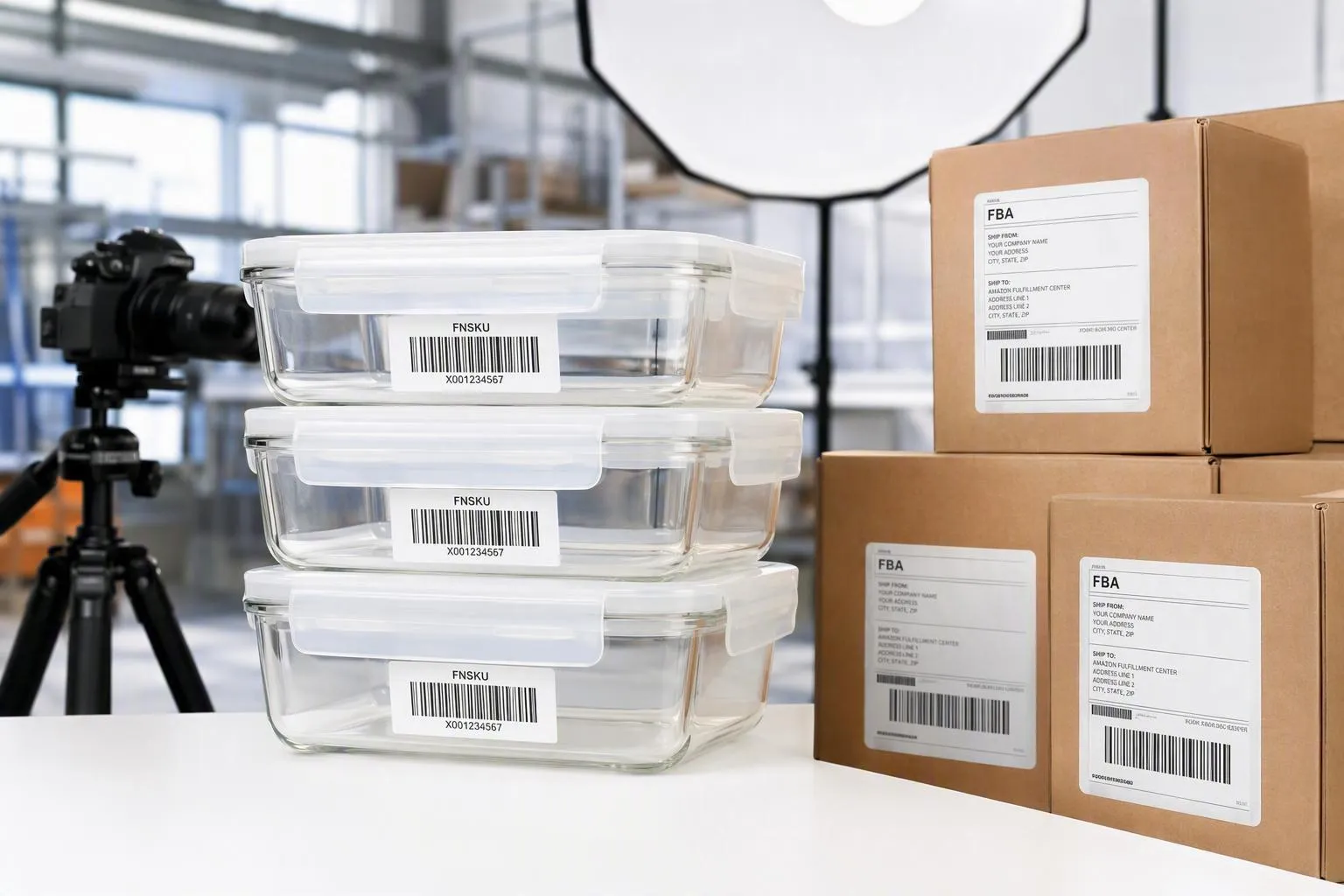
For Amazon FBA sellers specifically, both paths must satisfy Amazon’s packaging, labeling, and prep requirements. ODM gets you to that point faster and cheaper; OEM gives you a more defensible listing but demands more upfront commitment and planning — precisely the kind of bulk food storage container MOQ and lead-time detail worth pinning down before you commit.
The Compliance Step Most Buyers Miss
Here’s the angle almost every generic mold article ignores, and it’s critical for food contact.
Changing a mold or switching material can change a container’s compliance status. Under EU Regulation (EC) 10/2011 on plastic food-contact materials, compliance attaches to the finished article’s migration behavior under worst-case use. If a mold change alters wall thickness, surface finish, cooling, or crystallinity, the prudent move is to re-test migration. For repeated-use articles, EU rules require the migration test be run three times on one sample and judged on the third result, with a consistent overall migration limit of 60 mg/kg. If you switch the resin itself, you essentially need a new compliance assessment and fresh migration data, plus an updated Declaration of Compliance.
The FDA approach differs in form but is similar in intent. There’s no FDA-issued certificate for a finished container; compliance rests on using permitted substances and sound manufacturing controls, documented under 21 CFR Part 177 for food-contact plastics (food-grade polypropylene-type olefins fall under 21 CFR 177.1520 ). A material change means new supplier documentation and typically extractables or migration data to support your compliance file.
The practical takeaway: before mass production, get your supplier to issue updated test reports and a fresh Declaration of Compliance covering the modified product. A mold tweak that only adds a logo or a finish is low-risk, but a geometry or material change on a food-contact part should always come with re-validation. This protects your listing from the FBA rejections and compliance friction that damage private-label brands.
Decision Matrix: Modify or Build New?
Use this summary to shortlist before you talk to any factory.
If your priority is…
Choose
Why
Fast time to market, low capital
Modify an existing mold
Days, not months; smaller upfront spend
Branding/finish/color differentiation only
Modify an existing mold
Fully supported by steel-safe changes
Test a niche before committing
Modify (or low-MOQ ODM)
Lower MOQ, smaller inventory risk
True exclusivity on a defensible listing
Build a new OEM mold
You own the tool and the design
Major geometry or structural change
Build a new mold
Existing tooling can’t physically deliver it
Material change (e.g., PET, HDPE)
Build a new mold
Shrinkage/cooling demands a dedicated tool
High-volume scaling
Build a multi-cavity new mold
Per-unit cost drops as cavity count rises
Food-contact safety certainty
Build a new mold + re-validate
Controlled tooling + fresh migration test & DoC
Red Flags and Deal-Breakers
Watch for these before signing anything:
• No compliance documentation. If a supplier can’t provide updated migration reports and a Declaration of Compliance for a modified food-contact part, walk.
• Unclear mold ownership. Confirm in writing who owns the tool and whether exclusivity is real. Verbal promises don’t hold up.
• Modifications on a worn mold. If a tool is near end-of-life, paying to modify it is money thrown at failing steel.
• Quote without a breakdown. The biggest red flag is a vague lump-sum number. You should see steel, machining, cavity count, and engineering split out.
How to Use These Criteria With a Supplier
Bring your needs-assessment answers to the conversation and ask the factory to respond in kind. For each customization you want, ask three things: Is this steel-safe? What’s the total cost including any re-tooling? And does it change our food-contact compliance? A good OEM/ODM partner will walk you through the modification-versus-new-tool trade-off with line items and timelines, not a sales script. When you’re weighing a brand-new exclusive tool against a cheaper shared mold, put the custom plastic food storage container options in front of you and compare them against the four constraints you set at the start.
The decision isn’t complicated once your constraints are clear. Modify when you need speed, low capital, and surface differentiation. Build when you need exclusivity, structure, material change, or scale. And in every case, re-validate food-contact compliance before the first mass-production run.
FAQ
Can I change the size of an existing food storage container mold? Sometimes. Enlarging a feature by removing steel is generally possible and affordable. Making the container smaller or thinner requires adding steel, which usually means welding or new inserts and can cost as much as a rebuild.
Does adding my logo require a new mold? No. Embossed, debossed, or engraved branding is a standard steel-safe modification on most food container molds, done quickly and at low cost.
Is ODM private label the same as owning a custom mold? No. ODM uses a factory-owned shared mold with logo/color/packaging customization. Owning a custom mold is OEM, which gives you exclusivity and design control at a higher MOQ and longer timeline.
If I change the material, do I need a new mold? Often yes. Different resins shrink and cool differently, and some material switches require new tooling. A material change also triggers a fresh food-contact compliance assessment.
Do I need new food-contact testing after modifying a mold? You should re-validate. Under EU 10/2011, migration is tested repeatedly for reusable articles with a limit of 60 mg/kg and compliance judged on the third test; a material change needs new migration data and an updated Declaration of Compliance. FDA compliance is documented via permitted substances under 21 CFR Part 177 rather than a certificate.
Continue reading
Related sourcing guidance
More practical context for your food storage container sourcing conversation.

Discuss your product range
Need help selecting or customising containers?
Share the product type, market and sourcing requirements with the Xinghui team.