
Lunch Boxes & Bento
Specifying Kids' Bento Boxes for a Preschool or Daycare Group Order: Capacity by Age, Cleaning Cycle, and the Child-Safety Reports to Ask For
How to specify kids' bento boxes for a preschool or daycare group order: a capacity-by-age ladder, a cleaning-cycle matrix and the safety reports to request.
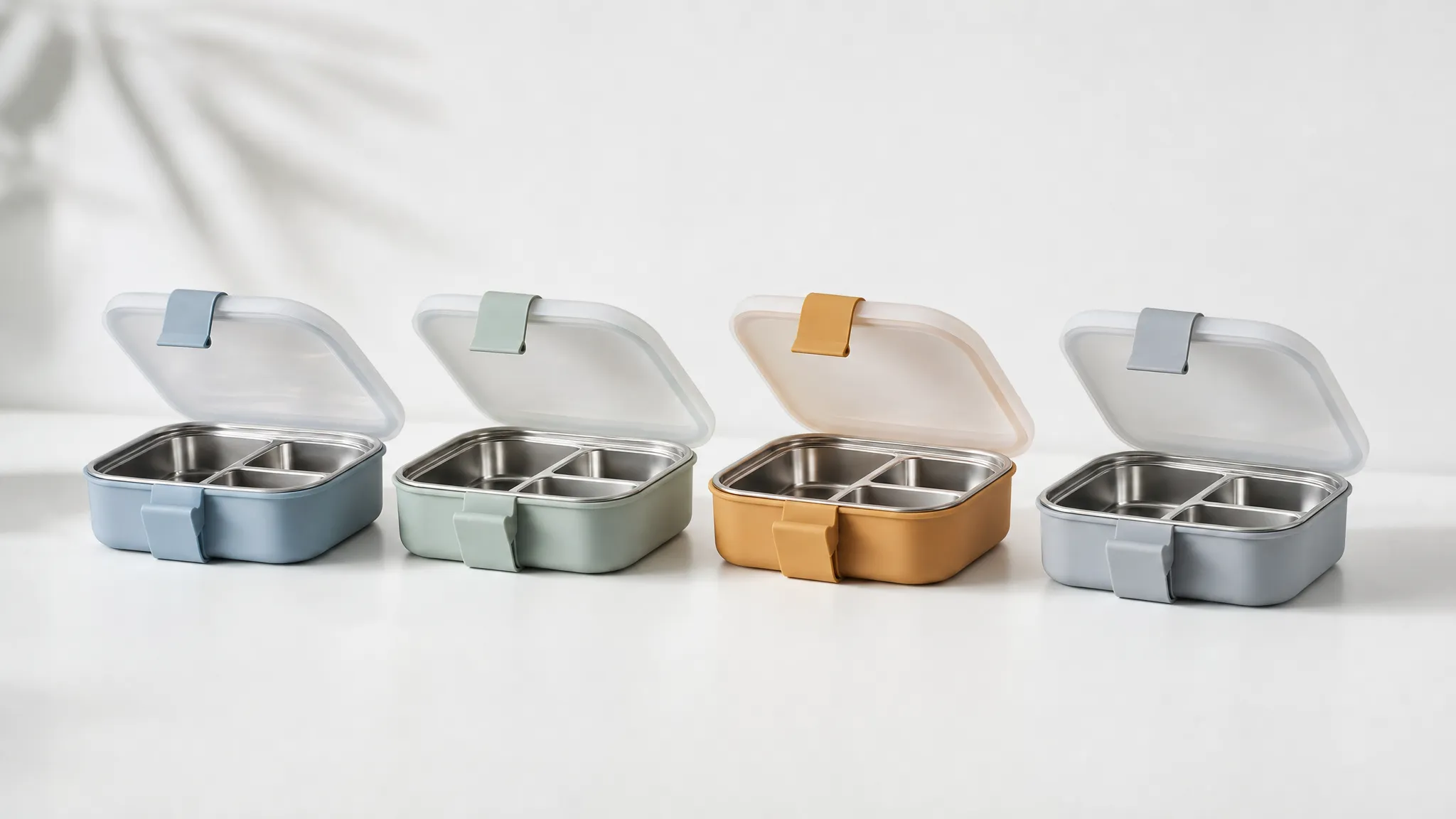
A bento box for kindergarteners is easy to buy one at a time and unexpectedly hard to buy forty at a time. The moment a preschool, a daycare chain or a school district puts the order out for quotes, the conversation stops being about colours and cute compartments and starts being about three things a purchase order can actually carry: how much each box holds for each age band, what the site's dishwashing routine will do to those boxes over a school year, and which child-safety documents a supplier must produce before money moves.
That is the gap this page fills. Almost everything written about kids' lunch boxes is written for a parent choosing one box for one child. Very little of it is written for the person who has to defend a school order to a bursar, an insurer or a procurement officer. The difference is not subtle: a parent asks "will my child open it?"; a buyer asks "will the lid still seal in May, and can I show the safety paperwork in writing?"
This is an educational specification article, not a product listing. The model figures used below are the factory's own published records, and they are here to show what a written spec looks like when it is filled in — not to sell you a particular box.
A Group Order Is Not One Box Times Forty
Start with what actually goes wrong on a group order. It is rarely the box. It is almost always one of three things the buyer never wrote down.
The first is a capacity picked by eye. Someone looks at a display box, likes it, and orders it by the pallet. Six weeks into term, the four- and five-year-olds are not finishing lunch and the six-year-olds are still hungry, and there is no document anywhere that records why that size was chosen. The second is a cleaning decision made by nobody: the boxes go into an institutional dish machine that runs hotter and longer than a home unit, and by the second term the lids have warped, the silicone seals have gone chalky, and the site is hand-washing 300 pieces every afternoon. The third is a safety file that does not exist. The supplier sends a friendly PDF with the word "food grade" on it, and the buyer discovers — usually under pressure — that a children's product in the US needs third-party test documentation, not a marketing line.
None of those three is a product problem. All three are specification problems, and all three are fixable in an afternoon if the order is written properly. For a fuller picture of how bulk kids' lunch boxes move through a school order, the school-and-brand programme write-up is the natural companion to this page; here we stay on the specification itself.
So write the spec around the three variables — capacity by age, cleaning cycle, safety documents — and treat everything else (colour, lid art, packaging) as a downstream choice.
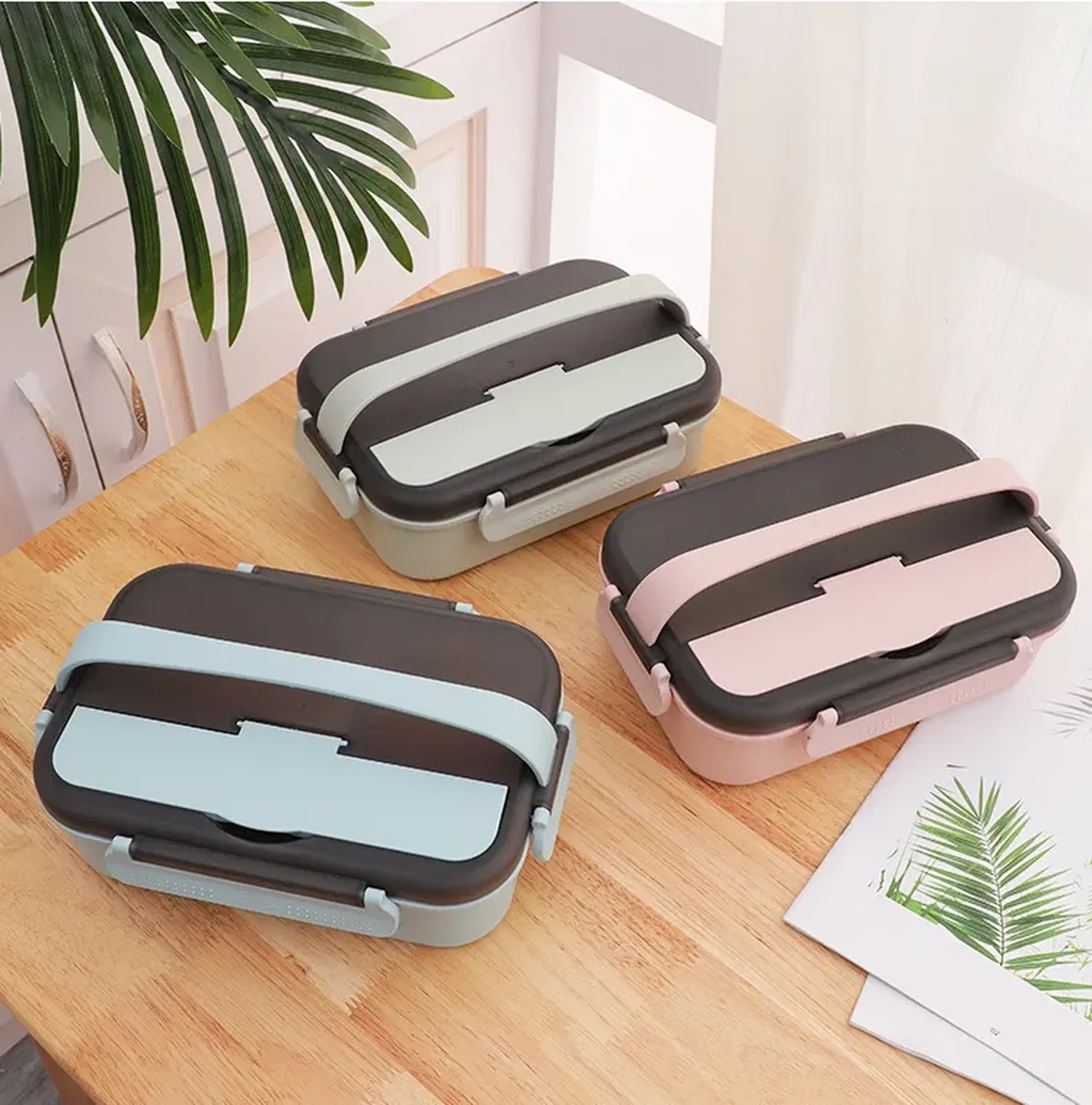
Group-order boxes are specified long before they are decorated. Colour and lid art are the last decisions, not the first.
Capacity for a Bento Box for Kindergarteners: a Specification Ladder by Age
A capacity ladder is the single most useful document you can put in a group-order file, because it converts "what size?" into "which band, and why". The mechanics are simple: list the volumes the supplier actually runs, give each one a compartment count and an outer size, and record which age band each is intended for at your site.
The table below is a real ladder from the factory's own model records — one family in PP lid, silicone seal and 304 stainless interior, run at five volumes, one of them an insulated body.
A note on the source: the capacity, pack and weight values below are the factory's published product records, so treat the packing scope and the unit/carton basis as to-be-confirmed on the quotation rather than as settled numbers.
Reference | Capacity | Compartments | Outer size (cm) | Pieces / carton |
|---|---|---|---|---|
6523 | 800 ml (27 fl oz) | 2 (confirm) | 22 × 15.5 × 6.5 | 24 |
6639 (insulated) | 850 ml (29 fl oz) | 2 | — | — |
6536 | 1,100 ml (37 fl oz) | 2 (confirm) | 21.5 × 15 × 7.5 | 24 |
6533 | 1,100 ml (37 fl oz) | 2 (confirm) | 24 × 17 × 7.5 | 24 |
6522 | 1,100 ml (37 fl oz) | 4 | 25.5 × 18 × 6.5 | 24 |
6527 | 1,300 ml (44 fl oz) | 2 | — | 24 |
6521 | 1,400 ml (47 fl oz) | 5 | 29 × 22.5 × 6.5 | 18 |
Writing the table with those markers is deliberate. The counts marked (confirm) are the cells the factory's own product record does not state outright; the two-compartment bodies the record names explicitly are 6527 and 6639. A spec that hides its unconfirmed cells is worse than no spec, because the buyer cannot tell which line to check on the quotation.
Two things in the table are worth pausing on. First, volume and compartment count move independently — the documented two-compartment bodies sit at 850 ml (6639) and 1,300 ml (6527), while the four-compartment body sits at 1,100 ml (6522) and the five-compartment body at 1,400 ml (6521). A buyer who fixes only the volume, or only the compartment count, will get a different box than they expected. Second, the piece count per carton changes with the shape, not the volume: the tall five-compartment 1,400 ml box packs 18 to a carton while the smaller 800 ml box still packs 24. Carton maths follows shape.
How to use the ladder without over-claiming: this is not a nutrition chart. Portion guidance is set by your site's own meal policy, by the age of the children and by what the kitchen actually serves, and it varies between districts and countries. What the ladder does is let you state a defensible range and record the reason. A preschool settling on the 800–850 ml band for its youngest classes is choosing the smallest body that still gives two compartments; a school taking the order up to the older years moves to the 1,100–1,400 ml band, where the extra capacity is buying an extra hot main and a separate compartment for it.
The practical test for the age band is a mechanical one you can run on a sample, not a number on a page:
- Can a child in that band open and close the lid unaided? A four-snap-lock body is harder for small hands than a single clip; put the class's youngest age on the sample before you commit, not after.
- Can the child reach every compartment with the cutlery the site provides? A five-compartment 1,400 ml body is generous for an eight-year-old and awkward for a five-year-old, because the far compartments sit beyond a short spoon.
- Does the box fit the bag or tray the site actually uses? Check the outer size against the site's existing lunch bags rather than against the box in isolation.
One more line belongs in the spec, because it is the gap that bites in winter: none of these bodies keeps food cold on its own. The closest is the insulated 850 ml body (6639), and even that needs an ice pack; a site that wants a real cold chain should specify a separate thermos-style insulated box — and say so in the spec rather than assume it. Ask about the rest of the same list at the same time: whether a BPA-free statement exists as a document (do not infer it from the material name), and whether the lid is intended for microwave or freezer use, since a box can be dishwasher-rated and still not be rated for either.
Recording the answer to those three questions next to the volume is what turns a guess into a spec. The safety guide for kids' plastic lunch boxes covers the material side of the same decision, and if the order is being built from scratch rather than picked from a shelf, the custom kids' lunch box process shows how a body and compartment layout get fixed before tooling.
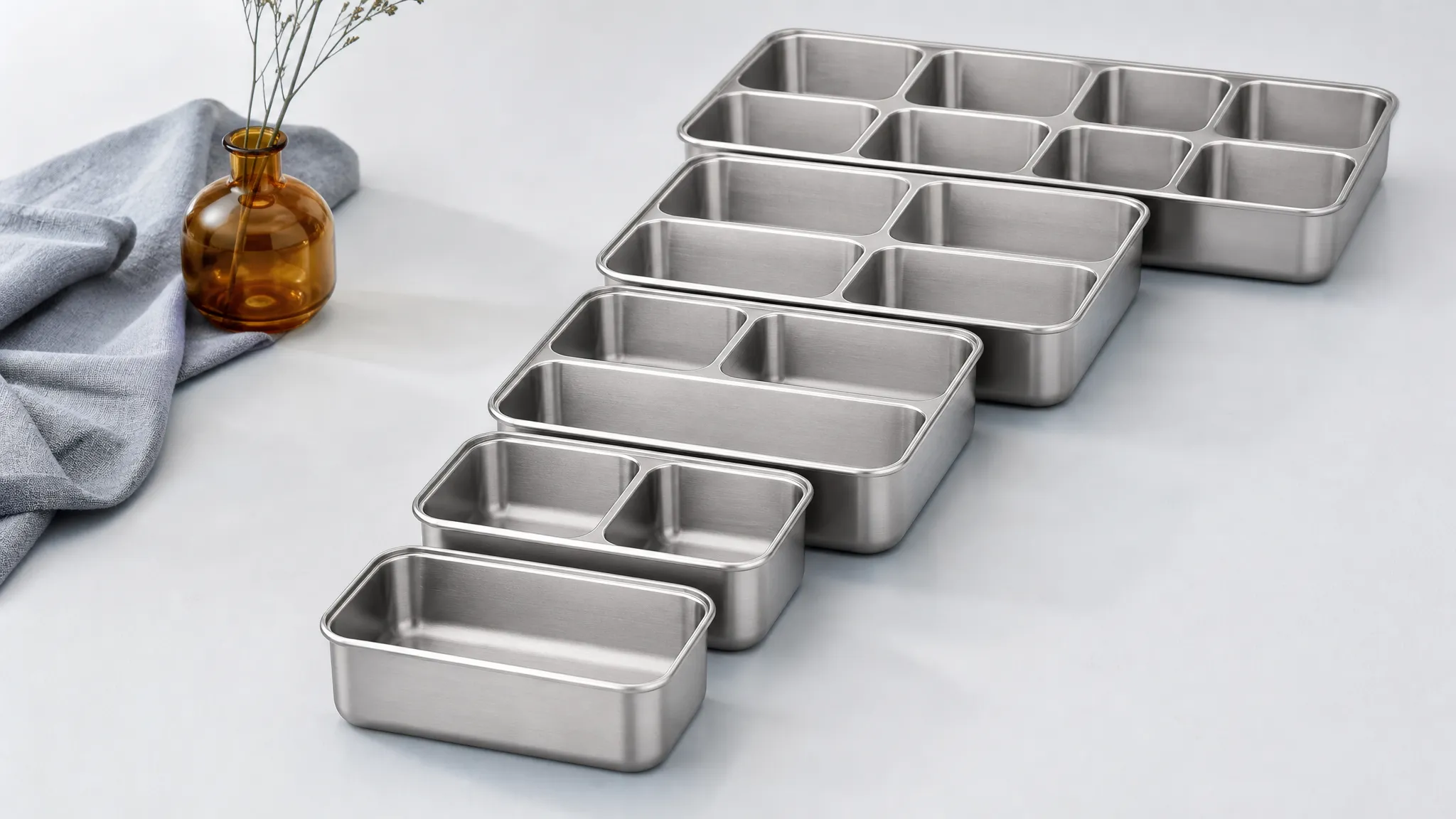
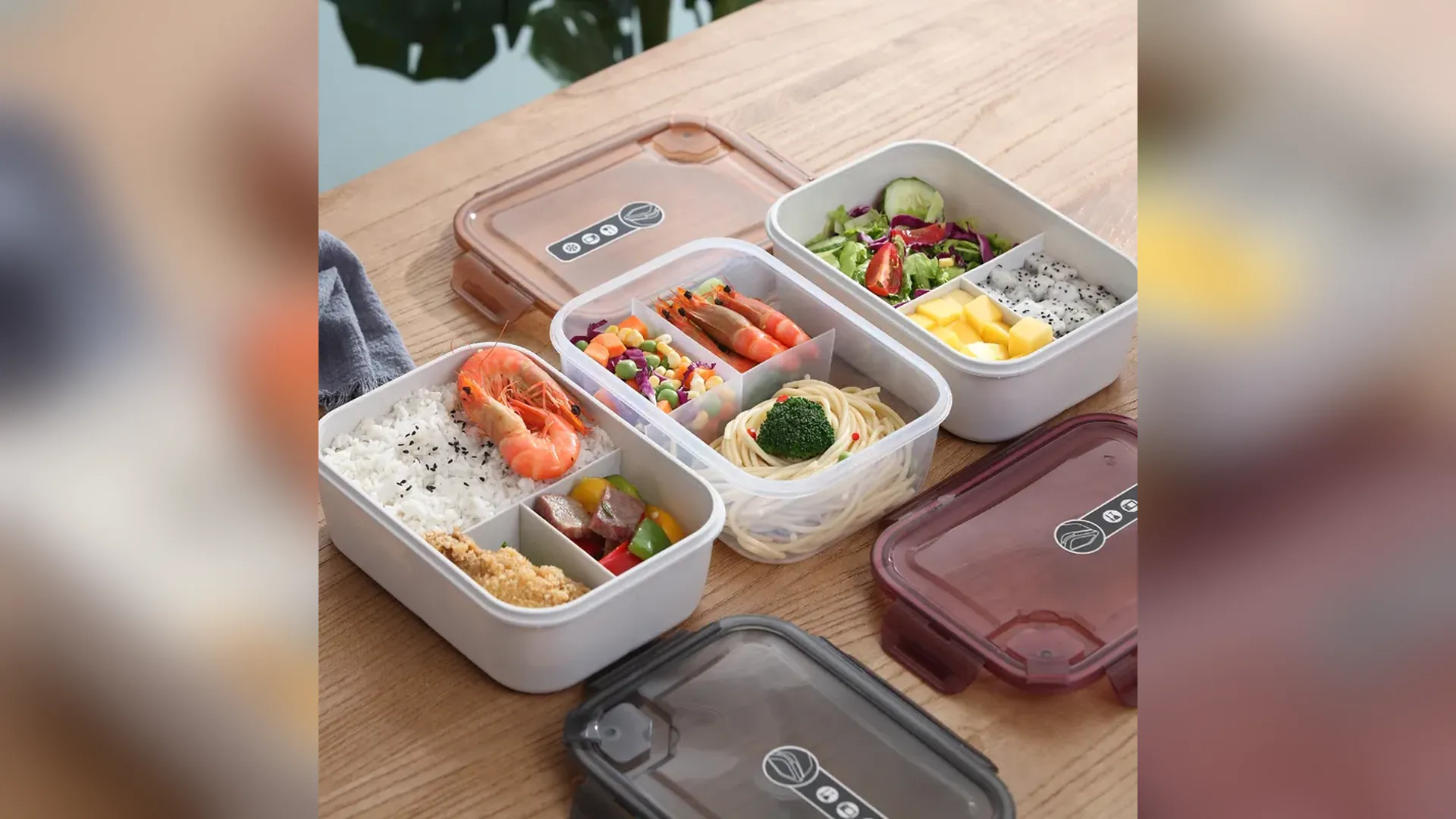
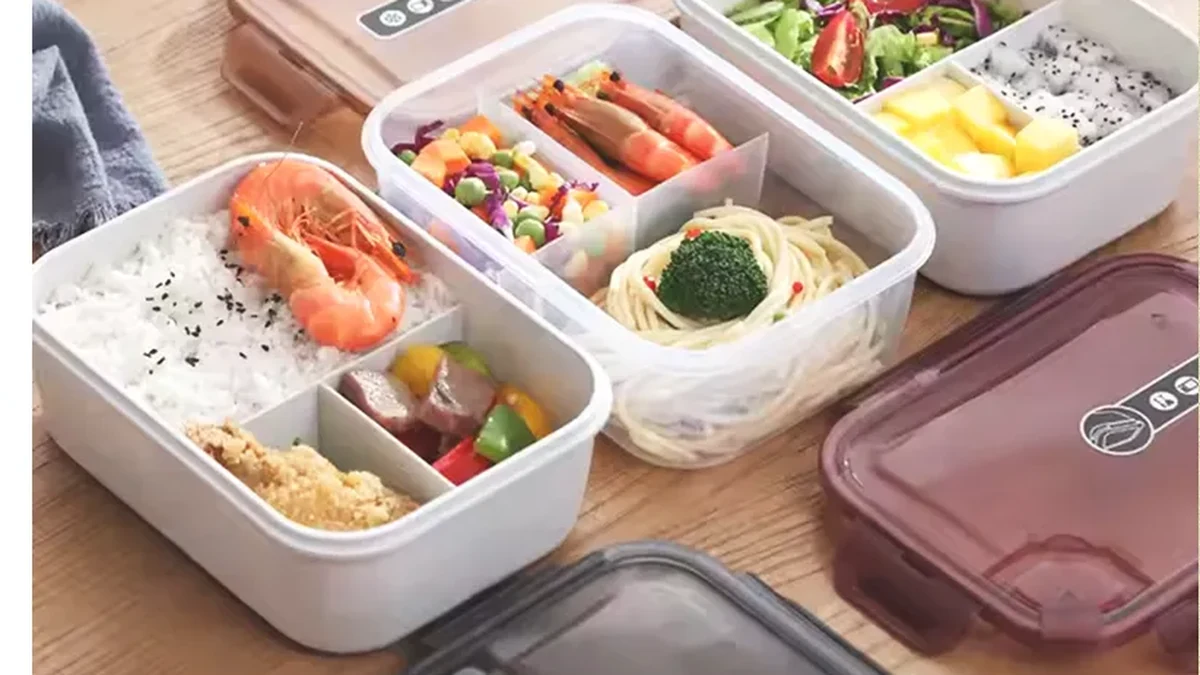
The capacity ladder: volume and compartment count are separate variables, and both belong in the spec. (Compartment counts in this illustration are indicative; the table above is the list of models the factory runs.)
Compartments, Seals and Lids: What Survives a School Year
Once the volume is fixed, the build is what decides whether the order is still usable at the end of the year. Three parts carry that load.
The compartment structure. A one-piece stainless tray is simple and robust; a removable tray that lifts out of a separate base is easier to clean but adds a part that can be lost or mixed up. For a group order, the question is not which is better in the abstract but which the site can keep together. Removable trays work well when the site controls the whole set and the cleaning is done centrally; they work badly when boxes go home with children, because parts migrate.
The seal. The leak-proof claim on a kids' lunch box is a claim about a soft silicone gasket sitting between a rigid lid and a rigid body. That means three things to specify: the gasket material, the pressure that closes it, and the lock that maintains that pressure. The factory's own kids' bodies pair a built-in sealing silicone ring with a four-side snap lock — the "four-snap" design is the part that keeps the pressure even around the rim rather than pinching it at one hinge. On a group order, write the seal and the lock into the spec together; a good gasket behind a single weak clip will weep. The leak-proof seal structure and sample-testing note is the deeper read on how that seal is built and tested.
The lid and the mesh of materials. Most of the boxes in this ladder are not one material. The body and inner tray are 304 stainless steel; the outer shell and lid are PP; the seal is silicone. That mix is deliberate — steel for the food-contact surface and rigidity, PP for a light and colourable lid, silicone for the part that has to deform to seal. It also means the compliance file (see below) has to cover each material, not just "the box". In the US, for example, polypropylene intended for food contact is dealt with under 21 CFR 177.1520, the section for olefin polymers, while the stainless steel and the silicone have their own bases — so a supplier's "food-grade" statement that names only one material is incomplete.
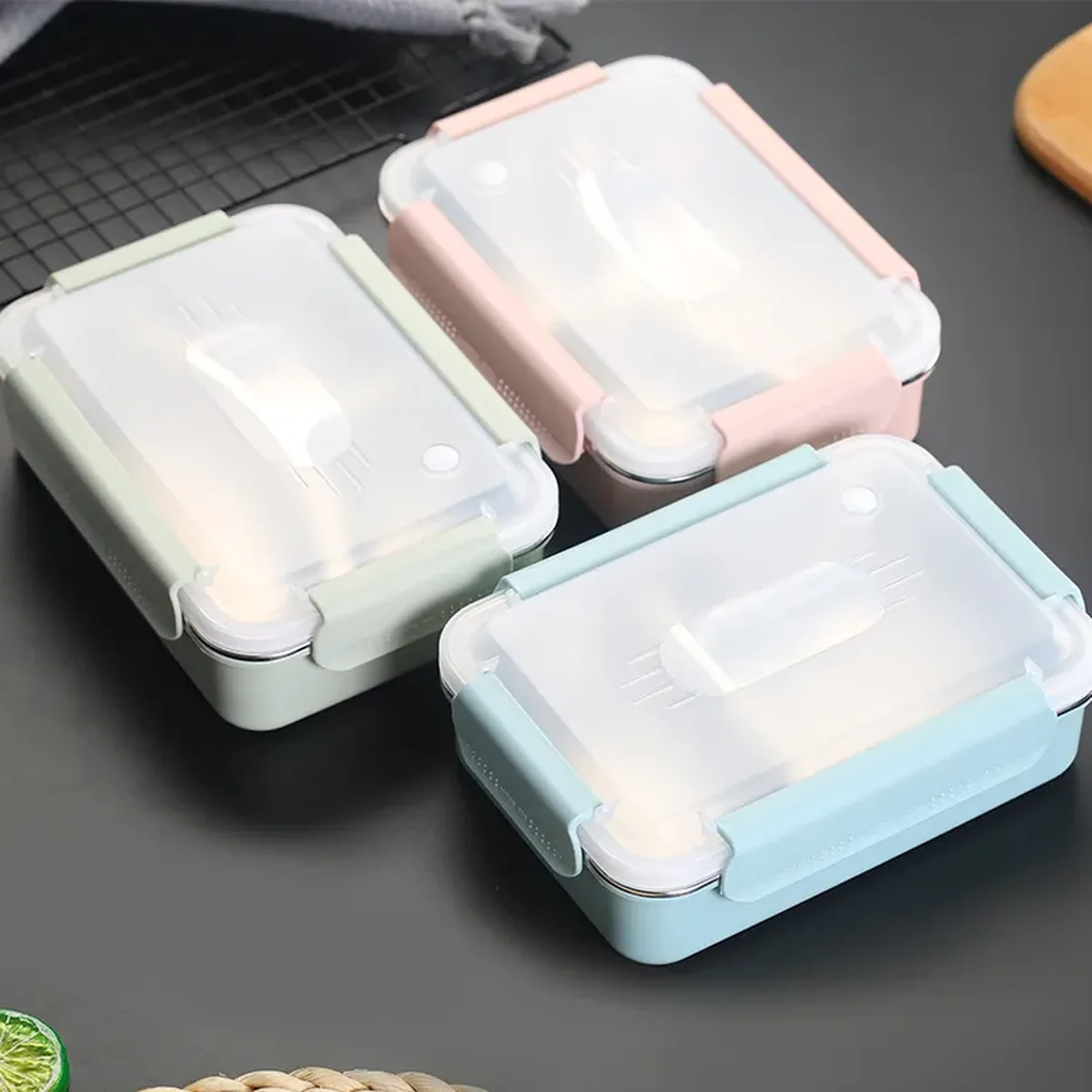
Steel body, PP lid, silicone seal: three materials in one product, so three materials in one compliance file.
The Cleaning Cycle Decides the Material Mix
This is the section most group-order buyers skip, and it is the one that decides how long the order lasts.
A childcare-centre dish machine is not a home dishwasher. Under the FDA Food Code (see the Food Code, § 4-501.110) a hot-water-sanitising machine is required to wash at 66–74 °C (150–165 °F), while a machine that sanitises chemically may run as low as 49 °C (120 °F) — and either machine will run many times a day. Which of the two the site has changes the box you specify, so write down what the machine does and then check each part against it.
Part | What an institutional machine does to it | What to specify |
|---|---|---|
304 stainless steel body/tray | Essentially unaffected by wash temperatures; the risk is staining, not failure | Confirm the wall is dishwasher-safe and that edges are finished, not sharp |
PP outer shell and lid | The first part to distort; repeated hot cycles plus heat-dry can warp a thin lid and loosen the lock | Ask for the lid's dishwasher rating and keep the site's dry-cycle temperature in the file |
Silicone seal | Survives heat but can harden or take on odour; the seal is a wear part, not a lifetime part | Treat the gasket as replaceable and order spares, or confirm it lifts out of the lid for hand-washing |
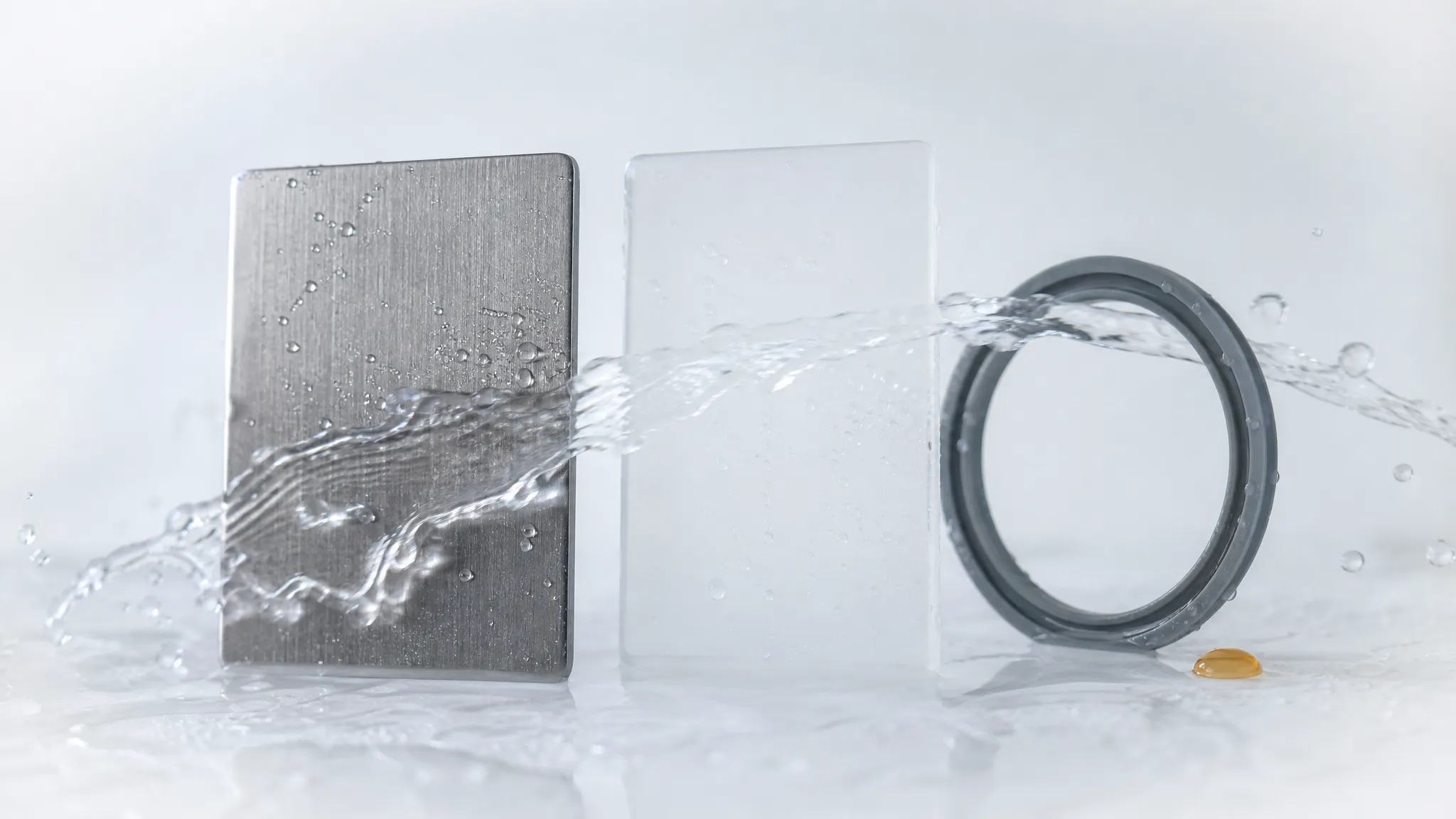
One box, three materials under one hot wash. Steel holds, polypropylene distorts first, the silicone gasket wears out — so the spec names all three.
The design conclusion is uncomfortable but useful: on a heavily machine-washed order, the steel is not the part that fails — the lid and the seal are. A buyer who specifies "stainless steel" and stops there has specified the one component that was never at risk. The specification that lasts a school year names the lid rating and the seal service life alongside the steel grade.
Two habits follow. First, if the site hand-washes rather than machine-washes, say so in the spec — a hand-wash site can take a thinner, lighter lid and a tighter seal, while a hot-machine site should bias toward a thicker lid and a lift-out gasket. Second, assume a drying and rotation routine: if 300 boxes come out of a machine at once, they need somewhere to dry and something to stop lids being mismatched. A rack cost is a fraction of a re-order, and it is the difference between a box service life measured in years and one measured in terms. The dishwasher-safe purchase specification sets out the same question for the plastic parts in more detail.
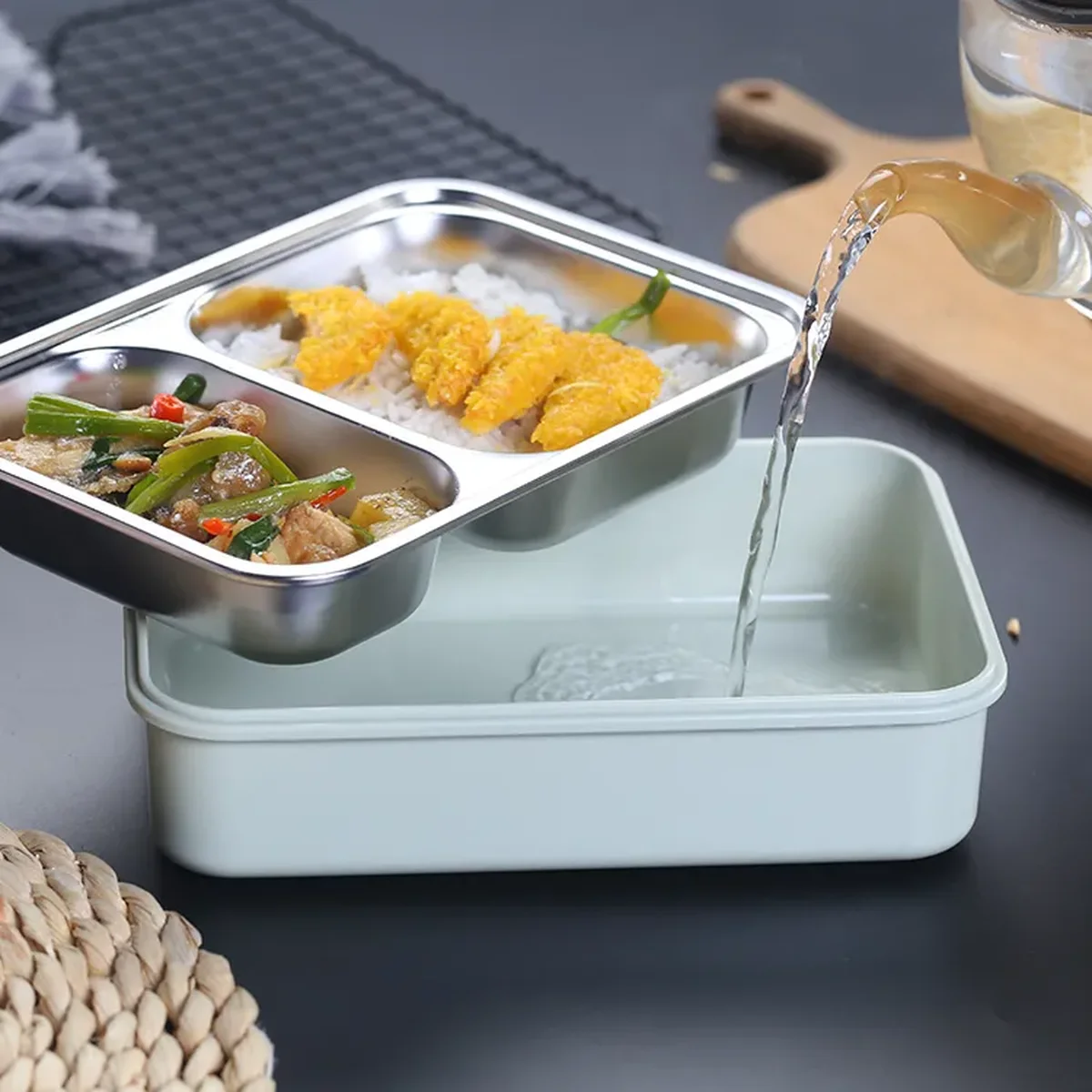
A leak demonstration rather than a wash: the tray is lifted clear while liquid is poured. Whether that seal is still tight in term three is exactly what the cleaning cycle decides.
The Child-Safety Reports to Ask For Before You Pay
Here is the part of a group order that most suppliers and most buyers handle badly. A lunch box for young children sits at the crossing of two compliance worlds: children's-product safety and food-contact materials. Both have documents attached, and both should be in the file before the invoice, not after an incident.
Ask for the documents, and ask the supplier to name the exact standard, the test house and the date — not to send a page of logos.
Document | What it is | Why a group buyer asks |
|---|---|---|
Children's Product Certificate (CPC) | A written certification, required in the US for a children's product subject to a children's-product safety rule — section 14 of the CPSA, codified at 16 CFR part 1110 — based on testing at a third-party, CPSC-accepted laboratory | It is the one document that ties the product to the rules it was tested against — see the CPSC's Children's Product Certificate page |
Total-lead test report | A test of accessible components against the total-lead limit; in the US, more than 100 ppm lead in an accessible component is treated as a banned hazardous substance (15 U.S.C. § 1278a) | A children's product is asked for this by importers and, increasingly, by schools — the CPSC's Total Lead Content page states the limit and the certification expectation |
Phthalate test report | A test for restricted phthalate plasticisers in children's products | The lid and any soft part are where this applies; the CPSC's phthalates guidance sets out the regime |
Food-contact compliance statement | A statement, per material, that the food-contact parts meet the destination market's rules — e.g. 21 CFR 177.1520 for PP in the US, or EU Regulation 10/2011 for plastics in the EU | Because "food grade" without a named regulation and a named material is not a document |
Drop / impact test report | A test of the assembled box dropped from a defined height, where the buyer's own spec or the destination market requires it | A group order is used hard; a documented drop test is how you decide whether a thin wall is acceptable. If the item is regulated as a toy, the CPSC's ASTM F963 chart sets out which sections of the toy standard call for third-party testing |
Two honest cautions. Whether a particular bento box is regulated as a "children's product" — or as a toy — is a determination the buyer makes with their importer or regulatory counsel, not something a supplier can assert for you. Ask for the documents and read them against your destination market; do not accept a logo sheet as a substitute. And note what the table is not: it is a list of questions to put to a supplier, not a statement that any box holds any certification. A factory can only hand over the reports its products have actually been tested to.
The wider question of which documents to demand from a food-container factory — and how to read each one — is covered in the factory document-request guide. If the order's steel body is the part you are unsure about, the 21 CFR 177 stainless-steel food container note goes into the steel side of the file.

A safety file is a set of named documents, not a page of logos — name the standard, the test house and the date.
Group-Order Arithmetic: Cartons, Weight and Cost Per Child
A group order is a logistics problem wearing a product's clothes. Before you compare prices, do the carton arithmetic, because the freight and handling cost often moves more than the unit price does.
Using the same real model records:
Reference | Pieces / carton | Carton (cm) | Gross weight / carton | Carton volume (m³) |
|---|---|---|---|---|
6536 | 24 | 47 × 34 × 47 | 11 kg | 0.075 |
6533 | 24 | 50 × 36 × 47 | 13 kg | 0.085 |
6523 | 24 | 54 × 32 × 50 | 11.5 kg | 0.086 |
6522 | 24 | 54 × 32 × 60 | 14.5 kg | 0.104 |
6521 | 18 | 47 × 31 × 73 | 15.2 kg | 0.106 |
Per the factory's published packing records; confirm the packing scope and the unit/carton basis on the quotation before you commit freight.
Read it against a real classroom. A 40-child cohort at one box each is 40 boxes: that is two cartons of any of the 24-piece bodies, or three cartons of the 18-piece five-compartment body. Two cartons run from about 22 kg to 29 kg depending on which body you take — and if you take the 18-piece body then it is three cartons, about 46 kg, more than double the lightest case. That is a number worth having before you promise a site that the delivery will fit through its door.
The same table gives you cost per child without anyone quoting a price. Take the delivered unit cost (the price plus the freight share), and divide the freight share by the pieces per carton: a body that packs 18 to a carton carries a higher per-piece freight share than one that packs 24, unless the carton is unusually efficient. That is why the five-compartment box can look cheaper per unit and lose on landed cost — the larger box, and its lower piece count, is doing the damage in freight, not in manufacturing. Run the arithmetic before you assume the bigger box is the better buy.
MOQ is the other number to settle early. On this line the standard minimum order quantity is 2,000 pieces per model, which is a fraction of a school year for a district and far more than a single site needs — which is exactly why a group order is usually placed by a co-op, a distributor or a district rather than by one preschool alone. Combining several sites into one order is what turns a 2,000-piece MOQ from a barrier into a discount. The lunch box quality-check guide picks up where the arithmetic leaves off, on inspecting the actual delivery.
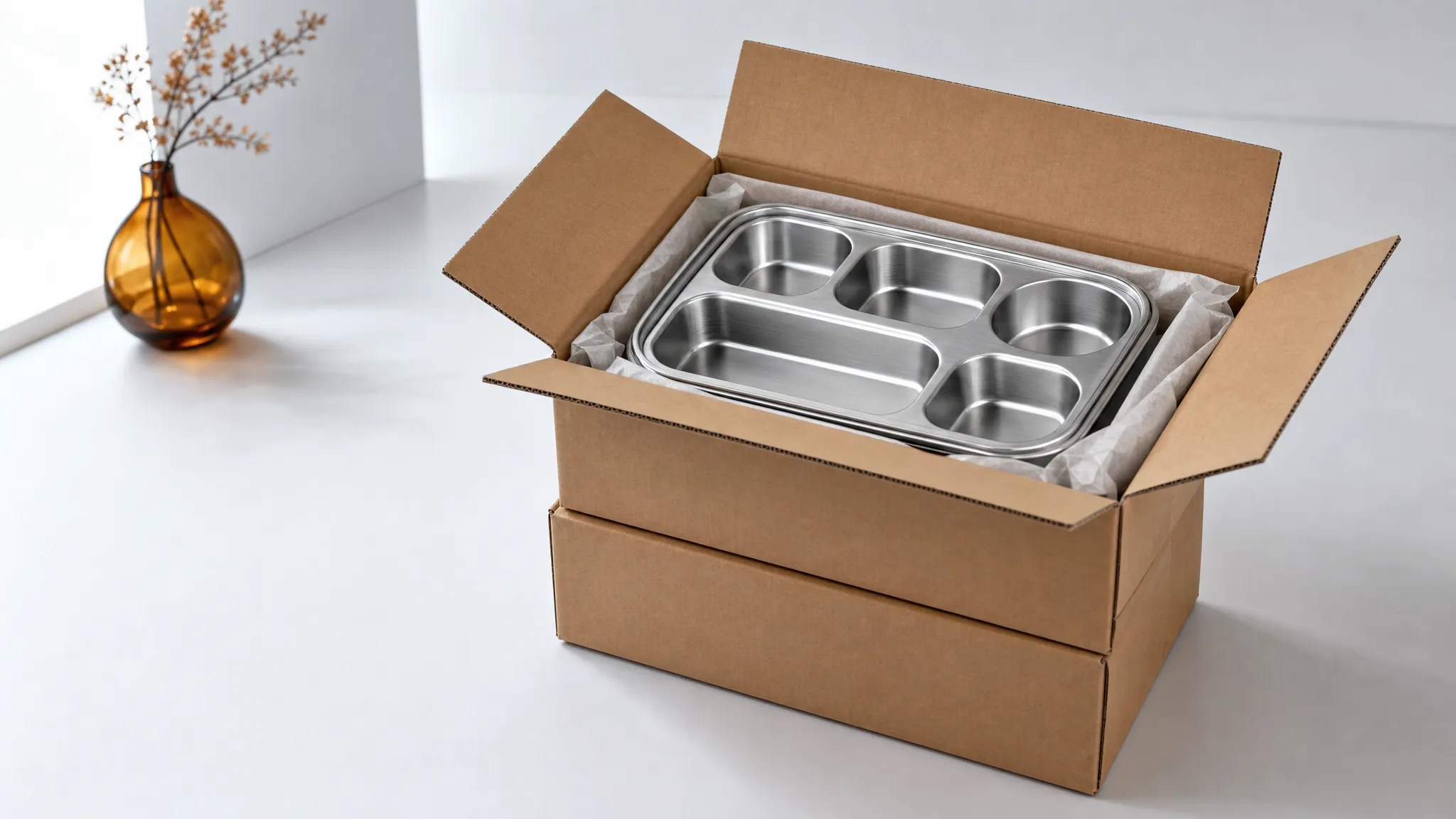
Forty boxes is two cartons — or three, if the body packs 18 to a carton. Do that arithmetic before you compare prices.
From Specification to Sample: What to Sign Off Next
A group order is decided by a four-line spec, a sample and a signed sample. Here is the four-line spec, filled in:
- Capacity band and reason — e.g. "800–850 ml, two compartments, for the three-class preschool group; reason: smallest body that still separates a main from a side, lid openable by the youngest cohort."
- Build and seal — e.g. "304 stainless interior tray, PP lid, silicone gasket, four-side snap lock; gasket lift-out for hand-washing."
- Cleaning condition — e.g. "site runs a hot institutional wash; lid rating and dry-cycle temperature recorded; spare gaskets ordered."
- Safety file — e.g. "CPC, total-lead and phthalate reports, per-material food-contact statement; documents named by standard, test house and date."
Then hold a sample against those four lines before production, and sign the sample you approved. A specification is only as good as the object it was checked against — and on a group order, the sample is the last cheap place to find out that the four-year-olds cannot open the lid.
If the order is a mix of models rather than a single body, group the spec by age band and let the supplier quote the mix; if it is a single body across the whole site, keep to one model so the spares and the gaskets stay interchangeable. Either way, the boxes you buy are chosen by the spec you wrote, not by the one that looked best in a photo. The factory's own PP lunch box line, for sites that want a lighter and lower-cost body, is described in our plastic lunch box line note.
This page is written from the buyer's side of the table. The plant behind it is Xinghui Plastic, an injection-moulding factory in Jieyang, Guangdong (the address the site gives in its own footer) that runs PP and 304 stainless houseware lines for importers, brands and school suppliers; the site states it was founded in 2000, covers 15,000 m² and runs 30+ injection moulding machines. If you are writing a group-order spec and want a sample quoted against it, send the four lines above with your quantities and the site's cleaning conditions through the factory's custom-solutions enquiry — that is enough to start.
Continue reading
Related sourcing guidance
More practical context for your food storage container sourcing conversation.
Discuss your product range
Need help selecting or customising containers?
Share the product type, market and sourcing requirements with the Xinghui team.