
Lunch Boxes & Bento
Backwards From the Event Date: A Working Calendar for a Branded Container Giveaway — Artwork Freeze, Sample Sign-Off, Production, Sea vs Air
A backwards calendar for a branded container giveaway: artwork freeze, sample sign-off, production, and how the sea-versus-air call moves your deadline.
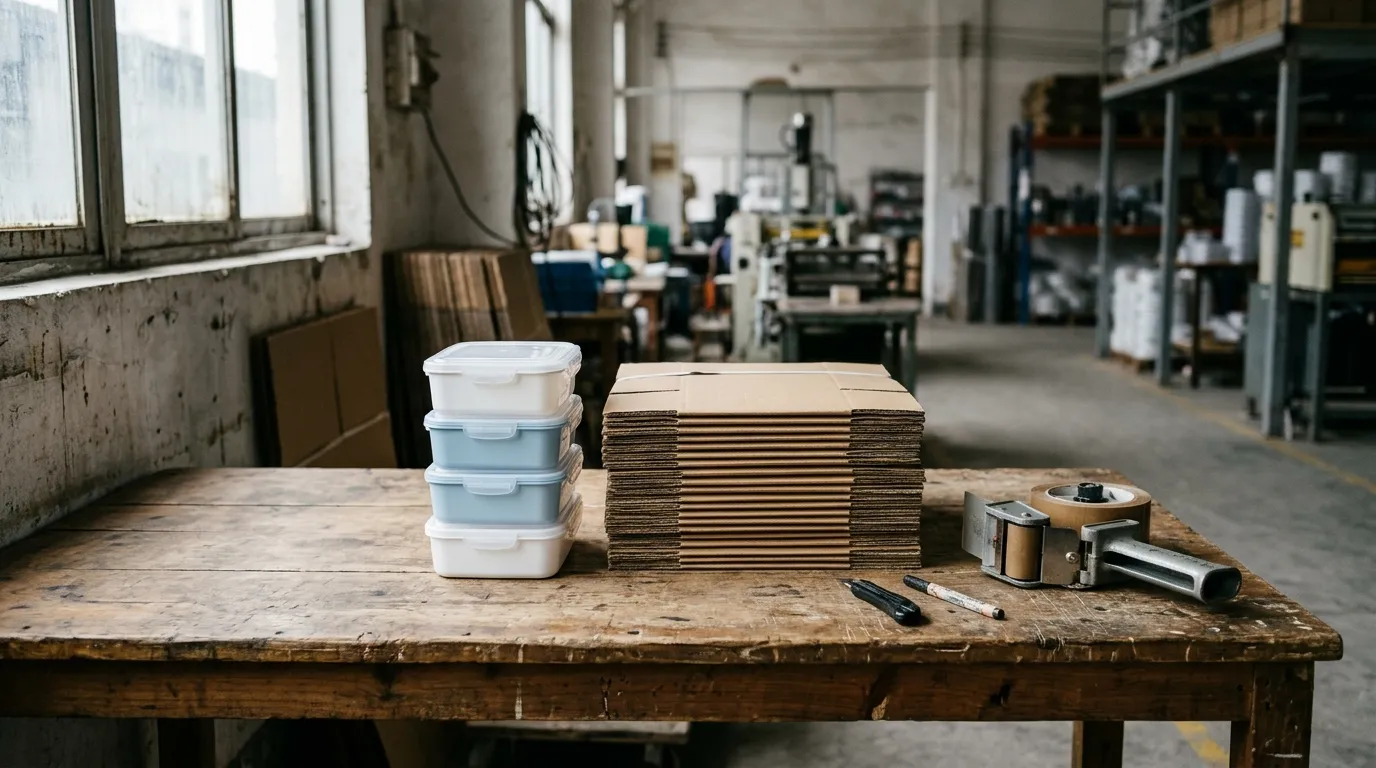
A branded container giveaway is the one kind of promotional order where the date is decided before anything else about the project exists. The conference is on the 14th. The site opening is the first Monday of the quarter. The distributor's annual meeting has been in the calendar since last year. Whether the program is one of the promotional giveaways for trade shows that fill a spring calendar or a single plant opening, the shape of the problem is the same. Nobody in that chain can move it, and nobody in that chain is going to accept "the sailing was full" as a reason.
So the only useful way to plan one is backwards. Start at the day the box has to be in a recipient's hands and subtract, one gate at a time, until you arrive at a date on which you must have a signed artwork file. That subtraction is the promotional product production timeline this page is about — not a table of typical lead times, but a working calendar in which every date has an owner, a deliverable and a consequence for missing it.
One warning before the numbers. Most of what is written about promotional products assumes the product already exists in a warehouse and the only open question is how long the printing takes. That assumption is wrong for a container made to your specification on a mold in Jieyang, and it is wrong in a way that quietly costs four to six weeks. The gap between those two models is what the rest of this page works through.
The date that cannot move, and the four that can
A giveaway program has five dates in it. Exactly one of them is fixed, and it is not the one buyers usually put at the top of the plan.
The in-hands date is the day the product is physically with the recipient — on the chair at the conference, in the welcome pack, in the hands of the person who came to the opening. It is not the day it leaves the factory, not the day the ship sails and not the day it clears customs. Those are all earlier, and each of them is derived from it.
The four derived dates are where the project is actually managed. Artwork freeze is the last day on which a change to your logo, its position or its color costs nothing. Production complete is the day the goods are packed and the cartons are marked. The ship-by date is the last day the goods can leave the factory and still make the sailing your forwarder booked. And the container cut-off is the carrier's gate time, which does not negotiate with anybody.
Date | Who fixes it | What it actually means | What it costs to move it late |
|---|---|---|---|
In-hands date | Your marketing calendar | Product in a recipient's hands, at the venue | The whole point of the program; not movable |
Artwork freeze | You, through one named approver | Last day a logo change is free | Restarts the proof; on a printed part it restarts the sample |
Production complete | The factory's schedule | Goods packed, cartons marked, ready to load | Pushes the booking, and the booking is the expensive miss |
Ship-by date | You and your forwarder | Last day the pallet can leave the factory | Either the next sailing (a week or more) or an air quote |
Container cut-off | The carrier | The port's gate close for that vessel | A missed vessel is a missed vessel, whatever the reason |
Read the third and fourth rows together, because that is where the money is. A factory can finish production on time and still miss the launch, because production complete and ship-by are different dates and the gap between them is the inspection, the carton marks and the booking. A buyer who tracks only the factory's completion date is tracking the wrong one of the two.
There is a second structural point that most first-time buyers miss. The five dates are sequential, not parallel, and four of the five waits happen on your side of the table, not the factory's. The base sample sits in a courier van. The artwork sits in a designer's queue. The signed approval sits in someone's inbox. The deposit sits in a finance approval. The factory's own production window is one phase out of five, and it is rarely the phase that slips — which is why "how long is your lead time?" is the wrong first question and "which of these dates are yours and which are mine?" is the right one.
Why a branded lunch box is not a stock promotional product
The promotional-products industry has a well-developed vocabulary for the first kind of order: stock item, decoration, proof, in-hands. That vocabulary was built around decorated apparel and branded lunch boxes pulled from a shelf, and it holds up well there. Its published ranges cluster around two to six weeks from order to delivery, and the fast end of that range is real — for a warehouse in Ohio with a pad printer in the next building.
Those pages are also unusually clear about where their clock starts. Promo Gear, an Australian promotional products distributor, publishes a standard turnaround of around four weeks from signed artwork approval on stock items, around six weeks on fully custom ones, and about two extra weeks per pre-production sample (its turnaround note). The convention behind those numbers runs through the trade: a quoted production figure counts business days, and weekends, plant holidays and the proofing step all sit outside it. Those statements are correct, and they are correct about a different business than the one this page describes.
If a catalog of custom promotional products decorated in a domestic warehouse is what you actually need, the distributors that own that search will serve you faster than a factory can, and nothing here argues otherwise. The case this page covers is the other one: the product does not exist yet, and it has to be made, printed, packed and moved before the date.
Compare the two models on the four things that set a date:
The base product. A stock promo item is in a bin. A branded lunch box in stainless steel or PP is molded, and the mold may be running somebody else's order when yours is confirmed. Nine of our published lunch box records state a minimum quantity, all nine state 2,000 pieces, and eight of the nine are stainless bento models — which means the first commercial question is not "how long does printing take" but "which mold slot are we buying".
The decoration surface. A pen barrel and a flat steel tray do not accept the same processes. On this product family the material line in the records says what it says, and nothing more: the eight stainless bento records all read PP plus silicone plus stainless steel, only five of them name the grade, and the grade they name is 304. A model such as BX1051 is listed as PP with silicone and no steel at all. That single field decides which decoration methods are even available, and therefore what the sample loop looks like.
The carton. A stock promo item ships in a master carton somebody else designed. A manufactured container's carton is set by how the part nests, and it decides whether your 2,000 pieces are one pallet or twelve cubic meters. That arithmetic is worked through below, because it is the number that picks your freight mode.
The paperwork. An imported food-contact article carries a document set that a domestic decorated item does not. Asking for it after artwork is frozen is asking for it at the worst possible moment.
None of that makes the imported route slow by definition. It makes it scheduled, in a way that local decoration is not, and the schedule is knowable in advance if you ask for the right things. If you want the product-level version of this decision — how many pieces a gift unit should contain, where a logo can physically go, and what the carton math does to cost per gift — that is a separate article on meal prep container sets as corporate gifts, and if your giveaway is a pantry canister set rather than a lunch box, the equivalent piece-count and retail-box decision is covered in branded kitchen canister gift sets for member rewards. This page stays on the calendar.
The artwork freeze is the gate that slips first
Ask anyone who has run five of these programs which date they missed, and the answer is almost never production. It is the artwork.
The reason is structural. Artwork is the last thing anybody thinks about, because it feels like a file rather than a manufacturing input, and because the people who own it — brand, marketing, sometimes an agency — are not the people who own the purchase order. So it arrives late, and it arrives in a state the factory cannot use: a JPEG pulled from a website, a logo with the wrong clear space, a color specified as "our blue" in an email.
"Print-ready" needs a definition you can put in the brief, and it is narrower than most brand guidelines suggest:
- Vector outlines, not an image. A raster logo will be traced by somebody at the factory, and the trace is the version that ends up on 2,000 lids.
- One file per color, on named layers or as named spot colors, with the color reference given numerically.
- A placement drawing: which face, the distance from each edge, the maximum and minimum size, and what happens on the curved part of a lid.
- One named approver. Not a committee. A committee approves in rounds.
Then the harder half: the freeze date has to be a date somebody can be held to, and the only thing that makes it real is a consequence. The moment the industry calls artwork approval is the moment a design file becomes a manufacturing instruction; everything after it is a change order, whether or not anyone uses that phrase. The consequence is that a change after freeze restarts the proof, and on a printed part it also restarts the sample, because the sample you signed had the old logo on it. Two restarts in a five-week production window is how a program ends up air-freighting half its quantity.
The four decoration methods buyers ask about most often do not fail for the same reasons, and they do not demand the same artwork. This is not a ranking, and it is not a guide to the tool: how a logo sits against the gate position, the parting line and the weld lines on a molded part is covered in our review of four mold design decisions. What follows is a table of what each method asks of the file and of the calendar.
Method | Where it can go on this product family | What the artwork has to be | What it adds to the sample loop | Where it usually fails |
|---|---|---|---|---|
Heat transfer | PP lid or PP body, flat or gently curved | Vector, spot colors separated, film-ready | A printed film has to be made before a decorated sample exists | Very fine reverse-out lettering closes up |
UV digital print | Flat PP areas, on a surface the printer has prepared | Vector or high-resolution raster, CMYK plus white | No film, but the color is matched per run | Adhesion on PP if the surface is not treated first |
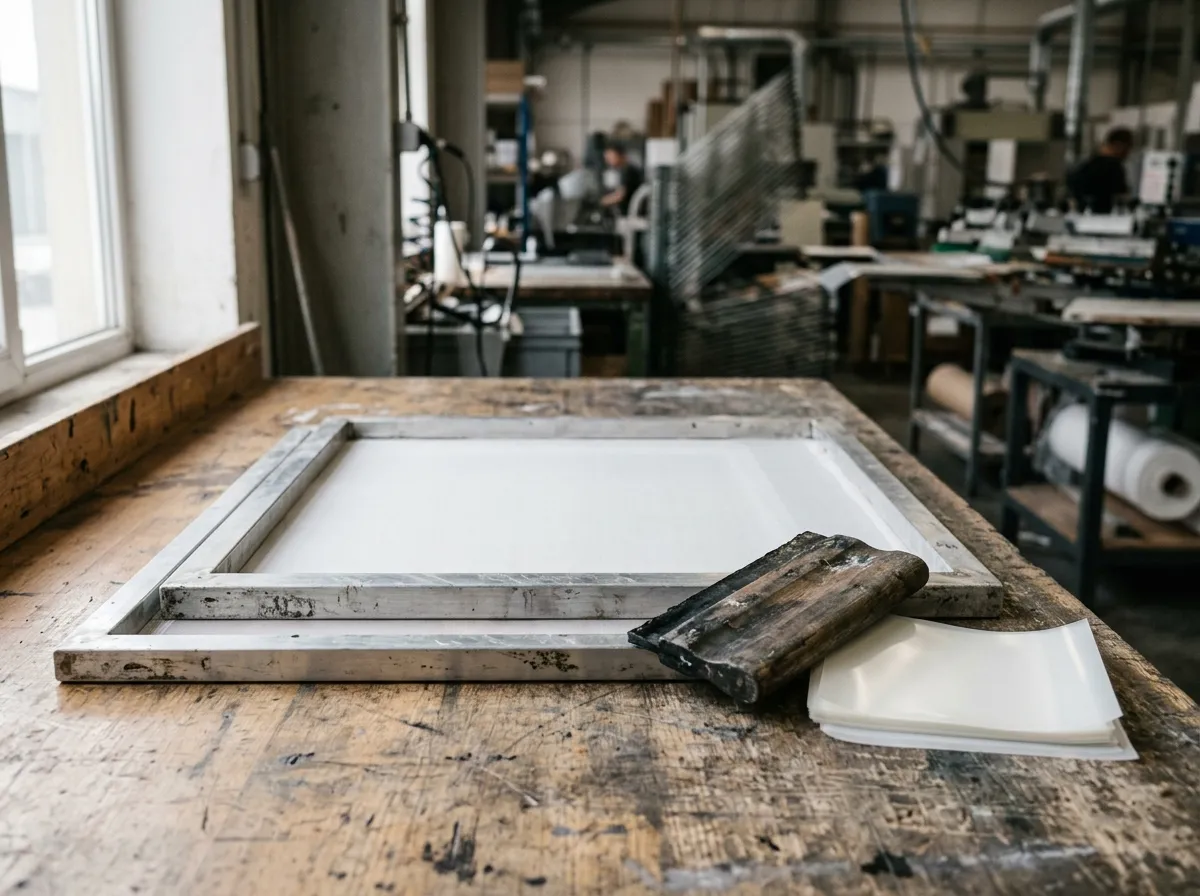
Silk screen (screen printing) | Flat PP panel, one screen per color | Vector, one layer per color, no gradients | A screen has to be burned for every color | Halftones and soft gradients disappear |
Laser engraving | The stainless steel tray only | Vector outlines only; no color, no halftone | No consumable, but a fixture has to be made | Cannot mark PP at all; the mark is tone-on-tone |
Two practical consequences follow from that table, and they are the ones that change dates.
The first is that your artwork decides the method more often than your preference does. A four-color photographic logo rules out silk screen on cost and rules out laser engraving entirely. A single-color mark on a brushed steel tray is a laser job that never needs a consumable. The choice should be made before the sample is ordered, not after it is rejected.
The second is that PP has low surface energy, which is why printing on it involves a surface preparation step — usually flame or plasma treatment — before the ink goes down. You do not need to specify the treatment. You do need to ask whether it happens, because a supplier who has never been asked will sometimes skip it, and the failure does not show up until the print rubs off in a recipient's bag three weeks after the event. The question belongs in the RFQ, and it belongs before the sample, because a sample printed without treatment can pass a visual check and still fail in use.
Three different things get called "a sample"
Sample loops are where calendars die quietly, because three different objects share one word and only one of them is on the critical path.
A photo or 3D sample is a rendering or a photograph of an existing model in a stock color. It costs days, sometimes hours, and it proves shape and proportion. It proves nothing about your logo, nothing about the color match and nothing about the seal. Our published records list a sample lead time of three days for the PP lunch box model BX1051, and that number is about this first kind of sample — an undecorated unit, not a decorated production-representative piece.
A pre-production sample is a physical unit made with your artwork, in your color, from the production tool. It is the only sample that can answer the questions that matter: does the logo sit where the drawing says, does the color match the reference under daylight, does the lid still seal once the decoration is on it, does the print survive a dishwasher cycle if you intend to claim that. It is also the slowest, because it is a small production run with a setup change at each end.
A golden sample is the signed reference unit that stays with the factory — the physical definition of what "correct" means for the rest of the run, and the object an inspector compares against. It is not a decision, it is a record, and programs that skip it are the ones that argue about a color four weeks later with nothing to compare.
The calendar consequence is simple and routinely missed: the pre-production sample is a courier event, not a production event. It arrives in a box, on a van, and that transit is three to five days on most lanes regardless of how fast the factory was. A buyer who approves a sample on the day it lands has lost nothing. A buyer whose sample sits on a desk for a week over a public holiday has moved the entire program by a week, and the factory will be blamed for it.

What to check, physically, on the day the sample lands — this is the list that separates a sign-off from a glance:
- Position against the placement drawing, measured, not eyeballed.
- Color against the reference, in daylight and under office light, because they differ.
- Edge definition of the smallest element in the artwork — the place where a print method fails first.
- The seal, with the lid closed and the box inverted over a sink, if leakage is part of your claim.
- The steel marking, on a laser-engraved part: is it the tone you approved, or did it come out darker on a different surface finish.
- Abrasion, by rubbing the decorated area with a thumb and then a cloth, before you sign anything.
Then sign, keep one unit, and send one back to the factory as the golden sample. The mechanics of that reference unit, and what it protects you against during mass production, are set out in golden sample and mass production. If your concern is the commercial side of the sample loop — who pays for it, whether the fee comes back off the order, and what the courier account should be — that is covered in sample fees, courier charges and credit.
Working the calendar backwards: two reference schedules
The phrase buyers type is promotional products lead time, and what comes back is almost always a decorating window — the days between proof approval and dispatch. A decorating window is not a calendar: it contains no artwork freeze, no deposit, no cut-off and no transit. Here is the calendar itself, with all four of those in it.
Read the numbers as reference assumptions, not as our quoted lead times: they are the planning values this page uses to show the arithmetic, and every one of them must be replaced by a date your supplier puts in writing. Our published records carry a sample lead time and a minimum quantity; they do not carry a bulk production lead time, and a supplier who will not give you one in writing has told you something useful.
Two routes, because the route is the single biggest variable in the whole schedule:
Stage | Sea route (weeks before in-hands) | Air route (weeks before in-hands) | Owner | Closed by |
|---|---|---|---|---|
Brief freeze | W-18 | W-13 | You | One page: date, city, quantity per model, gift unit |
RFQ out, quotes back | W-17 | W-12 | You | Written dates, not lead times |
Base sample in hand | W-16 | W-11 | Factory, then courier | Physical approval of model and color |
Artwork submitted | W-15 | W-10 | You | Vector files plus a placement drawing |
Decorated sample shipped | W-14 | W-9 | Factory, then courier | A real unit with your logo on it |
Sample sign-off = artwork freeze | W-13 | W-8 | You | Signed sample plus a retained golden sample |
PO issued, deposit cleared | W-12 | W-7 | Your finance | Money in the factory's account |
Production and decoration | W-12 to W-8 | W-7 to W-3 | Factory | Packed cartons, marked |
Inspection and carton marks | W-7 | W-2 | Third party | Inspection report you have read |
Booking, cut-off | W-6 | W-2 | Forwarder | Container loaded, or air waybill issued |
Transit | W-6 to W-1 | W-2 to W-1 | Carrier | Arrival at port or airport |
Customs release, inland delivery | W-1 | W-0 | Broker | Goods at the venue |
The first thing to notice is that air freight buys you five weeks, not eight. The two calendars differ almost entirely in the transit block, plus one week that only the sea route spends: sea inspects at W-7 and books at W-6, while the air route does both in W-2. Everything else is the same sequence, because production and decoration take the same five weeks whether the goods will fly or sail. A buyer who assumes air halves the schedule will build a calendar about four weeks short and will discover it at the sample stage.
The second thing to notice is where the slack is. The sea calendar holds roughly two weeks of it, spread across production and transit, and it is deliberately not at the front. Slack placed before the artwork freeze gets consumed by the artwork. Slack placed between production complete and cut-off is what absorbs an inspection finding, a reprint of a carton mark, or a vessel that gets rolled to the next week. The air calendar holds about one week, all of it at the end, which is why a program that converts to air is buying the transit difference and no buffer.
The third is the deposit. Production does not start when the PO is issued; it starts when the money lands, and international transfers between banks in different time zones routinely lose two to four working days. The terms themselves — what percentage, what triggers the balance, and what to do when they do not match what you expected — are worked through in payment terms with a Chinese houseware factory.
One more calendar note that is specific to this product class: 2,000 pieces is the minimum recorded on nine of our lunch box records, and a minimum is counted per model and per color, not per order. If your 2,000 pieces are split across four models in three colors, you do not have one order of 2,000. You have up to twelve smaller runs, and the factory will schedule them accordingly. How those minimums get counted, and how to structure a mixed order so the count works in your favor, is set out in how MOQ gets counted on a mixed order.
The mold is not yours alone
Production time is quoted as a number of days, and it is experienced as a slot in a queue. Those are different things, and the difference is the mold.
A stainless bento box is a set of molded parts plus a steel tray, which means its schedule is set by machine time on a tool that other orders also use. When a factory quotes a production window, it is usually counting from the week it loads your tool, and the week it loads your tool depends on what is in front of you. That is not a trick; it is what a shared asset means. It is also why the useful question is not "what is your lead time" but "which week is my mold scheduled, and what would move it?"
Color is the second constraint and it behaves the same way. A color change is not a setting; it is a run, with a purging step at each end. Three colors in one order is three runs, and a color that has to be matched to a Pantone reference is a fourth step before any of them. This is also why "can you do a custom color" and "can you do a custom color on 800 pieces" have different answers.
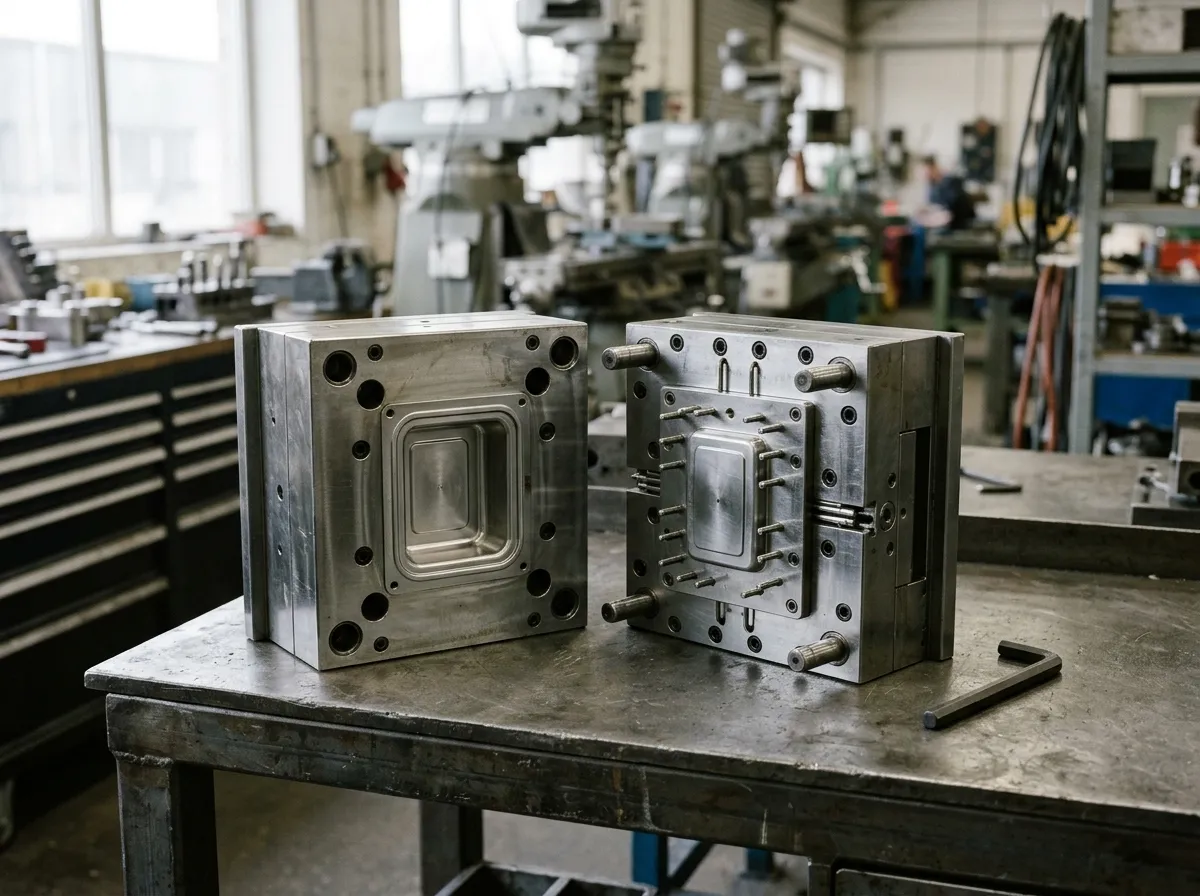
If your giveaway needs a shape that does not exist in any catalog, the mold is a project of its own with its own weeks, and it belongs before the calendar on this page starts — the tooling decision and its cost structure are covered in reading an injection mold quote. And if the giveaway is a thin-wall container where the grammage is being negotiated down to save cost, remember that wall thickness also sets cycle time, which is to say it moves this calendar: thin-wall molding and grammage works that trade-off through.
Turning 2,000 pieces into cubic meters
A quantity is not a shipment. Between "2,000 pieces" and a freight decision there are four numbers — pieces per carton, cartons, cubic meters and chargeable weight — and they are all derivable from the packing data on a product record, if the record has it.
Here is the arithmetic for six models from our published records at 2,000 pieces each. Carton counts are rounded up, because you ship whole cartons. Volumetric weight uses the 6,000 cubic centimeter per kilogram divisor that air pricing conventionally applies, and chargeable weight is the greater of actual and volumetric.
Model | Capacity | Pcs per carton | Cartons for 2,000 | Cubic meters per carton | Total cubic meters | Gross weight | Chargeable weight (air) |
|---|---|---|---|---|---|---|---|
6521, 5-compartment | 1,400 ml | 18 | 112 | 0.106 | 11.9 | 1,702 kg | 1,985 kg |
6522, 4-compartment | 1,100 ml | 24 | 84 | 0.104 | 8.7 | 1,218 kg | 1,452 kg |
6523, 3-compartment | 800 ml | 24 | 84 | 0.086 | 7.3 | 966 kg | 1,210 kg |
6527, 2-compartment | 1,300 ml | 24 | 84 | 0.146 | 12.2 | 924 kg | 2,036 kg |
6533, kids | 1,100 ml | 24 | 84 | 0.085 | 7.1 | 1,092 kg | 1,184 kg |
BX1051, PP lunch box | 1.3 L | 72 | 28 | 0.172 | 4.8 | 400 kg | 804 kg |
Two rows in that table are worth more than the rest of it.
Model 6527 and model BX1051 hold almost the same capacity and ship two and a half times apart. A 1,300 ml two-compartment stainless box ships at roughly 6.1 liters of carton space per piece; the 1.3 L PP lunch box ships at 2.4 liters per piece, because 72 of them fit in a master carton against 24. At 2,000 pieces that is 12.2 cubic meters against 4.8 — and 2,036 kilograms of chargeable weight against 804. The recipient sees two containers of the same lunch. The freight sees a small container and a large one.
Model 6527 also illustrates why you read the record rather than the summary. Its published record carries two box fields — one listed as Size at 49 × 36 × 45 cm, and one listed as Carton Size at 51 × 46 × 62 cm. Both cannot describe the same master carton, and the difference is not academic: at the larger figure the order occupies 12.2 cubic meters, at the smaller one 6.7. The table above uses the field labeled Carton Size, and the other one is a question to put to the supplier before booking. A record that contradicts itself on carton dimensions is a record to confirm, not to copy.
The same rule applies to the material field, which is why every material statement in this page is quoted rather than summarized. Five of the eight stainless lunch box records name 304 in that field. Three name only "stainless steel", and 6527 — the row above — is one of the three. Both statements describe a stainless box; only one of them states a grade, and turning the second into the first is exactly the summary this page keeps telling you not to trust.
Then look at what the table cannot show. Plenty of records in this product class publish a model and a capacity and no carton data at all. A supplier who quotes freight from such a record is quoting a guess. The practical rule: do not accept a freight number for a model whose pieces-per-carton and carton dimensions you have not seen in writing.
Once you have the cubic meters, the container question answers itself, and it is mostly a question of whether you are big enough to fill one. The planning thresholds — when a shipment stops being sensible as LCL and justifies an FCL booking, and how a mixed order gets loaded so the cartons do not waste the last two meters of a container — are worked through in mixed container loading for importers.

Sea or air is a calendar decision, not a cost decision
Buyers usually frame this as a price question. It is not, or at least not first. It is a question about which of your five dates you are willing to move, and the answer falls out of the cubic meters above.
Sea. A trans-Pacific sailing is planned in weeks, not days: roughly two to three weeks port to port to a US West Coast port and around four to five to the East Coast, before terminal handling, customs release and inland delivery. The mean is not the problem — the variance is. That variance is why UNCTAD's annual Review of Maritime Transport tracks port calls, container throughput and the chokepoints that reroute traffic rather than a single average transit figure: the spread between a good month and a bad one is measured in weeks, not hours. A calendar built on the mean transit will miss about half the time.
Air. Five to eight days door to door on most lanes, priced on chargeable weight — the greater of actual and volumetric weight, under the cargo standards IATA publishes. For the five-compartment 6521 at 2,000 pieces that is 1,985 kilograms of chargeable weight: two tonnes to deliver 2,000 lunch boxes whose goods weigh a little over 1.7 tonnes. On the PP model BX1051 the same 2,000 pieces come to 804 kilograms. Air is not a rounding error on either; it is a different order of magnitude from sea freight, which is why the honest framing is that air buys weeks with money, and only weeks.
Two decision rules survive contact with real programs:
- Air is for a date that cannot move, or for a top-up. If the event is fixed and the sea calendar has already collapsed, air on the full quantity is a legitimate business decision — but it should be a decision, taken with the weight in front of you, not a surprise invoice in the last week.
- Split the shipment before you air-freight everything. Sea the bulk, air the subset you need on day one — the launch table, the first conference day, the executive gifts. It converts a two-tonne air shipment into a two-hundred-kilogram one and leaves the rest of the program on the cheap route. The trade-off is two deliveries, two sets of documents and a warehouse that has to hold the balance.
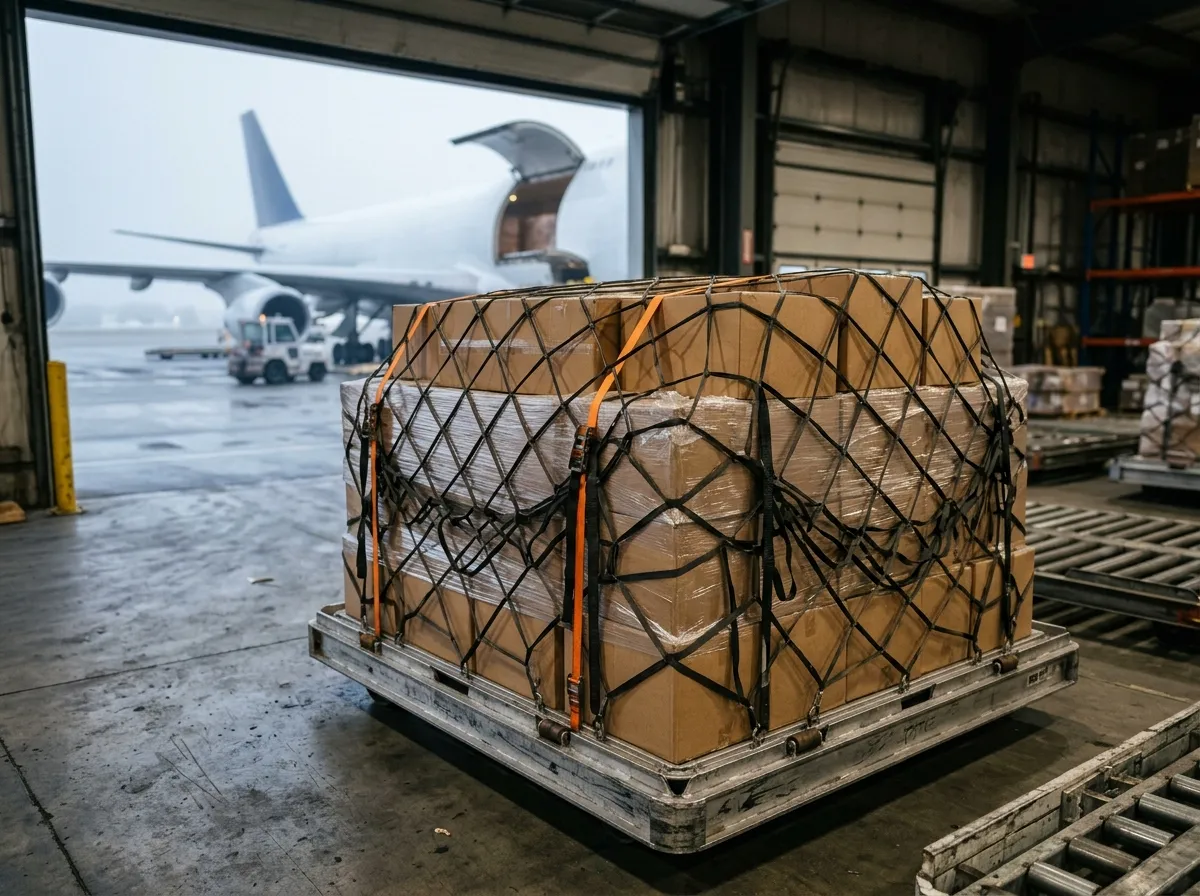
Whichever route you choose, the last gate is not the carrier's. It is customs, and it is a separate clock with its own paperwork. US entry requirements for a commercial shipment are documented by US Customs and Border Protection, and duty treatment for goods of Chinese origin is a moving target that should be checked against the current tariff position rather than assumed from last year's landed cost. Neither of those is a formality you can absorb in the last week of a calendar.
Pre-shipment inspection belongs here too, because it is the cheapest week you will ever buy back. An inspection that finds a print defect at W-7 is a repair. The same finding at the port is a re-export. What an inspection on this product family should actually look at — carton count, print position, seal function, and the marks — is set out in pre-shipment inspection for plastic lunch boxes.
What to put in writing before the calendar exists
The calendar above is only as good as the dates you can hold somebody to, and a date is only holdable if it was asked for as a date. Seven fields, asked in the first email, convert a quote into a schedule.
Ask for | Why it fixes a date | What a vague answer tells you |
|---|---|---|
The in-hands date and the delivery city | Everything downstream is subtracted from it | "We will do our best" means nobody has scheduled anything |
Quantity per model and per color | It sets the carton count and the mold slots | A single total hides which tool is being loaded |
The decoration method, named | It sets the sample loop and the production batch | "We can print anything" means the method has not been chosen |
The date your approved artwork will arrive | It is the freeze date, and it is yours to miss | A supplier who never asks for it has no freeze |
Pieces per carton, carton dimensions, gross weight, marks | It produces the cubic meters and therefore the route | Numbers "to be confirmed" after the PO are numbers you cannot plan on |
A committed production completion date | A date, not a lead time | "About four to five weeks" cannot be measured against a sailing |
The deposit amount and the date it must clear | Production does not start before it clears | Silence here is how a program loses a week to a bank |
There is an eighth item that belongs on the same list even though it is not a date: the document pack. For a food-contact article, the declaration of compliance and the test report that applies to your destination market should be requested at the same time as the quote, not at shipping. Which parts of a lunch box actually need a document and which do not — the tray, the lid, the gasket, the print — is worked through in direct versus indirect food contact, and the reason it matters for the calendar is simple: a document requested at W-2 that turns out to be missing is a delay with no production fix.
If you are still at the earlier stage — choosing a supplier rather than scheduling one — the sequence from first inquiry to first container is set out in sourcing food storage containers from China, and the calendars there and here are the same calendar seen from two ends.
Where the program actually slips, and how to buy back a week
Five failure modes account for most missed giveaway dates. Each has a week in which it happens and a recovery that costs less than the alternative.
Artwork arrives late and in the wrong format (W-15). Recovery: order the base sample before the artwork is ready, in a stock color, so the product decision and the artwork decision run in parallel instead of in sequence. Two weeks saved, no extra cost.
The sample is approved by three people (W-13). Recovery: name one approver in the brief and give that person a deadline. If a second opinion is required, it gets 24 hours.
The deposit clears late (W-12). Recovery: send the payment instruction the same day the PO is issued, and ask for the bank reference so the factory can match it. On a Friday in one time zone and a Monday in another, this is three days.
The carton data is missing until the booking (W-7). Recovery: make pieces-per-carton and carton dimensions a condition of the quote. Without them there is no sailing to book, only a hope.
The inspection finding arrives after cut-off (W-6). Recovery: inspect early enough that a rework is still possible — the week before the booking, not the day before the vessel.
There is one more, less common and more expensive: the program was planned forwards. A brief written as "we need 2,000 boxes by June, how long will it take" produces a quote, not a schedule, because nothing in it forces anybody to name the artwork date or the cut-off. The same brief written backwards produces five dates, five owners and a container booking — and the difference between those two documents is usually the difference between a giveaway that happens on the day and one that arrives the week after.
The practical version, for a lunch box or bento giveaway, is to fix four things before you ask for a quote: the in-hands date and city, the quantity per model, the decoration method you are aiming for, and the date your artwork will be frozen. Everything else in this page is arithmetic that follows. The range those decisions are made against is on the lunch box category page, and if you would rather send the brief and have the calendar come back with dates in it, send it to us with the event date on the first line.
Continue reading
Related sourcing guidance
More practical context for your food storage container sourcing conversation.


Discuss your product range
Need help selecting or customising containers?
Share the product type, market and sourcing requirements with the Xinghui team.