
Sourcing & OEM
Are Sample Fees Refundable? How Sample Cost, Courier Charges and Credit Against the First Order Are Normally Handled
Sample fees are usually credited against the first production order rather than returned as cash. What the fee covers, who pays courier, how to word it.
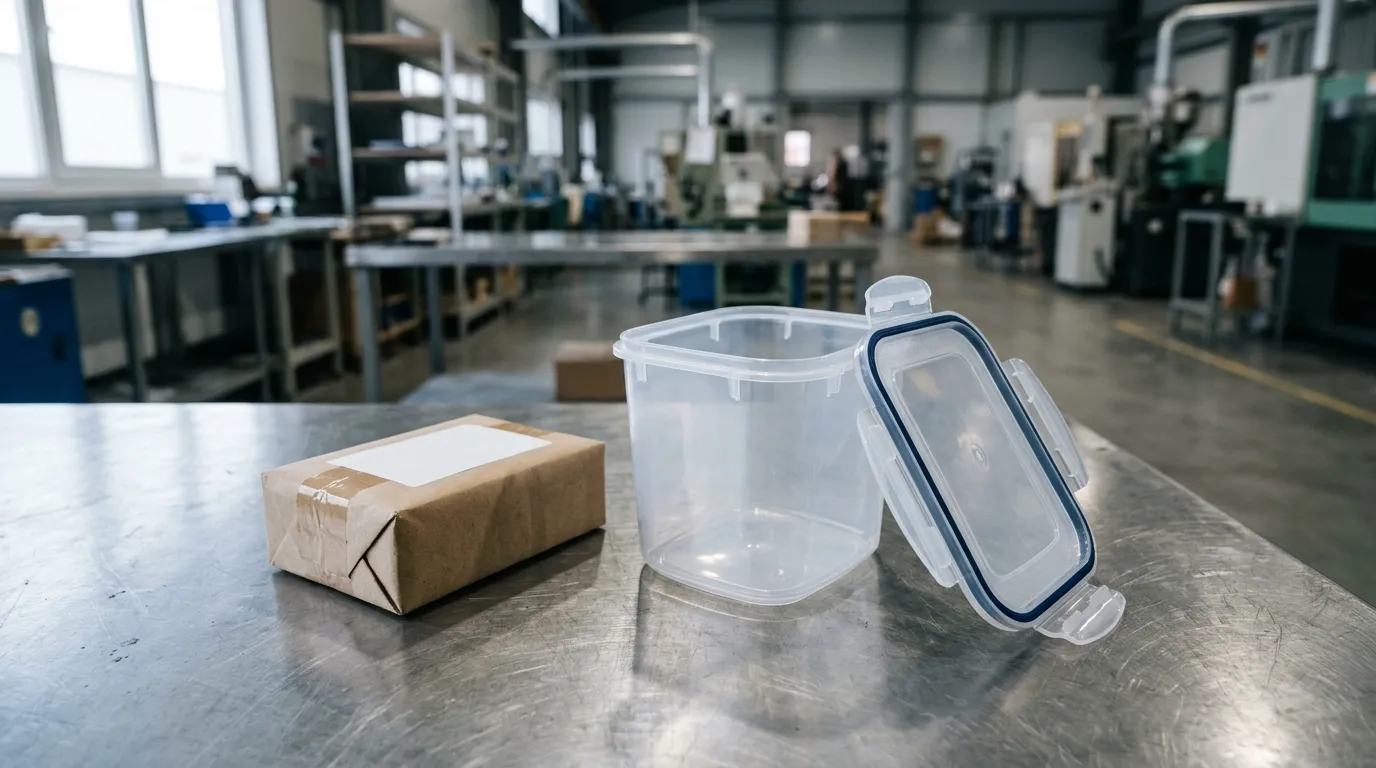
A buyer samples a 1.3 L lunch box in a custom lid color, pays the fee, approves the unit, and places a first production order. Then the pro forma invoice arrives — and the sample fee is not on it.
Nothing has gone wrong yet. The question is whether anything was ever promised. "Are sample fees refundable?" gets asked after the money has moved and before the shipment does, when the only lever left is a sentence in an email thread nobody wrote down properly.
In housewares the question has three answers, because "refundable" covers three transactions: a stock unit pulled off the line, a decorated unit made in your color on an existing mold, and a first article off a mold cut for you.
A sample fee is a development cost with a conditional credit attached. Whether the credit exists is a commercial term you negotiate, not a default you inherit.
The short answer: credited against the order, not refunded to your account
Two mechanisms get called "refundable", and they behave differently on the day you decide not to order. A refund returns cash. A credit reduces what you owe on a later invoice. Same value on paper, different paperwork, different timing, and different remedies when the supplier disagrees.
In B2B houseware sourcing the credit is the common arrangement. When a factory says "refundable", the sentence it usually means is "deducted from your first order if the order qualifies" — factories also call it a sample deduct policy, a sample fee credit or a sample offset, and all three describe the same invoice line. Two things follow: if you never order, nothing comes back, and the fee is not a deposit — it is the price of the sample, and the credit is a discount you earn by proceeding.
Cash is reasonable in one situation: the factory cannot make the sample to the agreed specification, or cannot obtain the material it quoted. That is a performance question, and it should be written as one instead of being folded into the word "refundable" — a remake at no charge is the normal remedy, and a refund follows only when a remake is impossible.
Three sample types, and why the fee is different for each
The fee structure follows the work, not the buyer's budget, and the difference between a stock sample and a custom sample is not cosmetic — it changes which line you are arguing about. Establish which transaction you are in before arguing about the number.
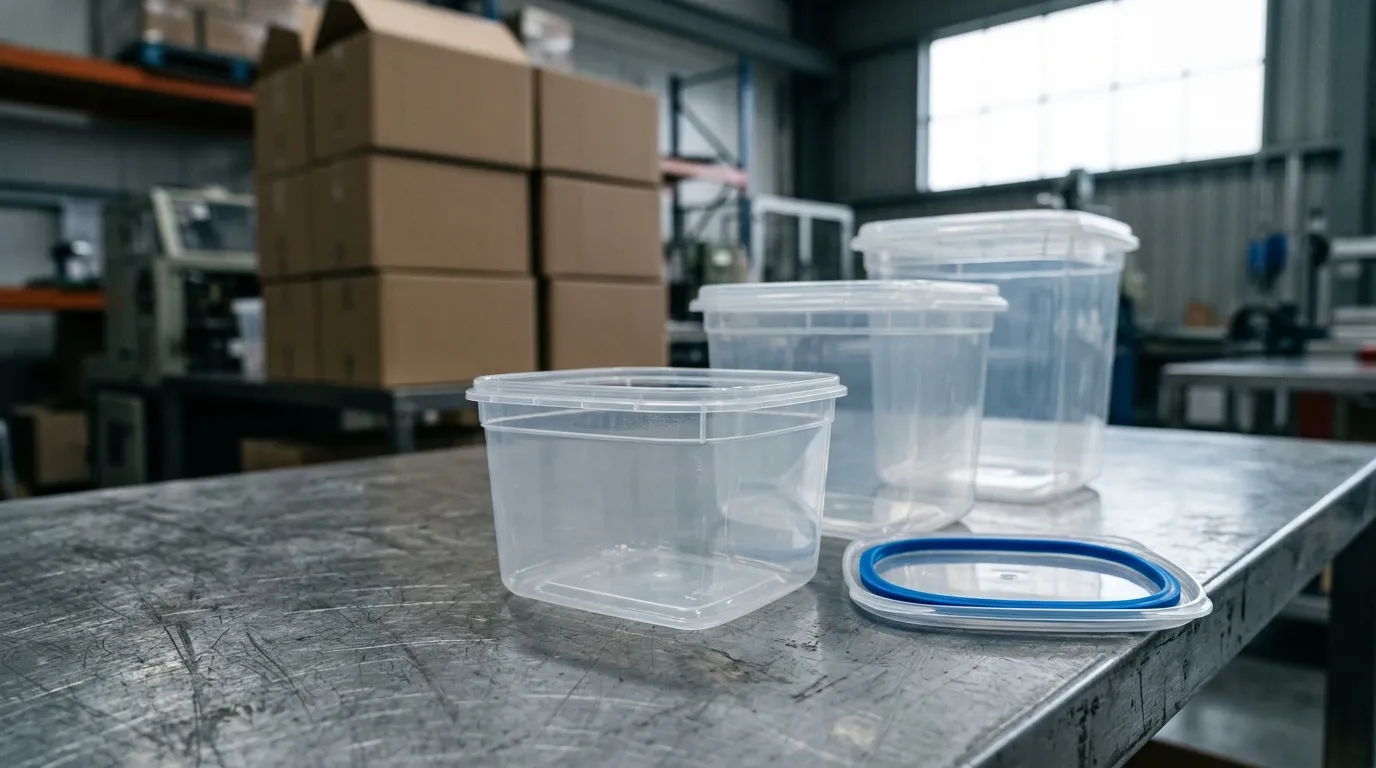
A stock sample is a model already in production, in a catalog color, undecorated. Cost sits close to the unit price plus handling and the lead time is short: the product record for the 1.3 L three-compartment lunch box BX1051 lists a sample lead time of within three days.
A custom color or logo sample is made on an existing mold, and the custom sample fee reflects the setup rather than a new tool. Either the colorant changes — a purge and a short run in the new compound — or decoration is added. The mold is not rebuilt, but a setup exists, and that setup is what you pay for on top of the unit.
A tooled first article comes off a mold cut for your part: a tooling bill, plus a first-article charge covering trial shots, the dimensional report and engineering time. Calling that "the sample fee" is how buyers end up asking for a mold to be credited against an order worth less than the mold.
Sample type | What triggers it | What the fee normally covers | Usual credit treatment |
|---|---|---|---|
Stock sample | Model already in production; catalog color; no decoration | Unit cost plus handling and packing | Often free or credited in full; sometimes charged and never returned |
Custom color or logo sample | Colorant change or decoration on an existing mold | Unit, color purge, decoration setup, extra handling | Commonly credited against a qualifying first order; setup line sometimes excluded |
Tooled first article | New mold, or a modification to an existing one | Trial shots, first-article inspection, engineering time, plus the tooling bill | First-article charge may be credited; tooling is normally not |
What the sample fee is actually paying for
A sample run is a mold stopped mid-cycle, a color purged out of the barrel, a decoration setup mounted for a handful of pieces — which is why a sample always costs more per unit than the goods it precedes, and why the quotation is easier to negotiate as line items than as one number. The unit, the color or decoration setup, handling, and courier each carry a different credit treatment, and only the first of them behaves anything like the goods price.
The custom-logo sample hides a tooling decision
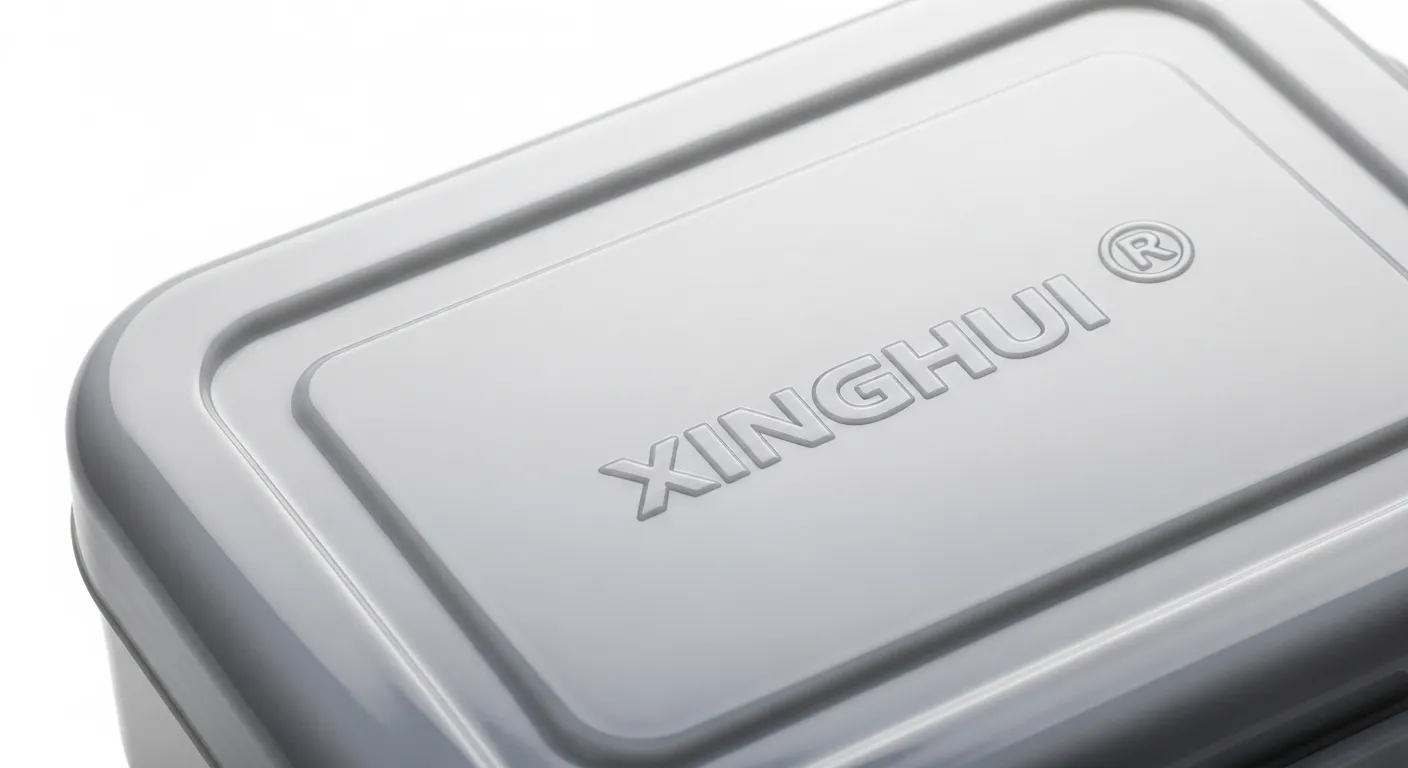
Printed or transferred decoration is applied after molding. It needs a plate, a film or a program — setup costs, not tool changes, and the kind of line a factory can absorb into a first order because the next run in the same artwork reuses them.
Engraved decoration is cut into the mold. The mark then exists on every part that mold produces — a permanent change to a capital asset, which no factory credits the way it credits a print plate. If your artwork is going into steel, expect a tooling line and expect it not to come back. The same logic decides whether a part needs a modified mold or a new one.
A color change is also a documentation change
Changing the colorant changes the material that touches food, even when the polymer does not. The declaration you hold for the catalog color may not cover the sample compound. The US framework for olefin polymers sits in 21 CFR 177.1520 and the EU framework in Regulation (EC) No 1935/2004; neither tells you what your sample contains. Ask which document covers the compound in the color you are sampling, and whether it names the colorant — the list worth requesting is in our guide to the documents to ask a food container factory for.
The courier charge covers transport, and almost nothing else
Sample freight is its own line because it is a service the factory buys on your behalf and it is consumed whether or not you order. The question of who pays courier charges for samples therefore has a short answer: whoever the invoice names, which is why the term has to be written down. That is also why courier is almost never credited, and why buyers who negotiate "sample fee refundable" and stop there still pay for the parcel twice.
What the line contains depends on the Incoterms term on the invoice. Under DAP the consignee pays duty and taxes on arrival; under DDP the shipper has paid them and the amount sits inside the freight line; under EXW you buy the parcel from the factory's dock, which for one sample is rarely worth the admin. The International Chamber of Commerce publishes the current rule set, and it is the reference the invoice should name.
Three points decide who ends up paying:
- Duty and import tax are not freight. A modest freight charge can arrive with a duty and tax bill on top. If the quotation says DDP, confirm the figure includes the tax.
- The declared value is what customs works from. Samples are not automatically duty-free, and customs value is normally the transaction value on the invoice — the reference point is the World Customs Organization's valuation guidance. A deliberately low declared value creates a mismatch with the same goods on the production invoice.
- Consolidation changes the number. Three samples from three suppliers on three waybills cost three courier minimums; on one waybill they cost one — the same arithmetic that makes a mixed container worth planning later.
When the fee is normally credited: four conditions that decide it
"A sample fee refunded against the first order" is a sentence with four blanks in it, and each blank is where the argument happens later.
Condition | What varies between factories | What to write into the term |
|---|---|---|
The qualifying quantity | A minimum order quantity, a minimum order value, or a minimum per style | The exact figure, and whether it counts pieces, cartons or invoice value |
The time window | Often expressed in months from sample approval or from the quotation date | Which date starts the clock, and what happens if production slips for reasons outside your control |
The matching requirement | Same model, same specification, same artwork | Whether a color change after approval still qualifies |
The unit the credit applies to | Per style on a mixed order, or once per order regardless of styles sampled | What happens when you sample four models and order two |
The quantity condition catches importers most often, because it interacts with how minimums are counted. If the minimum is per color rather than per order, a mixed order that samples well can still land under the threshold on the sampled color alone. Settle that before the sample; it is the same arithmetic covered in how minimum quantities are counted on a mixed order.
The time window deserves the same care. Measured from the quotation date, it starts running before the sample is approved, so a slow courier and two revision rounds can eat most of it. A window measured from approval matches what the credit is for.
When it is not credited, and why that is usually fair
The credit fails in a few predictable situations, and in most of them the factory's position is defensible:
- The specification changed after approval. New color, new artwork, different capacity: the second sample is a new development.
- You order a different model. The credit is tied to the sampled part; sampling four and ordering two usually credits two.
- The order falls below the threshold. This is where partial credits and low-volume surcharges appear, and where a terms sheet saying only "minimum order" does its damage.
- The project stops. No order, no credit. The factory keeps the fee; you keep a sample that is still a reference for the next supplier.
- The fee was tooling. A mold, a mold change or an engraved logo is a capital asset, quoted as such — the distinction that decides which mold design decisions to review before steel is cut.
When the defect is the factory's — wrong material, wrong dimension against an agreed drawing, decoration on the wrong face — document it against that drawing rather than in prose. "It does not look right" is not a specification, and a remake request without a written reference is a negotiation rather than a claim.
The table to put in front of the factory
Send it with the right-hand column empty. A supplier who returns it complete has given you something comparable; one who returns three of the seven rows has told you what the other four are.
Quotation line | What it is | Normally creditable? | The trigger that decides it |
|---|---|---|---|
Sample unit fee | Material, machine time and labor for the sample piece | Often, in full | A qualifying first order for the same model |
Color change or purge | Cleaning the barrel and running the new compound | Sometimes | Same color carried into production |
Decoration setup | Print plate, transfer film, engraving program | Sometimes | Same artwork reused on the order |
Revision round fee | A second or third sample after feedback | Rarely | The revision was caused by the factory, not by a spec change |
Courier and freight | Express parcel to your address | Almost never | Nothing — it is a consumed service |
Duty and import tax | Assessed on arrival, or prepaid under DDP | Never | Which Incoterms term the invoice names |
Tooling or mold modification | New mold, mold change, engraved logo | No | Ownership and exclusivity of the tool |
Two rows get forgotten: the revision round and the duty. A second sample because the first was made to the wrong drawing should not be charged, and a DDP quote that excludes import tax is not a quote you can budget from. The tooling line has its own arithmetic — how to read an injection mold quote takes it apart.
Writing the clause so it has one meaning
The clause needs the amount, the mechanism, the trigger and the exclusions, in one paragraph, in the same document as the price.
Element | Wording that works | Wording that means nothing |
|---|---|---|
The amount | "A sample fee of USD ___ per model" | "A small sample charge" |
The mechanism | "Deducted from the first production invoice" | "Refundable" |
The qualifying trigger | "For orders of _ pieces or more per model, placed within _ months of sample approval" | "On a bulk order" |
The exclusions | "Courier, duty and import tax are billed separately and are not part of the credit" | Silence |
The failure case | "If the sample does not meet the approved drawing, the factory remakes it at no charge" | "Quality is guaranteed" |
The mixed-order case | "The credit applies once per sampled model that appears in the order" | Silence |
Assembled: "Sample fee USD _ per model, credited in full against the first production invoice for orders of _ pieces or more per model placed within ___ months of sample approval. Courier, duty and import tax are billed separately and are not credited. Where the sample does not meet the approved drawing, the factory remakes it at no charge." Four sentences settle the argument that would otherwise arrive eight weeks later.
What to verify on the sample invoice before you pay
The pro forma invoice for a sample carries the sample fee as a line, and it is a customs document as well as a commercial one — the fields that matter later are the ones nobody reads at the time.
Field | What it must show | Why it matters |
|---|---|---|
Consignee and notify party | Your legal entity and address — except where the term puts clearance on the shipper (DDP, or a DDP courier service), in which case the shipper or its appointed importer is legitimately named and you should confirm that in writing | A consignee that contradicts the Incoterms term complicates the duty bill and the credit trail |
Incoterms term and named place | For example DDP plus the destination city | Decides who pays duty and import tax on arrival |
Declared value per line | Sample unit, courier and any setup shown separately | Customs values the shipment from these lines; a lump sum hides the split |
Goods description | Model, material, and "samples, not for resale" | Supports the declared value and the later invoice match |
Reference to the quotation | The quotation or pro forma number | Ties the fee you paid to the credit you were promised |
Courier account | Who is billed, and on whose account number | Prevents a second courier invoice landing after the credit is settled |
Photograph two things and keep them with the approved sample: the invoice and the packing list. When the credit is claimed months later, the invoice is the only document showing what was paid for and what was not.
What this changes on a first houseware order
The credit is small money next to the order it sits on, and the sample cost from a China factory is rarely the number that decides whether the order works. The terms that decide it are the ones the sample fee hangs from: the minimum quantity and how it is counted, the deposit and balance split, and the delivery date measured from approval. If the sample fee credit is the only term you settle in writing, you have settled the cheapest one; what payment terms to expect from a Chinese houseware factory covers the rest.
One detail from our own catalog, offered to show how uneven published records are rather than as a quotation: thirteen of the 63 product records list a minimum order of 2,000 pieces, the rest leave the field empty, and exactly one carries a sample lead time. That one is BX1051 — within three days — which tells you the sample is a stock pull, not a development. The distinction decides whether you are negotiating a credit or a tooling bill, and it sits next to two related checks: the golden sample production will be measured against, and whether the seal or gasket gets its own sample test before the run.
The questions to send before you pay
Six questions, in one message, before any money moves:
- Is this a stock sample, a custom color or logo sample, or a first article off a new tool?
- What exactly does the fee include, line by line — unit, setup, decoration, courier?
- Is the fee credited or refunded, against which invoice, and what quantity and date qualify it?
- Is courier inside the fee or billed separately, and under which Incoterms term?
- What happens to the fee if the sample is wrong through the factory's error?
- If we sample three models and order one, which fees are credited?
A factory that answers all six in writing is not necessarily cheaper. It is the one whose quotation you can compare. If you are still choosing between suppliers, the questions that separate a factory from a trading company belong in the same first message.
If you are sourcing plastic houseware — lunch boxes, bento boxes, storage containers, canisters — and want the sample terms settled before the first unit is made, our procurement team works through this checklist with buyers at quotation stage, so the credit terms and the sample invoice are agreed in the same document as the price.
Continue reading
Related sourcing guidance
More practical context for your food storage container sourcing conversation.

Discuss your product range
Need help selecting or customising containers?
Share the product type, market and sourcing requirements with the Xinghui team.