
Sourcing & OEM
Is MOQ Per Order, Per Colour or Per Model? How Minimum Quantities Get Counted on a Mixed Houseware Order
MOQ can be counted per order, per model, per colour or per carton. See how each unit reaches a quotation and why a mixed order misses four floors at once.
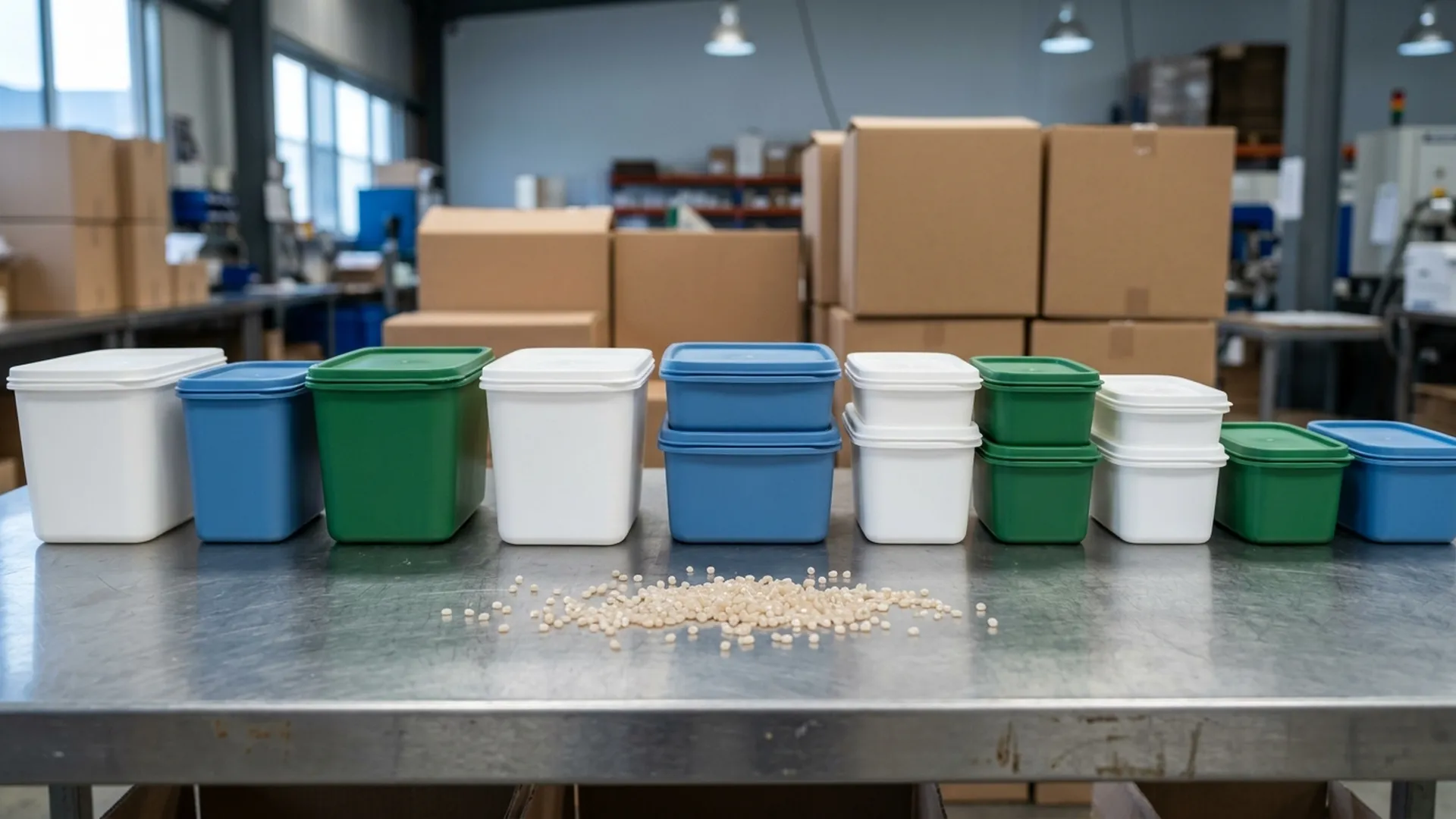
Most MOQ arguments are not arguments about a number. They are two people using the same word for two different denominators.
A buyer asks for 15,000 containers across four models and three colours. The factory sends back a minimum that looks three times larger than anything the buyer named. Nobody is lying. The buyer was counting units on an order; the factory was counting units per model, per colour and per carton, and the smallest of those three floors is what the quotation is actually made of.
The direct answer to the question in the title is this: MOQ is normally counted per unit that has its own setup, its own material lot or its own packing configuration — and on houseware it is usually per model and per colour, not per order. "Per order" is the count that almost never governs, and it is the one most buyers assume.
That answer needs unpacking, because the floor you hit depends on what you are buying. This page is written from the buyer's side of the table by Xinghui Plastic, an injection-moulding factory in Jieyang, Guangdong that moulds reusable PP houseware — food storage containers, lunch boxes and bento boxes, drinkware and organizers — for importers, brands, wholesale buyers and retail buyers. Stainless-steel drinkware sits alongside the moulded range rather than being moulded in-house. The site states the plant was founded in 2000, covers 15,000 m² and runs 30+ injection moulding machines for buyers in 60+ countries.
One caveat before the arithmetic. Most pages that answer this question are written for people managing stock in a warehouse, so they answer it with an inventory formula built around a single bulk purchase. This page is written for the person holding a factory quotation, where the same question has a different answer and different levers.
The Short Answer: the Unit on the Quotation Wins
There is no industry-wide convention that fixes MOQ to an order, a product or a colour. Each factory defines it, and the definition that counts is the one printed on the line you are about to sign.
So the question is not "is MOQ per order or per product." It is "which unit does this supplier's minimum attach to, and how many of those units am I asking for."
An MOQ is not a quantity. It is a quantity attached to a unit — per order, per model, per colour or per carton — and the one that binds is whichever unit you have the fewest of. Add artwork and a printed component brings its own floor on top.
That single sentence explains nearly every quotation surprise in this category. If your order is one model in one colour, all four units point at the same pile of plastic and the numbers agree. The moment you mix, the units pull apart, and the smallest one sets your price.
The rest of this page is the arithmetic behind that, plus the lines worth getting in writing before you approve anything. If you want the wider purchasing context first — how an inquiry turns into a purchase order, and the questions worth settling in between — the site's sourcing and OEM notes collect that side of it.
Why the inventory formula does not answer this question
Most of the pages that rank for this question answer it with the economic order quantity — the order size that balances the cost of placing an order against the cost of carrying the stock, sitting alongside safety stock and demand forecasting in inventory-management practice.
That formula is correct, and it is answering a different question: how much should a buyer re-order, given that stock is already moving through a warehouse. A quotation is not a reorder point. It is a statement of what a plant will set up a machine to make. EOQ assumes you can place an order at any quantity and simply carry the cost of the choice; a factory floor says otherwise — below a certain quantity there is no order to place at any carrying cost, because the set-up has to be paid for by the parts on that run.
That is why the two answers diverge the moment you move from a warehouse to a moulding shop, and why the levers differ too. An inventory manager adjusts order frequency and reorder points. A buyer adjusts the mix.
The Four Units a Minimum Can Attach To
A mixed houseware order is judged against four floors at once. They are all called "MOQ" in conversation, which is why the conversation goes wrong.
Unit | What it means on the factory floor | Typical trigger | Usually the binding floor when… |
|---|---|---|---|
Per order | One total across the whole purchase order | Freight and export paperwork | The order is a single model in a single colour |
Per model | One total for each moulded shape or size | Mould change, machine setup, first-article check | You are mixing several sizes of the same product family |
Per colour | One total for each colour within a model | Colour lot, masterbatch dosing, barrel purge | You are mixing colours on the same model |
Per carton | The smallest shippable multiple of one line | Case pack and pallet build | Your per-colour quantity is not a whole number of cartons |
Read that table in the order buyers usually hit the floors. The per-order floor is the one they think about. The per-model floor is the one that catches a four-size order. The per-colour floor is the one that catches a four-colour order on a single model. And the per-carton floor is the quiet one that catches almost everyone, because cartons do not split.
The practical consequence: a mixed order can clear the per-order minimum comfortably and still fail three of the four floors. That is not a negotiating position. It is how the factory's cost is built. Adding a second colour to a model does not double your quantity in the eyes of the people who coat and clean the machine; it doubles the number of setups. Anyone who has built a retail assortment across several SKUs and sizes already knows this pattern from the other side — the SKU mix and capacity ladder walk-through covers how the size ladder and the case pack interact when you are designing an assortment rather than responding to a quote.
Why a Colour Carries Its Own Minimum
The per-colour minimum is the one buyers most often read as arbitrary, so it is worth following the plastic.
A factory rarely buys pre-coloured resin for a houseware line. It buys natural polymer and adds a colour masterbatch — a pre-dispersed colour concentrate that is let down into the base resin. Masterbatch suppliers describe the industry norm as a let-down ratio in the region of a few per cent by weight, with the exact figure depending on pigment strength, wall thickness and the opacity the part needs (the Polymer Compounding Network's technical note on mixing thermoplastic compounds and masterbatches is a useful plain-language reference on that). That small percentage is not free, and it is not instant: it has to be dosed, mixed and proven to match an approved sample.
Then there is the changeover. Going from one colour to the next means purging the barrel, the screw, the nozzle and, on a hot-runner tool, the manifold. As a rule of thumb, a colour change consumes more than a few shots of purge material and some lost production before the output is clean again — dark-to-light transitions, where a few black specks in a white part are immediately visible, are the worst case. Every one of those purge shots consumes resin and machine time and produces nothing saleable.
That is the real content of the per-colour minimum: it is a way of making sure the purge and the setup are spread across enough saleable parts that the line still makes sense. Which is why the same factory will quote one colour at a lower minimum than three.
Two practical consequences follow:
- Colour order matters, not just colour count. Running light colours first and dark colours last inside a batch is cheaper than the reverse. If your assortment has a pale shade and a black, ask where they sit in the schedule.
- A new colour is not a new model — but it behaves like a small one. It needs its own approval sample and its own purge, so it carries a smaller version of the same setup logic. The methods used to colour plastics explains the different colouring routes, which matters here because a liquid colourant films the screw and barrel differently from a pre-coloured pellet, and that difference shows up in the purge time and the minimum.

If the part is going into contact with food, colour is not only a colour question. Colourants and additives are part of the regulated formulation for a food-contact article, not a cosmetic layer on top of it — in the United States that sits inside the olefin polymer rule at 21 CFR 177.1520, and in the European Union inside the plastics regulation 10/2011. The buyer-facing consequence is a document request, not a legal claim: ask which masterbatch and which base resin grade are recorded for the colour you are approving, and keep that on the same sheet as the colour standard. A new colour is a new entry in that record.
Why a Model Carries Its Own Minimum: Moulds, Cavities and Setup
The per-model minimum is easier to justify, because it has hardware behind it.
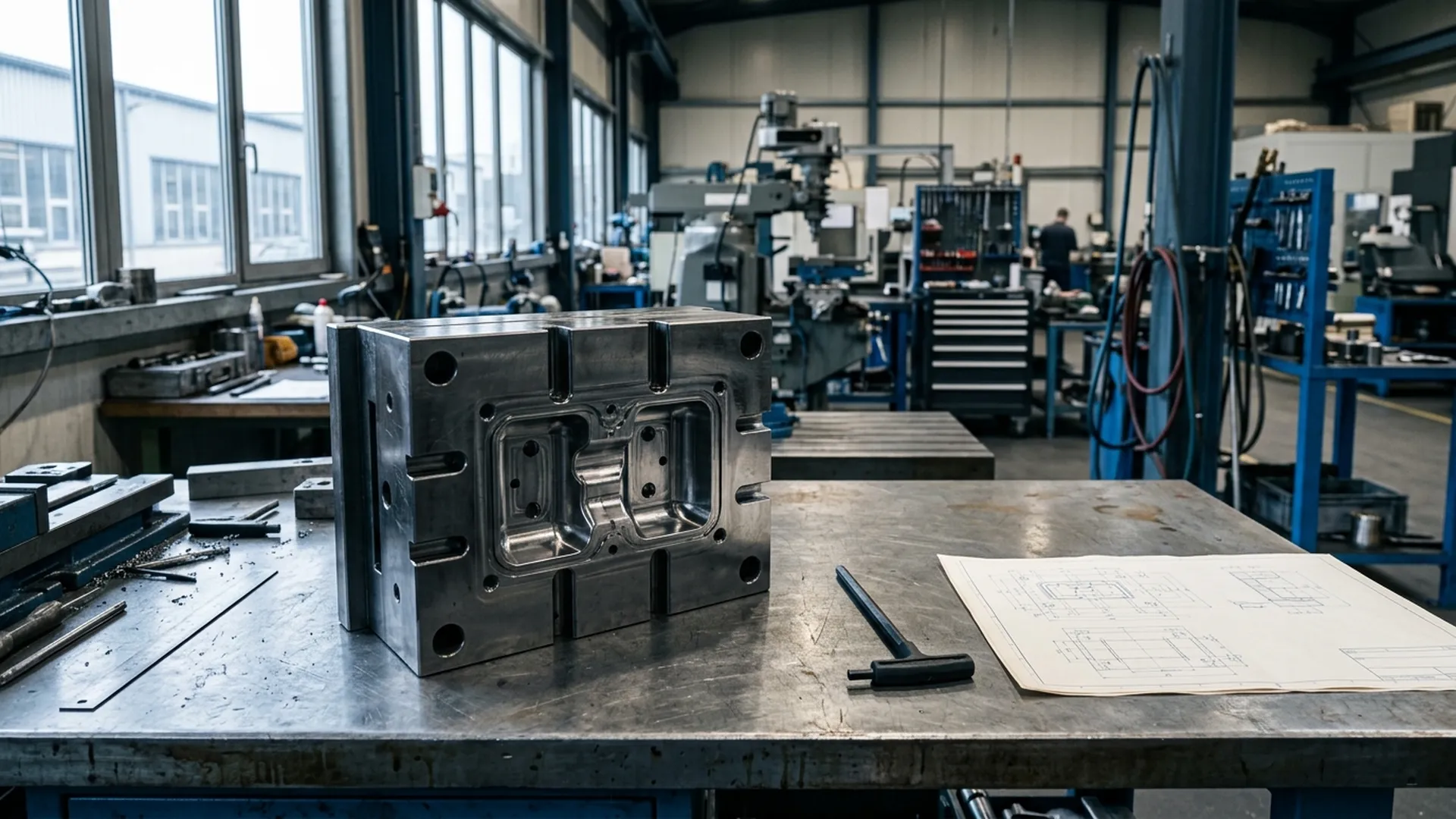
Each model in a houseware range has its own mould. Changing from one model to the next on a machine is not a settings tweak: the tool comes out, the next tool goes in, the machine is warmed back to a stable process window, and the first parts are checked against the drawing and the approved sample before the run is released. All of that happens before a single saleable part exists.
The cavity count in that mould is what really sets the per-model floor. A tool with a high cavity count produces more parts per shot, so it reaches any given quantity in fewer machine hours — and the same tool, run for a short quantity, spends a larger share of its time on setup than on production. This is the arithmetic underneath a tooling quotation, covered in the walk-through on reading an injection mould quote.
There is also a fork in the road that decides whether a new model is cheap or expensive for you. If the new size is close enough to an existing one, the factory may be able to modify an existing mould or add an insert; if the geometry differs more than that, it needs a new tool. That distinction — and how far "close enough" actually goes — is the subject of when to modify an existing mould and when to build a new one. The plant's own tooling process is described on the custom mould development page if you want to see the steps a model actually goes through between drawing and first article.
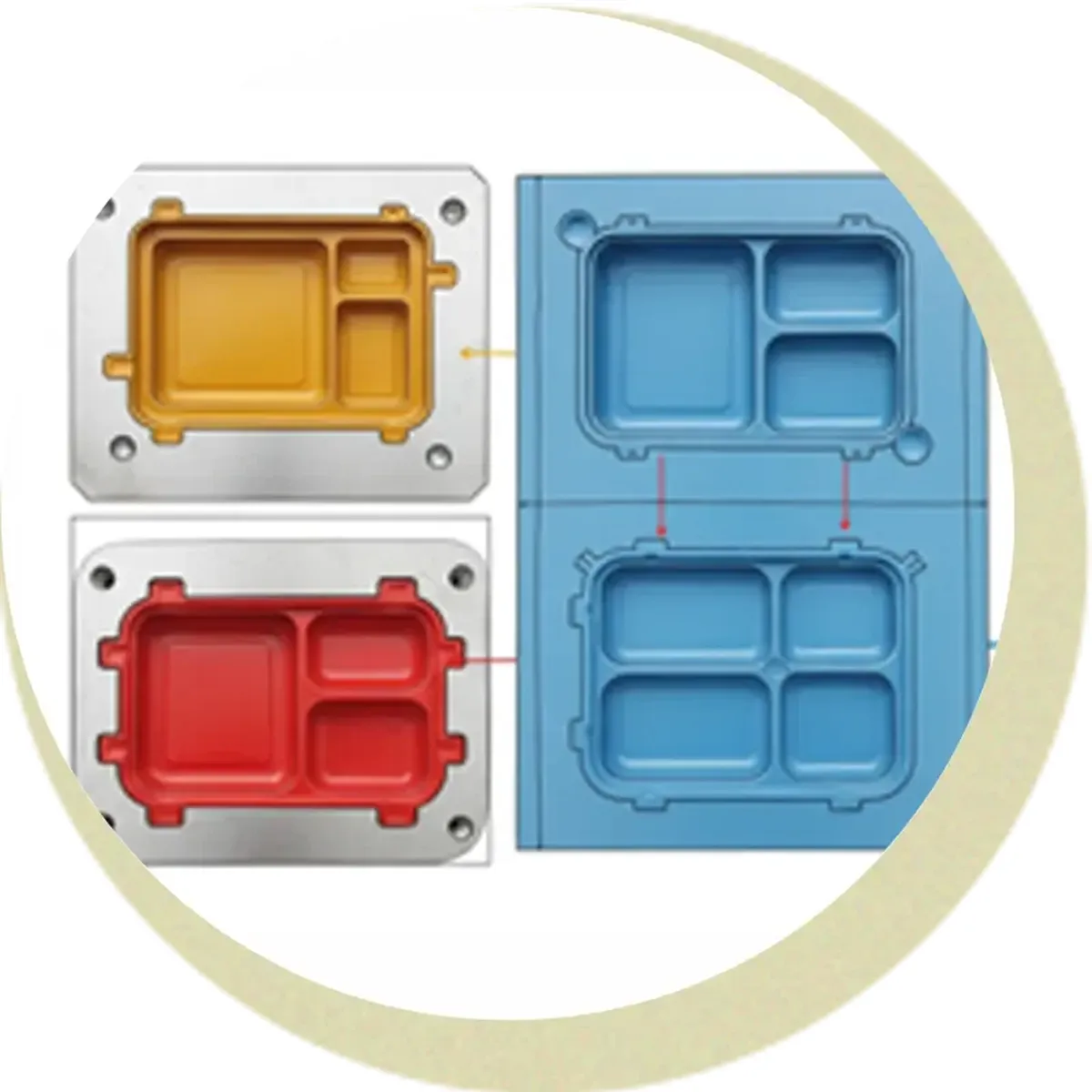
The buyer-side takeaway: a per-model minimum is not a wall, it is a setup cost with a quantity attached. Ask what the setup costs and how many parts per hour the tool runs, and you can see for yourself why the number is what it is.
What a Mixed Houseware Order Actually Looks Like
Here is the arithmetic that makes the four floors concrete. Take a buyer who wants 15,000 reusable food storage containers across four models and three colours.
Suppose the factory's stated floors are 5,000 per model, 2,000 per colour within a model, and 60 pieces per carton. The buyer's first cut looks reasonable:
Model | White | Blue | Green | Model total | Against the floors |
|---|---|---|---|---|---|
A — 1.0 L square | 3,000 | 2,000 | 1,000 | 6,000 | Green is 1,000 against a floor of 2,000 |
B — 1.5 L square | 4,000 | — | — | 4,000 | Model total is 4,000 against a floor of 5,000 |
C — 0.5 L round | — | 2,000 | — | 2,000 | Model total is 2,000 against a floor of 5,000 |
D — 1.9 L tall | 3,000 | — | — | 3,000 | Model total is 3,000 against a floor of 5,000 |
Total | 10,000 | 4,000 | 1,000 | 15,000 | 4 of 6 lines fail |
Fifteen thousand units, and four of the six lines miss a floor. The per-order reading of MOQ would have passed this order without comment.
Now re-cut the same 15,000 units onto two models instead of four:
Model | White | Blue | Green | Model total | Against the floors |
|---|---|---|---|---|---|
A — 1.0 L square | 2,500 | 2,500 | 2,000 | 7,000 | Every line clears |
B — 1.5 L square | 3,000 | 3,000 | 2,000 | 8,000 | Every line clears |
Total | 5,500 | 5,500 | 4,000 | 15,000 | 6 of 6 lines clear |
Fifteen thousand units either way, the same three colours, the same family — but two models instead of four. The buyer traded assortment width for a clean quotation.

This is the trade every mixed houseware order is making, whether or not anyone names it: width against floor. A fourth model on the order is not a fourth of the volume, it is an extra setup, and that setup has to be paid for by the parts on that model alone.
Carton Quantity Is the Quiet Floor Under Everything
Now the floor that catches people who cleared the first three.
Cartons do not split. If the case pack is 60 pieces, a line asking for 2,500 pieces ships as 42 cartons — 2,520 pieces — or it ships as 41 full cartons plus a partial, which most factories will not do because a partial carton breaks the pallet build and the outer dimensions on the export paperwork.
So take the clean cut above and run it through the carton:
Line | Units wanted | Cartons at 60/carton | Units actually quoted |
|---|---|---|---|
A — white | 2,500 | 41.67 → 42 | 2,520 |
A — blue | 2,500 | 41.67 → 42 | 2,520 |
A — green | 2,000 | 33.33 → 34 | 2,040 |
B — white | 3,000 | 50.00 → 50 | 3,000 |
B — blue | 3,000 | 50.00 → 50 | 3,000 |
B — green | 2,000 | 33.33 → 34 | 2,040 |
Order total | 15,000 | 252 cartons | 15,120 |
The order you approve is 15,120 units, not 15,000, because four lines had to round up to whole cartons. That is not a trick and it is not a rounding error — it is the difference between moulding parts and shipping them.
Two things follow. First, if a number has to be exact, make the exact number the carton count, not the piece count; that is the only one both sides can hold. Second, ask for the case pack and the carton dimensions before you finalise the mix, because they constrain what the mix can be. The stacking, nesting and carton arithmetic behind that is worked through in freezer and fridge container stacking, nesting and carton maths, and the packing-side rules that decide how tight a carton can actually be built are in the packaging tips for kitchen storage containers.
Reading the MOQ Line on a Quotation: Eight Things to Get in Writing
A minimum that is not written down is not a minimum; it is a memory of a conversation. These are the lines worth having on the quotation itself.
# | What to get in writing | Why it decides money later |
|---|---|---|
1 | The unit the minimum attaches to | "MOQ 5,000" means nothing until it says 5,000 per model, per colour or per order |
2 | The floor for each unit, separately | One blended number hides which of the four floors you are actually missing |
3 | Case pack and carton dimensions, per line | Sets the real shippable quantity and the pallet build |
4 | Colour standard and the masterbatch recorded for it | A new colour is a new approval, not a variation of the old one |
5 | Machine setup and mould change charges, if any | Turns an unexplained floor into a line item you can weigh against volume |
6 | What happens below the floor | Whether it is refused, surcharged, or accepted with a one-time setup fee |
7 | Sample and approval route, and who pays for it | Cheap to settle now, expensive to argue at first article |
8 | Which quantities are firm and which are estimated | Protects both sides when a line has to round to whole cartons |
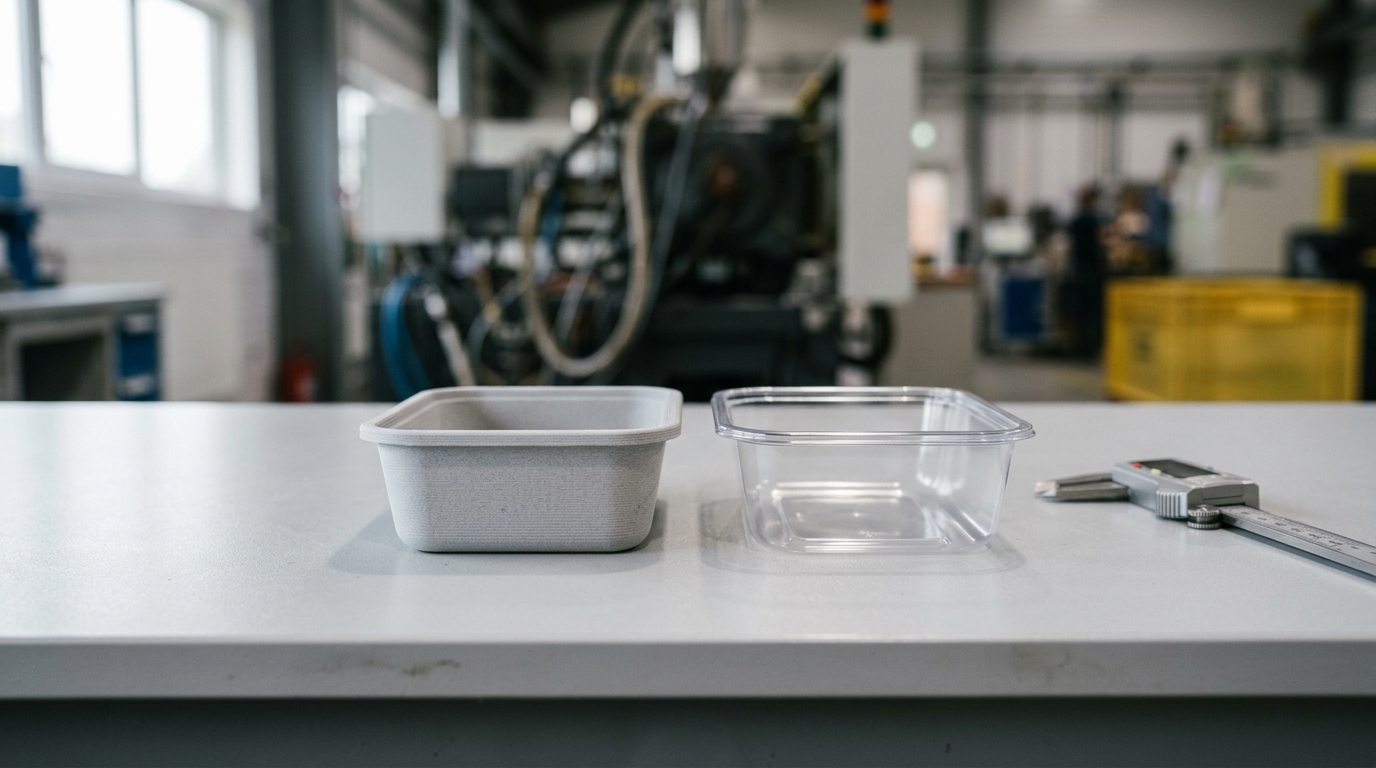
Item 7 is the one buyers under-specify, and it has a cost attached to it in both directions. A short-run pre-tooling sample — a printed or prototype part used to check fit before steel is cut — can settle fit and function questions, but it cannot settle the questions that only come from the actual tool and the actual material. What a pre-tooling sample can and cannot prove is the whole subject of the walk-through on 3D-printed verification before steel. Seal behaviour is the classic example: whether a lid actually holds is decided by the real gasket, the real wall thickness and the real tool, and the way that gets tested at first article is set out in leak-proof seal structure and sample testing.
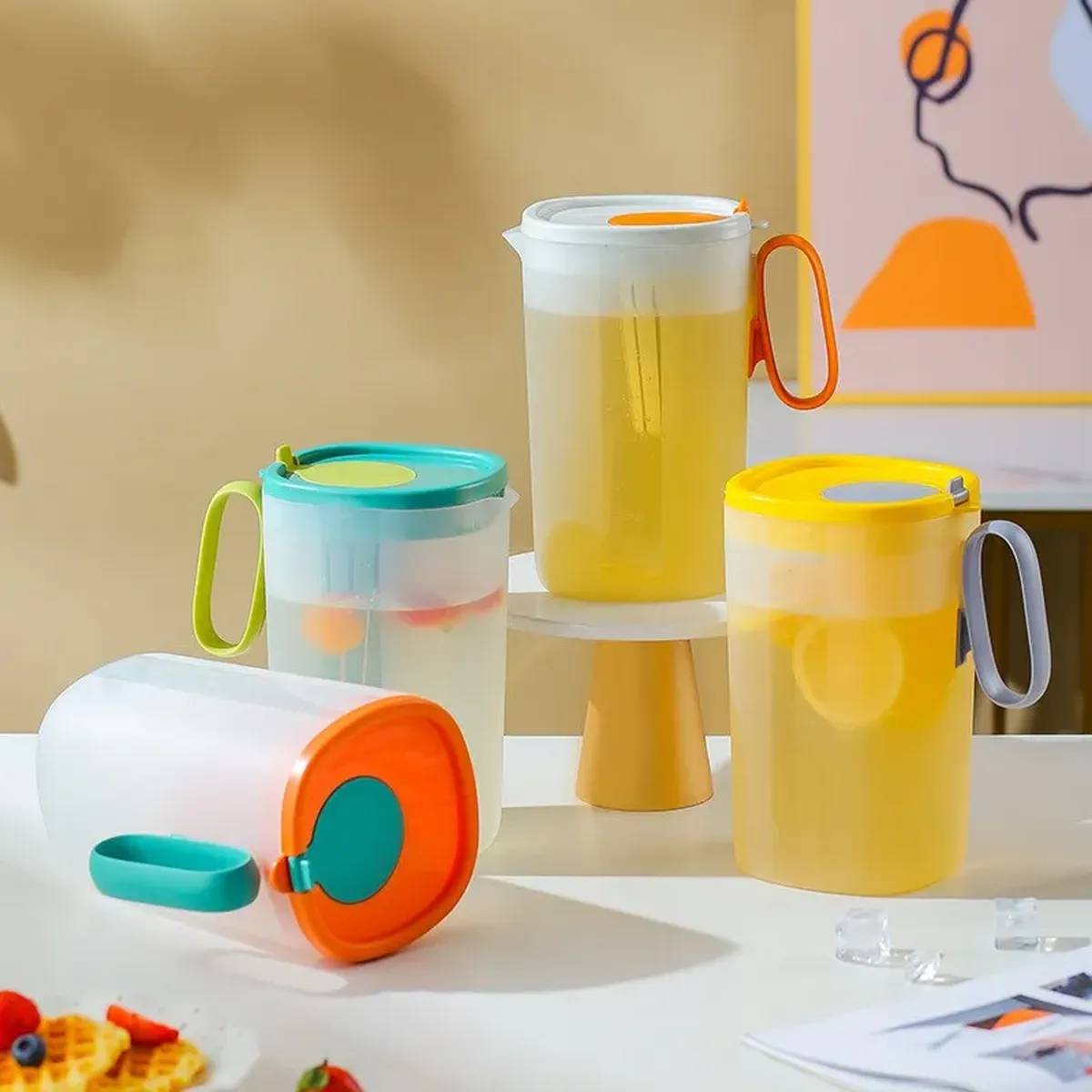
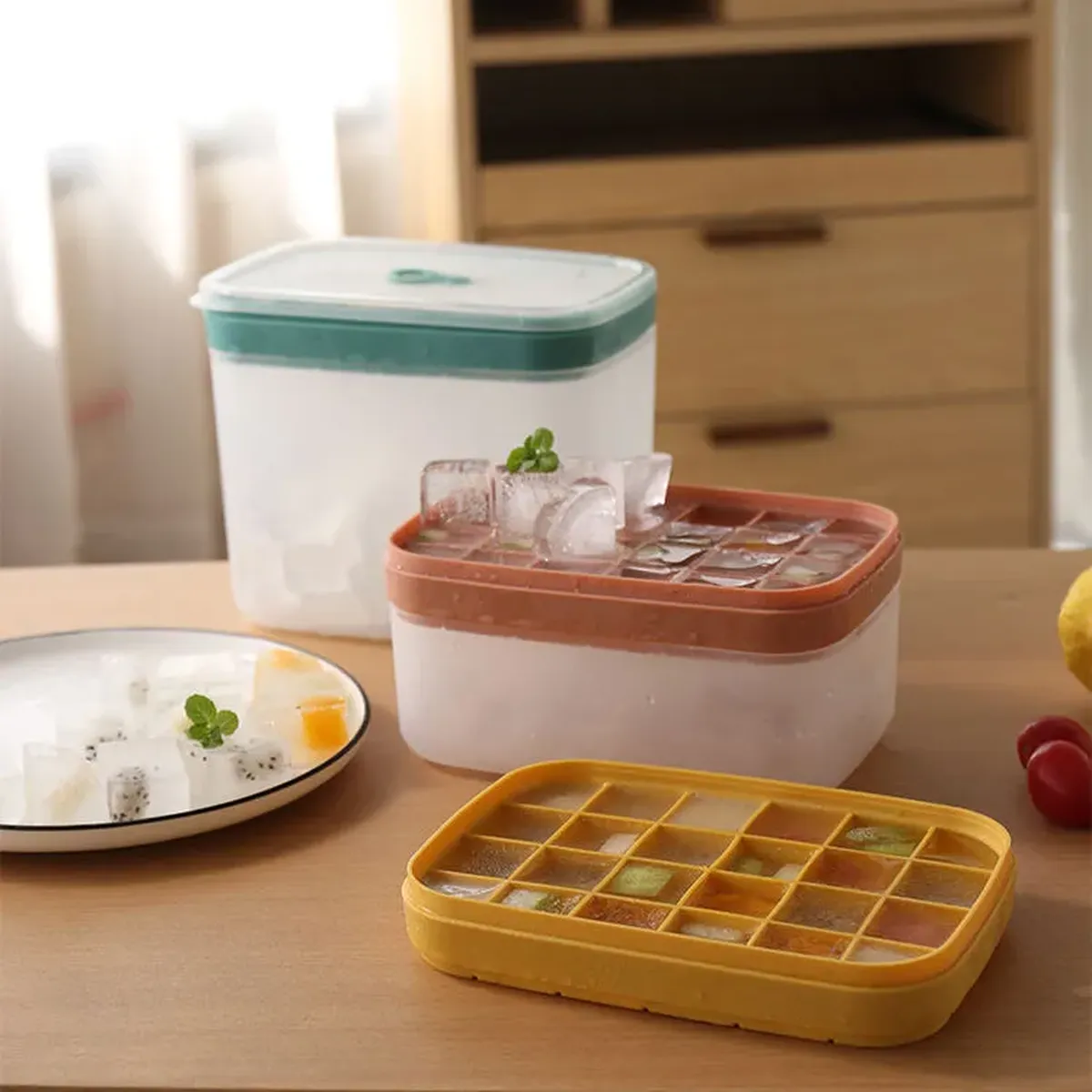
That photograph is the per-colour minimum in one frame: one model, four colours, four colour lots, four approvals and a purge between each of them.
Four Ways Buyers Close the Gap on a Mixed Order
None of this means a mixed order is impossible. It means the mix has to be designed against the floors rather than discovered by them. These are the four moves that work.
1. Concentrate the colour, widen the model. If you need several sizes in the same colour, that is a friendlier order than one size in several colours. Model changes are a known cost with a known setup time; colour changes on top of model changes multiply both.
2. Consolidate colours inside a model. Three colours on one model is three floors. If two of them are close enough to read as the same family on a shelf, delivering them with one masterbatch change instead of two is real money.
3. Move the short line, not the whole order. When one line is under the floor, the cheapest fix is usually to add the missing pieces to that line rather than to increase the order total — because the setup is already being paid for by that model.
4. Split the order into a first order and a repeat. A first order that clears the per-model floor on two models, followed by a repeat that adds the third model once the first two are selling, keeps both orders clean. This is the standard route for a buyer testing an assortment, and it is what a trial quantity is for: not a discount on a small order, but a defined first step. The wider picture of combining several product lines into one shipment is covered in the one-stop food storage container sourcing guide, and the service side of running those orders for you is described on the procurement service page.
None of the four is free, and the cost is not always money:
Move | What it changes on the quotation | What it costs you |
|---|---|---|
Concentrate the colour, widen the model | Fewer colour changeovers, more model changes | A narrower range in the colour you care about |
Consolidate colours inside a model | One fewer colour lot, one fewer purge | A shelf story with fewer shades to sell |
Move the short line, not the whole order | Clears the per-model floor without inflating the order total | Cash committed to a model you were not sure about yet |
Split into a first order and a repeat | Two clean orders instead of one order that cannot be built | Two sets of paperwork, and a later start on the model you dropped |
How a MOQ Question Reaches Us
When a buyer sends us a mix and asks for a price, the first thing we do is not quote it. We check it against the four floors and send back one of three things: the mix clears and here is the price; the mix misses on these specific lines and here is the arithmetic; or the mix would clear if two colours ran light-first and here is the revised schedule.
That order — arithmetic first, price second — is deliberate, because a price sent against a mix that cannot be built is a price that gets rewritten later, and rewriting it costs both sides a week. If you are still choosing which factory gets the inquiry rather than which mix to approve, the guide to choosing a reliable lunch box factory covers the questions that separate a plant that will tell you about a floor from one that will discover it at first article.
If you want to see how a customised range is actually set up — sizes, colours, lids and artwork — the custom solutions page shows the routes a private-label houseware programme takes. Send the mix you are considering, including the split by colour, and we will return the arithmetic even if the answer is that we are not the right plant for it.
FAQ
Is MOQ per order or per product?
Usually neither, on moulded houseware. The floor that governs is normally per model and per colour within the model, with a smaller per-carton floor underneath it. "Per order" is the reading that most often passes an order that the factory then cannot schedule — which is why the quotation is the only reliable statement of which unit applies.
What does per-colour MOQ mean?
It means the factory needs a minimum number of pieces in each colour before that colour is worth running. Each colour needs its own colour lot, its own purge of the barrel and hot runner, and its own approval against a sample. Spreading those costs across too few parts is what makes a small colour run expensive, so the floor exists to keep the run worth setting up.
Does MOQ apply per design or per artwork?
Yes, and it is usually the smallest of the floors. Printed or labelled items carry the minimum of the printing process on top of the moulding minimum — a lid that gets a logo applied needs enough pieces to make the print setup worthwhile, and that number is often higher than the number of pieces you would have ordered for the container alone. For unprinted houseware, the design floor is effectively the per-model floor.
Can you order below MOQ?
Sometimes, and the honest answer is that it is a commercial decision rather than a technical one. A first order that clears the per-model floor can usually be followed by smaller repeats once the tool is running. Below the floor entirely, the usual outcomes are a one-time setup surcharge, a price adjustment that absorbs the setup, or a refusal. Samples and trial quantities are a separate conversation, and usually a simpler one: ask for them as a defined first step rather than as a discount on the order you actually want. Whichever route a factory offers, get it in writing.
What to Take Away
- MOQ is a quantity attached to a unit. The unit is whatever the quotation names, and on houseware it is normally the model and the colour, not the order.
- Four floors run at once — per order, per model, per colour, per carton. A mixed order can clear the first and fail the other three without anything being wrong.
- The per-colour floor is the purge and the colour lot. It is real cost, it is worst on dark-to-light transitions, and it can often be reduced by consolidating shades or by running colours in a smarter order.
- Cartons do not split, so the number that ships is a whole number of cartons. Get the case pack before you finalise the mix.
- Eight lines on the quotation separate a floor you can plan around from one you discover at first article. Ask for them by name.
Continue reading
Related sourcing guidance
More practical context for your food storage container sourcing conversation.
Discuss your product range
Need help selecting or customising containers?
Share the product type, market and sourcing requirements with the Xinghui team.