
Sourcing & OEM
Lunch Box PSI: AQL & Defects
A pre-shipment inspection of plastic containers is only as good as its lot definition, sample plan and defect list. Here is the version written for lunch boxes.

A pre-shipment inspection of plastic containers is usually described as a final random check of finished goods, done at the factory, before the container is loaded. That description is accurate, and almost useless. It tells you what the visit is called, not what makes one worth paying for.
Two things decide that. The first is the lot: whether the pile the inspector samples is one model, one color, one run, or a mixed pallet with three colors and two sizes in it. The second is the defect list: whether it names the parts of a lunch box — the lid, the snap clip, the silicone gasket, the divider, the stamp on the base — or says "workmanship, visual" and leaves the inspector to invent a standard on the factory floor.
Get both right and the report becomes a document you can act on. Get them wrong and you have bought a photocopy of a carton label with a smiley face drawn on it.
This is written from inside a plastics factory in Jieyang, Guangdong, so read it with that interest declared. Nothing here is a certification claim about our plant and nothing here is legal advice. The numbers come from one of two places: our own product records, or a published standard you can check yourself. Where a figure is a buyer's choice rather than a standard's value, the article says so.
One clarification before the tables, because search results for this subject are polluted by it: "container" here means a food container — a lunch box, a bento box, a meal-prep box — not a 40-foot shipping container. Half the pages ranking for this phrase are about inspecting steel boxes at a depot. Useful if you ship furniture; irrelevant if you ship polypropylene.
What a pre-shipment inspection of plastic containers can and cannot tell you
The check itself is simple to describe. A pre-shipment inspection runs when production is finished and at least 80% of the order is packed into export cartons. An inspector draws a random sample from those cartons, examines every unit in the sample, classifies each defect as critical, major or minor, and compares the counts against the accept and reject numbers written in your order. Pass, fail, or pending — three possible verdicts, and the third one is more common than the agencies admit.
What it cannot do is worth more attention than what it can.
It cannot tell you the mold is right. First-article approval does that, before the run, against a signed golden sample. By the time an inspector opens a carton, the tool is cut and the run is over; the inspection measures the output against a reference that was frozen weeks earlier. If you never froze one, the inspection is measuring the order against itself. That gap is the subject of the first-article and AQL clauses worth writing into a purchase order. That article owns the PO clause and the golden-sample gate; this one owns the inspection day — the lot the sampling table is applied to, the sub-samples the AQL sample cannot carry, the defect list written part by part, and the week after a fail.
It cannot replace a laboratory. Migration testing, dishwasher cycle testing and grade verification happen in a lab on prepared specimens, not on a folding table in a packing hall. An inspector can confirm the paperwork exists and that the model number on the report matches the model in the carton. That is a real check, and it is not the same check.
It cannot tell you the goods were loaded correctly. That is a loading check, a separate visit, on a different day, with a different purpose.
And it cannot reject a defect it was never told about. This is the one that costs buyers the most money, because it fails silently: the inspector is competent, the report is clean, the crates arrive, and four hundred lids have a hairline crack at the hinge that nobody wrote down as a defect class, so nobody counted it.
An inspection enforces a specification. It does not create one.
Who should be doing the inspection
Three arrangements are common for a pre-shipment inspection, and the choice changes what the report is worth more than the price does.
Who inspects | Good at | Misses | How it is billed |
|---|---|---|---|
The factory's own QC, reported to you with photos | Speed, cost, and access to the run while it is still on the machine | Independence — and it usually samples what is easy to reach | Absorbed into the order, or free |
A third-party inspection company | A written procedure, a calibrated routine, a report format you can compare across suppliers | Product knowledge: their checklist is generic unless you write the product-specific part | Per man-day (usually written inspector-day), plus travel |
Your own QC or sourcing agent on site | Product knowledge and continuity across orders | Coverage on a single visit, and the travel cost of getting there | Travel and time |
The independent agency is the default recommendation for a first order, and it is the right one — with a caveat that the agencies themselves will tell you if you ask directly: their value is the discipline of the visit, not knowledge of your product. A generic checklist asks whether the lid fits. Yours needs to ask whether the lid fits after the gasket has been compressed two hundred times, because that is the failure your customer will actually report.
So the booking is where you do the work. Three documents travel with it: the signed sample (or photographs of it under agreed light), the specification sheet with tolerances, and the defect list. Send all three, in that order of authority. An inspector with a sample and no defect list will classify by gut; an inspector with a defect list and no sample will classify by description; you want both.
In-house inspection is worth taking seriously rather than dismissing. A factory that inspects its own run can produce a report you can use, if four conditions hold: the inspector is named, the gauge is calibrated and its ID appears in the report, every defect is photographed with the carton number beside it, and the sample is drawn by the inspector rather than handed over by the packing line. Ask for the same report format every order — the value of an in-house record is comparison over time, which is exactly what a factory has and an agency does not. Whether the factory is what it says it is at all is a separate question, with its own set of tests.
We sit on the inspected side of this table, so treat the paragraph above as a description of what we are asked to produce, not a recommendation to skip the agency.
When to book it, and why the calendar decides more than the checklist
The trigger is production complete and 80% packed. Not 100%, and the difference matters: at 80% you still have room to sort, rework and re-inspect without missing the vessel. At 100% packed and sealed, a fail has nowhere to go.
Four timing traps catch most first orders.
The last color run. A three-color order is often packed color by color. An inspection booked when the first color is packed samples one color out of three and reports a pass on all of them. Either wait until every color is packed, or define three lots and book three samples — the sampling section below explains why that is not pedantry.
The balance payment. If the payment releases on a bill of lading rather than on an inspection report, the inspection has no leverage. Move the trigger to the report, or accept that you are buying information rather than protection.
The holiday squeeze. Production in Guangdong compresses hard before Chinese New Year, factories run at capacity, and inspection companies book out. A visit requested ten days before the holiday may be scheduled after it. Book the inspection date when you book the production slot, not when the goods are nearly ready.
The sail date against the rework window. A failed lot needs sorting, repair, re-packing and a second visit. Five working days is a realistic minimum for a small order and it is not enough for a large one. If your inspection date is three days before cut-off, you have not scheduled an inspection; you have scheduled a formality.
A first order on a new tool usually earns a second, earlier visit: a during-production check (often written DUPRO) somewhere in the middle of the run, while a correction still costs a few parts instead of the order. The pre-shipment inspection cannot see a drift that started in week one and stopped in week two; the during-production check can, and it is the cheapest hour you will buy all order.
There is also an arithmetic check worth doing before the inspector arrives, because it doubles as a quantity check. Take one of our own models as the example. Model 6522, a four-compartment 304 stainless bento box at 1,100 ml, packs 24 pieces to a carton. A 12,000-piece order is therefore 500 cartons, and the carton is 54 × 32 × 60 cm, or 0.104 m³ — about 52 m³ of freight for the order:
Model | Item | Carton (cm) | Carton CBM | pcs / carton | Packed g / piece |
|---|---|---|---|---|---|
6522 | 1,100 ml four-compartment bento, PP + silicone + 304 | 54 × 32 × 60 | 0.1037 | 24 | 604 |
6521 | 1,400 ml five-compartment bento, same build | 47 × 31 × 73 | 0.1064 | 18 | 844 |
6523 | 800 ml bento, same build | 54 × 32 × 50 | 0.0864 | 24 | 479 |
BX1051 | 1.3 L three-compartment lunch box, PP + silicone | 62 × 47.5 × 58.5 | 0.1723 | 72 | 199 |
BX1069 | 1,200 ml ramen bowl, PP + silicone | not recorded | — | 60 | — |
Read the last row first. BX1069's record lists a kraft paper box and 60 pieces, and no carton dimension — so the freight volume for that model cannot be computed from the record at all. That is not a scandal, it is a normal state of affairs in a factory's own files, and it is exactly what an inspection should catch before it becomes a freight invoice: if the carton dimension and gross weight are not specified, nobody can measure them, and nobody can be found short.
A note on the four rows above that do have numbers: our own records annotate gross weight and carton size (or box size, for BX1051) with "confirm packing scope", because the same figure can be read per carton or per pallet. Treat them as the figures to re-confirm on the first purchase order, not as a permanent specification. Inspections are where that confirmation happens.
Define the lot before you draw a sample
A lot is the group of units the verdict applies to. In a sampling plan it is the denominator of everything, so it has to be a group a single verdict can sensibly cover.
The working definition: one model, one color, one production run.
Three colors packed together are three lots. Two sizes in one carton are two lots, and a lot whose cartons contain both sizes cannot be sampled at all without opening every carton in the sample and counting inside — which inspectors will do, and which you should expect to pay for. A re-worked batch mixed back into a first-run batch is two lots pretending to be one, and it is the single most common way a clean report covers dirty goods.
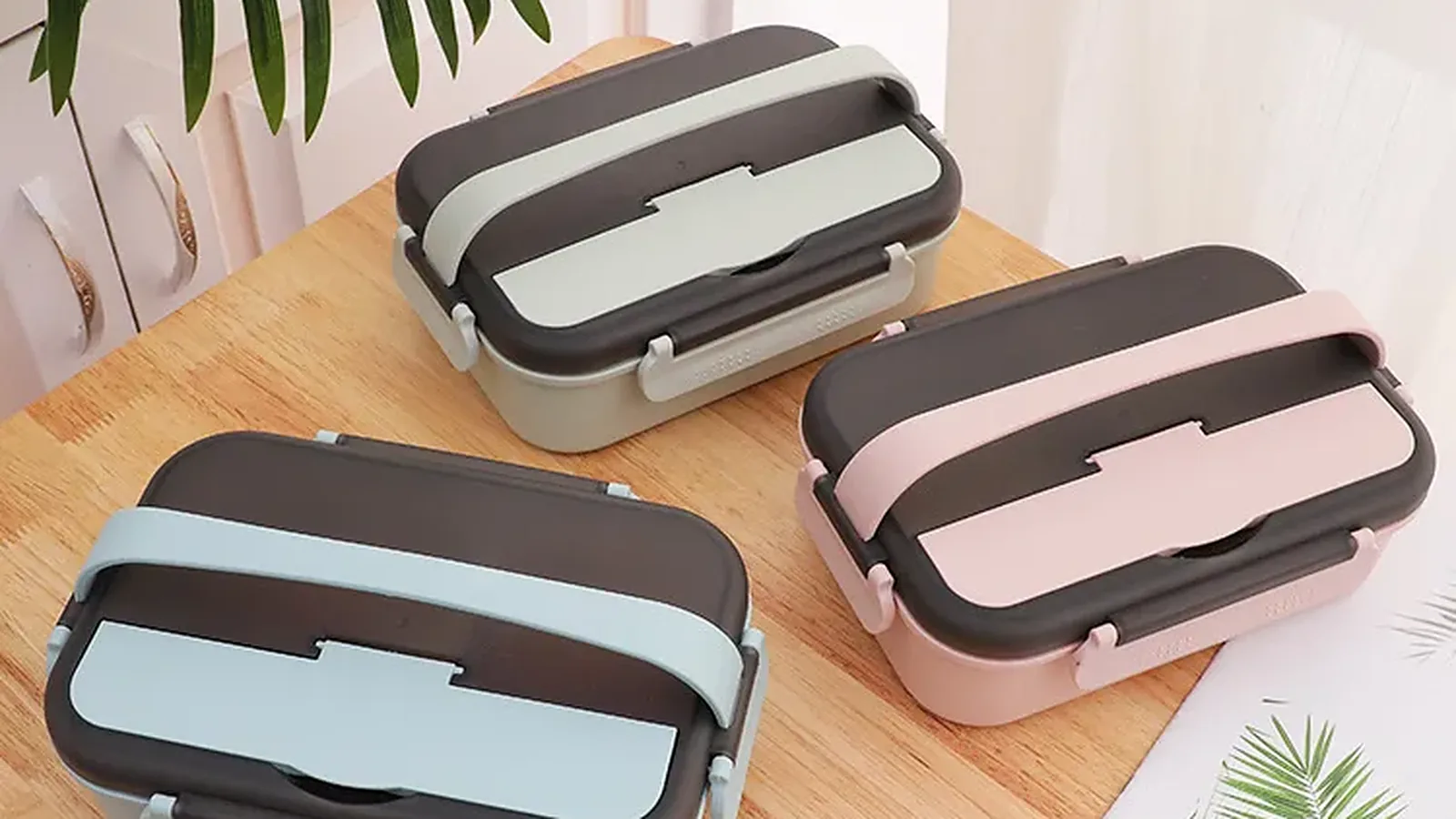
Three colors of one model, photographed together. On an inspection booking these are three lots, each with its own sample size — not one lot of "the order".
Where the sample comes from matters as much as how big it is. The cartons to open should be spread across the stack, across pallet positions, and across the packing sequence — not the top row, not the pallet nearest the door, and never the cartons the factory has set aside. A credible report lists the carton numbers it opened, so you can see the spread. If there is no carton list, the sample is unverifiable and the pass is worth what you paid for it.
Two more checks belong at this point, both cheap:
- Count first. Packed cartons times pieces per carton against the ordered quantity. A short count is a finding, not a footnote, and it changes the lot size that the sample was drawn against — a plan built for 500 cartons and applied to 430 is a plan for a different lot.
- Check the assortment. The proportion of colors and sizes in the packed cartons should match the order. An inspector who samples the pink ones beautifully has told you nothing about the blue ones. How cartons are built to stack and nest is its own branch of arithmetic.
The sampling plan: AQL, sample size and accept numbers
Three inputs produce the plan: the lot size, the inspection level, and the AQL for each defect class. The standard behind them is ISO 2859-1, with ANSI/ASQ Z1.4 as its American twin — the same code letters and closely aligned tables, separately maintained. General inspection level II, single sampling, normal inspection is the commercial default for consumer goods and the level almost every inspector will assume unless your order says otherwise.
The pre-shipment inspection AQL levels you are choosing between are three general ones — I, II and III — plus four special levels (S-1 to S-4) reserved for tests that take time or destroy the unit. Level I takes a smaller sample and Level III a larger one; special levels are what a drop test or a cycle test is booked at, which is why those checks never run on the full AQL sample. A buyer who writes "level II" and stops has chosen the appearance sample, not the test sample.
AQL is not a quality target. It is the worst defect rate you are willing to accept, on average, across a series of lots — the point where the plan starts rejecting. Buyers who read it as "2.5% of my goods may be broken" have misread the table in the expensive direction: the plan accepts lots that are better than the AQL most of the time and rejects most lots that are worse, and it does both with error bars. The standard also carries switching rules — a supplier with a clean run of lots can move to reduced inspection, and a run of failures moves the next lot to tightened — but those rules work on a series, and a single order is not a series.
Lot size (units) | Code letter | Sample (n) | Major, AQL 2.5 (Ac / Re) | Minor, AQL 4.0 (Ac / Re) |
|---|---|---|---|---|
91 – 150 | F | 20 | 1 / 2 | 2 / 3 |
151 – 280 | G | 32 | 2 / 3 | 3 / 4 |
281 – 500 | H | 50 | 3 / 4 | 5 / 6 |
501 – 1,200 | J | 80 | 5 / 6 | 7 / 8 |
1,201 – 3,200 | K | 125 | 7 / 8 | 10 / 11 |
3,201 – 10,000 | L | 200 | 10 / 11 | 14 / 15 |
10,001 – 35,000 | M | 315 | 14 / 15 | 21 / 22 |
General inspection level II, single sampling, normal inspection. Critical defects are not a column in this table: zero acceptance is a buyer's rule written into the order, and it is the rule to write. For lots above 35,000 units, read the standard's own table rather than extrapolating this one. These are single-sampling plans: a double- or multiple-sampling plan has different accept and reject columns and a second stage of sampling, so if the order does not say "single", ask which plan the inspector is reading.
How to read a row of that table — where the accept and reject numbers come from, and why two order sizes land on two different plans — is worked through line by line in the PO clause article. What that article does not cover is which lot the table is being applied to (the lot-definition section above), and what rides on the sample besides appearance.
The AQL sample covers appearance and workmanship. It does not, and should not, cover the checks that take time, need a gauge, or destroy the unit. Those need their own number in the booking:
Check | Runs on | Quantity to write in the booking |
|---|---|---|
Appearance, workmanship, color against the approved sample | the AQL sample | all of n (315 for a lot of 10,001 – 35,000) |
Quantity, packing, carton marks, barcodes | every carton counted, a subset opened | all cartons, 10 – 20 opened |
Critical dimensions (length, width, height, wall thickness at named points) | a measuring sub-sample | 13 units, three readings each |
Seal and leak | a functional sub-sample | 13 units, all of them filled |
Hinge or clip fatigue | a cycling sub-sample | 3 units, cycle count set by you |
Carton drop | whole cartons | 3 cartons, one corner, one edge, one face |
Documents: migration report, grade certificate, dishwasher report | paper, not units | 1 set, checked against the model number |
Those sub-sample counts are a buyer's convention, not a standard's requirement — ISO 2859-1 sizes the accept/reject decision, not the destructive-test sample. What matters is that they are written down before the visit. An inspector who is told "do a leak test" will do three units; an inspector who is told "thirteen units, ten minutes inverted, photograph every failure" will do that, and the difference in what you learn is larger than the difference in what you pay.
Critical, major and minor, part by part
The classification decides the verdict more than the counting does, and on a lunch box it cannot stop at three words: "major" has to mean something an inspector can point at. The three-class convention is standard; the examples are the part nobody writes down. So here is the fourteen-line version we would hand an inspector for a plastic lunch box, and the one we would expect a buyer to hand us.

The parts a defect schedule has to name: the body and its SUS304 stamp, the lid, and the snap clip that holds it — all visible here. The gasket that does the sealing sits under the lid, out of frame; a checklist that says "workmanship" covers none of it.
Part | Defect | Class | Why it belongs there |
|---|---|---|---|
Body | Sharp flash on a cut edge or rim that can cut a hand or a lip | Critical | Injury risk, and unsellable once a customer reports it |
Body | Polymer not the one specified, or no food-contact document for the resin used | Critical | A compliance failure, not a cosmetic one |
Body | Wall below the drawing tolerance at a named measuring point | Major | It fails the job: breakage, heat distortion, a lid that will not hold |
Body | Crack, or a weld line that opens when flexed | Major | Leaks and fails in use |
Base | Missing or wrong grade stamp (SUS304 on a steel part, resin code on a plastic one) | Major | The product no longer matches what was sold |
Lid | Warped enough that the clip will not close, or closes and springs | Major | Seal failure, the classic return reason |
Clip / latch | Will not latch, latches and releases under load, or breaks within the cycle count | Major | The closure is the product |
Gasket / silicone band | Missing, torn, or the wrong hardness so it will not compress | Major | A seal is a compressed gasket; no compression, no seal |
Hinge | Cracks or stiffens within the cycle count | Major | Fails the second month of use, not the first |
Divider / compartment wall | Detached, or flash across a compartment | Major | Food mixes; the product's function is separation |
Print / logo | Wrong logo, off-register beyond the agreed tolerance, or peeling after the rub test | Major | The item cannot be sold under the brand |
Surface | Sink mark, gate blush, faint flow line away from a sealing surface | Minor | Visible under raking light, harmless in use |
Surface | Scuff, dust, water spot, mold-release smear | Minor | Cleans off or is not seen at arm's length |
Carton | Wrong shipping mark, wrong carton dimension or gross weight against the spec | Major | Freight and customs problem, and it is the document the warehouse reads |
Three rules make the table usable on the floor, and they are worth arguing about before the visit rather than after it.
Flash is classed by consequence, not by where it sits. A burr that can cut a hand or a lip is critical anywhere on the part, including a decorative edge. A burr at a sealing rim that breaks the seal without cutting is major. A burr on a decorative edge that does neither is minor, a fingernail problem. The critical line in the table above turns on injury, not on location — which is why the same rim can produce two classes of burr on two parts of one box. Write down which one you mean; an inspector left to choose will class every burr one way and be wrong in both directions.
A missing gasket is major, not critical. It is a functional failure with no injury path. Classifying it as critical feels satisfying and destroys the credibility of your defect list, because the factory will correctly point out that a missing gasket is fixable in ten seconds.
Cosmetic defects belong on surfaces the user sees, and sink marks near a gate are normal in thick sections — which is a tooling question as much as a molding one. Where the wall thickness sets both the unit price and the breakage rate, the grammage argument explains why a buyer who demands a thinner wall has also demanded a different defect profile. And when a defect traces back to gate position, draft or where the weld line lands, the fix is in the tool, which is what the mold quote was pricing all along.
What this table does not do is replace the product-specific list you already have. It is a starting point: the defects that matter on a lunch box go part by part through the same hardware, and a buyer who reads both will write a shorter, sharper list than either.
The tests a lunch box order should carry
Seven tests and one document check decide whether the thing works. Only some of them can happen at an inspection; the rest are paper, and knowing which is which is the point.
Test | What it proves | Method to name in the booking | Sample |
|---|---|---|---|
Carton drop | The export carton survives handling and the contents survive the carton | ASTM D5276, or an ISTA 1-series procedure, at a drop height you specify | 3 cartons |
Unit drop | The box itself survives a waist-high fall onto concrete | Fill, close, drop on a corner from the height you name, inspect for cracks and clip release | 3 units |
Seal and leak | The lid, gasket and clip hold liquid in the orientation it will travel in | Fill with water, close, invert, hold for the time you specify, shake, look for a film of water at the rim | 13 units |
Microwave use | The claim on the retail box is defensible | EN 15284 — resistance to microwave heating of ceramic, glass, glass-ceramic or plastics articles intended for multiple re-use; a reusable PP lunch box falls inside that scope, a single-use one does not — plus the resin's food-contact status at the use temperature and a migration test at that temperature | paper plus 1 heated unit |
Dishwasher resistance | The container survives the cycles the label promises | The EN 12875 series, which sets out mechanical dishwashing resistance methods for domestic articles including plastics: part 1 is the reference test method, and part 2 is the inspection-and-evaluation part that defines the number of cycles | 3 units, cycle count named |
Hinge and clip fatigue | The closure still works after the number of openings a customer will do | Cycle the part open and closed to the count you name, then check for cracking, whitening and loss of retention | 3 units |
Migration documentation | The material is cleared for food contact in the market you sell into | For polypropylene in the US, 21 CFR 177.1520; in the EU, the framework in Regulation 1935/2004 and the plastics measure in Regulation 10/2011, with its overall migration limit of 10 mg per dm² of contact surface | 1 set |
Odor and taste | The part does not smell of machine oil, regrind or mold release | Sealed container, warm, opened and smelled by two people; a taste check on a plain water sample | 3 units |
Four observations about that table, in the order they cost money.
The carton drop test is the only test on the list that most pre-shipment inspections actually run, and it is the one that catches the failure buyers underestimate: the lunch box is fine, the carton is not, and 500 cartons arrive with crushed corners. Drop height, carton orientation and whether the carton is dropped before or after palletizing all belong in writing, because the difference between a 60 cm drop and a 90 cm drop is the difference between a pass and a redesign.
There is a published method, and a reusable lunch box falls inside its scope. EN 15284 covers resistance to microwave heating of ceramic, glass, glass-ceramic and plastics articles intended for multiple re-use in a microwave oven — it excludes single-use items, not lunch boxes. Anyone who tells you their container "passed the microwave test to standard X" should be able to name the clause and the sample, and the migration question is separate: it is answered at the temperature the product will see. The defensible position is narrower and stronger: the resin is cleared for food contact, the migration test was run at the temperature the product will see, and the retail claim is worded to match both. Microwave claims fail in specific, predictable ways, and the failure is almost always in the wording rather than the polymer.
Dishwasher resistance has a method, and the method has parts. The EN 12875 series covers mechanical dishwashing resistance of domestic articles: part 1 is the reference test method, and part 2 is where the cycle count and the evaluation of the washed part are defined. A report that says "dishwasher safe" with no cycle count and no method is a marketing sentence, not a test result — and if it does name a part, it should be one of those two, because the rapid methods in parts 4 and 5 are written for ceramic ware. If the retail packaging promises 500 cycles, the report should name 500 cycles. The purchase specification for a dishwasher claim is where that number belongs.
The leak test is the one to insist on. A lunch box that leaks is not a cosmetic problem, and a seal is a gasket compressing against a rim — which means it is proven by filling and inverting, not by pressing the lid and pronouncing it firm. The mechanics, and the sample protocol that goes with them, are worked through in the seal structure note. Two failure points specific to this product: a clip that holds at the rim but releases when the box is carried by the handle, and a gasket that seals cold and weeps after a microwave cycle.
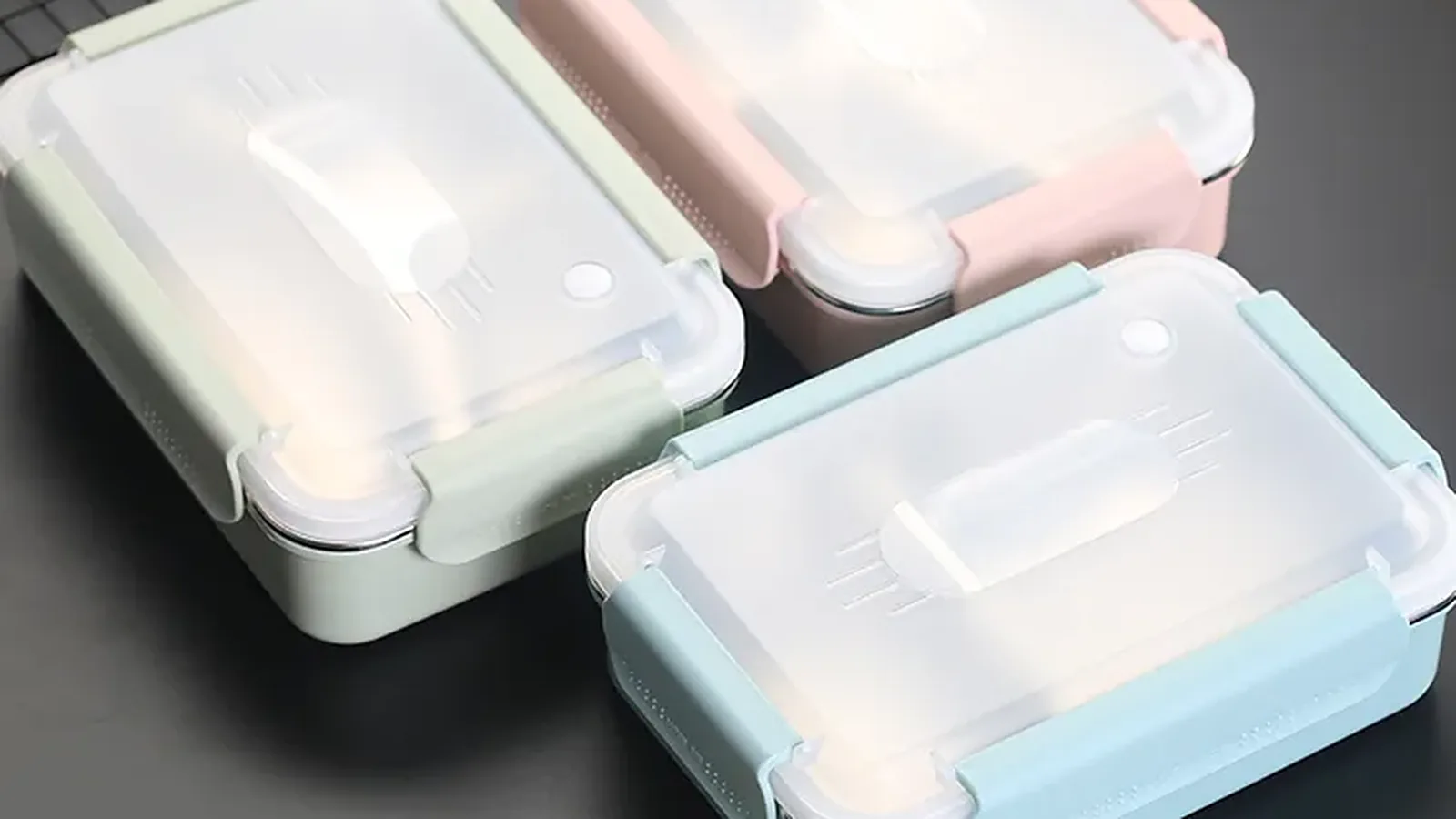
The parts a leak test is really testing: the clip that holds the lid down, and the gasket that has to compress evenly all the way around the rim.
Destructive tests consume sellable units. Declare it in the booking — three dropped cartons and three cycled hinges come out of your quantity, and a factory that is not told will simply replace them from stock, which quietly removes them from the lot.
What a usable report contains
A pre-shipment inspection report is usable when a person who was not there can re-run the decision. That takes about twelve fields, and the absence of any one of them degrades the rest.
- Client, factory, inspection date, arrival and departure times
- The lot: model, color, ordered quantity, produced quantity, packed quantity, carton count
- The sampling plan: standard, inspection level, AQL per defect class, sample size, accept and reject numbers
- The cartons opened, by number
- Every defect found, with class, location on the part, quantity, and a photograph
- Measurement results against the specification, with the gauge identified
- Functional and destructive tests, with the method and the result per unit
- Packing conformity: inner packing, carton grade, pieces per carton, gross weight, dimensions
- Marks and labels: shipping marks, barcode scan result, country of origin, warnings
- Documents sighted: migration report, grade certificate, dishwasher report, each checked against the model number
- The verdict per defect class, and the overall conclusion — pass, fail, or pending
- The inspector's name and signature
Two fields do more work than the others. The carton list is what makes the sample verifiable: without it you cannot tell a stratified draw from a handful off the top of the nearest pallet. The defect photographs are what makes the report arguable: a photo with the carton number and a scale in frame ends the conversation that a written description starts.
Then there is "pending". It is the verdict that means the inspector found something that is neither a defect count nor a pass — a quantity shortfall, a mark that differs from the artwork, a document that names a different model, goods reworked during the visit. Three questions resolve it: which specification clause is in question, what would have to change to satisfy it, and who decides. A pending verdict with no answer to those is an unfinished inspection, and it usually means the booking was missing the document that would have settled it — most often the food-contact file, and specifically whether the part in question is a direct or indirect food-contact component.
When the report says fail
A fail is not the end of the order. It is a decision with five exits, and each one costs a different number of days.
Sort 100%. Every unit checked by hand, defects pulled, the balance shipped. Viable when the defect is visible and the quantity is small; it converts a sampling problem into a labor cost, and it needs the factory to have people who are not on the packing line. Ask for the sorted quantity to be re-inspected, not self-certified.
Rework and re-inspect. The right answer when the fault is systematic and fixable — a gasket seated wrong, flash trimmed, a label replaced. It needs a second visit, and the second visit is a new booking with its own sample, not a courtesy call.
Deviate with a price adjustment. Legitimate for a minor-defect failure on a commodity line: accept the lot, take the discount, and write the acceptance down whether or not you disclose it to your customer. What makes this safe is that the defect class is known and the count is in the report.
Reject the lot. The expensive exit, and the one that only works if the payment terms gave it teeth. In practice it is a negotiation about who absorbs the material, and it goes better with a report that lists carton numbers and photographs.
Ship part. Take the conforming portion against the sailing and hold the rest for a second shipment. Worth pricing before the inspection, not after: on a mixed container the incremental freight for a partial shipment can exceed the value of the goods being rescued, which is why mixed loads need the loading plan decided early.
Whichever exit you take, two things happen on the clock. The inspection date was set against a sail date, and every day of rework eats the buffer. And the second inspection has to be booked — during the same holiday crush that made the first one hard to schedule.
The cheapest fail is the one you planned for: an inspection date with five working days of slack, a defect list specific enough that the inspector's count is not arguable, and payment terms where the report means something.
Nine questions to send with the booking
Print these, answer them with your supplier, and paste the answers into the booking. Each one maps to a section above.
- Which model, color and run does this lot cover — and if there are three colors, are we booking three samples?
- What is the produced and packed quantity, in cartons, against the order?
- Which inspection level and AQL per defect class are we using, and does the report have to state the accept and reject numbers?
- Here is the defect list. Which lines does the inspector disagree with, and why?
- Which cartons will be opened, and will the numbers appear in the report?
- How many units get the dimensional check, the leak test and the hinge cycles — and at whose count?
- Which carton gets dropped, from what height, and to which method?
- Which documents will be on the table for the document check, and do they name this model?
- If the lot fails, what is the rework plan, who pays for the second visit, and how many days does it take?
Question four is the one that changes behavior. Getting the defect list into the factory's hands before the visit — not the inspector's only — is what turns an inspection from an ambush into a specification. Everything else on this page is downstream of that.
Short answers to the questions buyers send us
What does AQL 2.5 mean on a lunch box order?
It means the plan starts rejecting lots whose major-defect rate is worse than about 2.5% over a series of lots. In practice, at 200 units sampled it accepts 10 major defects and rejects at 11; at 315 units it accepts 14 and rejects at 15. It is a decision rule with error bars, not a promise that 97.5% of the pieces are good.
Is ISO 2859-1 the same as ANSI/ASQ Z1.4?
They use the same sample-size code letters and produce closely aligned accept and reject numbers, and they are maintained separately by ISO and ASQ. If your order names one, your inspector should be reading that one. Naming neither and arguing about the table afterward is the failure mode.
Who pays for the inspection?
Usually the buyer, per inspector-day plus travel, and usually the buyer pays again for a re-inspection. Some factories absorb the cost of the second visit when the fault was theirs, and that is worth agreeing in writing before the first visit rather than after the first fail.
Can a factory inspect its own order?
Yes — provided the report is built to be compared rather than believed, and provided the sample is drawn by the person writing it rather than handed over by the packing line. For a repeat order on a proven tool that is often enough; for a first order, a new color or a new mold, it is not.
If you are specifying the inspection clause and the sampling plan into an order for the first time, the RFQ-to-shipment sequence puts this step where it belongs in the calendar.
Xinghui Plastic Life molds and packs lunch boxes and food-storage containers in Jieyang, and this is the check we sit through on every order that leaves the plant — the same defect list, the same carton arithmetic, a report built to be compared against the next one. If you are writing an inspection brief for a first order, send the model, the market and the defect list you have; we will tell you which lines we would argue with before an inspector ever sees them. The models in the tables above come from the wholesale lunch box range.
Continue reading
Related sourcing guidance
More practical context for your food storage container sourcing conversation.

Discuss your product range
Need help selecting or customising containers?
Share the product type, market and sourcing requirements with the Xinghui team.