
Sourcing & OEM
Thin Wall Injection Molding Math
Grammage, wall thickness and breakage are one purchasing decision, not three. How to read a PP food container quote and put both numbers into your PO.
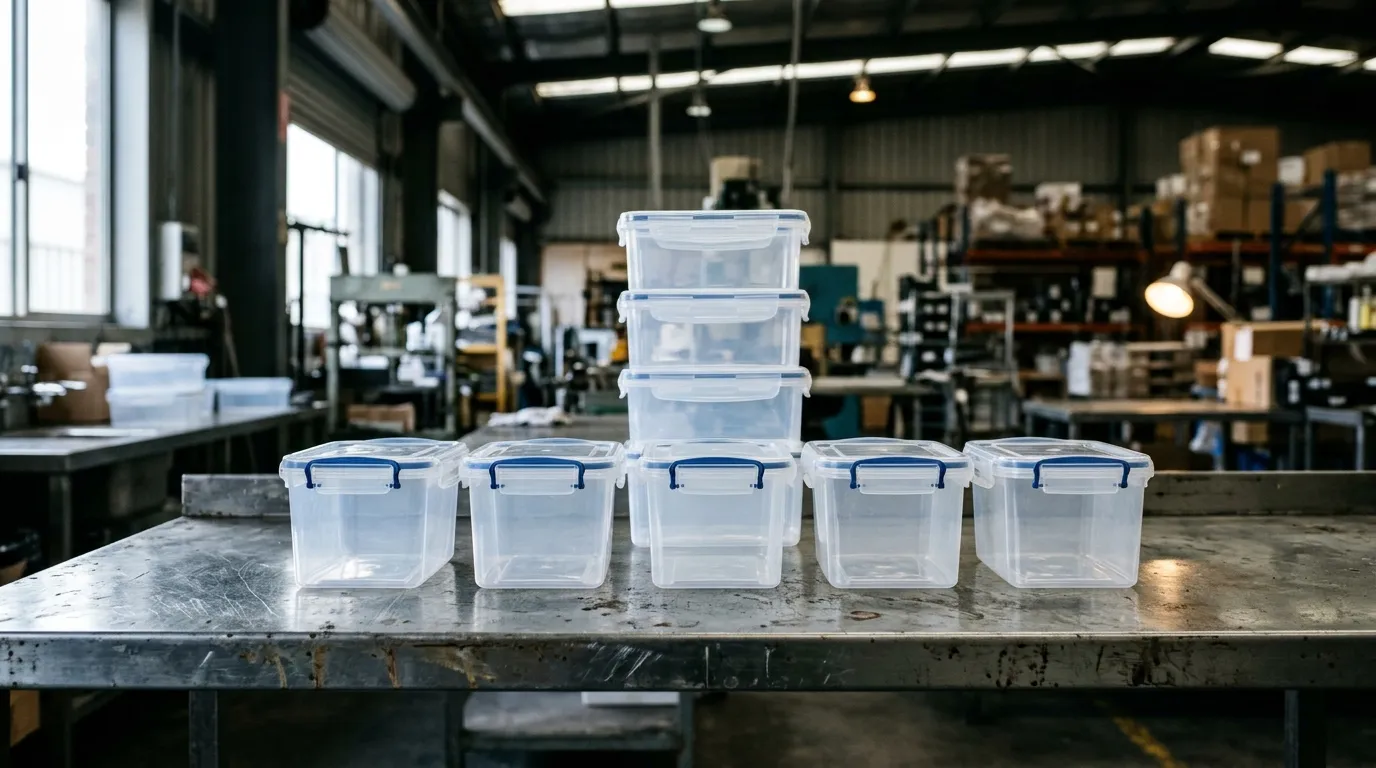
Two quotes land in the same inbox in the same week. Both are for an 800 ml square PP box with a snap-lock lid, both from factories you have bought from before, and both look like the same product on the drawing. One quotes the part at 95 g. The other quotes it at 130 g — and the 95 g quote is 12% cheaper.
Nobody in either email explains the 35 g. Grammage is the one number in a thin wall injection molding quote that a buyer can check with nothing more than a scale, and it is also the number frequently quoted without a basis — a bare weight with no statement of what was weighed, where the wall was measured, or what test the part has to survive.
The 35 g is not the point. One quote describes a part and the other describes a promise, and you have no way to tell which is which. What follows is the version of this conversation engineers have with each other and rarely have with buyers: what grammage measures, where the wall goes thin, why a 0.4 mm change moves five cost lines at once, what breaks after the container leaves the factory, and the six lines you can put in a purchase order so that the next two quotes are comparable.
What Grammage Actually Measures, and the Three Numbers It Can Be
Grammage is the weight of the thing you are buying, expressed in grams. In paper and film converting the word is precise — grams per square meter — but in plastic housewares it has drifted into a looser meaning: the weight of one piece, as quoted. That drift is where the arguments start, because "one piece" has at least three defensible readings.
The first is the bare body: the container without its lid. The second is the assembled unit: body, lid, and any silicone gasket seated in the lid groove. The third is the shipped unit: everything above plus the poly bag, the retail sleeve, the divider, or the shrink wrap that goes into the carton with it. On a small box those three can differ by a third, and each is a legitimate thing to put on a spec sheet.
There is a fourth number that most buyers never ask for and every freight calculation depends on: the carton gross weight. It is the cheapest figure in the quote to verify, because it is printed on the carton and it can be weighed on any receiving dock scale.
Our own product records are a fair illustration of how easily the basis goes missing. Four records carry a weight, and the field is labeled — in our own database — "Grammage (confirm unit basis)":
Model | Recorded piece weight | Pieces per carton | Recorded gross weight | Recorded gross ÷ pieces |
|---|---|---|---|---|
BX1069 (1,200 ml round bowl) | 135 g | 60 | not recorded | — |
BX1051 (1.3 L three-compartment box) | 182 g | 72 | 14.3 kg | 198.6 g |
BX1052 (round storage set) | 298 g | 48 | 16.2 kg | 337.5 g |
BX1053 (three-piece round set) | 425 g | 24 | 12.4 kg | 516.7 g |
The record labels the middle weight "confirm unit basis" and the gross weight "confirm packing scope", so the arithmetic below assumes the gross is the shipped carton and the piece weight excludes packaging — the numbers support both readings. Read the second and last columns against each other. For BX1051 the carton arithmetic gives 198.6 g per shipped unit against a quoted 182 g, so roughly 16.6 g per piece is carton and inner packing. For BX1052 the gap is 39.5 g. For BX1053 it is 91.7 g. Those gaps are not errors — they are packaging, and they are the difference between what you pay for as product and what you pay for as freight.
Now the honest part. The two round storage records are multi-piece sets, which means 298 g and 425 g are almost certainly per set and not per piece, and the record does not say so. The field label says so instead. If a factory's own database cannot state the basis in the number itself, a quotation email certainly will not. Ask, in writing, on every quote: per piece or per set, with lid or without, and what the carton gross weight is.
This is also why two quotes built on different assumptions cannot be compared on price. When you ask a supplier to re-quote, the useful request is not "make it cheaper" — it is "state the basis". The same discipline applies to the tooling side of the sheet, where how an injection mold quote is actually built separates steel, cavities, and runner from the per-part price you are arguing about.
Where the Wall Actually Goes Thin: Body, Base, Rim, Lid, Hinge
A food container is not a uniform-thickness part, and this is the second reason two quotes for "the same box" diverge. For a plastic food container manufacturer, "wall thickness" usually means the nominal figure for the body — which is not where the part fails. There are five zones worth measuring separately.
Body. The sidewall has draft so the part releases, which means it is not the same thickness top to bottom; it thins toward the base as the core tapers. On a deep container the lower third of the sidewall is where the flow has traveled farthest and cooled most, and it is often the thinnest section that still looks like a wall in a photo.
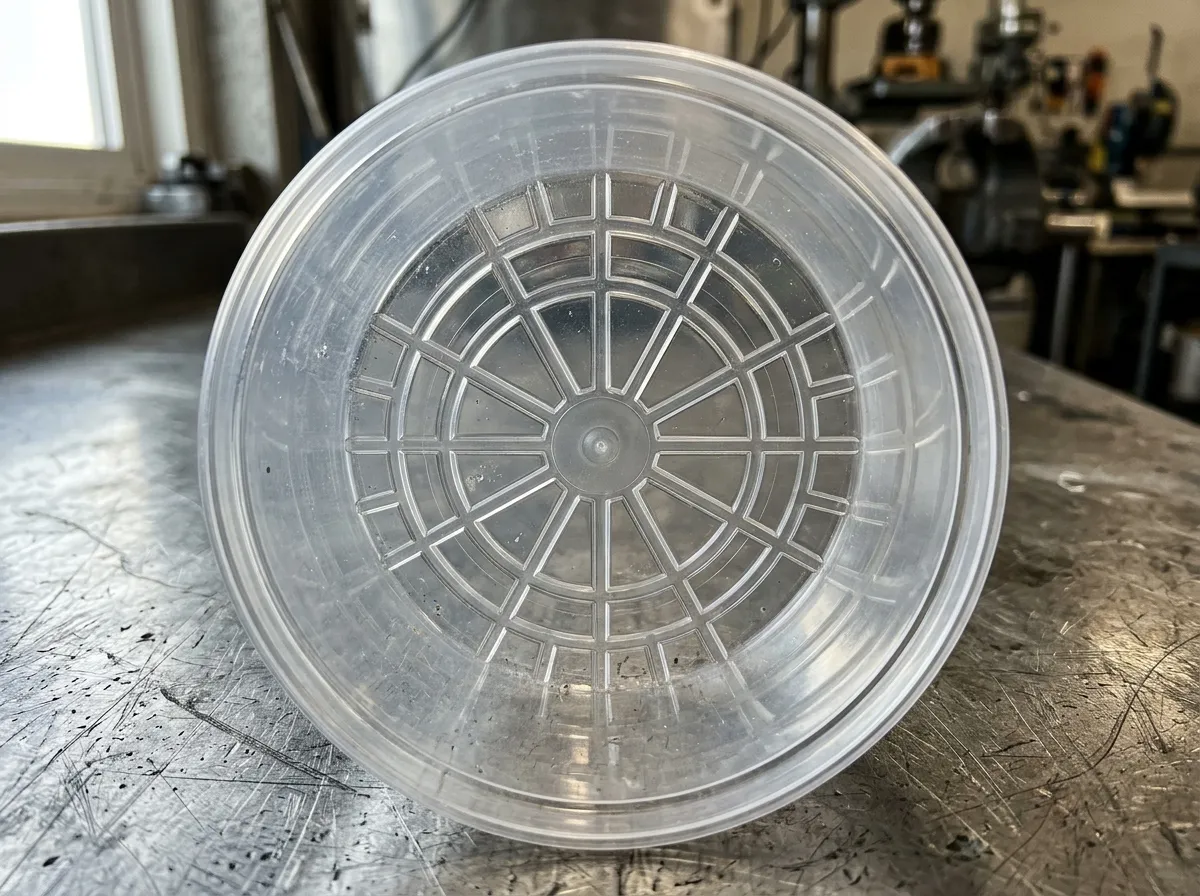
Base. The base is the largest flat area in the part and the hardest to keep flat, and it is the surface that carries the stack above it. A base thin enough to save grams will bow under load — the "oil can" that pops when you press the center — and once it bows, the container no longer stacks squarely and the carton corners take the load instead.
Rim and lid land. The sealing land has to be thin enough to flex and thick enough not to crack, and it is frequently where the gate sits. A gate scar on a sealing land is a notch, and a notch on a thin rim is where a crack starts. This is the zone where grammage and function fight most directly: material removed here is the cheapest gram you will ever remove and the most expensive one you will ever lose.
Lid panel and skirt. The lid is a separate part with its own weight, and quotes that give one number for the whole set hide whether the lid was thinned. A lid skirt that is too thin will not hold engagement force; one that is too thick will not snap on at all.

Hinge. Where the lid is attached, the living hinge is by definition the thinnest section in the assembly. It has to survive thousands of flex cycles, and the strain per cycle rises as the hinge thins. Save 0.1 mm here and you have moved the failure from the third year to the third month.

There is a second-order problem that experienced buyers learn to look for: the number on the drawing is nominal, and nominal is a point in the middle of a tolerance band. A wall called out at 1.0 mm with a tolerance of ±0.15 mm produces parts at 0.85 mm on the thin side of the band, and if the mold wears toward that side, the whole shipment sits there. Wall thickness tolerance is worth more attention than the wall thickness number, because the band is what you actually receive.
Where those numbers come from is a set of decisions made long before the first shot: gate position, draft angle, parting line, and where the weld line lands on your logo are all fixed in the tool, and each of them moves material around the part.
What Thin Wall Injection Molding Actually Constrains
No single millimeter figure makes a wall thin. The working definition in packaging is a relationship: wall thickness under 0.025 in (0.62 mm) together with a flow length to wall thickness ratio above 200, which is where the thin-wall entry on Wikipedia draws the line from a resin supplier's technical paper (Thin-wall injection molding, Wikipedia). The ratio is the half that matters for a food container, because it is the half that changes when the same wall has to run across a bigger base.
That line is drawn for single-use packaging, and a reusable food container is usually specified well above it. The economics below work the same on both sides: taking 0.4 mm off a 1.2 mm wall moves a part toward the thin-wall regime rather than describing one already inside it, and every cost line responds the same way.
The reason a supplier cannot simply "make it 0.6 mm" is not stubbornness. It is that the wall, the flow path, and the machine are one system, and the wall is usually the variable with the least room to move.
Flow length against thickness. The melt has to fill the cavity before the flow front freezes against the cold steel. A long, thin path freezes fast, so the ratio of flow length to wall thickness — the number molders call L/T — is the real constraint, not the wall figure on its own. A shallow 800 ml box with a central gate has a short flow path and tolerates a thinner wall than a tall 2 L canister with a gate at one end, even at the same nominal thickness. A supplier who quotes a wall without asking where the gate is has not finished the calculation.
Gate location. The gate freezes last or first depending on where it is, and it sets the packing pressure the part receives. Move the gate to shorten the flow and you leave a witness mark somewhere; the question is whether it lands on a sealing land, a hinge, or a face nobody looks at.
Ribs and transitions. Ribs are how a good design removes material without removing stiffness — a rib is cheaper than a thicker wall for the same bending resistance. But a rib root is a mass concentration, and mass concentrations produce sink marks on the opposite face and weld lines where the flow re-joins. Abrupt thick-to-thin steps stall the flow front and create a stress riser at the transition, which is exactly where a rim crack will later begin.
Warpage. Uneven wall means uneven cooling, and uneven cooling means the part cools into a different shape than the mold. A container with a thick rim and a thin base warps into a rocker: it will not sit flat, it will not stack, and it will not seal. Warpage is the constraint that most often forces a supplier to add material back after a mold trial.
Venting and clamp force. Thin sections need fast fill, and fast fill needs somewhere for the air to go. Poor venting at high speed produces burn marks and short shots that look like a wall problem and are not, and the higher cavity pressure demands more clamp force to keep the parting line closed.
That last point is where the technical literature is clearest. Thin-wall molding is not conventional molding with less material: it requires machines and molds built for higher stresses and pressures, runs in a narrower process window, and carries higher capital cost as a result (Thin-wall injection molding, Wikipedia). A factory without that equipment does not quote a thin wall badly out of carelessness; it quotes what its presses can hold. Which makes the tonnage of the press a fair first question, before the wall is argued at all.

If the tool already exists, the wall is largely fixed, and the question becomes whether a new mold is justified at all — what can change on an existing mold and what needs a new one sits upstream of every grammage negotiation. Where a silicone gasket sits in the assembly, the seal is a separate molding process with its own tooling and thickness logic; liquid silicone injection versus compression-molded seals covers what changes for gasket fit and for the tooling bill.
Why 0.4 mm Off the Wall Changes the Unit Price in Five Places
Here is the arithmetic that most quote comparisons skip. A part price is not a material price. It is five cost lines divided by the number of good pieces:
part cost = (resin + machine time + tooling amortization + scrap + packaging and freight) ÷ good pieces
Change the wall by 0.4 mm and all five move, in different directions and by different amounts. Most thin wall packaging decisions are made on the first line alone, which is why they surprise people at the third. The figures below are a worked example, not a measurement of any specific model we list.
1. Resin. Material cost scales with shot weight, and shot weight scales roughly with wall. Taking 0.4 mm off a 1.2 mm wall removes about a third of the material in the body — 0.4 ÷ 1.2 = 33%. On a 130 g part that is a little over 40 g, less whatever the rim and lid keep. This is the line the cheap quote is quoting, and it is real money.
2. Machine time. Cooling dominates the cycle, and cooling time falls roughly with the square of wall thickness. Going from 1.2 mm to 0.8 mm gives (0.8 ÷ 1.2)² = 0.44, so the cooling portion drops by more than half — but only if the press can fill the thinner cavity before it freezes, which usually means an accumulator or a high-speed injection unit.
3. Machine rate. That press costs more per hour, and the higher cavity pressure demands more clamp force for the same projected area, which can push the job onto a larger tonnage machine. The hourly rate goes up while the hours go down, and whether that nets out positive is the calculation a buyer never sees.
4. Scrap. A thinner wall runs in a narrower process window. Startup scrap and reject rate rise, particularly in the first hours of a run and at every restart after a color change. Scrap is resin you buy twice — once as pellets and once again as the disposal or regrind handling — so a quote that assumes a clean run is quoting a run that does not exist.
5. Packaging and freight. Lighter pieces mean more pieces per carton at the same gross weight, which usually means fewer cartons per 10,000 pieces and lower freight. But thinner walls also reduce how high the cartons can be stacked, and a shorter pallet can give back the volume you just won. The carton arithmetic that governs this is worth working through properly — stacking, nesting and carton math is where the freight saving either survives or evaporates, and how a mixed container actually loads decides whether the cube you saved is cube you can sell.
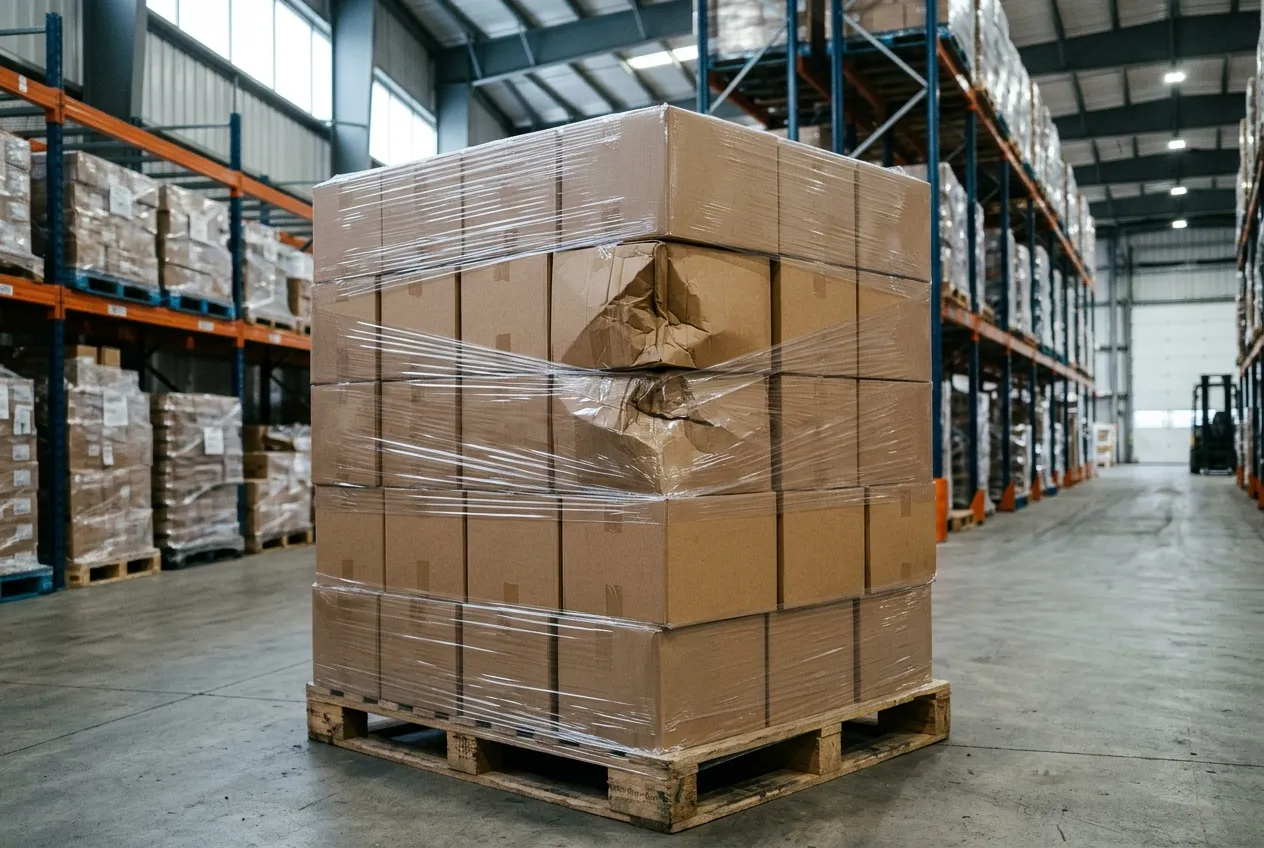
The point of listing all five is not that thinner is worse. It is that "injection molding cost per part" is a five-line equation, and the 95 g quote and the 130 g quote are almost never solving the same one. A quote that is 12% cheaper is only comparable if both sides used the same resin price, the same assumed cycle, the same scrap allowance, and the same carton.
What Actually Breaks in the Field
Factory defects and field failures are different animals, and buyers are usually shown the first while paying for the second. A short shot or a flash edge is caught on the line; what reaches your warehouse and then your customer is something else, and there are four patterns worth knowing by name.
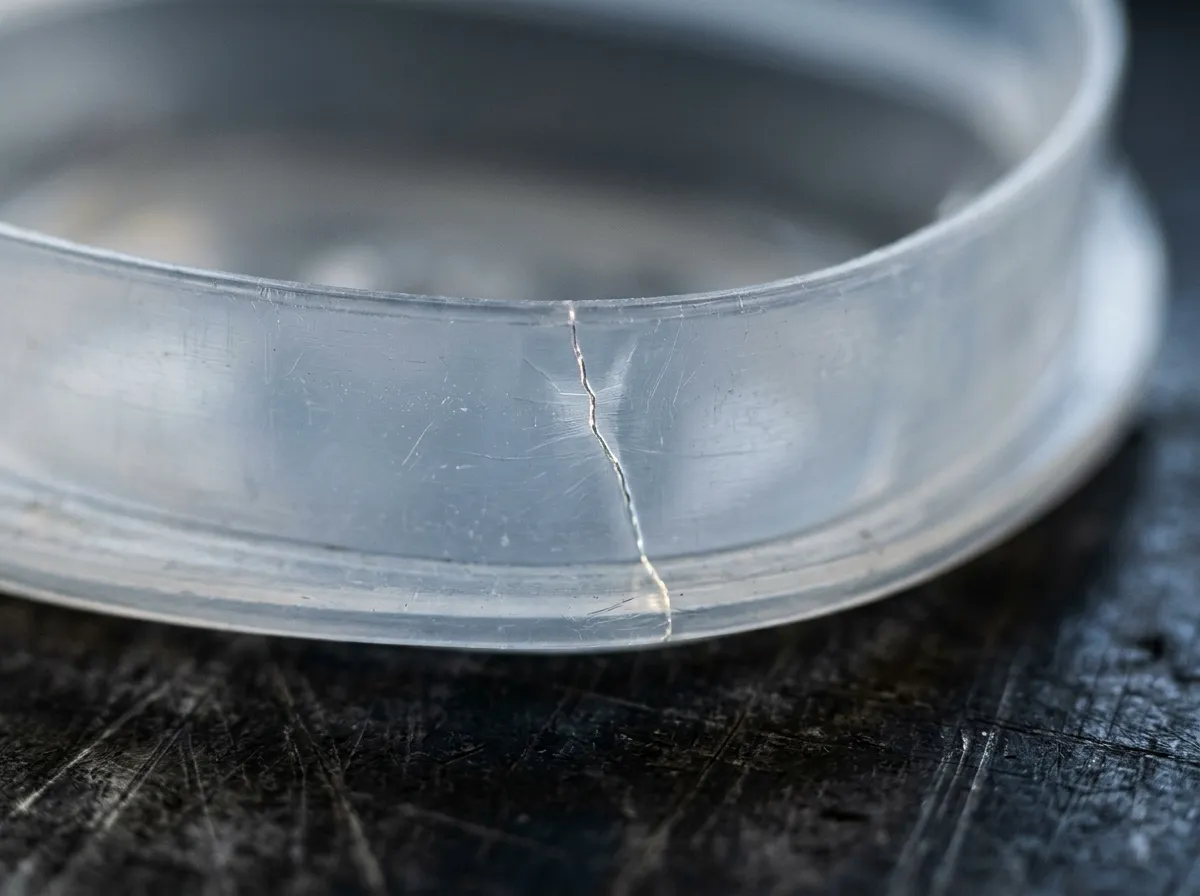
Rim cracking. The rim is the thinnest load-bearing path in the part and the first thing to hit the floor in a drop. Cracks start at a gate witness, a weld line, or a sharp transition, and they travel along the rim rather than across it. In a carton, one cracked rim breaks the seal and lets the stack shift.
Base crazing. Fine surface cracks that appear after a few weeks of use, not on arrival. They come from molded-in stress meeting heat, detergent, and thermal cycling — the fridge-to-microwave-to-dishwasher loop a storage container is sold for. A base that was thin enough to warp during molding carries residual stress for its whole life, and crazing is how that stress reports in.
Hinge fatigue. A living hinge is flexed every time the lid opens. Strain per cycle rises as the hinge thins, so a hinge that was acceptable at one wall becomes a crack initiation site two walls thinner. This failure is slow, which makes it worse: it arrives after the reorder.
Stack collapse. Carton compression is carried by the container walls, not by the contents. In a warm container or a humid warehouse the plastic creeps, the walls bow, and the stack settles. When it settles, the load moves to the carton corners and the whole pallet leans. Nothing is cracked and everything is unsellable.
Two test methods cover most of this, and both are worth naming in a purchase order because they turn an argument into a measurement. For impact, ASTM D5276 covers drop testing of loaded boxes and cylindrical containers by free fall, with face, edge and corner orientations, and it is explicitly intended for comparing how different package designs perform; for containers not exceeding 110 lb (50 kg) it also fulfills the requirements of two ISO drop-test standards, and the method is aimed at containers handled manually during distribution (ASTM D5276). For load, ISO 12048 specifies compression and stacking tests on complete, filled transport packages using a compression tester (ISO 12048), while ASTM D642 covers the compressive resistance of shipping containers, components, and unit loads.
None of these failures is exotic. All of them are cheaper to prevent than to absorb, and the reason they surprise buyers is that the carton arrived intact. Where glass wins on shelf and where it breaks your freight and returns math makes the same point from the other material direction: the cost of a fragile package is never the unit price, it is the replacement arithmetic behind it.
The Specification Table: Wall, Weight, Test, and What Goes in the PO
If you take one thing from this guide, take the table. It maps the four wall zones to what they do to weight, how they fail, and the exact line to write in the purchase order. A quote that answers these five columns is comparable to another quote that answers the same five.
Wall zone | Where it thins | Effect on the quoted weight | How it fails in the field | What to write in the PO |
|---|---|---|---|---|
Body / sidewall | Lower third, as the core tapers | Largest single share of the piece weight | Bows, then will not stack or seal | Nominal wall + tolerance, measured at mid-height on two opposite faces |
Base | Center and the corner radius | Second largest; often the cheapest gram to remove | Oil-canning, rocker, crazing after thermal cycling | Base flatness after filling, and a stack load the filled carton must hold |
Rim and lid land | Sealing land, at the gate | Small weight, large function | Rim crack starting at the gate witness | Gate position, and rim inspection under 10× magnification |
Hinge | The living hinge itself | Small weight, high consequence | Fatigue crack after N cycles | Cycle count the hinge must survive, with the test method stated |
Lid | Panel and skirt | Separate part; often hidden in a set figure | Will not snap on, or will not stay on | Weight stated per piece and per set, and lid engagement force |
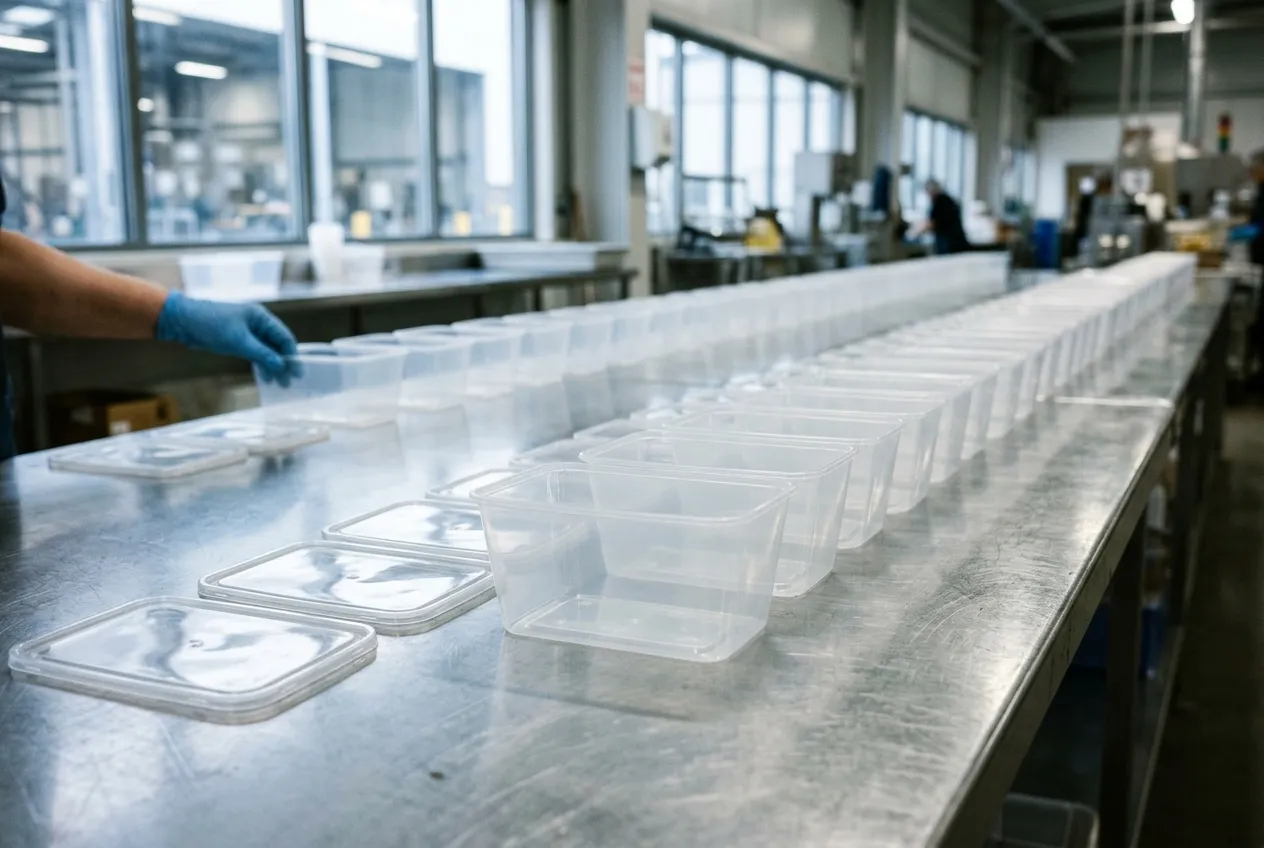
Then the six lines that make two quotes answerable at all. They are short enough to paste into an email and specific enough that a supplier cannot answer them accidentally.
- Grammage basis. Piece weight in grams, stated per piece and per set, with lid, without inner packaging. Ask for the average of ten pieces and the minimum and maximum in that sample.
- Wall thickness and tolerance. Nominal wall in millimeters with the tolerance band, plus the three measurement points: rim land, mid-body, base center.
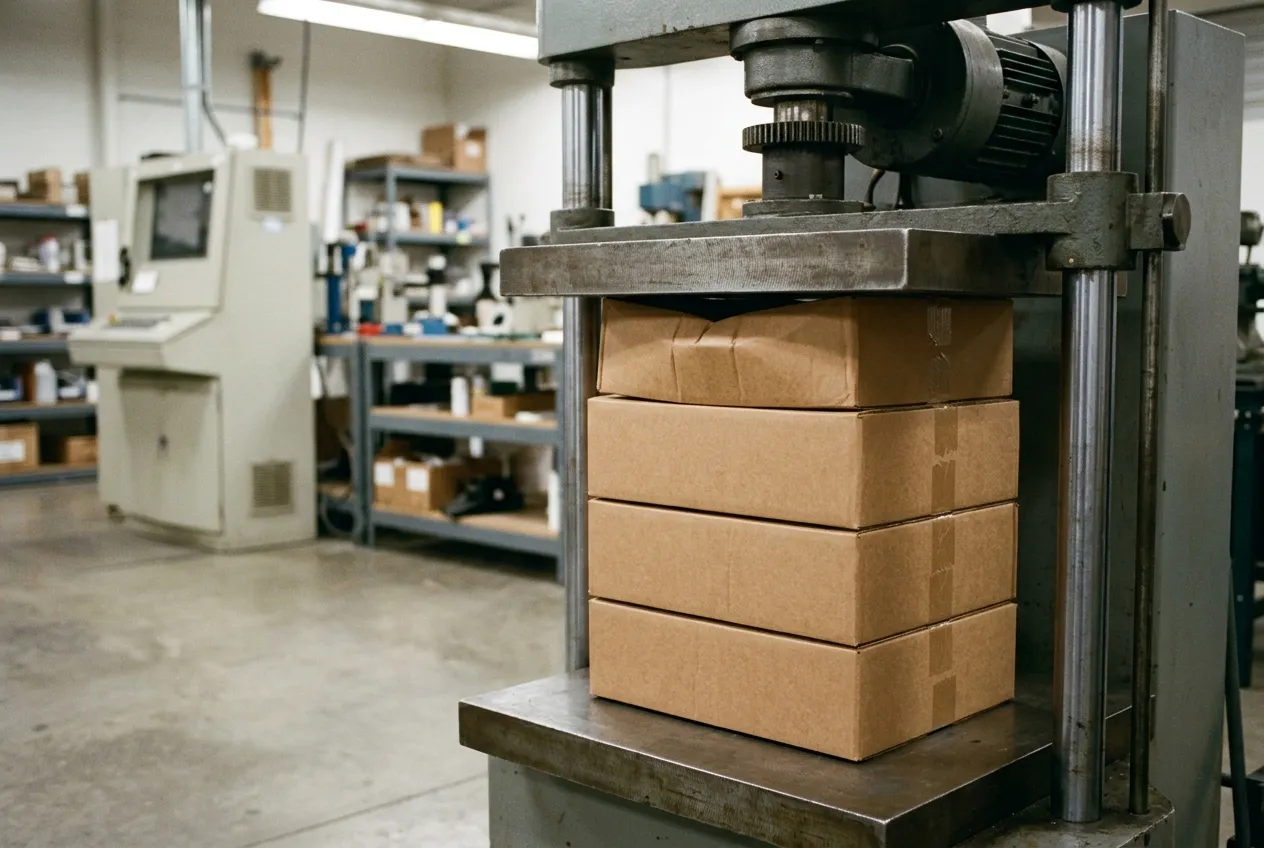
- Carton data. Pieces per carton, carton gross weight, and carton dimensions. This is the line you can verify on arrival.
- Drop test. Method, drop height, orientations, and the number of units tested — ASTM D5276 if you want a recognized reference, or an agreed in-house equivalent written into the spec.
- Stack test. The load and duration the filled carton must withstand, per ISO 12048 or ASTM D642, and whether the test is on the bare container or the shipped carton.
- Scrap allowance. The reject rate the quoted price assumes. A quote with no scrap assumption is a quote that will be renegotiated at the first claim.
Most specification arguments start from the same root cause — several requirements merged into one line, so nobody can tell which one was tested. Airtight and leakproof are not the same spec, and the same logic applies to weight and wall: two numbers, two tests, two lines.
How to Verify It Before You Pay for the Whole Run
A grammage figure is a claim about one part. What you actually buy is a distribution, and the difference between the two is where most disputes live.
Weigh ten, not one. A 0.1 g scale and ten pieces from the first article tell you the mean and the spread. If the spread is wider than the grammage tolerance you wrote, the process is not in control yet, whatever the average says.
Measure the same three places. Rim land, mid-body, base center — marked on a drawing, measured by both sides, reported in millimeters. An ultrasonic gauge reads plastic without cutting the part; a micrometer on a cut section is more accurate and destroys the sample. Either is fine if both parties use the same method at the same points.
Drop the carton, not the part. A bare container dropped on a bench proves very little. ASTM D5276 is written for loaded containers because that is the condition in distribution, and its orientations — face, edge, corner — exist because a corner drop finds cracks that a face drop misses.
Stack it as shipped. Load the filled carton to the specified stacking load and hold it for the specified time, then inspect. A container that passes compression cold and fails after a week under load has not passed; creep is time-dependent, and a short test understates it.
Sign a golden sample, and keep it. The reference part both sides agree on, dated and initialed, with its weight written on the bag. Every later argument about "the wall feels thinner" becomes a comparison against a physical object rather than a memory. How a golden sample holds through mass production is the process that keeps the reference alive after the first shipment, and how a seal is actually tested on a sample is the companion test for the lid interface, which determines whether the rim you just specified seals at all.
Three Legitimate Ways to Hit a Target Weight
When a buyer asks for a specific grammage, there are three honest routes to it, and they produce three different products. Confusing them is how a "weight reduction" project turns into a breakage program.
Route | What changes | What it costs you | When it is the right call |
|---|---|---|---|
Thin the wall | 0.2–0.4 mm off the body, usually with the base and rim held | Lower resin and cycle cost, narrower process window, higher scrap, weaker drop performance | Volume is high, the part is shallow, and the drop spec is modest |
Remove material structurally | Ribs, corner radii, nesting geometry, a shorter skirt | Tooling change, sink and weld-line risk at rib roots, longer development | The wall is already near its functional minimum and stiffness is the real problem |
Change the resin | Higher-flow PP grade, a PS or HIPS switch, a different gasket durometer | New compliance documents for the grade, different thermal limits, new process window | The wall cannot move but the flow cannot fill it, or the cost is in the material not the mass |
The third route deserves a warning rather than a recommendation. Changing grade changes what the part is made of, which changes which documents your customer needs — resin grade, food-contact declarations, and thermal claims all travel with the material, not the mold. Any resin substitution is a question for your compliance side before it is a question for your costing sheet. The number that separates two grades is the melt flow index: a higher MFI fills a longer, thinner path at the same injection pressure, and it is the figure to compare before you accept a substitution on weight grounds. Where PP and PS actually differ in a reusable container is the comparison worth reading first, because the two fail differently under heat and detergent even when they weigh the same.
The structural route is the most underused. A rib, a radius, or a different nesting angle can remove 10% of the mass without touching the wall thickness that carries the drop load — and unlike a thinner wall, it does not move the failure mode closer to the customer. It does cost tooling time, which is why a supplier will not propose it to a buyer who is only asking for a lower price.
Reading Two Quotes Side by Side
Back to the 95 g and 130 g boxes. Once both quotes state the weight basis, the carton data, and the tests, the comparison stops being about price and becomes about a threshold.
Take 10,000 pieces. The 95 g box at 12% below the other unit price costs 0.88 of the 130 g price per piece — call the 130 g price P. So the material saving is 0.12P × 10,000 = 1,200P, and the mass difference is 35 g × 10,000 = 350 kg of resin across the order.
Now add damage. Suppose the 130 g box arrives with 1.5% damage and the 95 g box with 4%. Assume a replacement costs 2.5 times the unit price once outbound freight and handling are counted — 2.5 times 0.88, or 2.2P, on the lighter quote — a conservative figure, not a quote. The 95 g order costs 8,800P plus 400 replacements at 2.2P, or 9,680P. The 130 g order costs 10,000P plus 150 replacements at 2.5P, or 10,375P.
The lighter box still wins. It keeps winning until its damage rate passes roughly 7%, which is more than four times the heavier box's rate. That is the number worth arguing about, and almost nobody measures it — which is why the argument defaults to "thicker feels safer" on one side and "lighter is cheaper" on the other, and neither side has a figure.
The lesson is not that thin walls are safe or that thick walls are wasteful. It is that the break-even sits at a damage rate you can measure, and the reliable way to measure it is to have written the drop and stack tests into the order. A buyer who specifies weight, wall, tolerance, and both tests can settle this with a spreadsheet. A buyer who specifies none of them settles it with a claim.
The two quotes were never 12% apart. They were two specifications that happened to share a drawing.
What to Ask Before You Accept a Grammage Figure
Seven questions, in the order that saves the most time:
- Is this weight per piece or per set, with the lid or without it?
- What is the carton gross weight and how many pieces are in it?
- What is the nominal wall, and what is the tolerance band around it?
- Where was the wall measured, and at how many points?
- What drop test does this part pass, at what height, in which orientations?
- What stacking load does the filled carton hold, and for how long?
- What reject rate is built into this price?
A supplier who answers all seven has run the job before; a supplier who answers three is quoting from a catalog. Neither is dishonest, but only one gives you a number you can put next to another quote and act on.
The 35 g between those two boxes was never the problem. The problem was that one of them was specified and the other was described. Weight, wall, tolerance, and two tests turn a description back into a specification, and a specification is the only thing two factories can be held to equally.
If you are holding two quotes for the same container and cannot tell which one you are actually buying, Xinghui Plastic Life works through this comparison with buyers before a tool is cut — the sourcing and OEM service starts with the spec sheet, not the price list.
Continue reading
Related sourcing guidance
More practical context for your food storage container sourcing conversation.

Discuss your product range
Need help selecting or customising containers?
Share the product type, market and sourcing requirements with the Xinghui team.