
Sourcing & OEM
Reading an Injection Mould Quote: Tooling Cost, Cavity Count, Steel Grade and Who Owns the Mould
Tooling cost, cavity count, steel grade, mould ownership and tryout: how to read an injection mould quote line by line before you sign the purchase order.
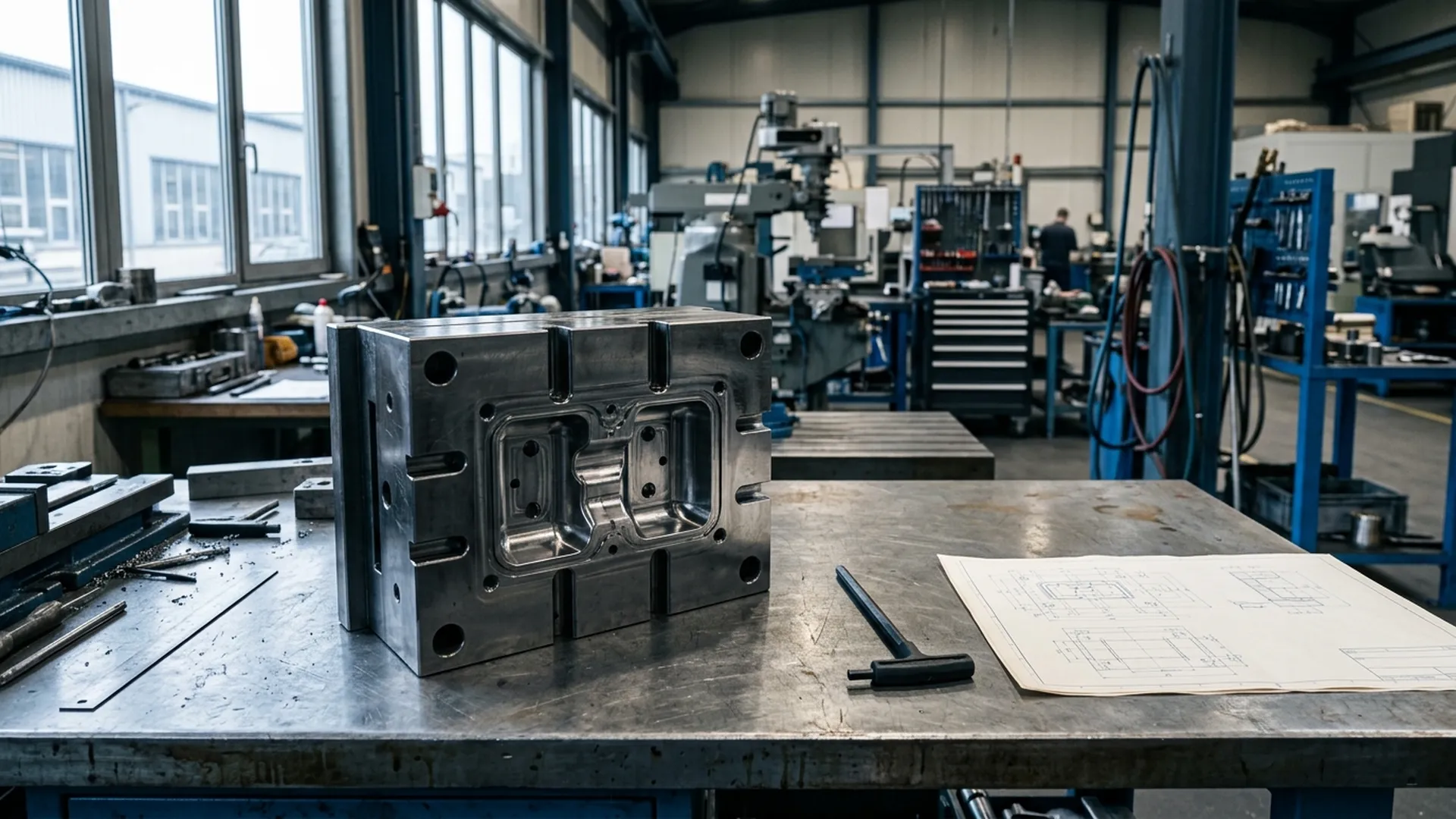
A mould quote is four decisions with one total underneath them. Read only the total and you are buying the decisions somebody else made on your behalf: how many parts come out of each shot, what steel the cavity is cut into, how much trial you get, and who owns the block of metal after you have paid for it.
The last one is the clause buyers read a year too late. The other three are arithmetic you can check in ten minutes.
A tooling price is not the cost of a shape. It is the cost of a set of decisions — cavities, steel, runner, tolerance and ownership — and every one of them is still changeable while the quote is sitting in your inbox.
We write mould quotes for a living, so this page is written from the buyer's side of the table on purpose. The plant behind it is Xinghui Plastic, an injection-moulding factory in Jieyang, Guangdong — the site states it was founded in 2000, covers 15,000 m² and runs 30+ injection moulding machines for buyers in 60+ countries — and the tools it quotes are for thick-wall reusable PP food containers rather than for brackets and housings. That distinction matters here, because most of the pages that rank for "injection molding mold cost" are written by machine shops selling rapid prototyping, and the worked examples they use are electronics housings and LED lenses. The spelling variants of this query sit in one demand pool with the same volume and the same difficulty, so there is no second SERP to write for. Container geometry has its own economics, and it is the one this page can speak to from the floor.
Everything below is either arithmetic you can rerun against your own quote, or a figure published by someone else with the source named. Nothing here is a quotation, and no mould price is printed — a mould price without a drawing attached is a number with no meaning.
The Seven Lines That Decide the Whole Project
Every factory lays its quote out differently. Every one of them prices the same seven things, and the layout is the only part that varies.
Line on the quote | What the factory is pricing | What to ask before you accept it |
|---|---|---|
Tooling / mould cost | Mould design and DFM, steel, machining hours, standard components, heat treatment, polishing, fitting | Is this a fixed price, or an estimate that moves with steel weight and cavity count? |
Cavity count and mould base | Parts per shot, machine size, cycle time, runner balance | What is the part price at one, two and four cavities? |
Steel grade and hardness | Tool life, polishability, corrosion resistance | Which grade and which hardness, and will both appear on a mill certificate? |
Runner, gate and cooling | Cycle time, scrap rate, surface quality | Hot or cold runner — and who owns the runner waste? |
Part price and packed basis | Resin, machine time, labour, packing, carton | Priced per piece: packed into what carton, how many pieces, what gross weight? |
Trial and sample | T1 sample, dimensional report, approval rounds | What do I receive, and how many sample rounds sit inside the price? |
Ownership and transfer | Legal title to the tool, and who physically holds it | When does the tool become my property, and how does it move if I leave? |
Two lines are pure one-off purchases — the tooling and the ownership terms. Three decide your recurring cost — cavity count, the runner and cooling system, and the part price. The remaining two, steel grade and trial, are one-off attributes that reset those three.
This is why price-shopping the first line alone produces bad decisions. Two factories can quote the same tool, and one of them has quietly priced a hot runner, a spare cavity set and two trial rounds that the other has not. Cheap tooling and expensive parts is a normal outcome of that comparison — and by the time you notice, the steel is already cut.
If your project is a change to a container you already sell rather than a new one, the first line moves before the quote does: modifying an existing mould and building a new one are two different purchases, and only one of them starts with new steel. The process we run on our own side, from drawing to first sample, is set out on the mould development page.
Tooling Cost: What You Are Buying, Not What You Are Paying
The tooling line is not one thing. It is a stack of blocks, and the same total can hide very different contents.
A published breakdown from a contract manufacturer splits a mould quote into five blocks — material cost, design fee, machining cost, assembly, and tax and profit — and notes that the material block can be calculated precisely while the machining block is an estimate based on comparable past jobs (Boyan Manufacturing's published mould-cost breakdown). That observation is the most useful thing to carry into your own documents:
- Design and DFM. Mould layout, parting line, ejection, cooling circuit, feed system. Charged once and rarely revisited.
- Steel and standard components. Cavity and core blocks, the mould base, ejector plates, guide pillars, slides, and a hot-runner manifold where there is one. This is the block that moves when cavity count or grade moves.
- Machining. CNC, EDM, wire cutting, grinding. This is the estimated block — and the block factories actually compete on.
- Heat treatment, polishing and texture. Hardening, mirror polishing, texture, engraved marking.
- Assembly, trial and correction. Fitting, T1 sample, and the changes that come out of that first sample.
Two consequences follow. First, a lump sum is not the same as a fixed price. A factory can quote a total that is still described as an estimate subject to the steel order. Ask which of the five blocks can still move after you sign, and what would move them.
Second, scope differences look like price differences. Before comparing two tooling quotes for the same part, normalise them: same cavity count, same runner type, same steel grade for cavity and base, same number of trial rounds, same list of spare parts. A quote that includes a spare cavity insert is not more expensive than one that does not — it is a different package. Our own custom container manufacture guide and the broader food storage container sourcing guide both walk the same discipline for a first order.
Two things sit outside those five blocks and explain most of the spread you will see across quotes. A bridge tool cut in aluminium is a real product sold for prototype and bridge volumes; the published SPI classification scheme puts it in the lowest class, and it is not a cheaper version of a production tool but a different object with a fraction of the life. An online cost estimator will give you a range in seconds from a CAD file — useful for budgeting, useless for negotiating, because the model cannot see your parting line, your wall thickness or your packing basis. Neither of them replaces a quote built against your drawing.
Cavity Count: The One Number That Sets Both Prices
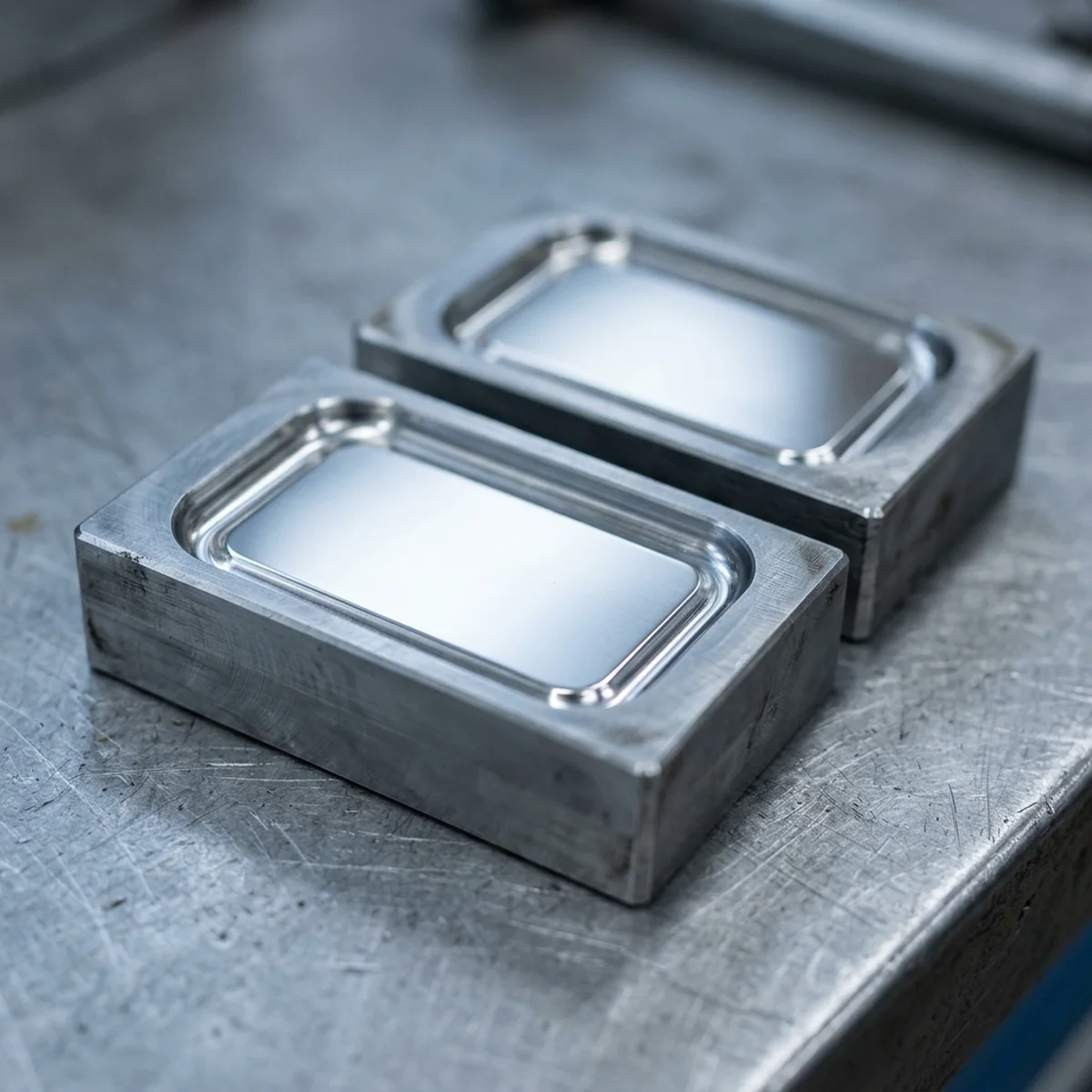
Cavity count is how many parts come out of one shot. It is the only number on the quote that moves the tooling price and the part price in opposite directions, which is why it deserves its own conversation rather than a line item.
More cavities means more of everything inside the tool: more cavity inserts, a larger mould base, a bigger machine, a longer runner system that has to be balanced so every cavity fills at the same moment. The tool gets more expensive and takes longer to build. In exchange, the cycle time buys you several parts instead of one, so the machine-hour cost per part falls.
That trade has a break-even point, and you can calculate it from two quotes:
Break-even volume = (price of the multi-cavity tool − price of the single-cavity tool) ÷ (part price at one cavity − part price at several cavities)
Count it in abstract units, so nobody mistakes the example for a price. Suppose a single-cavity tool is quoted at 1,000 units and a four-cavity tool at 1,600 units: a gap of 600. Suppose the four-cavity part price is 0.06 units lower. 600 ÷ 0.06 = 10,000 pieces. Below 10,000 pieces the single-cavity tool is the cheaper purchase; above it, the four-cavity tool is. Substitute your own two numbers into the same division and the decision is settled.
Volume bands in practice look like this. A single-cavity tool suits a complex or low-volume part where the geometry, not the output, is the problem. Two to four cavities is the ordinary answer for a container body or lid at retail volumes. Eight cavities and up is for small, symmetrical parts where the shot weight is low and the volume is high. Pushing past the band that suits your volume — a fifth cavity on a two-to-four-cavity job, say — often costs more than it saves: the extra insert, the bigger base and the machine tonnage cost more than the cycle time they buy back.
One cavity going down is a production stoppage. A four-cavity tool that loses a cavity runs at 75% until it is repaired; a single-cavity tool runs at zero. If your quote names a multi-cavity tool, ask what a spare cavity insert costs and how long a repair takes, because that is what you are really buying with the extra cavities.
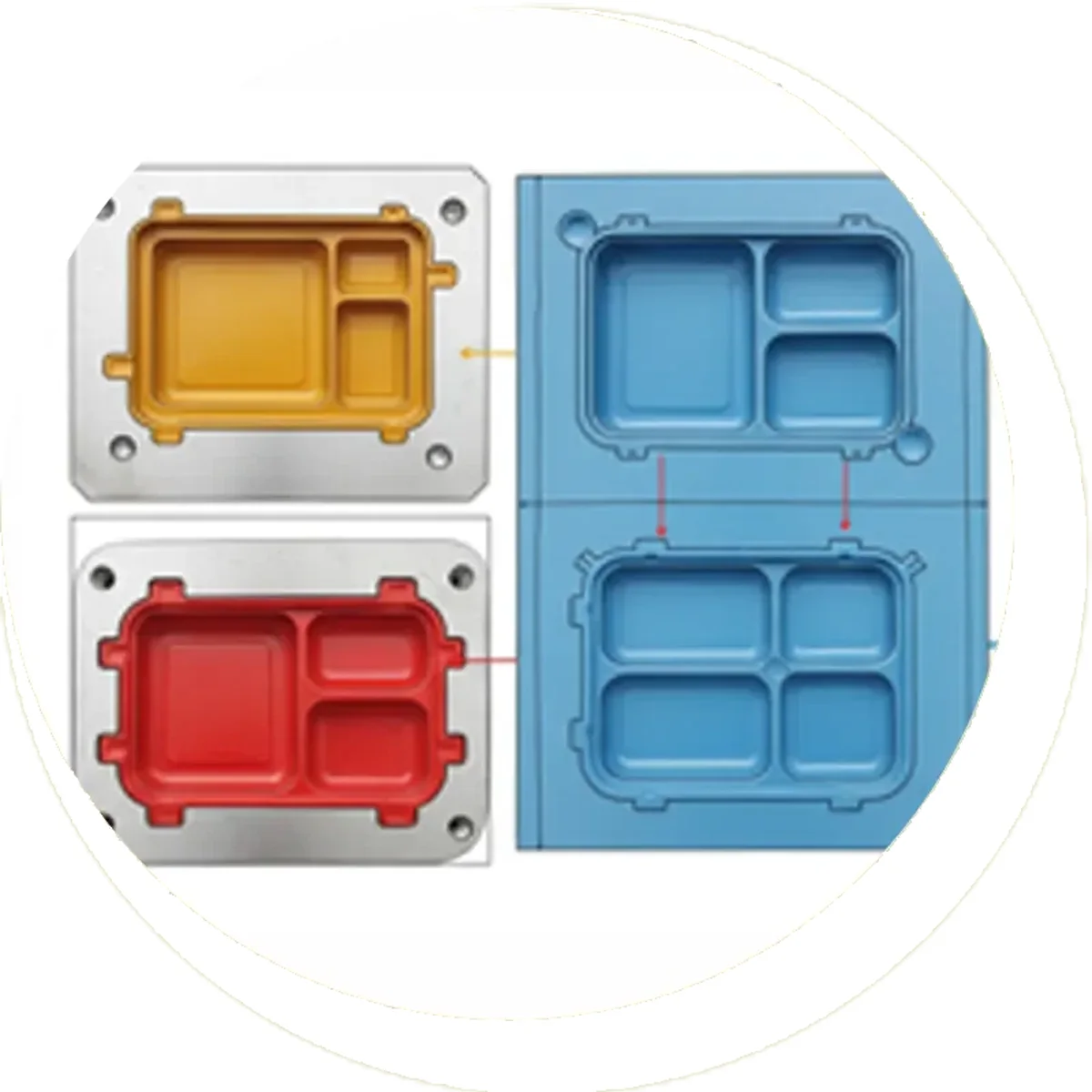
There is one alternative that buyers of container ranges should always ask about: a family tool, which moulds several sizes of the same line in one shot. A six-capacity range does not have to mean six moulds, and the difference between a family tool and six separate tools is the difference between one tooling purchase and six. Our SKU-mix and capacity ladder article works that through for a first retail order.
Whatever cavity count you choose, insist the packing basis travels with the part price. Carton dimensions, pieces per carton and gross weight decide the freight, and the geometry of nesting and stacking decides them — the reasoning is in our containers, stacking and carton maths note.
Steel Grade and Hardness: Two Words on the Quote, Ten Years on the Tool
The steel line is the shortest line on the quote and the one most buyers skip. It decides how long the tool lasts, how well it polishes, and whether it corrodes.
The industry grades tool life in classes rather than in years, and the classification is public. Under the SPI mould classification, Class 105 is a prototype tool built for not more than 500 cycles, Class 104 is a low-production tool for under 100,000 cycles, Class 103 is a medium-production tool for under 500,000, Class 102 is a medium-to-high production tool for up to one million, and Class 101 is built for one million cycles or more. The same classification sets hardness floors: cavities and cores must be hardened to a minimum of 48 Rc in Class 101 and 102, and 28 Rc or higher in Class 103, with the tool structure itself at 28 Rc minimum in Classes 101 and 102 and 18 Rc minimum in Class 103 (SPI mould classifications, as published).
Two things follow for a buyer.
Ask for the class, then ask what it implies. A product you sell 200,000 units a year takes five years to reach a million cycles, which is the threshold of the highest published class — so a tool quoted to a life beyond that is money spent on steel you will never wear out. A prototype-class tool answering a multi-year retail programme is the opposite mistake, and it shows up as a cavity that needs rework in year two. The class belongs in the quote, in words, next to the grade.
Ask for the hardness, and whether it is certified. A grade family name — a pre-hardened P20 or 718-type tool steel, a hardened 1.2344 / H13-type, or a corrosion-resistant stainless grade — tells you what the steel can do, not what the heat-treat shop actually delivered. The number that matters is the measured hardness in HRC, and the document that proves it is a mill certificate or a hardness report. A quote that names a grade but not a hardness is a quote you cannot audit.
Where food contact changes the answer. For a food container, the cavity surface is the surface your product copies, hundreds of thousands of times. A corroded pocket, a polished-out scratch or a soft cavity that dents transfers to every part. That matters commercially before it matters legally: the surface condition is part of the article you will later have to describe, and the documents a factory can hand over for it are the subject of our five-market compliance document map and the shorter list of documents to request from a factory. For the polymer side, the US route runs through the food-additive provisions of 21 CFR 177.1520 for olefin polymers, and the EU framework for plastic food-contact materials is Regulation (EU) No 10/2011. Both are documents you request and read against your own product — neither is a statement we make about anyone's certificates.
The tolerance line belongs here too. The quote should say what tolerance and acceptance conditions the part is priced to, because a tighter tolerance is a tighter tool, more polishing and a longer qualification. The published standard on that subject is ISO 20457, Plastics moulded parts — tolerances and acceptance conditions, and asking a supplier which conditions they quote to is a two-line email that prevents most late-stage arguments.
The Lines That Are Not Tooling: Resin, Colour, Scrap and Setup
Four recurring lines sit outside the tool, and they are where a well-read quote and a badly-read quote diverge after the first order.
Resin. Whose resin is it, and on what price basis? A quote that prices material at a fixed figure is quietly asking you to carry the resin market; one that prices it as an index-linked pass-through is asking you to carry it openly. Ask which, and ask for the grade, because a food-contact part needs the polymer's food-contact status documented rather than assumed.
Colour. White and transparent pigmentation is the classic case where the same part costs more in one colourway than another, because running a clean, streak-free white or clear moulding means longer purges, cleaner conditions and more rejects. If your line has a white and a transparent SKU, price it as its own SKU rather than assuming the colour average. Our colour options note covers what the colouring routes actually do to a moulding.
Scrap and regrind. This is the line almost nobody asks about, and it is a real cost. Every part price contains an assumption: what percentage of shots will be rejected, and will the sprue and rejects be ground and fed back as regrind? Both answers change the part price and, for a food-contact article, the regrind question is one you want answered in writing rather than assumed. Ask what scrap rate is inside the price, and whether regrind is permitted in your part.
Setup and minimum run. Colour changes, machine changes and short runs are charged somewhere — either as a visible setup line or hidden inside a higher part price. A quote with no setup line is not a cheaper quote; it is a quote whose setup cost is distributed across the quantity you said you would buy. Mixed-material assemblies make this worse, which is why gaskets, latches and inserts are worth pricing separately — see the note on non-PP parts and inserts.

Who Owns the Mould: the Clause That Decides Your Second Order
Ownership is where a technically good quote becomes a commercially bad one, and it costs nothing to fix at the quoting stage.
There are two different questions hiding in the word "mine". Title is who legally owns the tool. Possession is who physically holds it, maintains it and runs it. In normal contract moulding these are deliberately different: you own the tool, the moulder keeps it and runs your parts on it. That arrangement is fine. What is not fine is a quote that leaves both questions unanswered, because the answer then gets decided by whoever is holding the steel when you want to move.
Put six things in writing while the quote is still a draft:
- When title passes. Normally on final payment, stated as a date or a milestone rather than as an implied consequence.
- Where the tool lives, and on what terms. The moulder keeps it for production; the same line should say that the tool is not used for other customers' parts without your agreement.
- The transfer mechanism. On written request, the tool is released against a documented condition report, packaged, and shipped at an agreed cost — with the condition recorded before it leaves, not after.
- Maintenance and repair. Who pays for normal maintenance, who pays for damage, and what a repair has to restore. A tool that runs months of unattended production and then "wears out" during your peak season is a cost you either defined or inherited.
- Tool life, in shots. The SPI class you agreed to in the previous section is the natural number to write here, along with the spare insert or cavity arrangement.
- Identification. Mould number engraved or stamped on the tool and on the cavity plate, so that ownership, warranty and maintenance history attach to one identifiable object rather than to a relationship.
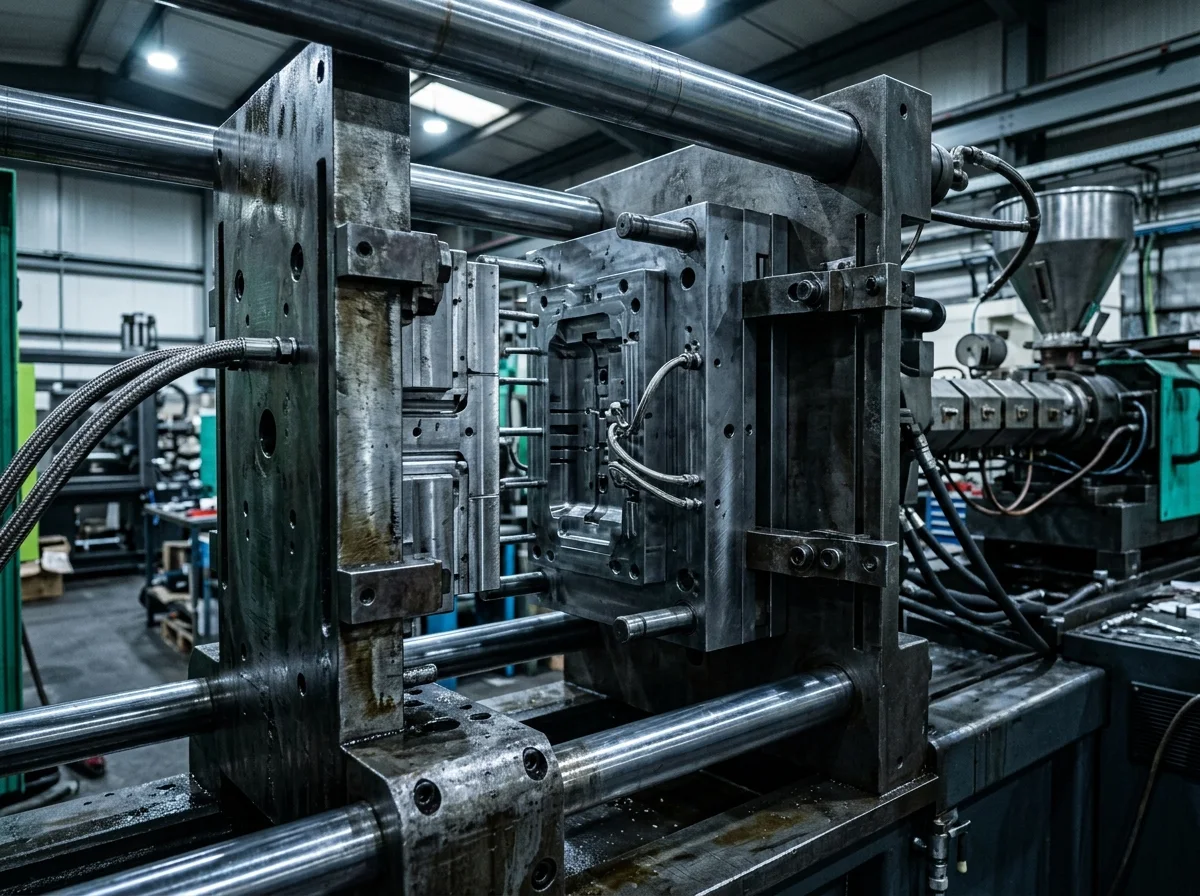
None of this is legal advice, and none of it is unusual — contract moulding houses expect to sign it. What is unusual is a buyer asking for it after the tool has been cut, when the answer to "what does it cost to move my tool" is set by the party who would rather it stayed. The same principle applies when you are choosing the counterparty in the first place: our guide to choosing a lunch box factory treats tooling terms as one of the screening questions rather than a detail of the contract.
Sample, Trial and Approval: What Arrives Before the Balance
The trial line is the smallest line on the quote and the one that most often turns into unbilled weeks. Define it in the quote.
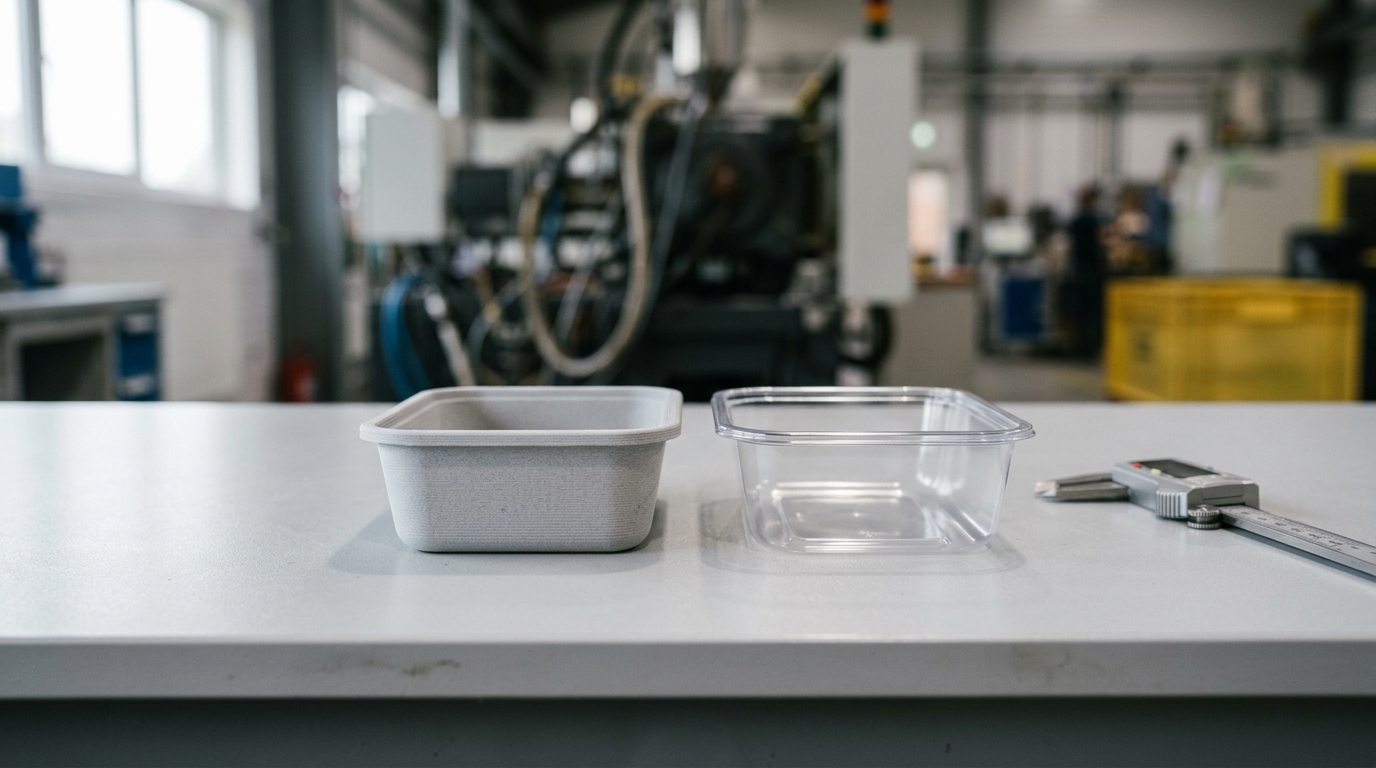
There are two kinds of sample, and quoting them as one thing is a common source of confusion. A prototype sample — printed or machined from the design, no mould involved — checks fit, clearance, assembly and how the part feels in the hand. It cannot tell you about cycle time, shrinkage or the surface the tool will produce. A T1 sample comes off the real tool, and it is the first object that can. Our note on the 3D-printed verification sample we run before cutting steel covers the first; the second is what your tooling payment is actually buying.
The quote should state, in words:
- How many trial rounds are included before changes become chargeable.
- What you receive with the sample: the parts, a first-article dimensional report, and a record of the moulding conditions the sample was shot under.
- Who pays for the correction if the first article misses the drawing.
- The sample lead time, and from what starting point. A sample lead time quoted from an existing tool is a different number from a sample lead time from a new tool. Our own published record for the 1.3 L lunch box line, for example, states a sample lead time of within three days — that figure belongs to a tool that already exists, and it is not a promise about a tool that is about to be built.
Where the part has a seal, a latch or a gasket, the sample is also where the leak claim gets settled, and it should be tested as a structure rather than judged by eye — the approach in our leak-proof seal and sample-testing note.
Volume, Payback and Packing: When the Higher Tool Quote Is the Cheaper One
Total cost is tooling plus part price times quantity plus freight, and freight is the term buyers leave out of the comparison. It is set by the carton, and the carton is set by the part's geometry.
Here is real carton data from our own published product records — carton dimensions, pieces per carton and gross weight exactly as those records publish them, so the arithmetic can be checked against the source rather than taken on trust:
Model | Product | Carton (cm) | pcs / carton | Carton volume | Gross weight |
|---|---|---|---|---|---|
BX1094–BX1099 | 1.4 L freezer storage box, PP | 59.5 × 43.5 × 53.5 | 72 | 0.1385 CBM | — |
3332 | Kitchen and frozen container, PP | 64 × 49 × 56 | 56 | 0.1756 CBM | 16.1 kg |
3334 | Tall storage container, PP | 59 × 56 × 65 | 80 | 0.2148 CBM | 14.7 kg |
BX1051 | 1.3 L lunch box, PP + silicone, 182 g | 62 × 47.5 × 58.5 | 72 | 0.1723 CBM | 14.3 kg |
Two derived numbers fall out, and both belong in your quote comparison rather than in the supplier's reply.
Carton litres per piece. Divide the carton volume by the piece count: the 1.4 L freezer box takes about 1.9 litres of carton space per container (138.5 L ÷ 72), the 3332 line about 3.1 litres each (175.6 L ÷ 56), the 3334 line about 2.7 litres (214.8 L ÷ 80), and the lunch box about 2.4 litres (172.3 L ÷ 72). Same rough product class, and roughly a 63% spread in the freight volume you are buying. Illustrative arithmetic on our own cartons — palletising and the forwarder's stow decide the real container count.
Packed weight per piece. Where a gross weight is published it divides cleanly: 16.1 kg over 56 pieces is about 288 g of packed weight per container, 14.7 kg over 80 pieces is about 184 g, and 14.3 kg over 72 pieces is about 199 g.
That is why "the cheaper quote" is a question about the packing basis and not about the unit price. A part priced two cents lower that ships at 3.1 litres of carton per piece can lose to a part priced two cents higher at 1.9 litres, on a single 40-foot container, before anyone discusses the tool. The geometry that produces the difference — nesting, stacking, lid design — is in our tall storage box guide.
Nine Questions That Turn a Quote Into a Specification
Send them together, in writing, and the reply is comparable across suppliers.
- Is the tooling price fixed, or an estimate that can move with steel weight and cavity count?
- How many cavities, and what is the part price at one, two and four cavities?
- Which steel grade and which measured hardness for cavities and cores, and is it certified?
- Which SPI class is the tool built to, and in how many shots is tool life stated?
- Hot runner or cold runner — and who owns the runner waste?
- What resin, whose resin, and on what price basis?
- What scrap rate is inside the part price, and is regrind permitted in my part?
- When does the tool become my property, and what is the transfer procedure?
- What is the packing basis: carton dimensions, pieces per carton, gross weight, pallet or loose?
The answers turn a price into a specification you can hold a supplier to. They also let you compare two quotes that were never meant to be comparable — which is the ordinary condition of buying tooling. The quality-side counterpart to this list is in our note on how to check plastic lunch box quality, and the product-side view of the same questions is in the PP lunch box line write-up.
Buyer Questions About Mould Cost
How is the cost of an injection mould calculated?
It is calculated in blocks: mould design, steel and standard components, machining hours, heat treatment and polishing, then fitting and trial — with tax and margin on top. Material is the block a factory can price precisely; machining is an estimate built from comparable past jobs. That is why two quotes for the same drawing differ by more than margin, and why normalising scope matters more than comparing totals.
Why does an injection mould cost so much?
Because it is a one-off piece of precision engineering that has to survive hundreds of thousands of cycles without drifting. The money sits in the steel, the machining hours and the hardness — the parts of the tool that decide whether the ten-thousandth part matches the first. A mould is also the smallest cost in most projects: it is paid once, while the part price is paid every month for as long as you sell the product.
Is injection moulding expensive compared with other processes?
For a first run of a few hundred pieces, yes — tooling dominates and other processes win. For a repeatable product in the tens of thousands, no: the tool is amortised and the part price falls. The decision is a break-even calculation, not a preference, and the formula above settles it with your own two quotes. What makes it expensive is buying the wrong cavity count or the wrong steel class for the volume you actually have.
What to Do Next
If your project is a reusable food container in PP — a body and a lid, sold in a capacity ladder, for retail or foodservice — then the first step is not a mould price, it is a scope: which sizes exist already, which need a cavity insert, and which need new steel. Our published range is the fastest way to see which food storage container geometries already exist, and a reusable container programme usually starts from an existing family rather than from a new tool.
Send the drawing, the annual volume, the cavity count you are considering and the nine questions above. What comes back will be a tooling price and a part price on a stated packing basis, with the steel grade, the class and the ownership terms written into it — the four decisions, made explicitly, in the document rather than after it.
Continue reading
Related sourcing guidance
More practical context for your food storage container sourcing conversation.

Discuss your product range
Need help selecting or customising containers?
Share the product type, market and sourcing requirements with the Xinghui team.