
Sourcing & OEM
Re-Ordering Only the Sizes That Sold: How a Regional Distributor Should Read Canister Sell-Through Before the Next Container
A reorder is a carton decision, not a units decision: read canister sell-through per size, convert it to cartons, and cut what cannot clear inside the cycle.

Two distributors buy the same wholesale airtight containers from the same factory, in the same four sizes, on the same terms. Twelve weeks later one of them reorders three sizes and drops the fourth. The other reorders all four, and ends the quarter with a pallet of the slowest one sitting behind the rack where nobody walks.
The difference is usually not judgment. It is unit confusion. One distributor reads sell-through in pieces, the other reads it in cartons, and only one of those two numbers can actually be ordered. A size that moves 40 pieces a week and a size that moves 44 look like a 10 percent gap on a spreadsheet; over a twelve-week cycle they become 20 cartons and 22, and neither line carries the rate that produced it.
A reorder is not "more of what sold". It is the number of cartons a size can clear inside one cycle, and the gap between those two readings ends up on your shelf, not in your spreadsheet.
Sell-through is a rate; a wholesale airtight container order is a carton
Sell-through is a rate: pieces leaving your warehouse per week, or per store per week if you sell through retail accounts. A purchase order for wholesale airtight containers is not a rate. It is a step function. You can order 24 pieces or 48 or 72, and nothing in between.
That mismatch produces two failures that look unrelated on a P&L and are the same failure underneath.
The first is the broken carton. You need 410 pieces of a size over the cycle, so you order 18 cartons, take 432, and finish the cycle with 22 pieces left over. Nobody sells 22 loose canisters. They go on a shelf as singles, get discounted, or get written off. Do that across four sizes and you have carried roughly ninety pieces of dead stock through a whole season without ever ordering anything obviously wrong.
The second is the stockout inside the ladder. A middle size can sell faster than an end size, but all four take the same carton quantity, so that size runs dry in week nine while the ends are still full. Reordering "what sold" at the family level hides this, because the family as a whole looks healthy right up to the week the shelf has a hole in it.
Both come from the same place. The reorder decision was made in pieces and executed in cartons, and nobody converted between the two before signing.
Start with the record you actually have, not the one you wish you had
Before any math, open the spec record for the family you are about to reorder and count the columns. What you find will usually decide how much of this method you can run.
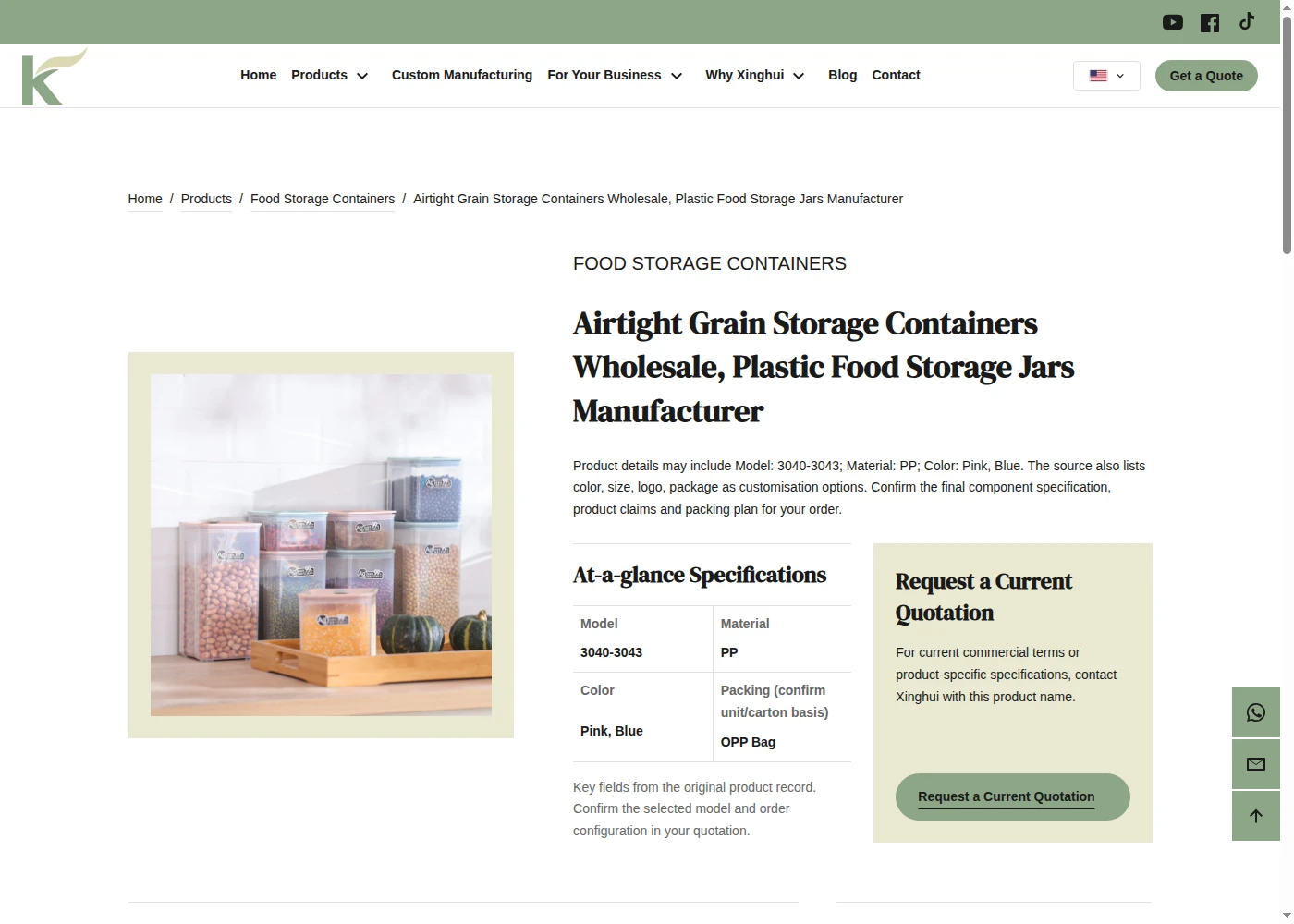
That table is the entire published record for model family 3040-3043: model number, material (PP), colors (pink and blue), and packing recorded as OPP bag. There is no capacity row. There is no carton size, no pieces per carton, no gross weight. For the family in the screenshot, every field a reorder decision turns on is missing, and nothing on the page lets you add it.
Compare a second family in the same catalogue. BX1053, a three-piece round set, records model, material (PP plus silicone), colors, a gross weight of 12.4 kg, a unit grammage of 425 g, a carton of 61 × 30 × 57 cm (the record labels it Box Size), and packing of 24 pcs — with the catalogue's own caveat that the packing basis needs confirming. Carton data in this catalogue is uneven rather than absent: a packing line is near-universal, a carton size is common, and a piece count next to that size is not. BX1053 happens to carry both a size and a count, which is enough to run the conversion end to end. It is not the only record with numbers, and it is not a complete record either, because it has no capacity line.
A complete record, for the purpose of a reorder, has eight fields per size: model, material, capacity in liters and in pounds, color options, pieces per carton, carton dimensions, gross weight per carton, and packing format. Anything less and you are either guessing at the conversion or discovering it after the goods land. In this catalogue, packing lines are on most records, gross weights and carton sizes on about half, and capacities on about a fifth. BX1053 misses two of the eight — capacity and the packing format — and capacity is the one you will end up asking for in the RFQ.
Field | Where it comes from | What the reorder does with it |
|---|---|---|
Model | Product record | Ties the size to one mold and one carton |
Material | Product record | Says whether a gasket is recorded at all |
Capacity, liters and lb | Factory spec, usually on request | Sets the retail band the size competes in |
Color options | Product record | Decides whether MOQ is counted per color |
Pieces per carton | Packing record | The only quantity you can actually order |
Carton dimensions | Packing record | Cube, pallet count, container load |
Gross weight per carton | Packing record | Weight check before the forwarder quotes |
Packing format | Packing record | Decides whether a carton survives receiving |
Two things follow, and they matter more than they look.
The first is that "airtight" is carried by the lid interface, not by the word. On BX1053 the material line records a silicone component; on 3040-3043 the material line records PP only. That does not make the second family non-airtight, but it does mean the seal is doing its work through lid fit rather than through a recorded gasket, and a distributor who has been selling both for two years will already know which one comes back more often. Airtight and moisture-proof are also two different claims: the gasket and the lid fit govern air exchange, while the body material and wall thickness govern how fast water vapor crosses the wall, which is why a canister can be airtight and still let a flour-packed body draw moisture over a season. Some product titles and descriptions name BPA-free; treat that as a material statement to verify on the document rather than a reorder input. If you have not checked how airtight is defined against leakproof on this kind of line, that distinction is worth settling before it appears in a return report.
The second is that the missing columns belong in your RFQ, not in your assumptions. Ask for capacity, pieces per carton, carton dimensions and gross weight on every family you are about to reorder, every time, and keep the answers in the same file as the sell-out data. If you want the full list of what a factory can supply and what it usually only supplies on request, the guide to bulk airtight container specifications covers the paperwork side; the sourcing overview covers how the families are organized in the first place.
Read the size ladder as a ladder, not as a price list
Most canister families are not a menu of independent products. They are a ladder, and the rungs do different jobs.
The two ends do the storytelling. The smallest size is the entry price on a retail shelf and the one an end buyer picks when they are trying the format for the first time. The largest size is the one that gets photographed full, holds a whole bag of something, and justifies the shelf space. In a lot of retail accounts those two sizes account for the visible facings even when they are not the volume.
The middle rungs carry the repeat purchase. They are what a household actually buys on the second and third purchase, and they are the sizes that a distributor's best accounts reorder without being asked. They are also the sizes that a units-based reorder rule under-orders, because a middle size rarely wins a "best seller" ranking against an end size that gets bought once per household per year at three times the price.
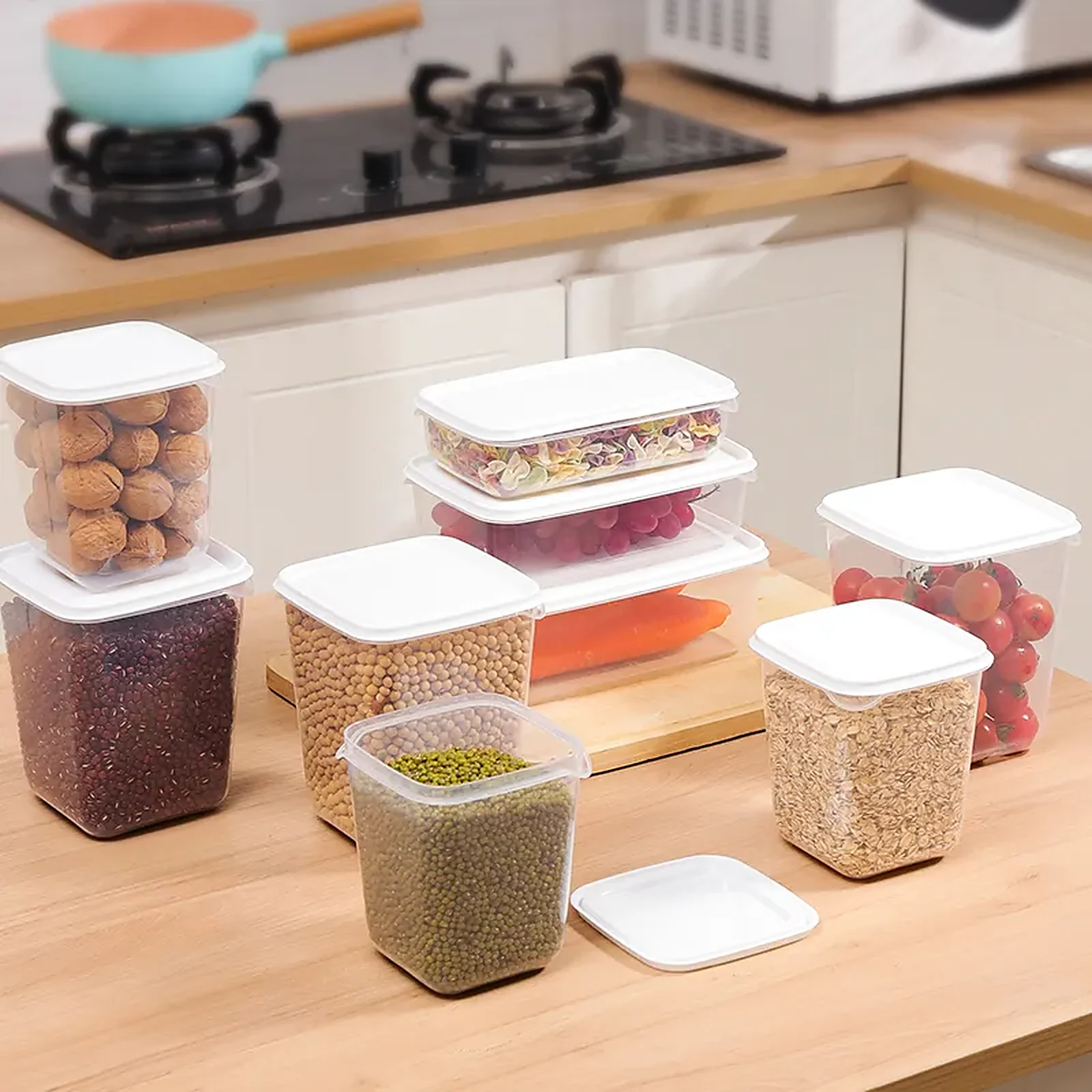
Cut a middle rung and two things happen at once. The ladder stops being a ladder, because a customer who wants the middle size is now choosing between too small and too big, and some of them leave rather than trade up. And the two ends start carrying the set on their own, which raises your unit cost per facing without raising your sales. Cut an end rung instead and you lose the entry price and the shelf photograph, but the volume rungs keep selling.
There is a hard ceiling on how many rungs a retail account can show. A shelf section that gives a canister family three facings can present three sizes; the fourth lives in the back room and gets restocked by hand, which is where sizes go to die in a planogram review. Count the facings your accounts actually allocate before you argue about which size to cut. If the count is three and your range is five, two sizes are already selling only through staff intervention, and those are the two to examine first.
That asymmetry is the whole reason "reorder only the sizes that sold" needs a qualifier. Reorder the sizes that cleared a carton, and when you have to drop something, drop from the outside in, not from the middle. The same ladder logic applies to tall food storage containers and to meal-prep sets, and it is worth reading the note on SKU mix and capacity ladders before you decide which rung is expendable in your own account list.
Convert sold units into cartons before you cut a single size
Here is the arithmetic that turns a sell-out report into an order, run on a family whose record happens to carry the carton: BX1053.
The recorded carton is 61 × 30 × 57 cm, which is 0.104 m³, and the packing line counts 24 pieces. Divide one by the other and each counted piece gets 0.0043 m³ of carton, or about 4.3 liters of cube. One caveat carries through every figure below: the record counts 24 of something without saying whether that something is a single canister or a three-piece set, and the weight arithmetic does not settle it, because 24 × 425 g is 10.2 kg and fits a 12.4 kg gross weight either way. If a carton counts sets, every carton-level number here stands as long as your sell-out file counts in the same unit; if your file counts canisters and the carton counts sets, the carton figures divide by three as well. Confirm the basis before you copy any of this into a buying sheet; that check is part of the method, not a footnote to it.
Now scale it. A thousand pieces is 41.7 cartons, call it 42, which is 4.3 m³ and about 521 kg at the recorded gross weight. Sit that next to a nominal 76 m³ high cube and you are looking at roughly six percent of the container. On this product line you run out of volume long before you run out of payload, which is the normal condition for plastic housewares and the reason carton cube, not weight, is the number to put in the spreadsheet.
The rounding is where the decisions hide. Take four sizes from one family and feed twelve weeks of sell-out into them, assuming the same 24-piece carton for the exercise:
Size | Units sold, 12 weeks | Cartons needed | Order | Over-shipped |
|---|---|---|---|---|
0.5 L | 410 | 17.1 | 18 | 22 pcs |
1.0 L | 980 | 40.8 | 41 | 4 pcs |
1.5 L | 1,360 | 56.7 | 57 | 8 pcs |
2.0 L | 2,140 | 89.2 | 90 | 20 pcs |
Read the last column, not the third. The 1.0 L size carries four pieces of residue and the 2.0 L carries twenty, but the 0.5 L carries twenty-two on a base of 410, which is five percent of everything you bought of that size. In cash terms the large size still carries more dead stock, because each piece costs more. In percentage terms the smallest size is the worst purchase in the table, and nothing in a units-based report would have told you that.
This is also why textbook order-quantity formulas only half apply here. The economic order quantity model assumes you can choose any quantity that balances holding cost against ordering cost. A wholesale airtight container line gives you a step function, so the real question is not "what is the ideal quantity" but "which side of the step do I want to land on", and that depends on whether the residue can be sold through in the next cycle or has to be written down. The carton and stacking arithmetic behind this is worked through in more detail in the note on stacking, nesting and carton math.
When an end buyer searches "airtight rice container", this is what they are choosing
The largest search volume attached to this product family does not come from distributors. It comes from households looking for an airtight rice container, and the searches are almost all capacity questions: 20 lb, 25 lb, 50 lb, 20 kg. That audience will never buy a pallet. But the questions they ask are a free read on which sizes actually get chosen at the shelf, and that is exactly the input a reorder decision needs.

Two bands matter, not five. There is the container that takes a bag of rice in one go, and the container that takes part of a bag and lives on the counter. A 25 lb bag is 11.3 kg. A canister sized to hold 11.3 kg is a different mold, a different carton and a different price point from one sized for half that.
Bag on the shelf | Same weight, other unit | Which band it pulls you into |
|---|---|---|
10 lb | 4.5 kg | Half-bag, counter canister |
20 lb | 9.1 kg | Whole bag, standard pantry size |
25 lb | 11.3 kg | Whole bag, the large end of the range |
50 lb | 22.7 kg | Two-canister split, or a bulk bin |
20 kg | 44.1 lb | Imported bag, maps to the 50 lb band |
Conversions are 1 lb = 0.4536 kg. What matters is not the arithmetic but the fact that the same shelf carries both units: a market buying 20 kg bags is choosing the top band, not the middle.
When a distributor carries both, the large one sells to households that buy in bulk once and the small one sells to households that buy weekly, and those two groups reorder at completely different rhythms. Carrying the middle of that range is usually the weakest position, because it is too big for the weekly buyer and too small for the bulk buyer.
There is a materials version of the same question. Glass canisters are a genuine preference at the consumer end, for visible contents and for the absence of plastic in contact with the food, but glass weighs more per liter, breaks in transit and changes both the carton and the return rate. That is why the glass answer to a rice storage question rarely travels well into a reorder decision: the material that wins the shelf comparison is not automatically the one that survives a container.
The carton consequence is easy to miss. The two bands are not two sizes of the same product in the way a 0.5 L and a 1.0 L are. They are different body diameters or different heights, which means different molds, different carton dimensions and different pieces per carton. A sell-out file that treats them as one family with one carton record will produce a conversion that is wrong for half the range, and the error is largest on the size that sells least, because a small base amplifies a small mistake.
One caution before you let consumer demand pull your assortment. The container that holds rice well is not automatically the container that holds rice safely on a shelf for months. Airtight and leakproof are different properties, tested differently, and a size can be perfectly airtight while being the one that comes back with a cracked lid. If the rice end of your range is growing, settle that distinction first.
The four numbers that decide each line
Four numbers per size, measured over the same window, will settle almost every reorder question on a canister family. None of them is difficult to produce if you already have the sell-out file and the carton record.
Number | How to read it | Keep | Watch | Stop |
|---|---|---|---|---|
Carton-equivalent sold per 12 weeks | Units sold ÷ pieces per carton | 20 or more | 8 to 20 | under 8 |
Weeks of cover at current rate | Units on hand ÷ weekly sell-out | 4 to 8 | 8 to 12 | over 12 |
Broken-carton residue | Pieces left at cycle end ÷ pieces bought | under 3% | 3 to 6% | over 6% |
Price-band drift | Realized price vs the band you bought at | flat | down 3 to 5% | down over 5% |
The thresholds are starting points, not laws, and they should be tuned to your own cycle length. A distributor on an eight-week replenishment cycle needs the cover band moved down by roughly a third, because eight weeks of cover on an eight-week cycle is a full cycle of stock sitting still. What matters is that all four are read together, because each one alone produces a wrong answer. A size with twenty cartons of sell-through and fourteen weeks of cover is not a strong size, it is a size you over-bought. A size with six cartons of sell-through and three weeks of cover is not a weak size, it is a size that has been running dry.
Price-band drift is the fourth number and the least intuitive. If a size keeps selling but only after a markdown, its sell-through is being bought rather than earned, and the reorder that follows is funding a discount rather than a sale. Compare the average realized price on that size over the last cycle with the band you bought it at. A size drifting down three to five percent is warning you that the next container will carry the same discount into a deeper hole. Past five percent, the honest move is to shrink the buy rather than repeat it.
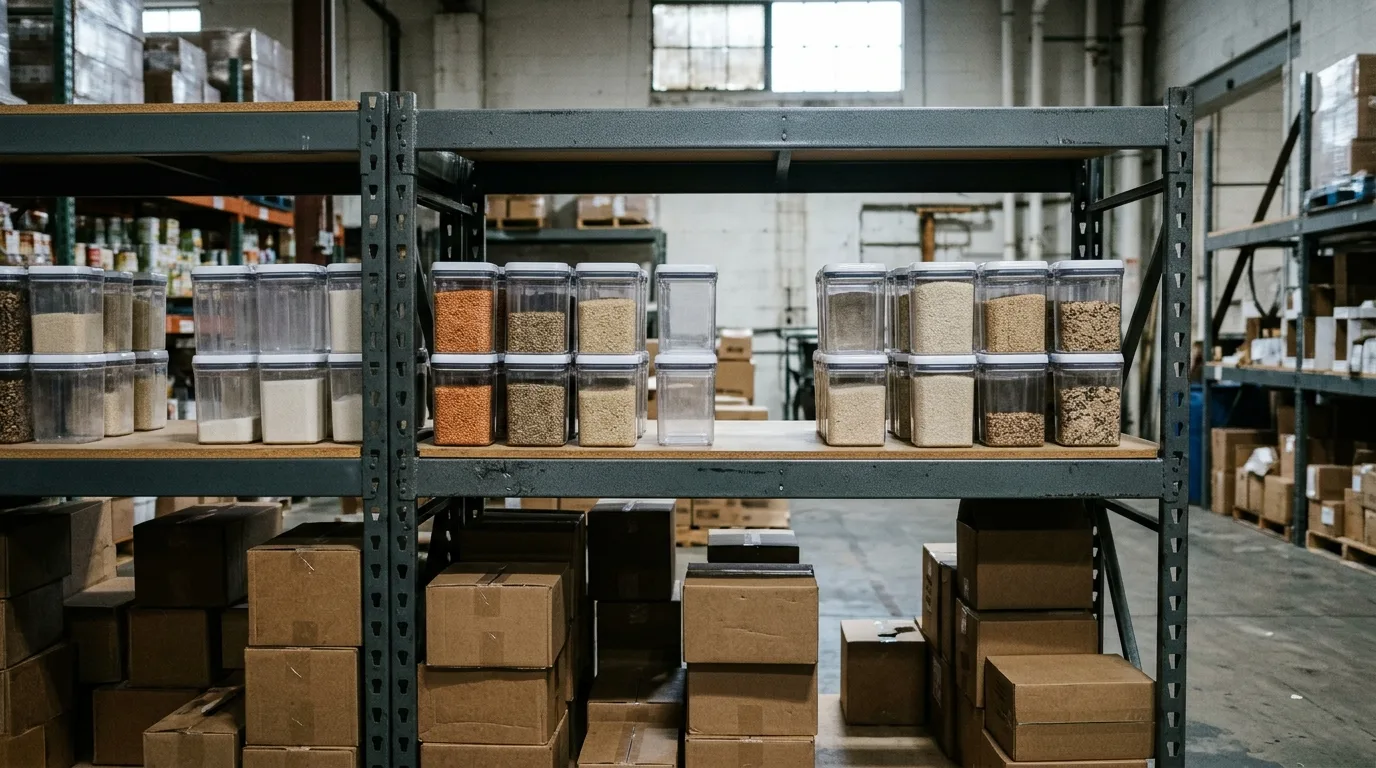
The weeks-of-cover column is the one worth borrowing from general retail practice. Inventory-to-sales ratios are published monthly for the whole US retail sector, and the reason the metric survives at that scale is that it answers the only question that matters in a reorder: at the current rate of sale, how long does what I already own last. Your own number should be narrower than the sector figure, because a distributor carrying one product family has less room to absorb a miss than a national chain.
Half the reasons a size stops selling are physical, not commercial
The most expensive mistake in this whole process is cutting a size because of a defect that will follow you into every other size you keep.
A canister that comes back at twice the rate of its neighbors is usually not a demand problem. It is a seal that took a compression set in a hot container, a lid clip that cracked because the carton was stacked one layer too high, or a lid that was tightened by hand at packing and arrived loose. In each case the sell-through of that size falls, the reorder rule says stop, and the actual cause moves into the rest of the range untouched.
Compression set is the one worth understanding, because it is invisible in a spec sheet. A silicone gasket that stays compressed at elevated temperature for weeks does not spring back to its original thickness; it keeps a memory of the closed position, and from then on it seals on the second or third attempt rather than the first. Nothing about that shows up as a defect rate at the factory gate, because the gasket passes at packing. It shows up as returns six weeks later, on whichever size spent longest in a container in summer.
Before you drop a size, pull the return reasons for it and sort them into three buckets: seal and lid failures, transit and packing damage, and everything else. If the first two buckets account for most of the returns, the size is not the problem and the carton or the gasket is.
Bucket | What it looks like | What it argues for |
|---|---|---|
Seal and lid | Gasket set, clip cracked, closes on the second attempt | Fix the seal, keep the size |
Transit and packing | Crushed carton, lid loose on arrival, scuffed body | Fix the carton, keep the size |
Demand and fit | Wrong capacity bought, color mismatch, change of mind | The only bucket that argues for cutting |
The sample testing routine for seal structures is the thing to run before the next container is booked rather than after.
There is a commercial version of the same trap. A slow size is sometimes slow because it has been out of stock at the two accounts that would have sold it, or because it is the only size still packed in the old carton and gets buried at the back of the pallet. Neither shows up in a sell-out number, and both are fixed by packing, not by assortment.

Stacking is the constraint underneath both of those. Three containers stacked in a domestic fridge is a light load that any lid survives. Ten stacked in a carton, then two cartons on top of them on a pallet, is a different problem: the bottom container carries the weight of everything above it through its lid, and a lid that is fine on a shelf can deform under that. The size that fails is usually the largest one, because it sits at the bottom of the stack, which is why cutting "the big size that keeps coming back" is so often cutting the wrong end of the range.
Lock five things into the purchase order before the container closes
The reorder decision is only half the work. The other half is making sure the order delivers the mix you decided on, because four of the five things below are where a good decision quietly becomes a bad shipment.
Mixed loading. If you are dropping one size and keeping three, the container is no longer a clean single-SKU load, and the loading plan changes with it. Whether that is worth an LCL or should be consolidated into a full container with other lines is a cube question, not a preference, and the trade-off between LCL and FCL for a mixed order is worth running before you commit the volume.
MOQ per color and per model. Minimum quantities are usually counted per color or per model, not per family, so dropping a size does not automatically free up the quantity you need to hit the minimum on the size you are increasing. The way color, model and minimum quantities actually get counted is the part of this that catches most first reorders.
Inner pack and retail packaging. If the size you are keeping is the one that goes to shelf, the inner pack and the retail box matter as much as the canister. Changing the pack on a reorder is possible but it moves the timeline, and the retail packaging and private-label requirements should be settled at the same time as the mix rather than after it.
Carton marking. Every carton that leaves the factory should carry a serial shipping container code so the receiving end can scan a pallet rather than count boxes. The SSCC standard published by GS1 is what most retail and distribution receiving systems expect, and it costs nothing to specify if you specify it before production rather than after.
Documents. Food-contact paperwork travels with the goods, and which documents you need depends on where the container is cleared. Ask for the document pack at the same time you place the order, and use the Incoterms 2020 rules published by the International Chamber of Commerce to fix who is responsible for what between the factory gate and your warehouse, because that allocation changes what your landed cost per piece actually is.
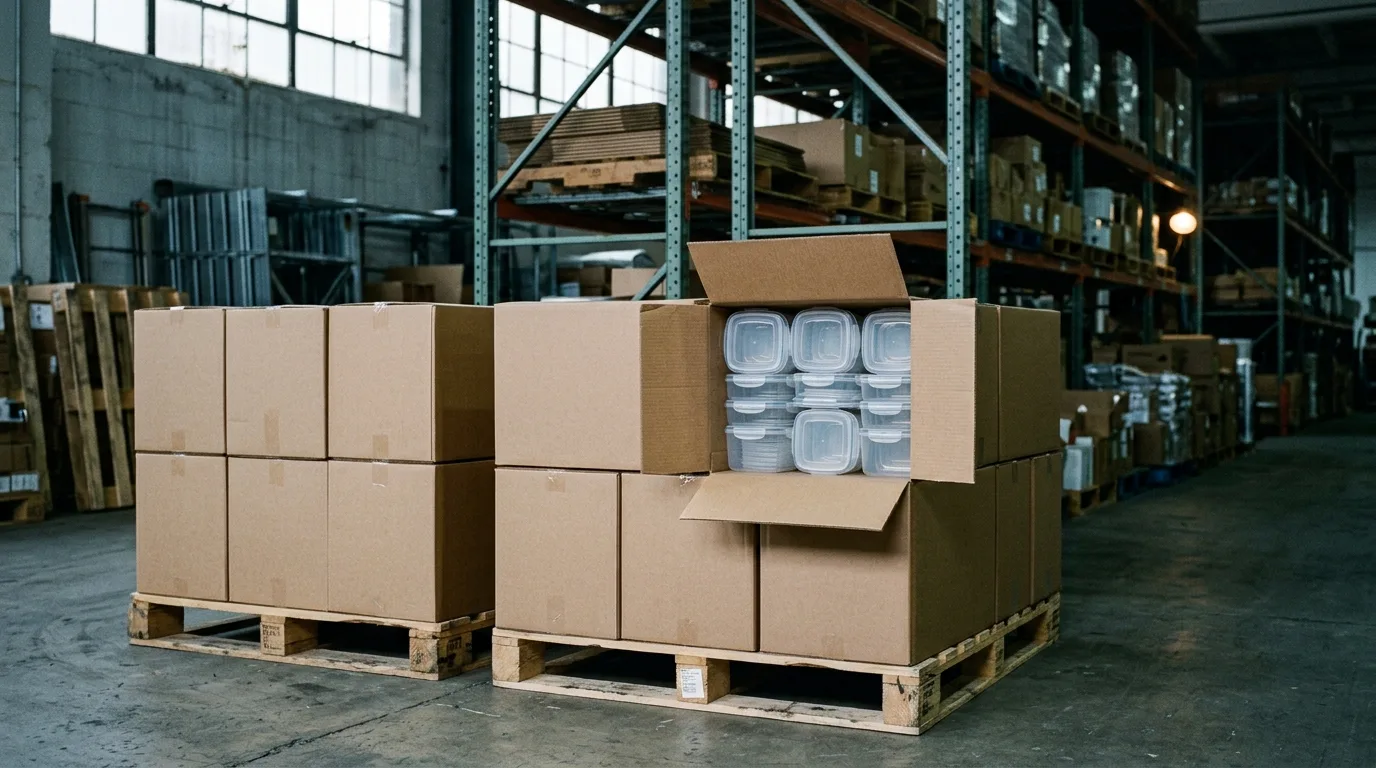
None of these five is exotic. What makes them matter is that each one can quietly change the effective mix after you have already decided it: a carton that arrives unmarked costs receiving time, an MOQ counted the wrong way forces an extra size, and an inner pack that was not specified turns a shelf-ready size into a loose one.
A worked reorder sheet for one canister family
Pull the four numbers together and the sheet looks like this. The volumes are illustrative, the arithmetic is not; next-cycle demand is taken as equal to last cycle's sell-out, so every order below is that demand minus what is already on hand.
Size | Sold last cycle, cartons | On hand now, cartons | Need next cycle | Order | Decision |
|---|---|---|---|---|---|
0.5 L | 17 | 7 | 17 | 10 | Order half, cover is already five weeks |
1.0 L | 41 | 2 | 41 | 39 | Order near-full, cover is thin |
1.5 L | 57 | 1 | 57 | 56 | Order full, cover is thinnest |
2.0 L | 89 | 9 | 89 | 80 | Order most of it, nine cartons is only a week |
Every order in the last column is the next-cycle demand minus what is already on hand: 17 − 7 gives the 0.5 L order of 10, and 89 − 9 gives the 2.0 L order of 80. Converting on-hand cartons back into weeks of cover is the check that tells you whether that subtraction is healthy or thin: at 34 pieces a week the 0.5 L is carrying five weeks, while at 178 pieces a week the 2.0 L is carrying one.
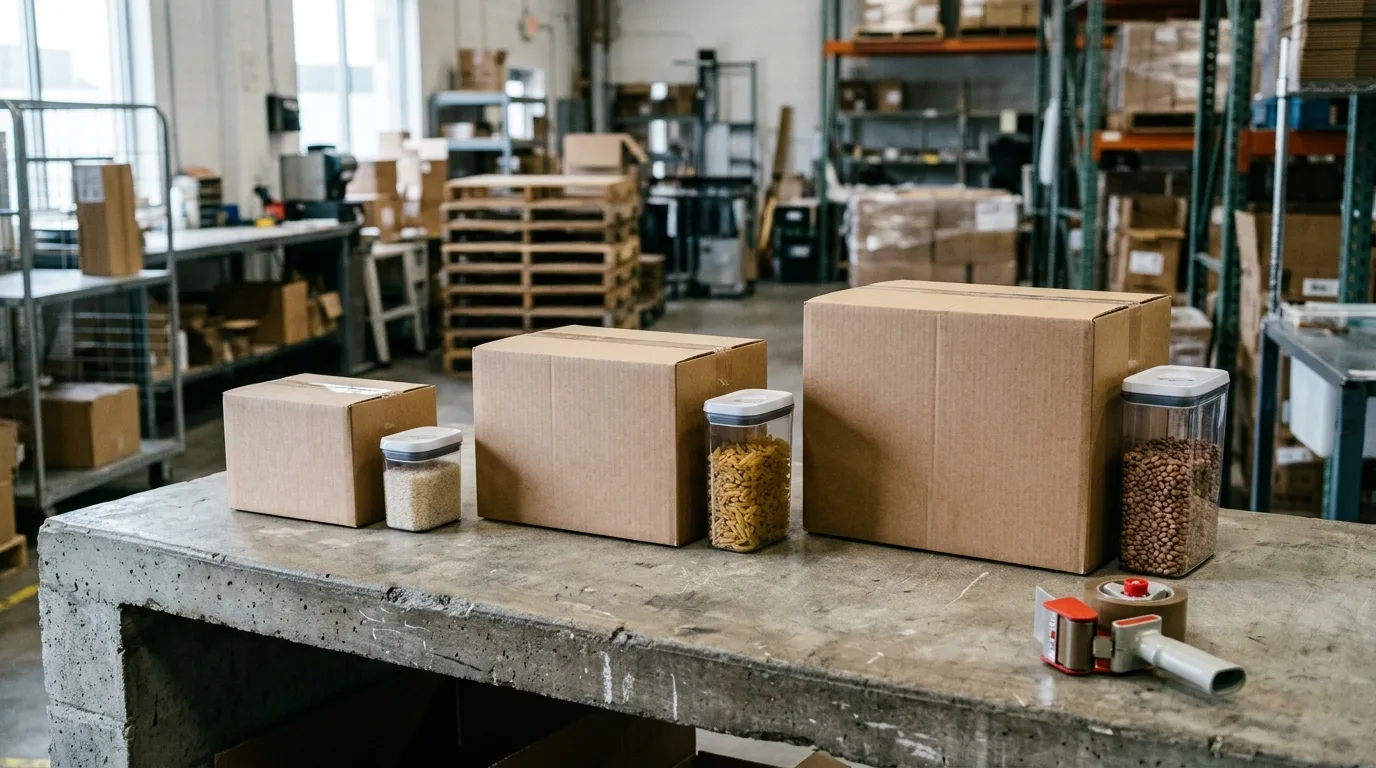
The decisions are not symmetric, and that is the point. The 2.0 L is the biggest seller and still orders eighty of its eighty-nine cartons, because nine cartons against its weekly rate is barely a week of cover. The 0.5 L is the weakest seller and orders ten of seventeen, because it is the only rung that ended the cycle with a real stock cushion. Read the two columns together and the units ranking stops working as a priority list: the biggest seller still needs ninety percent of its volume, and the smallest needs under sixty.
The same sheet run on a family without carton records produces nothing. That is why the first section of this article is about the record rather than the analysis: if you cannot fill in the carton column, any reorder you place is a guess dressed as a plan. If you are sourcing a new line rather than reordering one, the one-stop sourcing guide covers getting the record complete before the first order rather than after the third.
The one-line rule
Reorder the sizes that clear a carton inside your cycle, not the sizes that sold the most pieces, and when the data cannot tell you which is which, fix the record before you fix the assortment.
Everything else in this article hangs off that sentence. The carton conversion tells you what "clear a carton" means for your cycle length. The ladder tells you which rungs you can lose. The physical checks tell you when a size is failing for a reason that will follow you into the next container.
If you are about to place a reorder and the capacity and carton columns are still blank, request the specification record for the families you name — the eight fields, not only the four published on the page — together with the sell-out window, before the container is booked. That is the one place in this process where asking someone else is faster than working it out yourself, and it is a shorter conversation than the one you will have with your own finance team three months after the pallet arrives.
Continue reading
Related sourcing guidance
More practical context for your food storage container sourcing conversation.


Discuss your product range
Need help selecting or customising containers?
Share the product type, market and sourcing requirements with the Xinghui team.