
Food Storage Containers
Wholesale Food Storage Containers: Six Product Lines, Injection Molding Capacity and OEM/ODM from One Jieyang Factory
Six food storage container lines, real carton arithmetic an importer can check, a material comparison, and OEM/ODM work from one Jieyang molding factory.
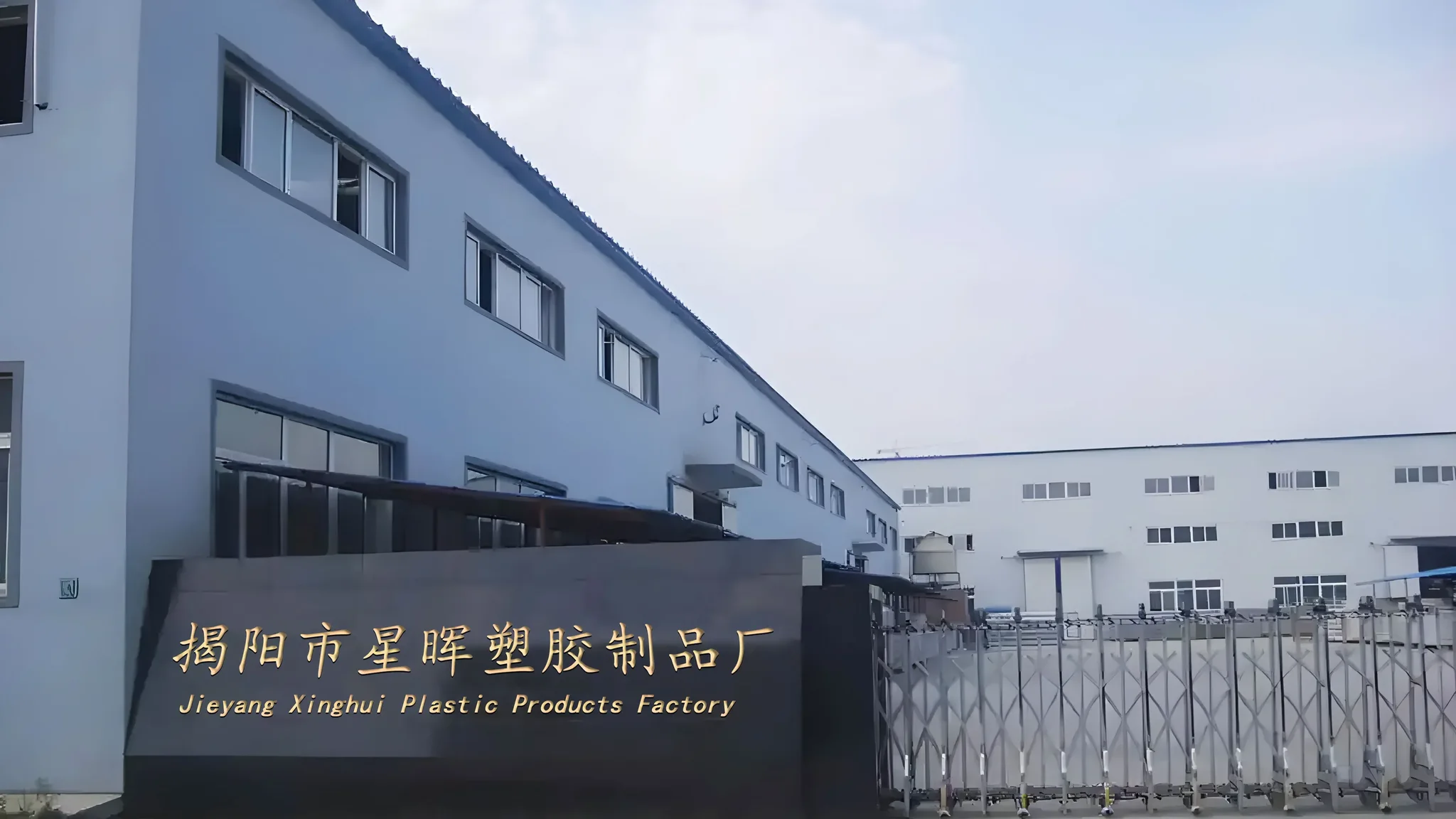
Search wholesale food storage containers and the first page is a row of American distributors quoting a carton price. Nothing on that page is wrong. But two different transactions hide behind the same four words, and they have different minimums, different paperwork and different people on the other end of the email.
This page is the factory-side answer. It sets out the six product lines we actually run, converts the product records into carton arithmetic an importer can check, compares the materials the way a freight forwarder and a compliance officer would, and explains what a machine count does and does not promise.
Wholesale Means Two Different Transactions
A distributor's wholesale is a carton price on stock they already hold. You get goods next week, a spec you did not write, a brand-neutral carton, and no say in the mold. The minimum is small, the unit price is not, and the only document you can ask for is their own.
A factory's wholesale is a production order. You get your color, your logo, your carton, a document pack with the resin and the gasket in it, and a decision about tooling. The minimum is per model and often per color, the lead time is measured in weeks, and the price is a quotation.
Three questions tell you which one you need:
- Is the quantity under one pallet? Buy from a distributor. Freight and setup will eat any factory saving.
- Does the container have to carry your brand, your color or your carton? Then it is a production order, because those three are what customization actually means.
- Do you need the resin and gasket documents in your own file? Then buy from whoever makes the part, because a distributor passes along a declaration it did not write.
Everything below assumes the third answer is yes. Who the company is — the plant, the machines, the export record — sits on a separate page; this one is about the specification and the load it creates, and the split between the two is stated where the carton table starts.
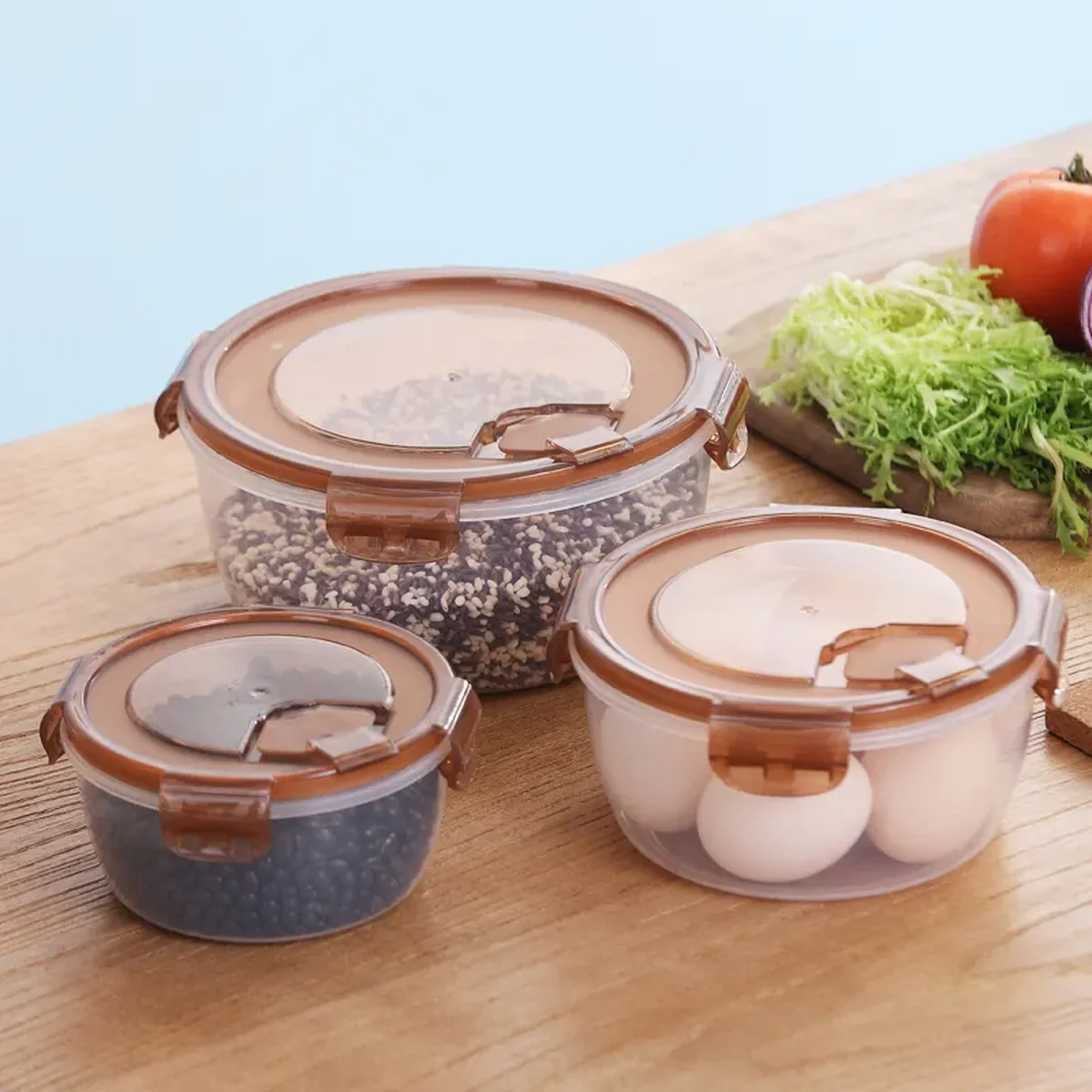
Six Product Lines, Read Straight From the Records
Our product file holds 63 records. Nineteen sit in the food storage category and collapse to sixteen distinct model families, which is too fine a grid for a buyer to shop. Grouped by how they are sold and what they are sold against, they are six lines.
Line | Model families as recorded | Material as recorded | Capacity as recorded | Carton as recorded |
|---|---|---|---|---|
Snap-lock round boxes | BX1041–BX1043, BX1044–BX1046, BX1047–BX1049, BX1052, BX1053 | PP + silicone | not recorded | BX1052: 48 pcs, 16.2 kg; BX1053: 24 pcs, 12.4 kg; the other three families not recorded |
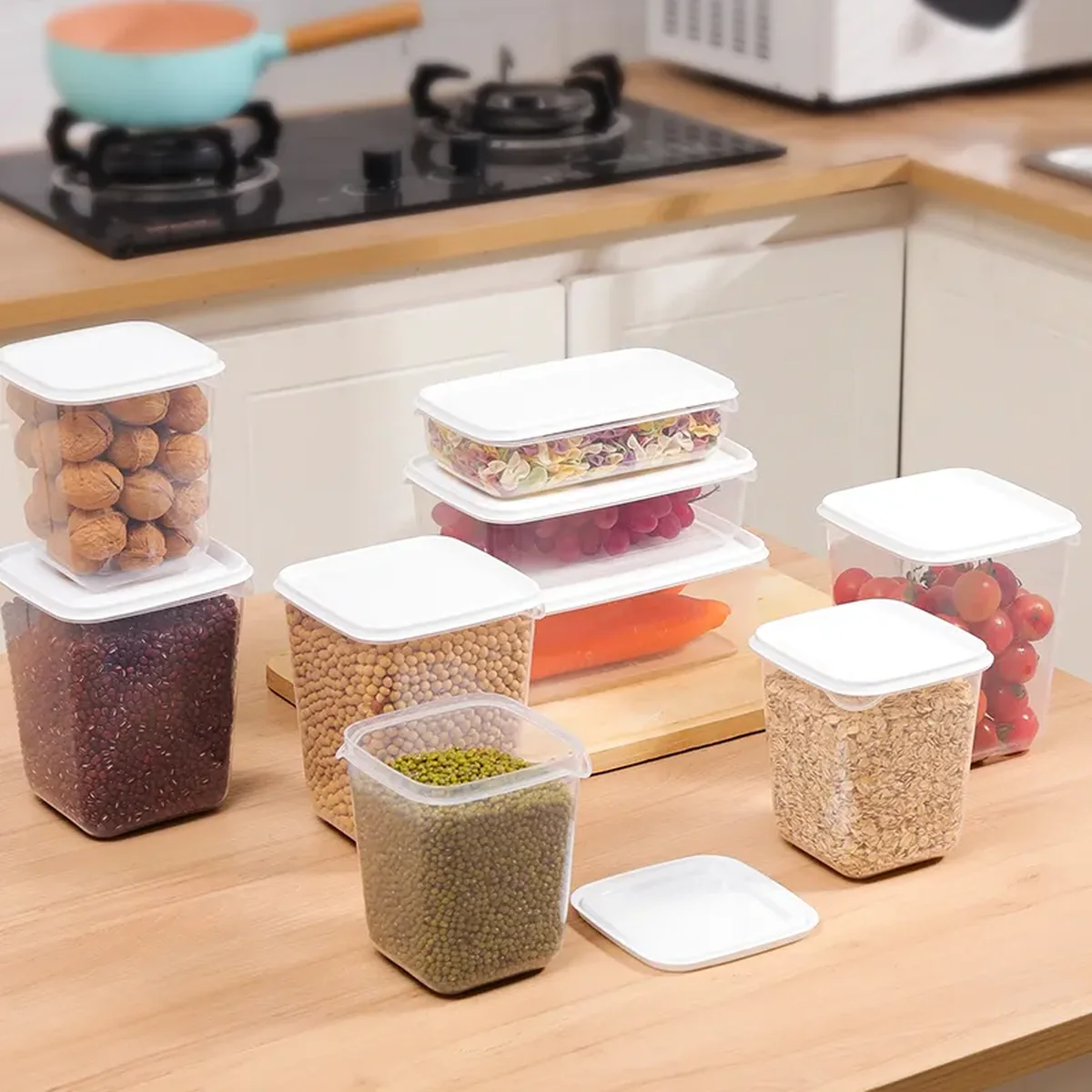
Fridge and freezer boxes | BX1094–BX1099 | PP | 1.4 L (47.34 US fl oz); unit 20.3 × 15 × 6.5 cm | 72 pcs; 59.5 × 43.5 × 53.5 cm |
Freezer sets with PET lids | BX1131–BX1136 | PP + PET | not recorded | piece count not recorded; OPP bag |
Rectangular meal-prep sets | 3320–3329, in four records with overlapping ranges (3320–3323, 3323–3325, 3328–3329) | PP + PET on two families, PP on two | not recorded | no piece count; the packing field reads only “Paper bid” |
Tall kitchen containers | 3332, 3334, 3335–3338 | PP | not recorded | 3332: 56 pcs, 16.1 kg; 3334: 80 pcs, 14.7 kg; 3335–3338 no count |
Airtight grain jars | 3040–3043 | PP | not recorded | no carton; OPP bag |
Three things about that table are deliberate.
The blanks are the record's, not an oversight. Five of the six capacity cells say not recorded, and five of the six carton cells are incomplete, because the source file has no value in them. We could fill them by measuring a sample, and on a real inquiry we would, but a table that mixes measured values with recorded values without saying which is which is worse than an incomplete one.
The six lines are our grouping; the model numbers are not. BX1041 and 3320 are fields in the file. "Snap-lock round boxes" and "rectangular meal-prep sets" are our description of what those families are for. Read the left column as editorial and every other column as data.
One line is missing on purpose. The borosilicate glass range (BX1021–BX1029, 320–1040 ml) is a real line and it is not in the six. It is a different substrate with a different freight and breakage profile, and folding it into a plastics table would have made the comparison table dishonest. It gets its own row in the material comparison below, as the adjacent case.
The commercial difference between the lines is where a distributor's range usually thins out. Snap-lock round boxes sell in mixed sets and gift packs; fridge boxes sell as single-SKU replenishment; the tall containers are the line that most often arrives with a private label already printed, and the tall container range carries the detail on that family.
The Carton Is the Unit You Are Really Buying
A buyer compares unit prices and then discovers the freight bill. With food storage containers the freight is decided by cubic volume, because the cartons are light: across every family where we hold both a carton dimension and a gross weight, the density lands between 68 and 119 kg per cubic meter. To reach a 24-ton payload inside the 33.2 m³ of a 20 ft container you would need about 720 kg/m³, six times the densest carton in the range. None of the four cartons whose gross weight is recorded comes within a factor of six of weight-limiting the box. The fifth, BX1094–BX1099, has no recorded gross weight, so its density cell is an em dash and that answer belongs to the factory rather than to this page. You run out of box before you run out of payload.
That changes the number you should be asking for. Below, every packing and carton figure comes from the recorded fields; the volume, density and carton-count columns are arithmetic on those fields, and the basis is stated under the table. Carton dimensions, pieces per carton and CBM for the same five families are tabulated on the manufacturer page; what is added here is what those numbers imply for a 20 ft load.
Model family | Packing as recorded | Carton, mm | Carton volume | Pieces per m³ | Cartons by volume (33.2 m³) | Cartons floor-loaded | Gross | kg per m³ |
|---|---|---|---|---|---|---|---|---|
BX1094–BX1099 | 72 pcs | 595 × 435 × 535 | 0.1385 m³ | 520 | 239 | 180 | not recorded | — |
BX1052 | 48 pcs | 680 × 360 × 565 | 0.1383 m³ | 347 | 240 | 192 | 16.2 kg | 117 |
BX1053 | 24 pcs | 610 × 300 × 570 | 0.1043 m³ | 230 | 318 | 252 | 12.4 kg | 119 |
3332 | 56 pcs | 640 × 490 × 560 | 0.1756 m³ | 319 | 189 | 144 | 16.1 kg | 92 |
3334 | 80 pcs | 590 × 560 × 650 | 0.2148 m³ | 373 | 154 | 120 | 14.7 kg | 68 |
How to read it:
- Cartons by volume divides 33.2 m³ by the carton's own volume. It is a ceiling: the number you would hit if the box had no walls, no door hardware and no wasted gap.
- Cartons floor-loaded is the honest planning figure for a floor-loaded container. It takes the 20 ft internal floor at 5,900 × 2,350 mm (232 × 92.5 in), fits whole cartons per layer in the better of the two orientations, and multiplies by the layers that fit in 2,390 mm (94.1 in) of internal height. The gap between the two columns is 20–25 per cent, which is exactly the error a volume-only quote makes.
- Pallets make it worse, not better. A standard pallet footprint wastes more floor than the carton's own edge does, and the pallet deck costs 150 mm of height. If your distributor delivers palletized and your container is floor-loaded, the two quotes are not comparable at all.
Three rows carry the lesson. The 3332 carton fits only 36 cartons per layer, the lowest in the table, and the reason is not floor area but how its footprint lands on the floor: four 490 mm rows across the 2,350 mm width leave 390 mm unused, where four 560 mm rows of the slightly larger 3334 leave 110 mm — so the 3334 gets 40 per layer. At 92 kg/m³ the 3332 is the second-least-dense fill after the 3334 at 68. The 3334 is where height costs you: a 650 mm carton buys three layers where the 535 mm BX1094 carton gets four, so a 115 mm difference in carton height removes a quarter of the floor's layers. The BX1053 holds the most air per piece — 0.1043 m³ for 24 pieces is 4.35 liters of carton per piece, the highest in the table — which is why it fits 318 cartons by volume and still delivers the fewest pieces per 20 ft: about 6,000 floor-loaded, against 9,600 for the 3334. That is why carton engineering is a sourcing decision and not a packing afterthought, and it is the subject of the stacking and nesting arithmetic.
On a multi-line order the arithmetic compounds: each family has its own carton, so the mixed container is a packing problem before it is a purchasing one. Loading a mixed order covers how to sequence the lines so the last cartons in are not the ones you needed first.
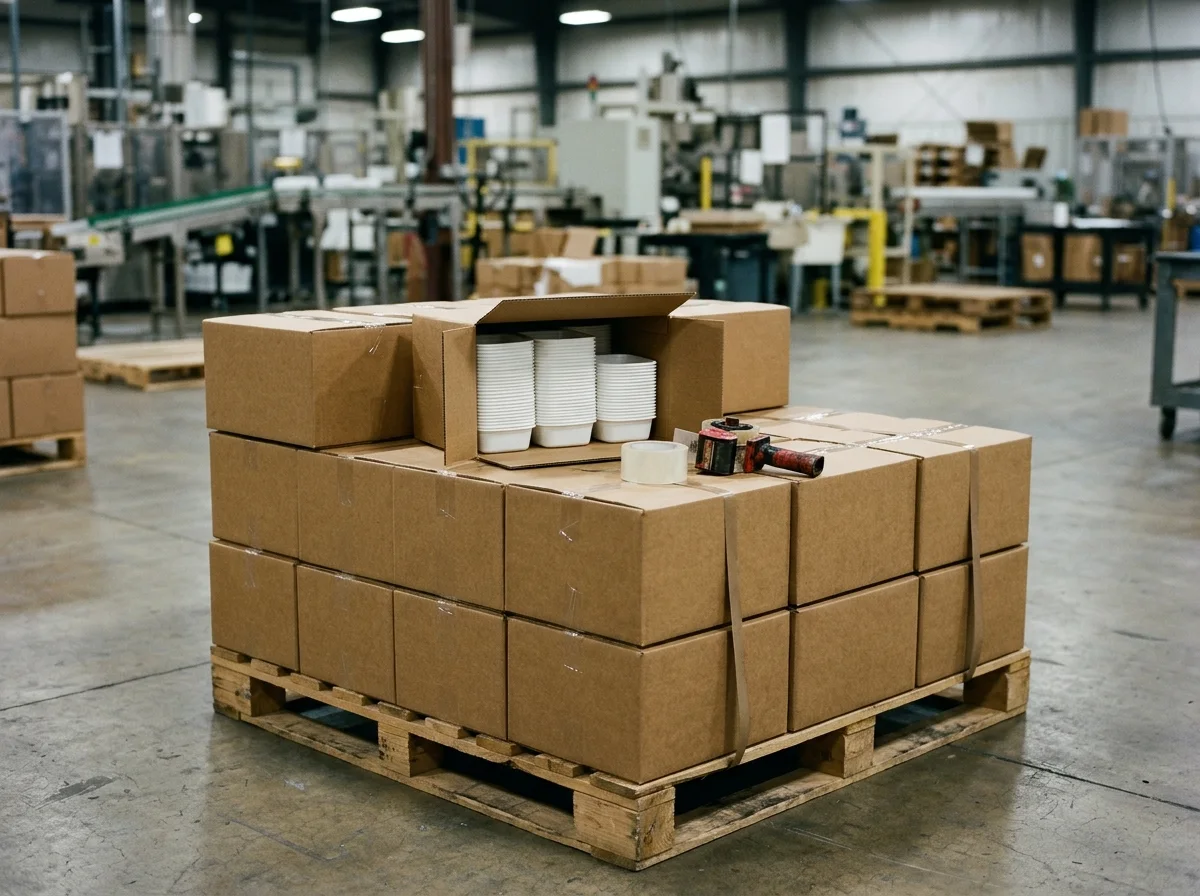
What Each Polymer Does to Freight, Heat and Paperwork
Material choice shows up in three places a buyer pays for: the carton, the claim on the lid, and the document pack. It does not show up in a photograph, which is why the range shot and the spec sheet disagree so often.
Material as recorded | Lines | What it does to freight | What it does to a heat claim | Paperwork it triggers |
|---|---|---|---|---|
PP | Lines 2, 5, 6 | Lightest per unit; the two tall cartons are the least dense in the range (68 and 92 kg/m³) | Heat tolerance is a property of the grade and the wall, not of the letters PP; a reheat claim needs a test on the finished part | The resin sits under the olefin-polymer listing, 21 CFR 177.1520 |
PP + silicone | Line 1 | One extra component at the seal; no measurable effect on carton density | The gasket, not the body, sets the temperature the seal survives | The silicone is a separate rubber article under 21 CFR 177.2600 and needs its own declaration |
PP + PET | Lines 3, 4 | Clear lid or tray over a PP body; same volume, more visual value | Lid and body can behave differently in a microwave or a dishwasher; a claim has to name which part | Two listings, 177.1520 and 21 CFR 177.1630 |
Borosilicate glass + plastic lid | Adjacent line, BX1021–BX1029 | Heaviest per unit in the whole file; density and breakage both rise, and packaging has to absorb it | The strongest heat story in the range, and the one that most depends on a transit test rather than a temperature | The glass body is not a polymer and does not sit under a plastics listing; the lid and gasket still do |
The practical consequence: a material comparison is a freight comparison plus a paperwork comparison, and only third a product comparison. Two lines that look identical in a catalog photo can differ by two document sets and by a carton that ships 25 per cent fewer pieces.
Two habits worth keeping. First, ask for the resin grade behind "PP" — the difference between a thin-wall injection grade and a general-purpose grade is a different heat story and a different cycle time. Second, treat a heat claim as belonging to a test report rather than to a material name, and how to tell whether a container is really microwave safe covers what a claim needs behind it. In the United States there is no certificate for a food container as such; the paper trail is a listing or a notification for each substance that touches food, which is what the FDA food contact program administers. In the European Union the frame is Regulation (EC) No 1935/2004 and its material-specific measures, with a written declaration of compliance per product.
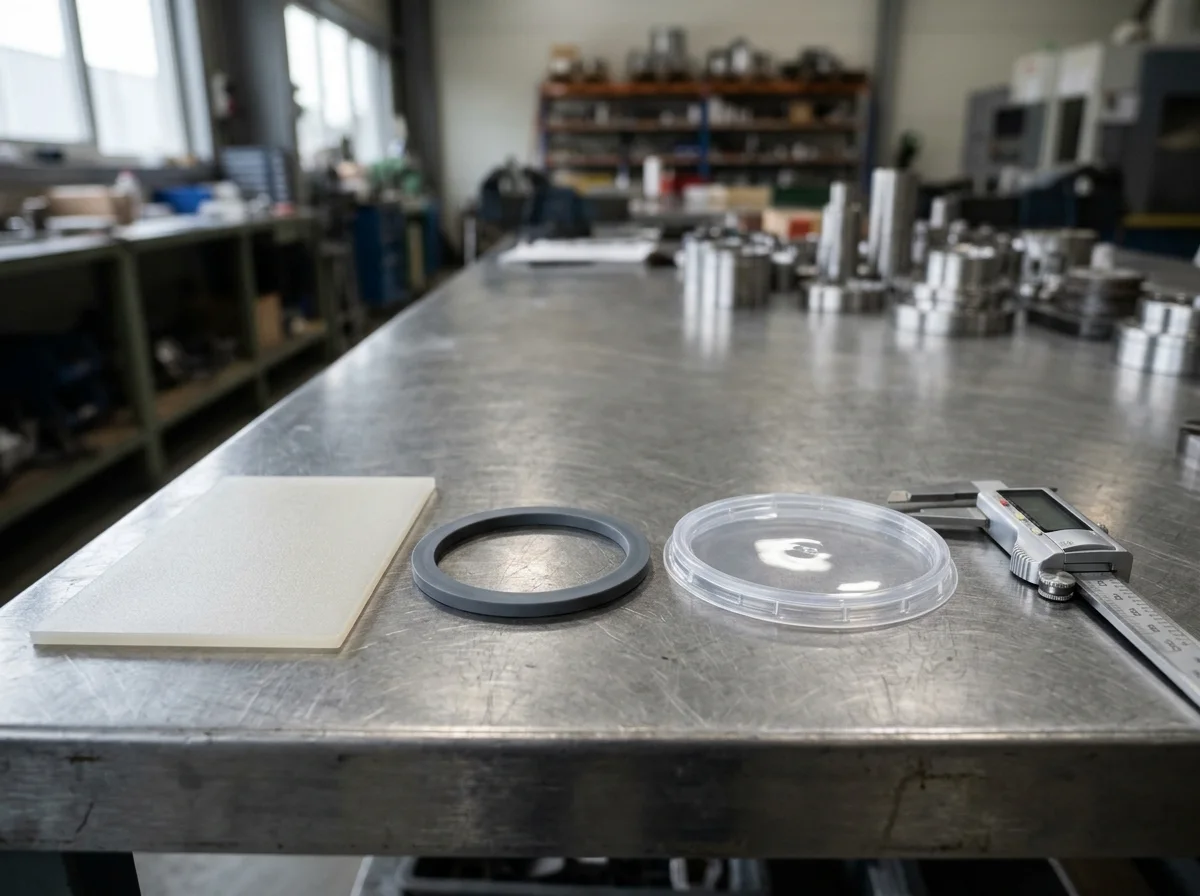
What 30+ Molding Machines Tell You, and What They Do Not
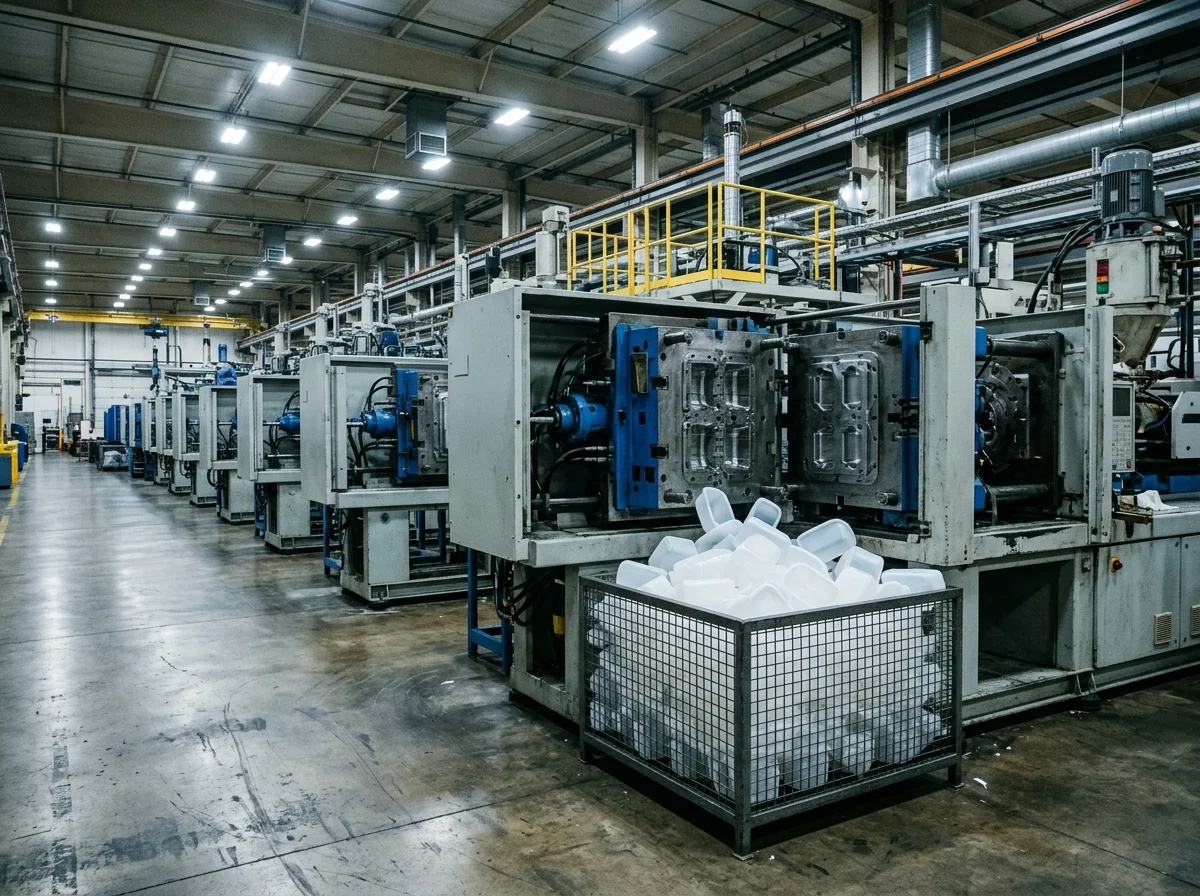
The company's published capability statement lists more than thirty injection molding machines in a 15,000 m² plant, two million units a month and exports to more than sixty countries, with operations dating from 2000. Those are the company's published figures, not an audited equipment schedule, and a buyer doing real diligence should ask for the machine list and the tonnage range rather than accept the count.
What a machine count genuinely tells you:
- Several tonnage bands run at once, which is what makes it practical to quote a 1.4 L fridge box and an 80-piece carton of tall containers on the same order rather than outsourcing one of them.
- Color changeover is a scheduling cost, not an impossibility. More machines means a color can be batched instead of squeezed between two others.
- Tooling is developed in-house, per the same capability statement, so a modification question reaches the people who cut the steel rather than a broker.
What it does not tell you, and what the five questions below extract:
- Which machine will run my mold, and what is its tonnage and shot weight? A machine count says nothing about whether your part fits the available platens.
- What cycle time is quoted, and at how many cavities? The arithmetic is unforgiving: a 30-second cycle on a four-cavity mold is 480 pieces an hour per machine, and a 45-second cycle on two cavities is 160. Same factory, same month, three times the output.
- Who owns the mold, and where does it live if I move? This is the single most expensive sentence in a tooling agreement.
- What is the scheduled date, not the lead time? "25 days" and "the week of 14 March" are different promises, and only one of them can be checked.
- What sampling do you run, at what AQL, and who signs the report? Capacity without a sampling plan is just speed.
For transit, the claim to test against is a distribution protocol rather than a drop test: ISTA 3A covers individual packaged products moving through a parcel system, and its integrity sequence is what a carton has to survive before "ships safely" means anything.
OEM and ODM: What Actually Changes
Four levers appear on the product records, and only four: color, size, logo and package. Everything else in an OEM conversation is one of those four wearing a longer name.
- Color is a masterbatch decision. It changes the minimum, because a color run is a run.
- Size is usually a mold decision. Within an existing family it may be a new cavity insert; outside it, it is a new tool.
- Logo is a decoration decision: printed, transfer, or molded into the part. Each has a different setup cost and a different durability under washing.
- Package is a print and carton decision, and it is the one that most often changes the carton dimensions worked out above — which is why packaging approved after the carton was specified can quietly cost you a container layer.
ODM means an existing mold, your color, your logo and your packaging. It is the fast route and the one the six lines are built for. OEM means your drawing: a new cavity, a new core, or a modified tool. Whether a change is a modification or a new mold is a decision with a cost attached, and the modify-or-build decision sets out the tests — annual volume, geometry change, and who owns the steel.
The part buyers underestimate is approval. A private-label carton has artwork, proofs, a color target and a barcode, and all four have to be signed before the line runs; the retail packaging approval loop covers the order those approvals happen in. If the goods are going to a marketplace rather than a store, the labeling, photography and carton-prep sequence is a different one again.
This page deliberately stops at the specification. The design-to-delivery workflow as a whole — design review, mass production, quality control — is a process story told elsewhere on the site; what follows here is the layer underneath it, where the numbers that decide freight and paperwork actually live.
A carton specification agreed after the packaging is approved is a container plan built on the wrong box. Fix the pack, then fix the load.
The Document Pack to Request Before You Print a Claim
Compliance on this page is a list of questions and documents, not a certification. We do not present a certificate as proof of scope, and an accredited laboratory report is not something a factory can issue about itself.
Ask for eight things, in this order:
- A declaration of compliance per material in the product, not per product. A PP body with a silicone gasket and a PET lid has three declarations, and a single sheet covering "the container" is a summary, not the evidence.
- The resin and gasket grades, with the supplier's own documentation. A grade name without a supplier document is a marketing word.
- Migration or overall-migration test reports on the finished article, with the simulant, the temperature, the duration and the number of uses stated. A report that omits the conditions cannot support a claim.
- Any claim-specific test, separately: microwave reheat, freezer cycling, dishwasher cycles. Each is a different test and none of them implies the others.
- A transit test at the packaging level, against the protocol your channel uses.
- Change control in writing — resin grade, gasket compound, tool repair, decoration method. Any of the four can move a product that passed last year.
- The domestic standard documents, alongside the export ones. Food-contact plastics made in China are governed by the GB 4806 series, and the plastics part, GB 4806.7-2023, has applied since 6 September 2024 and consolidates the earlier resin and article standards into one. Ask for the GB declarations as well as the FDA or EU ones: an export pack with no domestic paperwork does not show you what the line was built to.
- The document behind a "BPA-free" claim. BPA-free is a statement about the resin and the additives in it, not a test result on the part, so it needs two things behind it — the resin supplier's data sheet naming the grade, and, if the words are going on the label or the carton, a migration report on the finished article. Ask which grade, and ask who tested the finished part.

The market-by-market version of that list, including which document answers which regulator, is in the compliance document guide. Nothing here is legal advice, and claim wording belongs with your own compliance team and the market you sell into.
Assembling a First Order Across Lines
A first order rarely covers one line, and the way the lines interact is where trial orders go wrong.
Minimums are counted per model, and often per color. The records carry a 2,000-piece figure on thirteen SKUs, and not one of the thirteen is in this food storage range — they are lunch-box, pill-box and formula-dispenser lines — so read the number as a reference point from the same factory rather than as a minimum for these containers, and not as a statement about custom work. Ask how the minimum is counted before you design a carton assortment around a unit price.
A mixed order needs a capacity ladder, not a wish list. Decide which SKU carries the volume, which two exist to round out the order, and which one you are testing — then check the mix against the carton table, because a 24-piece carton and an 80-piece carton do not substitute one for one inside a 20 ft box.
Sample before you specify, and specify what you sampled. A seal that works in a sample room can fail in a bag; the leak spec explains which three dimensions decide it and how to write the test into a purchase order.
Then load. With cartons this light, the cheapest saving available to you is a carton that stacks one layer higher. Before the order is placed, not after.
What Our Records Show, and Where They Stop
The honest summary of this page: six lines exist as records with model numbers, materials and, for five families, full carton dimensions. Five of the six capacity cells and five of the six carton cells are incomplete, and we have printed them as they are rather than filling them from a photograph. The capability figures are the company's published numbers rather than an audited schedule. No prices appear here, because pricing on this range is by quotation against quantity, color and pack.
What we can do is turn a question into a record: which family, which color, which carton, which documents, and what the load looks like in a 20 ft box. The place to start is the food storage container category hub, and if the tall-container family is the one you need, its product page carries the specification the records actually support.
Wholesale, in the end, is a word two industries share. The distributor sells you a carton; the factory sells you a specification and the carton it arrives in. Which one you are buying should be a decision, not an accident of the search results.
Continue reading
Related sourcing guidance
More practical context for your food storage container sourcing conversation.

Discuss your product range
Need help selecting or customising containers?
Share the product type, market and sourcing requirements with the Xinghui team.