
Food Storage Containers
Food Storage Container Manufacturer in China — Xinghui: Lunch Boxes, Food Storage, Kitchen and Home Organizers Since 2000
A food storage container manufacturer in China sells you a range, a material, a carton and a document set. Here is how to read all four before you place a PO.
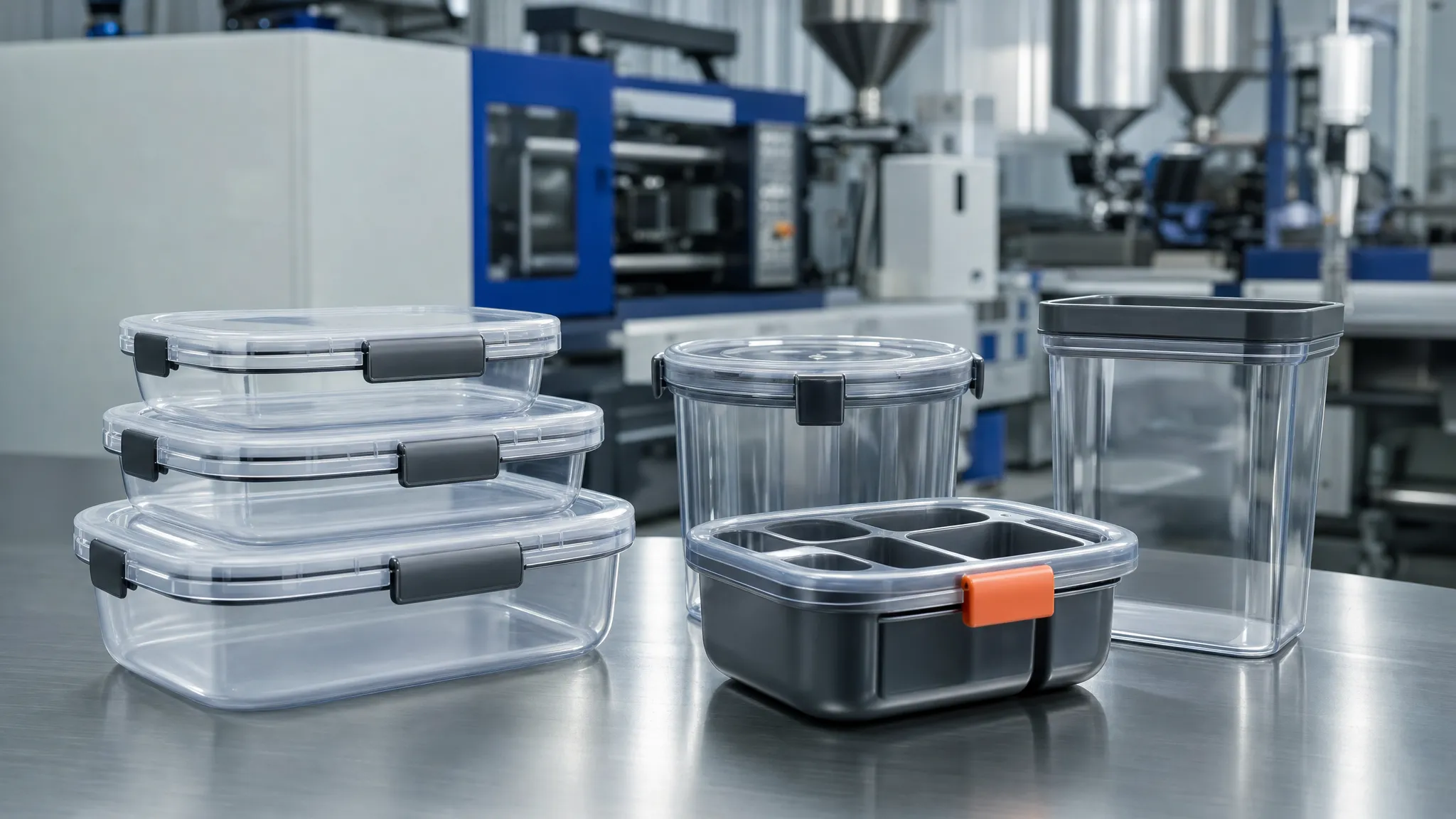
A food storage container manufacturer in China is four businesses wearing one name badge: a range you can sell, a material you can stand behind, a carton and freight profile you pay for, and a document set you can file. Buy on unit price alone and you are really choosing between three unknowns.
This guide is written from inside one of those factories — Xinghui Plastic, an injection-moulding plant in Jieyang, Guangdong whose published pages state it was established in 2000, runs 30+ injection-moulding machines in a 15,000 m² workshop, and lists 63 SKUs across six product families. That is a commercial interest, so the useful form of this piece is a set of questions to put to any factory, including this one. No prices, no certification claims, no legal conclusions appear below — every hardness claim is either a number from our own published product records or a document you should ask a supplier to produce.
What a China Food Storage Container Manufacturer Actually Sells You
Start by refusing the phrase "food container" as a unit of comparison. A factory is worth shortlisting when it can answer four separate questions — and the weaker suppliers can answer only the first.
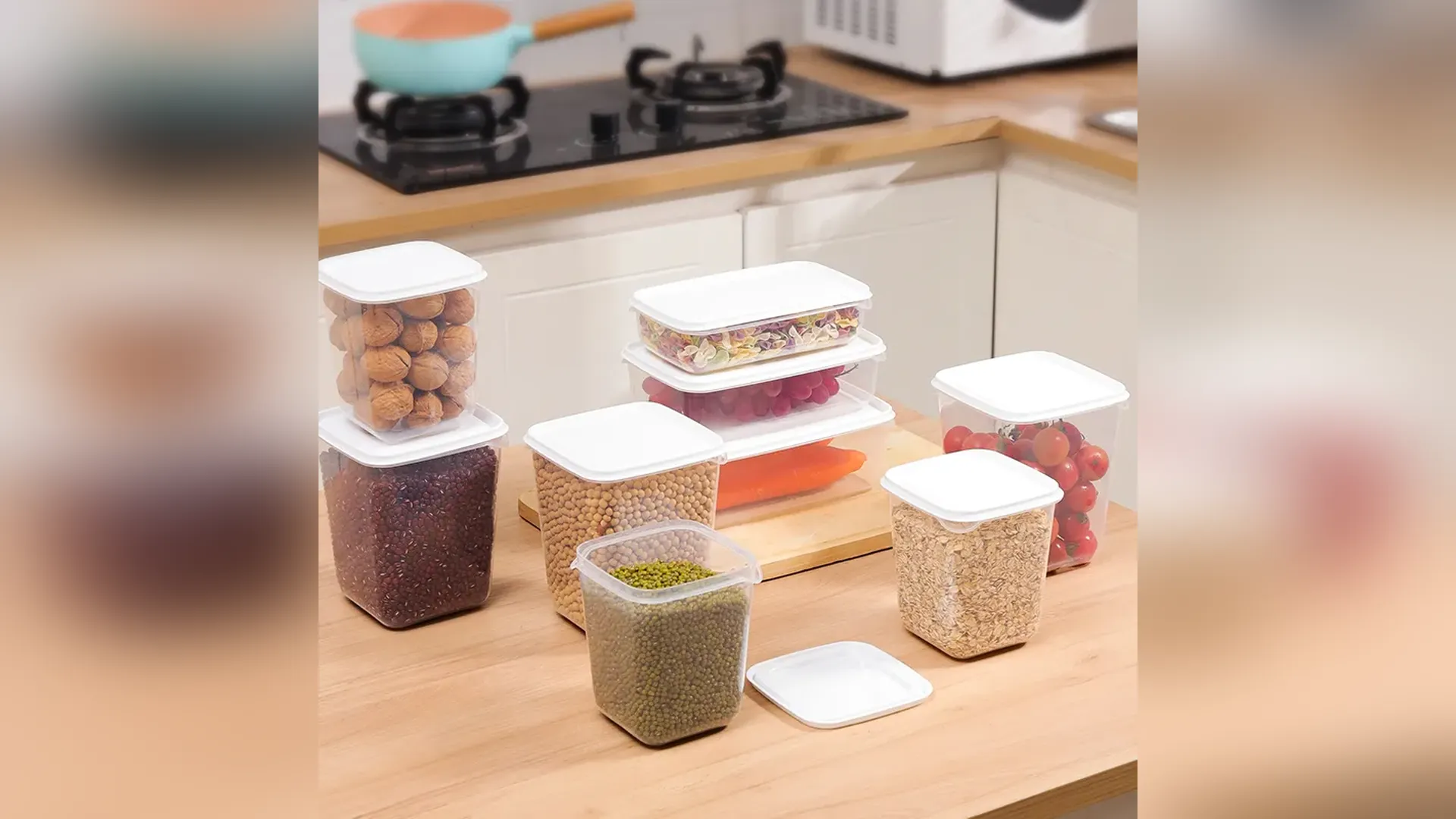
A range, not an item. A distributor needs a capacity ladder and a lid system that repeats across it; a private-label brand needs a shape it can protect with a mould. A factory selling one box in one size is a trader with a catalogue. The published sourcing route for a mixed range is set out in our one-stop food storage container sourcing guide, and the range itself lives under food storage containers. OEM and ODM work — colour, logo and packaging on an existing model, or a new mould for a new shape — sits on top of that catalogue.
The second is a material construction you can defend. "Food grade plastic" is a category, not a specification; what goes into the file is the polymer, the grade and the finished part — see the material table below.
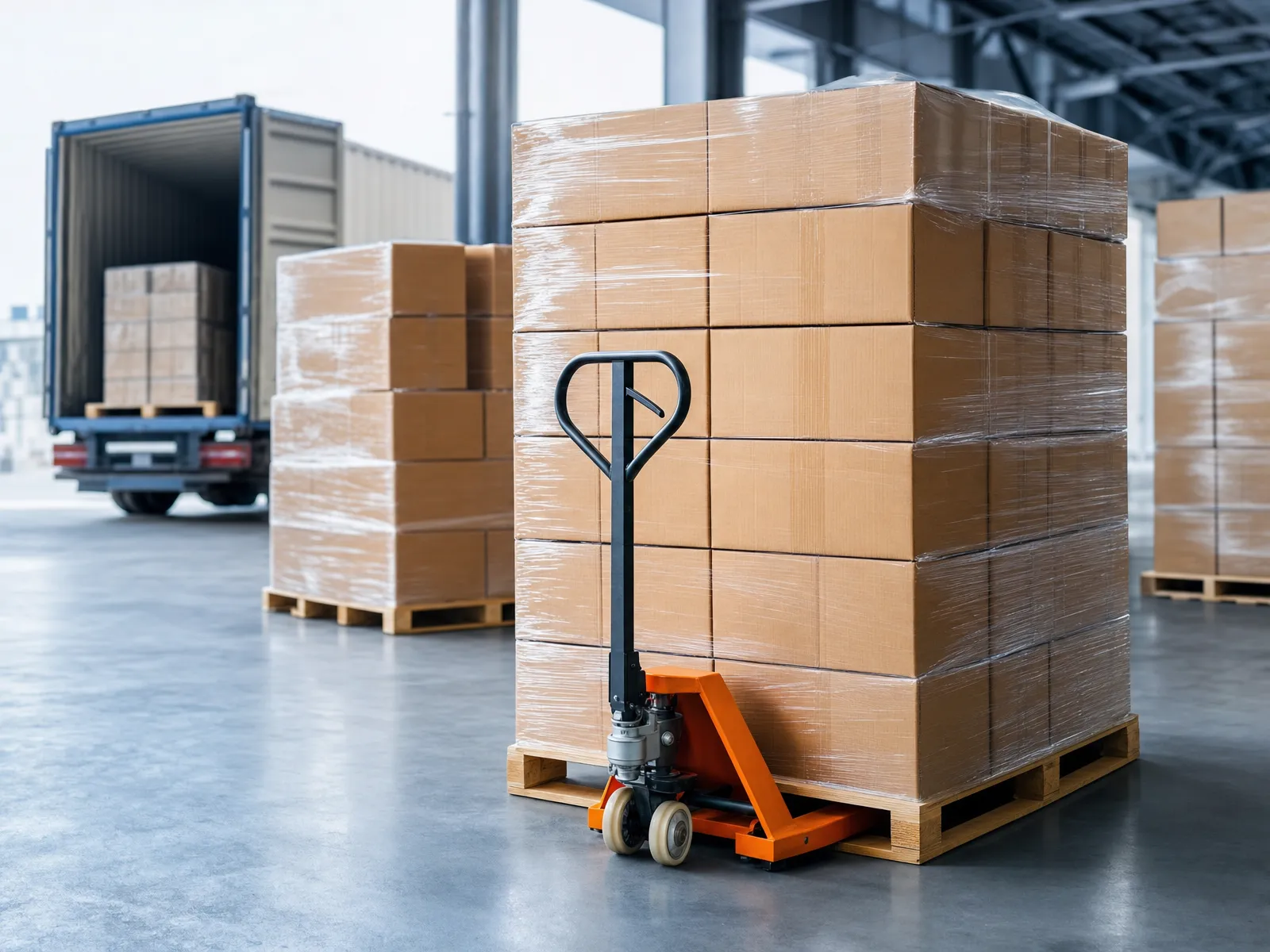
A carton, because the carton is the freight. The single most useful number a supplier can send with a quote is not the part price; it is carton dimensions, pieces per carton, carton volume and gross weight. Section three turns real records into that number.
Finally comes the document set — not a badge wall, but a food-contact file: a named document about a named product, covered in section six.
The Range, Family by Family
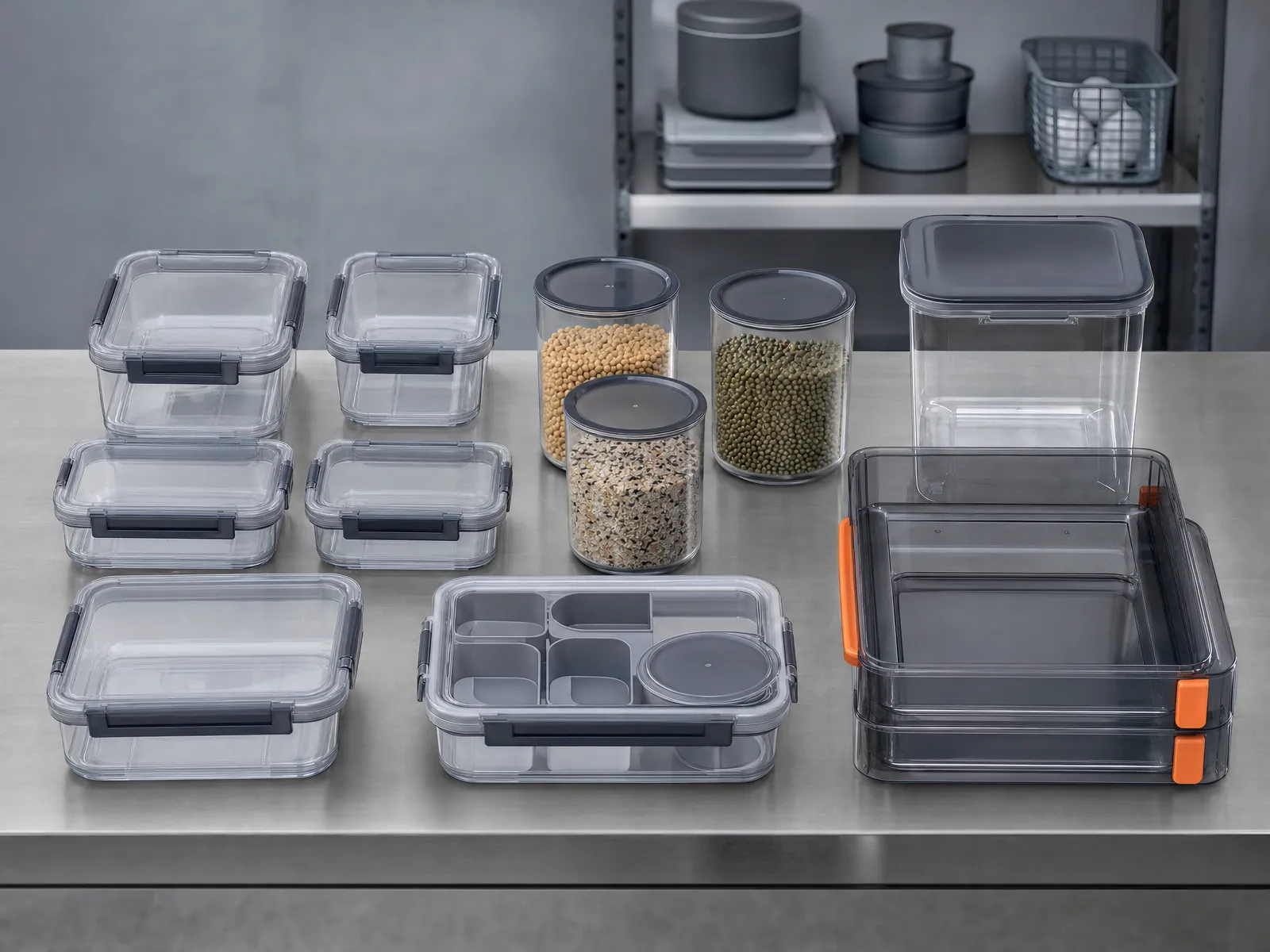
A "manufacturer" is only as wide as what it actually moulds. Our own catalogue is organised into six families, and the ones a food-storage buyer touches most are these:
Family | Representative models in our records | What a buyer uses it for |
|---|---|---|
Food storage containers (19 published pages) | BX1094–BX1099 1.4 L freezer box; BX1052 round grain-jar set; BX1053 three-piece airtight set; 3332 kitchen and frozen container; 3334 tall square container | pantry, freezer, fridge and meal-prep staples |
Lunch boxes and bento | BX1051 1.3 L lunch box (PP + silicone, 182 g) | carry-and-return lunch ranges |
Kitchen storage containers | 3332, also published under a kitchen-use listing — the same model has both a kitchen-use and a frozen-use page | visible kitchen organisation |
Home storage and organisers | makeup and fridge-can organisers (SN3178 / SN3179); PP + PS tissue box | non-food or light-contact home storage |
Drinkware | PP water pitcher (SH3139 / SH3141) | adjacent shelf fill |
Portable organisers | pill boxes (BX398–BX399) | travel and personal-organiser ranges |
Two patterns matter more than the list. First, the same factory that moulds a 1.4 L freezer box usually also moulds the lunch box and the organiser — so a buyer can consolidate several product lines into one order and one inspection, which is the real leverage in a housewares programme. Second, the range moves with demand: the category now reads as a capacity-and-organisation story rather than a container-count story.
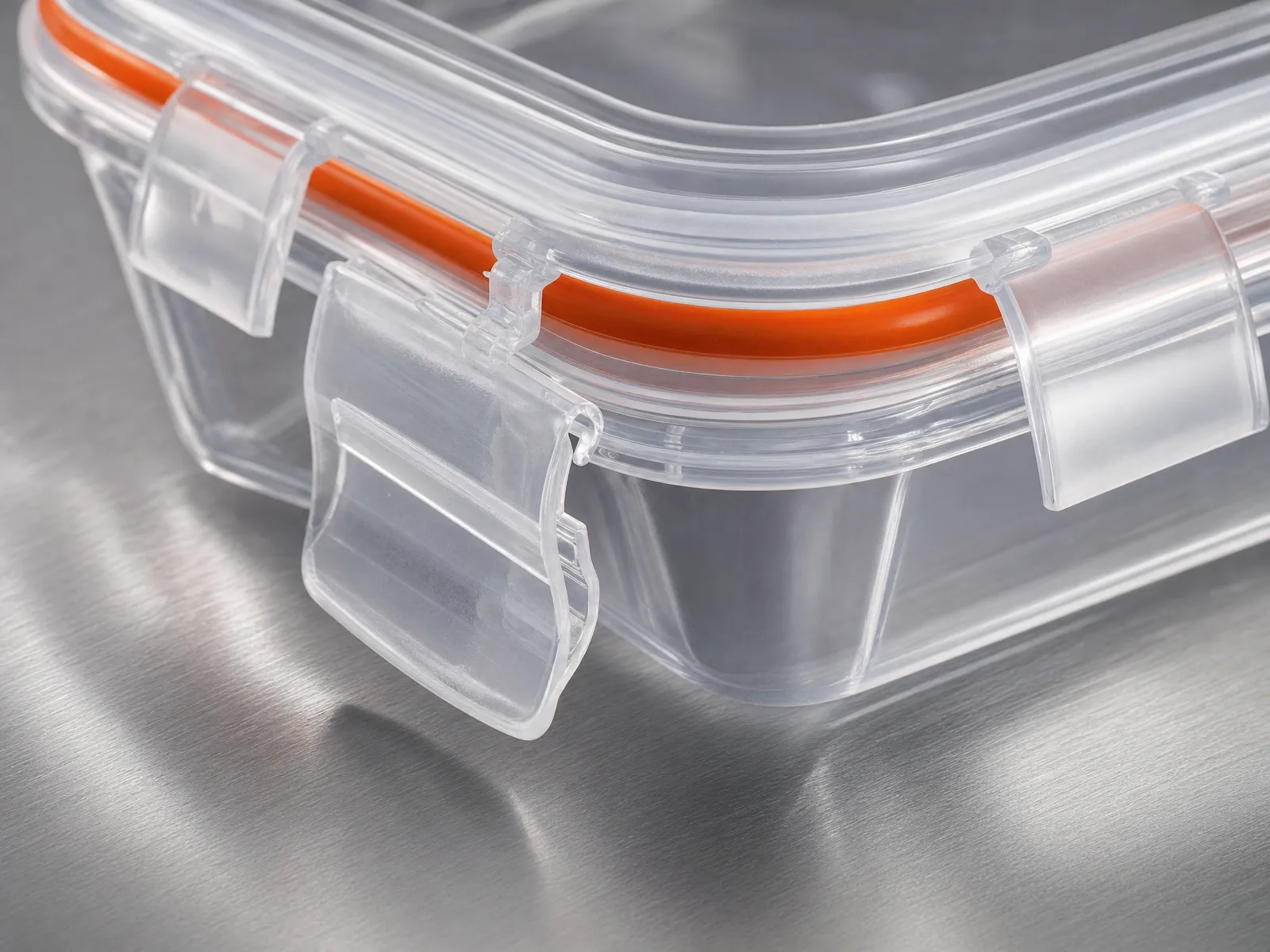
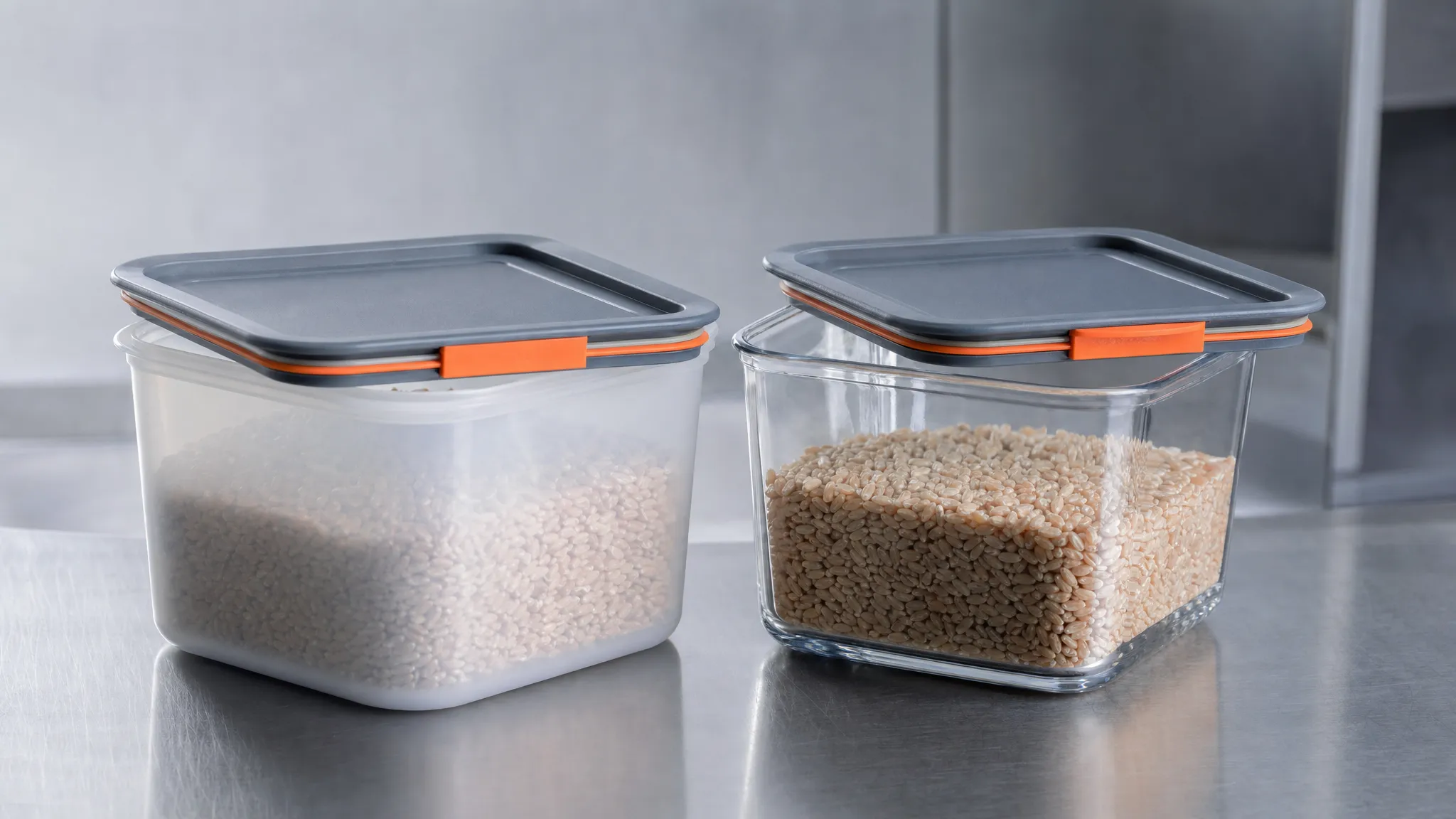
The feature buyers ask about first is "airtight", and it is a machine part, not an adverb. An airtight or snap-lock lid is a rim of locking tabs (or a four-sided clip) pressing a silicone gasket against a moulded rim; the seal is created by the gasket's compression, not by how hard the lid snaps. That is why "leak-proof" should be a sample-approval test — fill it, latch it, invert it — rather than a word on a product page.
The Specification and Carton Table Buyers Should Actually Read
Here is the table almost no factory publishes, built from our own product records. It is also the table that decides your landed cost.
Model | Item (material) | Carton (cm) | pcs / carton | Carton volume · gross weight |
|---|---|---|---|---|
BX1094–BX1099 | 1.4 L freezer storage box (PP) | 59.5 × 43.5 × 53.5 | 72 | 0.1385 CBM · — |
BX1052 | round grain-jar set (PP + silicone) | 68 × 36 × 56.5 | 48 | 0.1383 CBM · 16.2 kg |
BX1053 | three-piece round airtight set (PP + silicone) | 61 × 30 × 57 | 24 | 0.1043 CBM · 12.4 kg |
3332 | kitchen and frozen container (PP) | 64 × 49 × 56 | 56 | 0.1756 CBM · 16.1 kg |
3334 | tall square storage container (PP) | 59 × 56 × 65 | 80 | 0.2148 CBM · 14.7 kg |
Two derived figures fall out, and both belong in a sourcing decision.
Carton litres per piece. Divide carton volume by pieces: the 1.4 L freezer box buys about 1.9 litres of carton per container, the 3334 about 2.7 litres, the 3332 about 3.1 litres, the round grain-jar set about 2.9 litres, and the three-piece airtight set about 4.3 litres. That is roughly a 2.3× spread in the freight volume you are buying for a comparable product class. The geometry behind that spread — how a box nests, whether a lid stacks flat or proud — is worked through in our note on stacking, nesting and carton maths.
Packed weight per piece. 16.2 kg over 48 pieces is about 338 g of packed weight per container; 16.1 kg over 56 is about 288 g; 14.7 kg over 80 is about 184 g; 12.4 kg over 24 is about 517 g. A part quoted two cents cheaper that ships at 4.3 litres per piece can lose to one quoted two cents higher at 1.9 litres, on a single 40-foot container, before anyone debates the polymer — and that same arithmetic is what decides whether a first order travels as an LCL or a full FCL shipment.
These are illustrative arithmetic on our own cartons. Palletising and the forwarder's stow decide the real container count — treat the numbers as the shape of the question, then ask your supplier for the same four columns.
What the Containers Are Made Of, and the One Question Per Material
Most "material" pages compare polymers in the abstract. What a buyer needs is which polymer is in which part, and the single question that exposes a weak answer.
Material (resin code) | Where it appears in this range | Why it is chosen | The question to ask |
|---|---|---|---|
PP — polypropylene (5) | freezer boxes, kitchen and meal-prep containers, round sets, PP lunch boxes | tough, heat-tolerant and washable; hazy unless a clarified grade is specified | Which food-contact grade is named — clarified or standard? |
PET | clear panels in PP + PET freezer and meal-prep sets | clarity where a clear body or lid is wanted | Is PET only the lid or panel, and what is its service temperature beside the PP body? |
Silicone | the gaskets in airtight and snap-lock lids | it is the sealing element — the part that makes "airtight" true | How is airtightness tested, and where does that test sit in sample approval? |
Borosilicate glass + plastic | the glass storage set, BX1021–BX1029, 320–1,040 ml | clarity and oven/microwave tolerance | Are the lid and seal documented separately from the glass? |
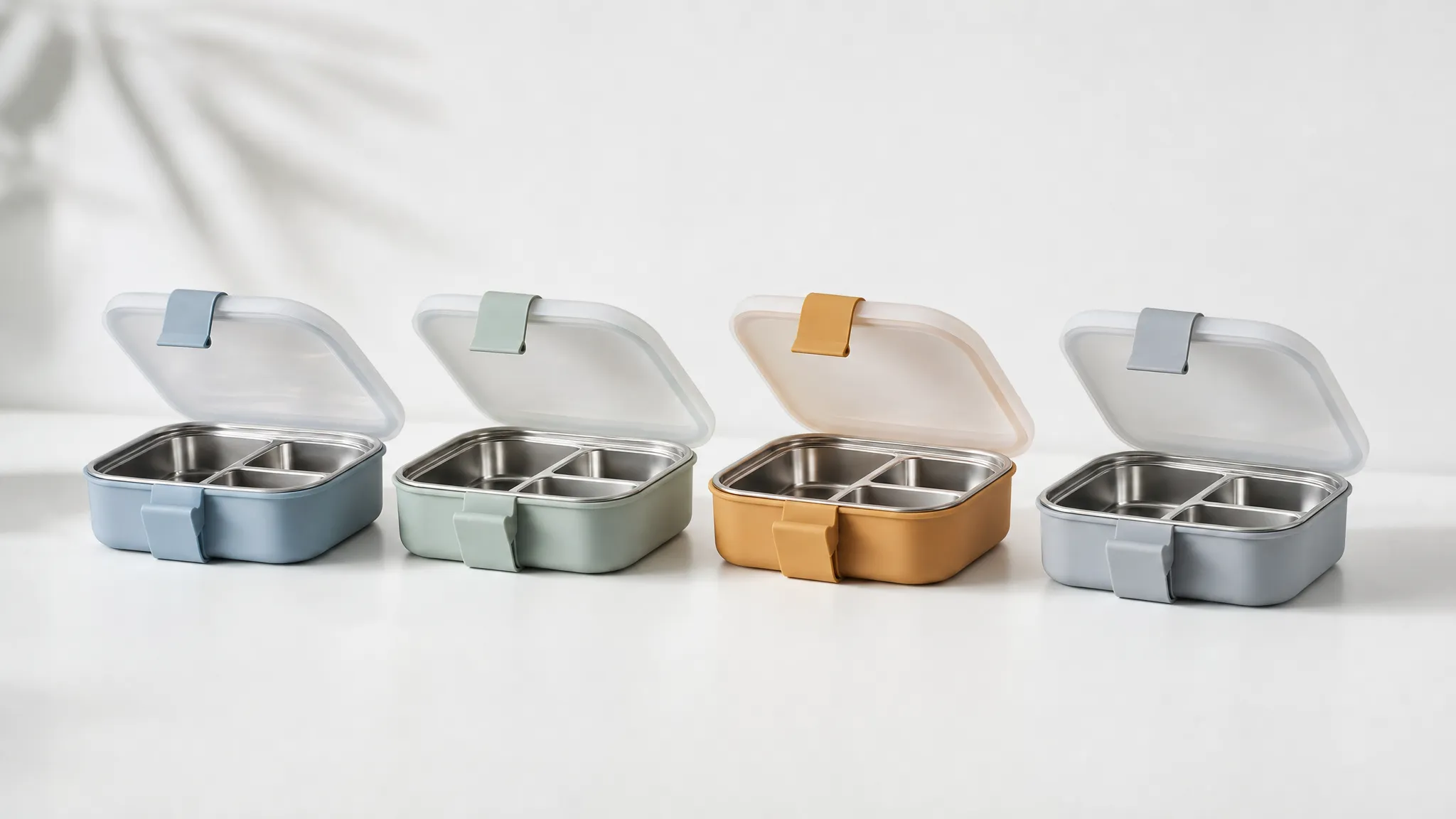
304 stainless steel | the stainless bento and lunch box line | rigidity with no plastic food-contact body | Is the steel grade stated, and which parts are plastic or silicone? |
HIPS / PS | soap dishes, and the rigid base of an ice-cube tray — not the reusable hot, washed containers | stiffness, clarity and cost where the part is decorative | Is this part food-contact at all, and does it see heat or dishwashing? |
Two conventions travel with the material and are worth naming. PP carries resin identification code 5 and PS carries 6 (5 = polypropylene, 6 = polystyrene) — the number a recycler or a retailer's compliance team reads to route the item. And PP's defining property for a reusable container is that it is semi-crystalline and tough, which is exactly the difference our PP versus PS comparison draws when a buyer is choosing between a translucent workhorse and a clear but brittle display material. Our materials and food safety page maps the same materials to their intended use and temperature conditions, and it makes the point that matters most here: "BPA-free" is a material statement, not a test report — the document that matters is the one for the finished article.
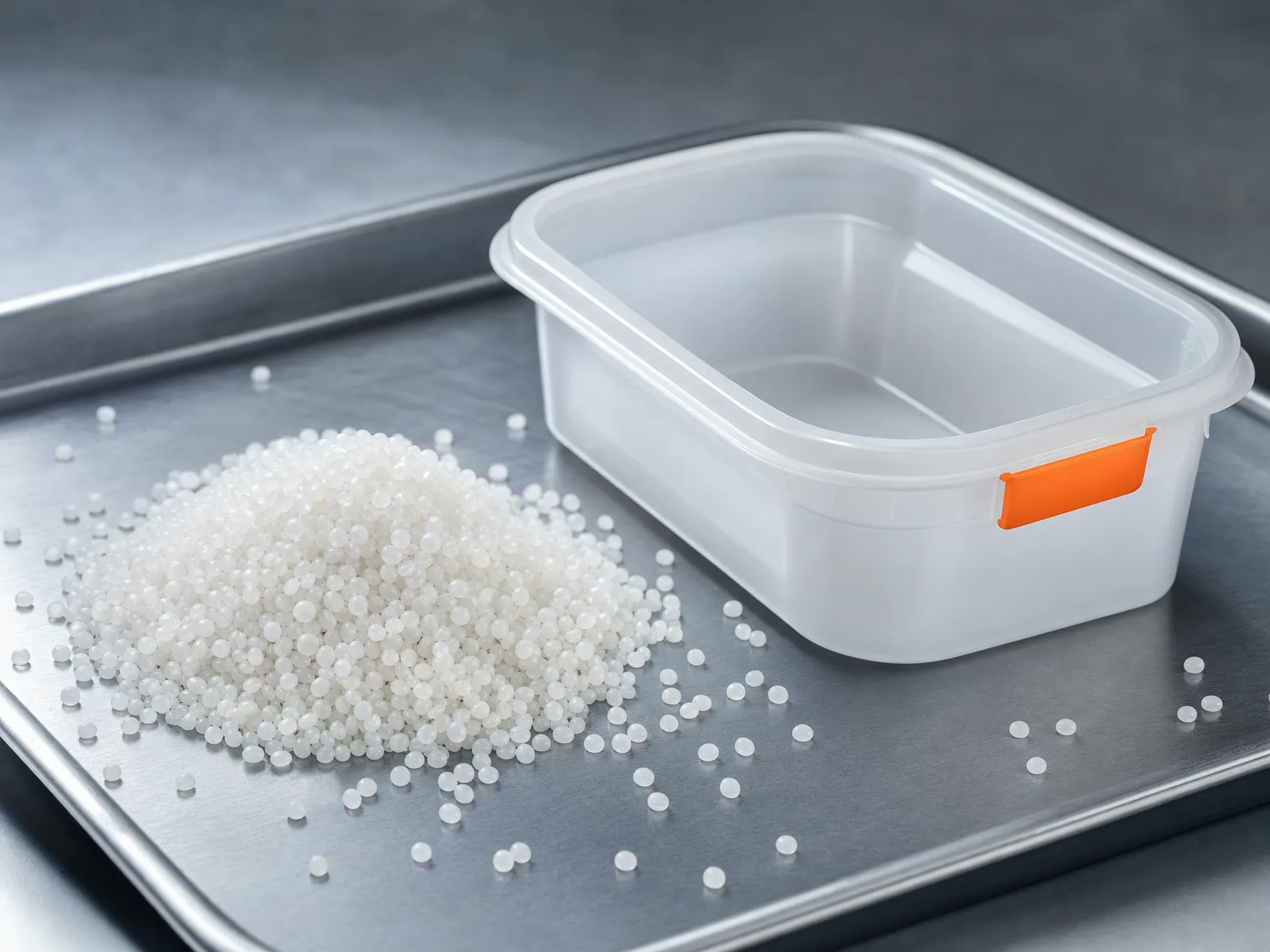
The honest limit: a material name never establishes compliance by itself. Whether a container is right for a hot-fill line, a freezer or a dishwasher is a question about that grade, that part and that use condition — which is why this page keeps pushing the same habit: ask for the document that names your product.
How the Containers Are Made: Moulding and Tooling
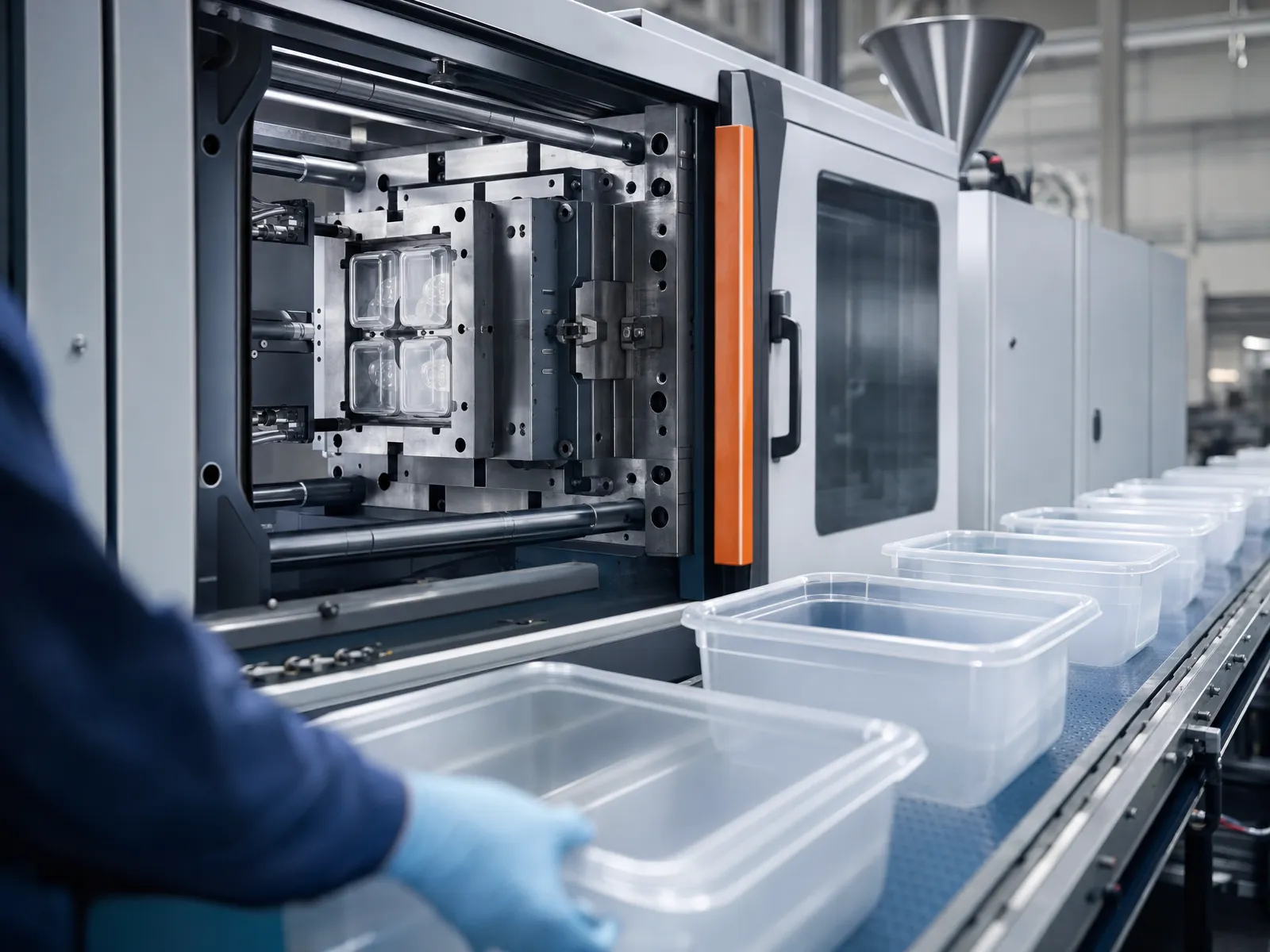
Almost every rigid food container in this category is made by injection moulding: molten polypropylene is forced into a steel mould, held under pressure while it cools, and ejected as a finished part. Two consequences follow for a buyer.
The mould decides what you can buy. If your shape already exists, colour, logo and packaging changes sit on top of an existing tool — the cheap, fast route. If the structure, size or closure must change, you are buying a new mould, with its own cost, lead time and ownership terms. Whether a given change can ride on an existing tool or needs a new one is the first thing to settle before any price means anything.
The quotation is a set of assumptions, not a price. Cycle time at your cavity count, the shrinkage figure the tool was cut to, wall thickness and the scrap/regrind assumption all move the part price — which is why our how to read an injection mould quote walk-through insists on normalising those four before comparing two suppliers. The published custom mould development path lays out the six stages we run — requirements, 2D/3D design, prototype, mould development, sample approval, then mass production.
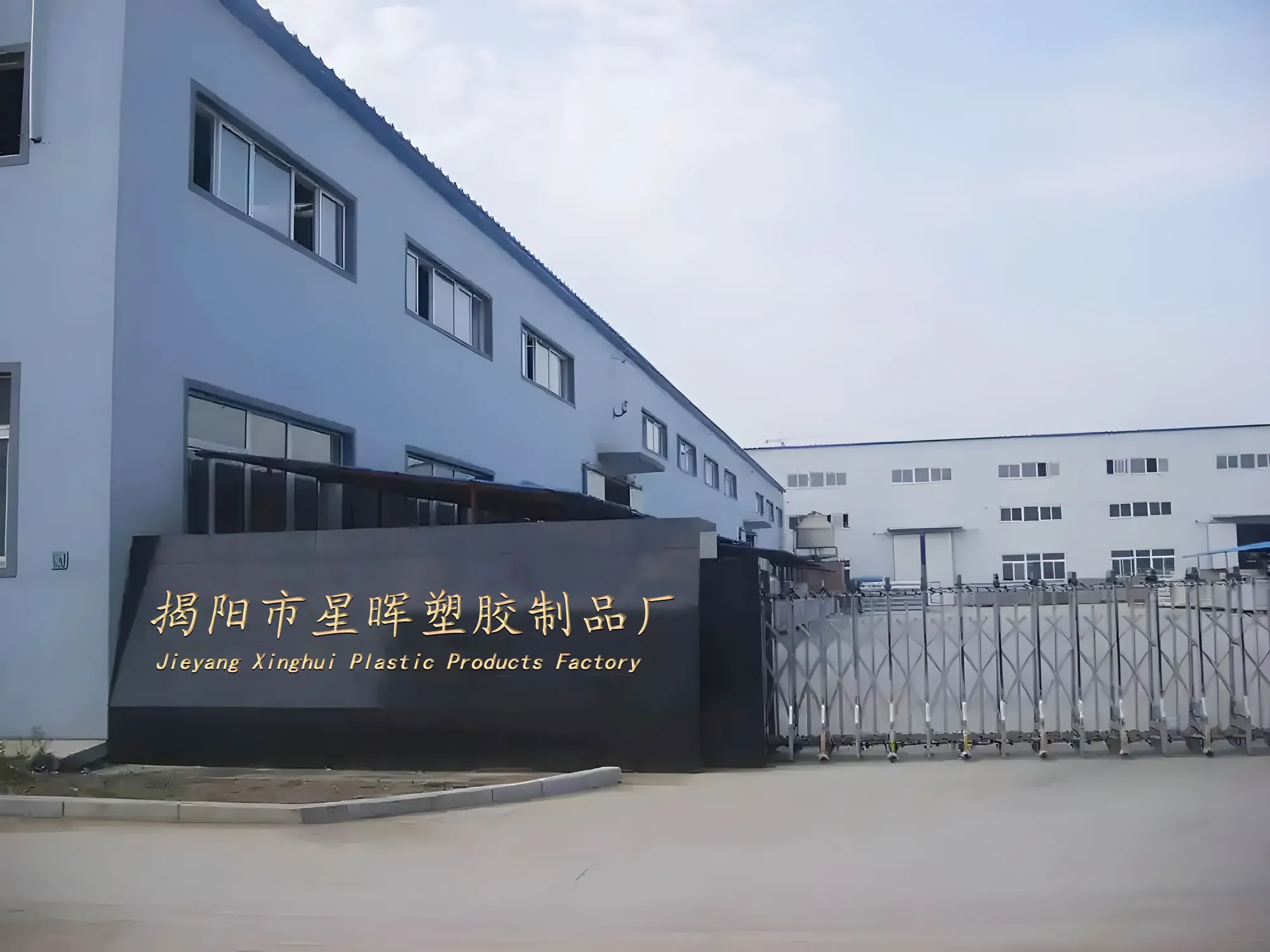
A factory's own address is part of the evidence. Ours is Jieyang, Guangdong:
Quality Control: What to Check and What to Request
Quality control is not a department; it is a list of checkpoints a buyer writes into the order. The three that catch most food-container problems:
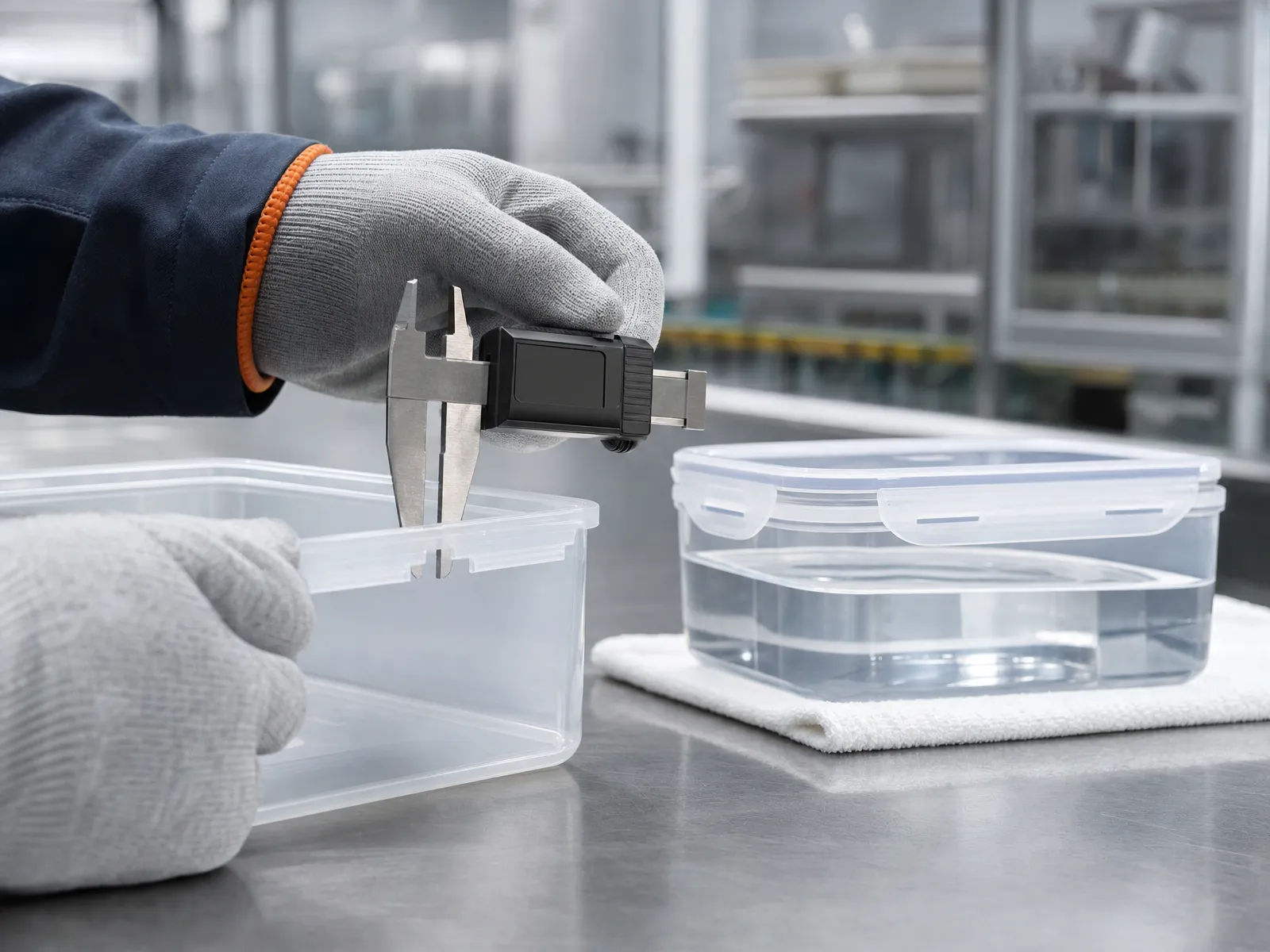
- Wall thickness and dimensions — checked against the approved sample or a dimensional sheet, at the start of the run as well as the end.
- Closure and leak performance — the fill/latch/invert test for a sealed product, tied to the gasket and tab design rather than to "it feels tight".
- Drop and packing checks — the sample discipline behind a drop claim is the method named ASTM D5276, Standard Test Method for Drop Test of Loaded Containers by Free Fall; the finished check belongs at packing, against the carton specification in the table above.
A published inspection route is only a starting point — our quality control page describes the stages, and the exact inspection plan, sampling level and tolerance still have to be agreed per order. A supplier working to a recognised quality-management system (the ISO 9000 family) is easier to audit, but the certificate is a system statement, not a product test.
Then there is the document set, which is where compliance actually lives. For food-contact plastics the US route runs through the FDA's food-additive provisions and the section depends on the polymer: for the olefin family that includes PP it is 21 CFR 177.1520, Olefin polymers. In the EU, plastic food-contact materials sit under Regulation (EU) No 10/2011, which sets the migration framework behind a declaration of compliance. Read both as a map of what to request, never as a verdict we can hand you. The shorter list of documents to request from a factory is the version to paste into an email to any supplier.
MOQ, Customisation and the First Order
Two questions stall first orders more than any other.
How is the minimum counted? Per order, per model, per colour or per carton — the four floors are different numbers, and a mixed order can miss all of them at once. Our published position is that a numeric MOQ applies to the products that list one, and is otherwise confirmed by model and customisation scope, with below-MOQ discussions possible for stock products, samples and trials. The counting rule itself is unpacked in is MOQ per order, per colour or per model.
How much can change without new tooling? Colour, logo, packaging and set composition can usually sit on an existing product; a new shape needs a tool. The two routes ask you to sign off different things: the light route wants artwork and a colour standard, the structural route wants a drawing and a sample.
The first order sequence that avoids the usual rework: state the use case and use conditions → pick an existing model or file a new-mould brief → agree material, colour, packaging and compliance scope → sign off the sample → confirm the carton specification → then release production. Skipping the carton step is the most expensive shortcut, because that is where the freight cost you cannot renegotiate is locked.
How to Shortlist a Food Storage Container Manufacturer
Reduce the shortlist to a scored conversation. Ask each candidate:
- Range — show me the capacity ladder and the lid system that repeats across it.
- Material — name the grade in the body, the lid and the seal, separately.
- Carton — send carton dimensions, pieces per carton, carton volume and gross weight for the two models I am comparing.
- Tooling — is this an existing mould, a modification, or a new mould, and who owns it?
- Quality — which checkpoints run before, during and after production, and what is the approval reference?
- Documents — which certificate or report names my product, material and market, and what is its scope?
- Commercials — how is the minimum counted, and what is the lead time after the tooling route is fixed?
A factory that answers all seven in writing is worth a sample. The certification checklist is the companion to this list — it explains what each document is for, so you can tell a product report from a company certificate — and the procurement service route describes how that sourcing conversation is run.
Who are the major food storage container manufacturers in China?
The honest answer is that the notable ones are not a fixed list — they are the factories that publish what they mould, what they make it from and how they pack it. Judge a candidate on range, records and documents (above), not on a place in someone's "Top 10", which is often the list-maker's own position. Our own published record is 63 SKUs across six product families, including 19 food-storage pages.
Is a plastic container or a glass set better?
It depends on the job. A reusable, dropped, washed container favours PP; a clear, display-led or oven-going product favours borosilicate glass with a separate lid and seal. The material table above is the checklist for deciding between them.
What is the smallest order I can place?
It is a function of the model and the customisation, not a single posted number — see the MOQ section. For stock products, below-minimum discussions are possible for samples and trials; for a new mould, the tool cost is the real floor.
What to Do Next
If you are building a food-storage or kitchen range, start from what already exists and make the supplier prove the rest. Browse the food storage container range for the current models, then send the capacity list, the use conditions, the target market and the two models you want carton figures for. A manufacturer that answers the seven shortlist questions in writing has already told you most of what a sample would.
Continue reading
Related sourcing guidance
More practical context for your food storage container sourcing conversation.
Discuss your product range
Need help selecting or customising containers?
Share the product type, market and sourcing requirements with the Xinghui team.