
Compliance & Food Safety
How to Tell If a Container Is Really Microwave-Safe: The Symbol Is Not Evidence — Here Is the File You Should Ask For
Two symbols on the base, and neither is evidence. For microwave safe plastic containers: the report to request, the fields it must state, the claim to avoid.
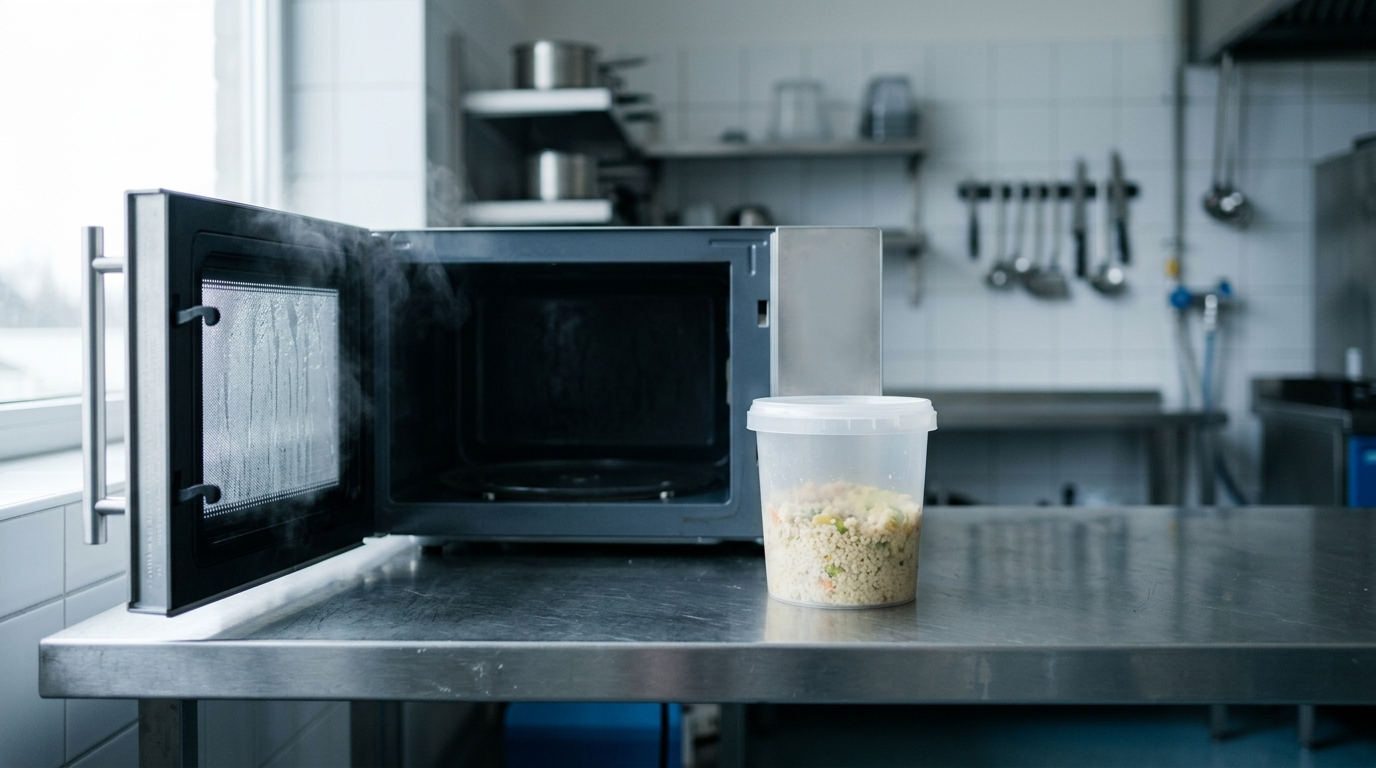
Turn a reusable container over and you will usually find one of three things on the base: a recycling triangle with a 5 in it, a small wave icon, or nothing at all. Buyers treat the first two as permission. Neither is.
The short answer to how to tell if plastic is microwave safe is that you cannot tell by looking. You can only tell by reading a document, and that document has a shape you can check in ten minutes. This page is the file to request and the sentences your artwork is not entitled to print without it.
It is written from the buying side of the table. Xinghui Plastic moulds reusable PP houseware in Jieyang, Guangdong — since 2000, 30+ machines, 15,000 m² — including microwave-safe containers and storage boxes that should never see a microwave. The difference is not the word on the base.
The Microwave Safe Symbol: Two Marks, Neither of Them Evidence
The triangle with a number in it is a resin identification code, defined by ASTM D7611. Code 5 is polypropylene, code 6 is polystyrene, and that is the whole message.
It says nothing about heat performance, food-contact compliance or how long the part survives a microwave. The same code covers a yogurt tub moulded from thin homopolymer and a lunch box moulded from impact copolymer at twice the wall thickness: one is cold-storage, the other may reheat, and both carry a 5. PP versus PS is a materials question, not a marking question; the consumer version of this one sits in is a plastic lunch box microwave safe.
The wave icon is different: a manufacturer's declaration, printed at the brand's discretion. No laboratory issues it, and it carries no duration, no temperature and no list of parts. It is only as good as the instruction leaflet behind it, and the leaflet as good as the test behind that. A microwave safe symbol on the base is one of those two marks, and neither one is a test result.
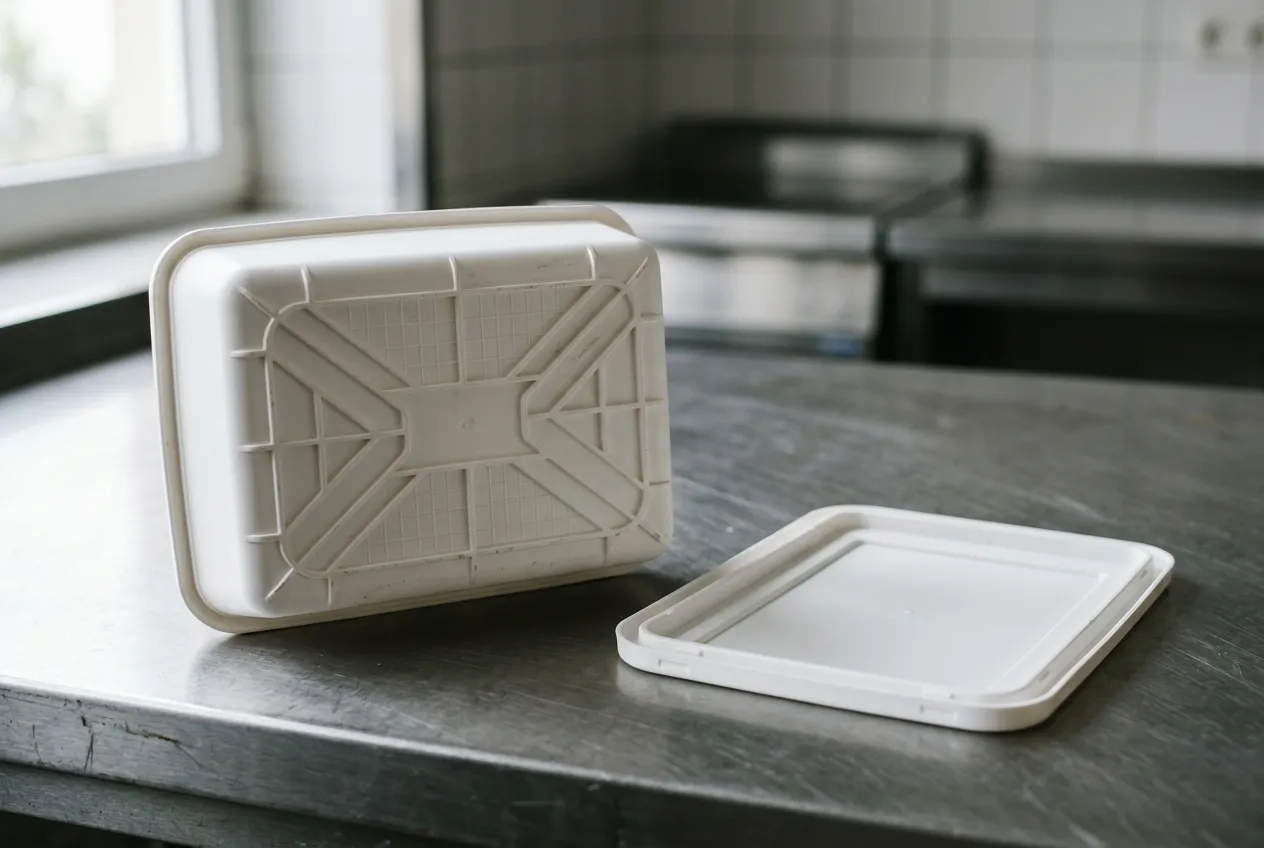
Why No Certificate Anywhere Says "Microwave Safe"
No single international certificate is called "microwave safe". Buyers ask for one because the phrase sounds like a certification. What exists comes in three layers.
The material is allowed in food contact. In the US, the polymer and its additives must be authorized food-contact substances used within the conditions of that authorization: the FDA's guidance on food packaging sets out that logic, and 21 CFR 177.1520 lists the olefin polymers permitted and the specifications each must meet. Neither contains a microwave rating; the FDA's consumer advice on microwave ovens is simply to use cookware made for microwave use. The EU's Regulation (EU) No 10/2011 sets migration limits and requires a written declaration of compliance naming the intended use — a statement about migration under stated conditions, not a microwave certificate.
Migration has been tested at conditions resembling your use. Two hours at 70 °C and thirty minutes at 100 °C are different tests of the same box, and only one resembles three minutes of chilli oil.
The moulded part survives the cycle. A distorted rim, a lid that will not clip — this third layer is a property of the article, not of the resin code, and the one most often asserted and least often documented.
Our five-market document map shows which paper belongs to which layer in the US, EU, Germany, Japan and China. Most suppliers hold the first, fewer the second at reheat conditions, very few the third on the part you are buying.
What a Microwave-Use Test Report Has to State
If a factory says the container was tested, ask for the report and read it against this table — one of several documents worth requesting from a food container factory, and the one a microwave claim stands on. A report that cannot fill the middle column is a letter with a logo on it.
Field | What it must state | What a weak report leaves out |
|---|---|---|
Article identity | Model code and the part tested — body, lid, gasket | "PP food container" |
Material | Polymer grade and the supplier's designation | "food-grade PP" |
Test conditions | Temperature and duration, and how the temperature was reached | "microwave tested" |
Contact medium | Simulant or food class — aqueous, acidic, fatty — and fill level | "with food" |
Result | Pass or fail against a named limit, with the measured value | "passed" |
Method | Test method and version, so results can be compared | nothing |
Laboratory | Issuing lab and its ISO/IEC 17025 accreditation (CNAS or CMA in China) | an in-house memo |
Traceability | Report number, date, sample reference matching your order | an undated PDF |
Two rows carry most of the weight. Test conditions decide whether the report has anything to do with reheating: 70 °C for two hours is a storage test, and quoting it as reheat justification is a category error. Contact medium decides whether the test resembles your product — aqueous simulants are gentle, while fatty and acidic foods pull at the material and push surface temperature up. A report written around water says little about a curry.
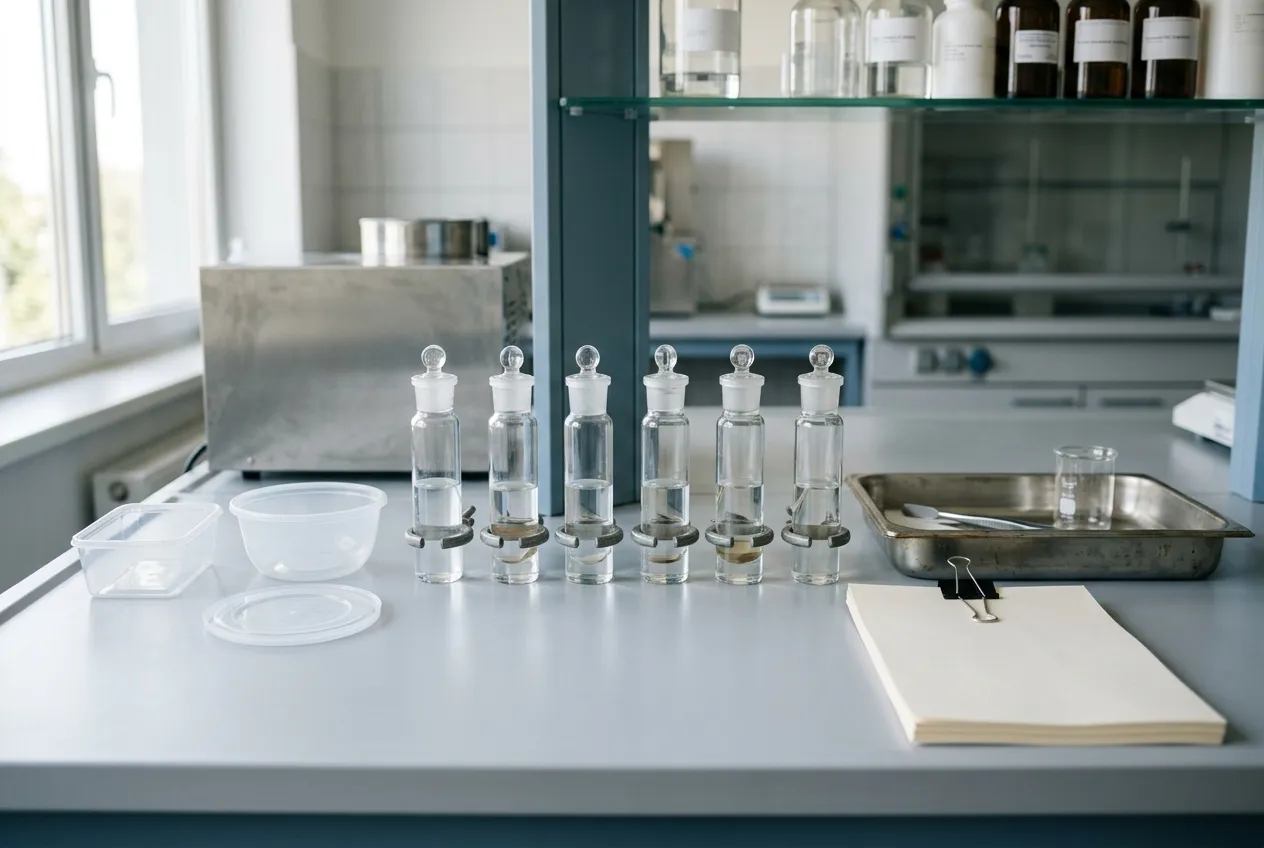
Body and Lid Are Two Different Claims
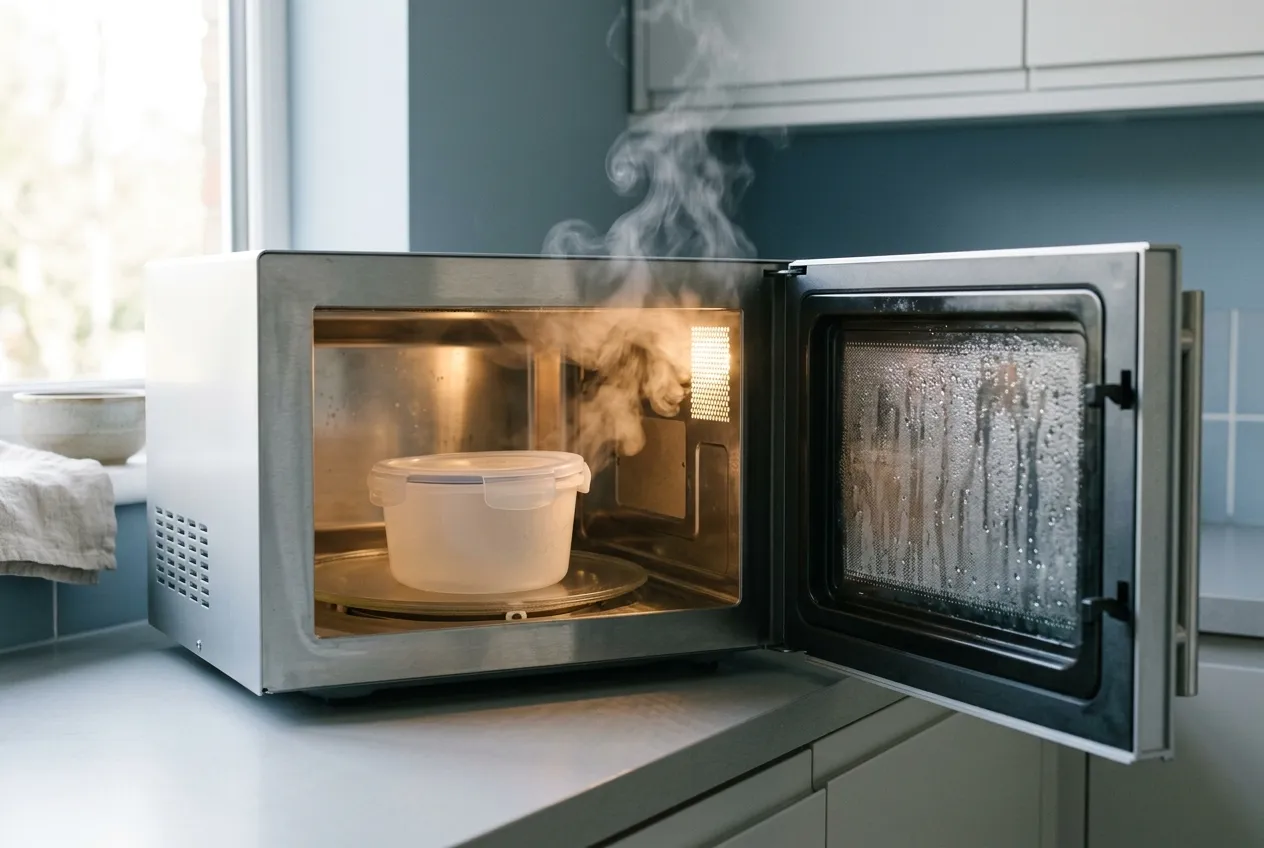
A microwave heats food; the food heats the air and the walls, and the steam goes up. The lid sits in that steam, is usually the thinnest part of the assembly, and is frequently a different polymer chosen for clarity rather than heat.
Our own records make the point without a competitor's help. The meal-prep set recorded under models 3320–3329 is listed as PP + PET, and the record does not say which part is which — exactly the question a reheat claim forces you to answer, because PET is chosen for transparency and its heat performance sits far below polypropylene's. A PP body with a PET lid is not a microwave-safe container. It is a microwave-safe body with a lid that must come off first, and the artwork has to say so.
Silicone gaskets are the least of the problem, but their rating belongs to the gasket, not the box — a separately bought part, like the glass inserts and alternative-polymer bases in our evidence map for non-PP parts.
The Reheat Envelope: Time, Temperature and Food
"Microwave safe" is not a yes-or-no property. It is a duration at a temperature in a named food, and a claim without those three numbers is a guess with a logo on it.
The food sets the first limit: water-based food stalls near boiling point in the headspace, while a fatty sauce or oil film pushes the surface it touches well above that. The mass sets the second: a frozen block holds a cold centre while its edges are hot. The oven sets the third: 700 W and 1,200 W machines deliver one setting differently.
FSIS gives the food-side numbers, not the container-side ones: cover with a lid or microwave-safe wrap, and reheat leftovers to 165 °F (74 °C), checked with a food thermometer after standing time (FSIS, cooking safely in the microwave oven). That is a target for the food, not a heat rating for the box.
So the envelope you ask for reads like a sentence, not an adjective: tested for three minutes at 100 °C with a fatty simulant, body and lid, no distortion, lid re-clips. If the factory cannot state a number, the honest artwork says "reheat in short intervals, lid off, stir between". The same FSIS page is blunter about single-use packaging — margarine tubs and takeout containers should not go in a microwave at all — which applies equally to a reusable box used past its envelope.
How to Tell If a Container Is Microwave Safe: Seven Checks and Four Sentences
You have the file. Now audit it:
- Is the article the article? The report must name the model, or a sample reference traceable to it. A report on resin granules proves the grade, not a 1.2 mm wall and a snap rim.
- Does it name the grade? Homopolymer, impact copolymer and talc-filled grades behave differently at heat. "PP" has not identified what you are buying.
- Are the conditions stated? Temperature and duration, with the method used to reach them. No conditions, no claim.
- Is the simulant representative? Match your best-selling recipe, not the test that was easiest to run.
- Is the lab accredited, and verifiable? ISO/IEC 17025, with a certificate number you can check. A CNAS or CMA mark is checkable; a screenshot of a logo is not.
- Is it current? Check the report date and the method version it cites.
- Does the scope match your market and your sentence? A migration report supports a compliance statement in the market it was written for. It does not authorize "oven safe".

Four sentences on the box cause most of the rest:
- "Microwave safe." With no conditions attached, this is the sentence the whole article is about. Attach the envelope — duration, lid instruction, reheat only — or drop it.
- "BPA-free, so it is microwave safe." Unrelated claims. BPA-free describes a formulation choice and says nothing about heat or the lid; the reasoning behind BPA-free claims is worth understanding, but it is not evidence here.
- "Oven safe." A microwave test is not an oven test: an air fryer heats the part with hot air a microwave never produces.
- "Dishwasher and microwave safe." Two tests, two reports. The dishwasher-safe specification is a different document — the same split that makes freezer-safe and freezer-to-reheat two claims rather than one.
Where the Claim Lands in the Purchase Order
A claim that lives only on artwork is a liability. In the purchase order, with a report reference and a parts list, it is a specification a factory can be held to. Four lines from our own catalogue show the shape for microwave safe plastic containers; every figure comes from our records, and where a field is blank there, it is blank here.
Model | Family | Material as recorded | Capacity | Carton | What a reheat claim needs first |
|---|---|---|---|---|---|
BX1069 | Round ramen bowl with handle | PP + silicone | 1,200 ml | 60 pcs (carton basis not confirmed) | Part-level report; marketed as microwavable, so lid and vent must be in scope |
BX1051 | Three-compartment lunch box | PP + silicone | 1.3 L | 72 pcs (carton basis not confirmed) | Body, lid and gasket each named and in scope |
3320–3329 | Meal-prep set | PP + PET | not recorded | not recorded | The record must split body from lid before any claim is printed |
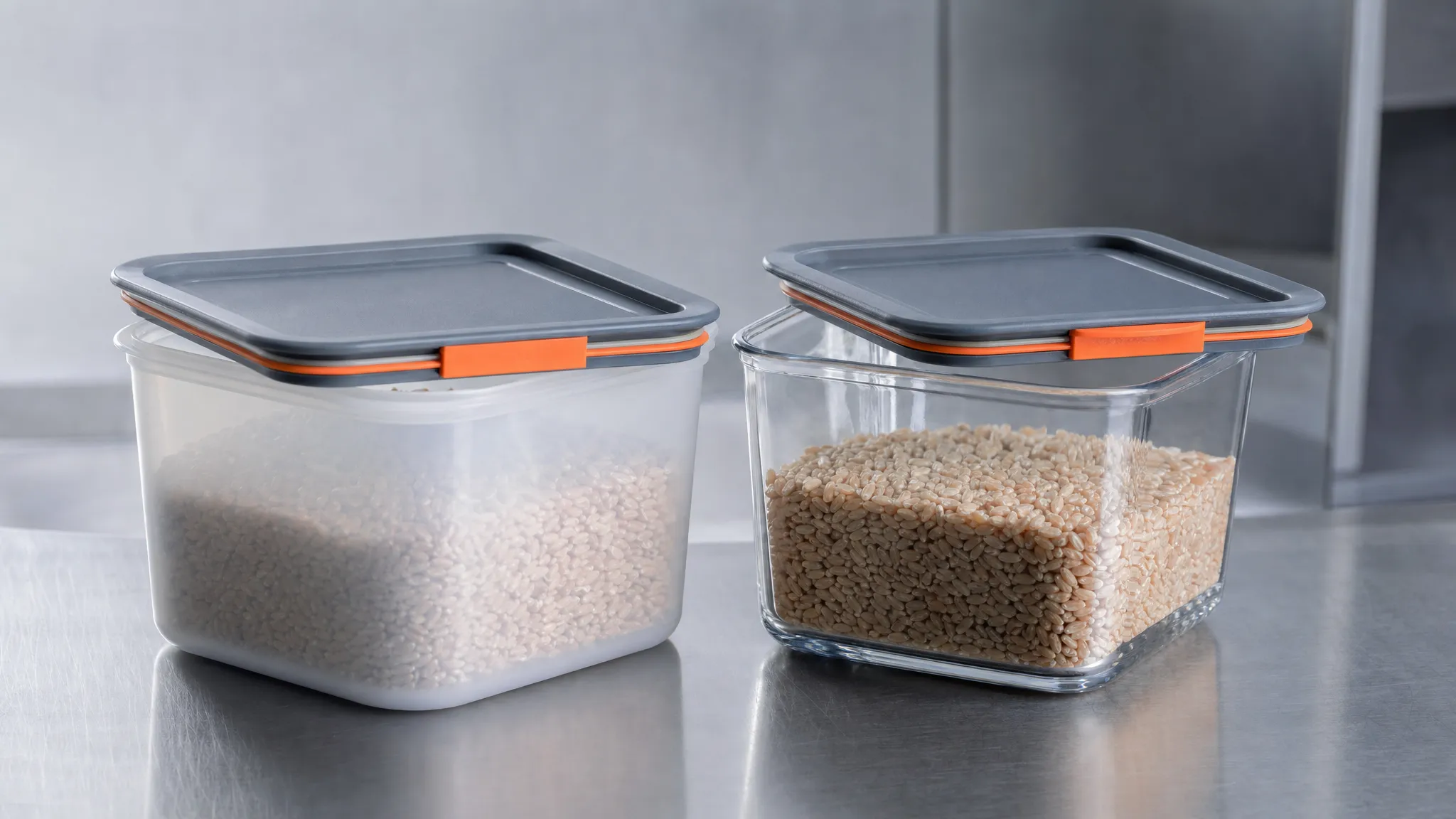
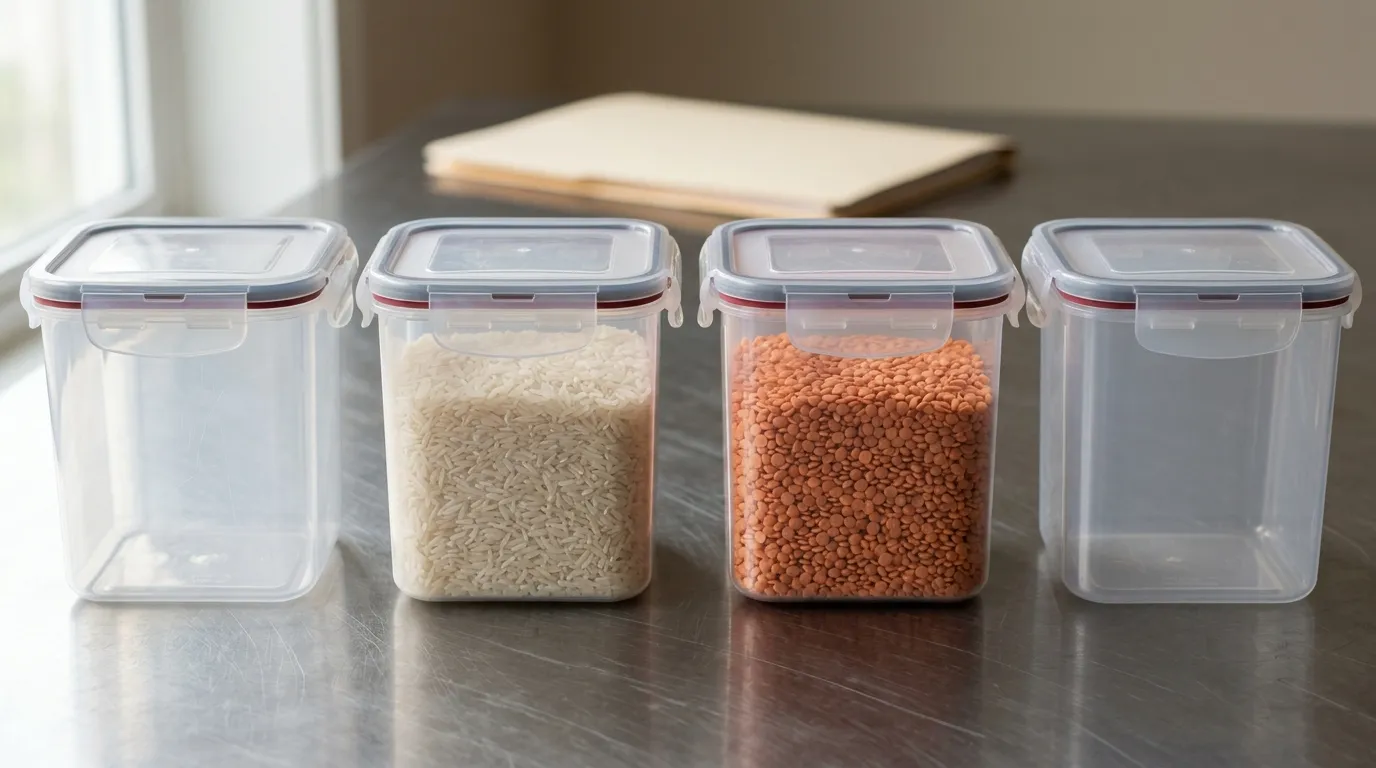
3335–3338 | Tall storage container | PP | not recorded | not recorded | No reheat claim without a report; this is a dry-goods line |
BX1051's carton figures — box 62 × 47.5 × 58.5 cm, 14.3 kg gross — are as recorded on the product record, where the packing basis is still to be confirmed. They describe the carton, not the reheat claim.
Four lines then go into the PO: the claim sentence, the report number it rests on, the parts covered, and the reheat instruction to be printed. Artwork review becomes a check against a document. The container manufacturer background covers how tooling is settled before a mould is cut; one finished example is the 1.3 L three-compartment lunch box.
What We Run, and What We Do Not Test In-House
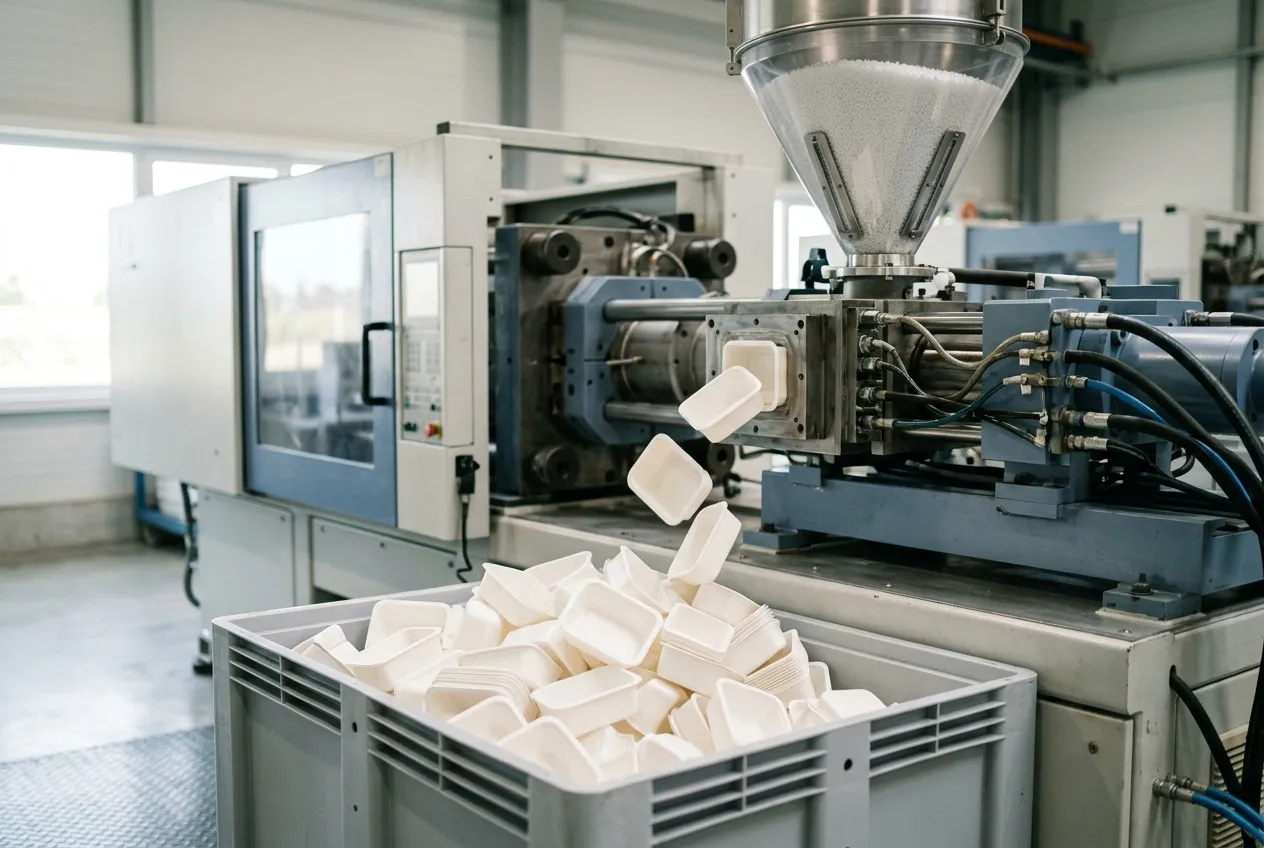
Design, tooling, moulding and assembly sit under one roof, so grade, wall thickness and seal geometry are settled before a mould is cut — where a microwave claim is won or lost, because a 1.4 mm wall and a 1.0 mm wall do not behave the same at minute three. What we can hand you is the grade record, part drawings, mould history and samples from the actual tool. What we cannot hand you is an accredited report from our own four walls: reheat-condition migration testing belongs to a third-party laboratory, and a factory document dressed as a lab report is worse than none. If a supplier offers a "microwave certificate" on letterhead, run check five.
The file to ask for, in one line: the test report for this model and these parts, at these conditions, from a laboratory whose accreditation you can look up — plus the instruction sentence the report allows you to print. Ask before the artwork is signed, not after the first container comes back warped. If you are still mapping documents to claims, the failure modes that belong in contract clauses is the companion read. This describes documents and questions; it is not legal advice, and claim wording should be cleared by your own compliance team for the market you sell into.
Continue reading
Related sourcing guidance
More practical context for your food storage container sourcing conversation.
Discuss your product range
Need help selecting or customising containers?
Share the product type, market and sourcing requirements with the Xinghui team.