
Compliance & Food Safety
Freezer-Safe vs Freezer-to-Reheat: Why Surviving the Freezer Does Not Mean Surviving the Reheat, and What to Put in the Spec
Freezer-safe is a cold-impact property; freezer-to-reheat is a thermal-shock property. Which test, which parameter and which report belongs on the spec.
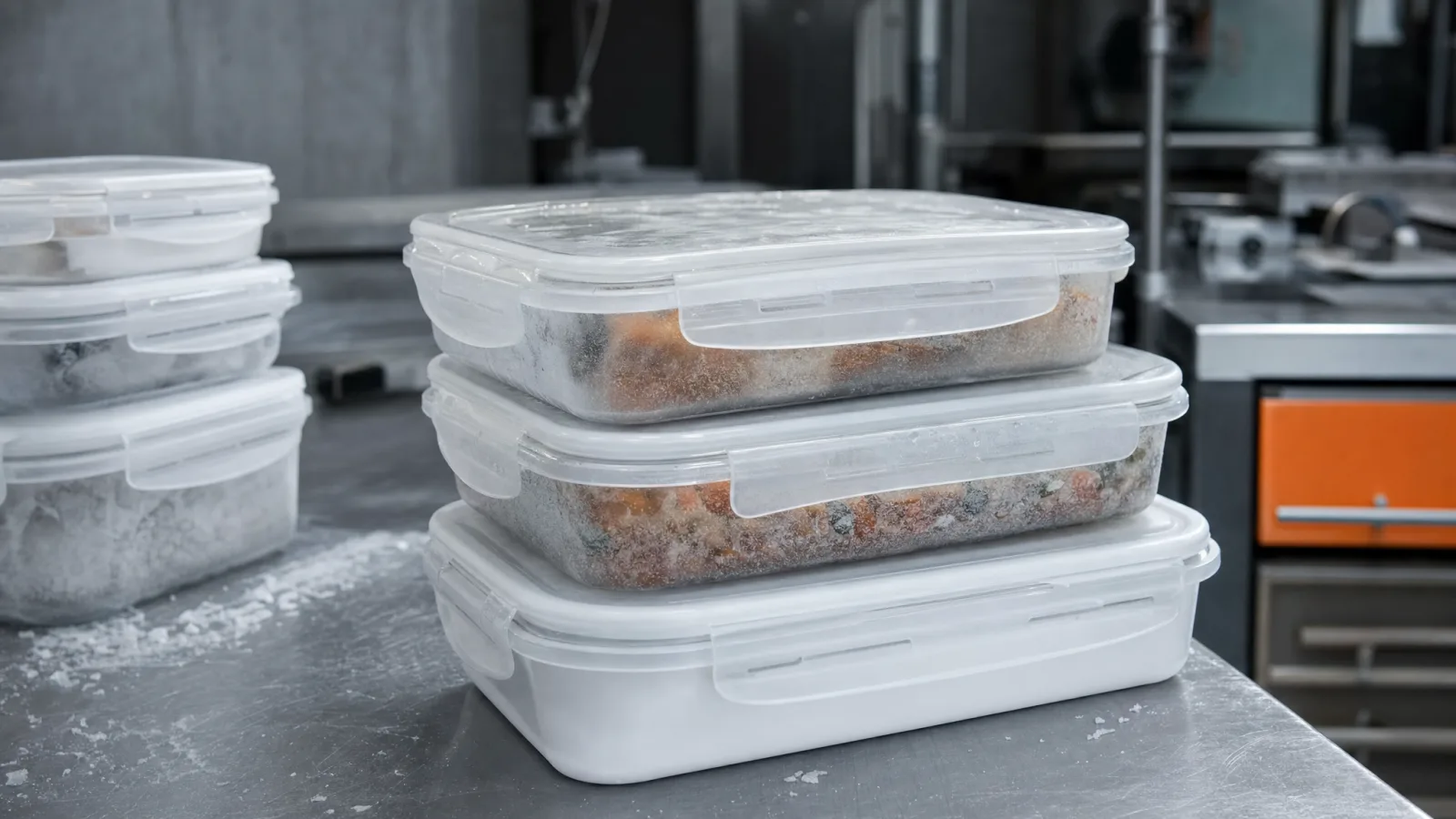
A plastic container that is genuinely freezer safe is not automatically freezer-to-reheat safe. The two phrases sit next to each other on a lid or a retail card, so buyers read them as one claim. They are two different material properties, measured by two different tests, evidenced by two different reports — and a container can pass one and fail the other.
The mistake cuts both ways. Print "freezer safe" on a box that only survives the freezer and you meet the failure in the reheat: a cracked corner, a lid that no longer clips, a crazed surface. Print "freezer-to-reheat" on a box a buyer then stores colder than it was tested, and you meet a container that shatters on the kitchen floor while still frozen.
This page is written from the buyer's side of the table by Xinghui Plastic, an injection-moulding factory in Jieyang, Guangdong that moulds reusable PP houseware — food storage containers, lunch boxes and bento boxes, drinkware and organizers — for importers, brands, wholesale and retail buyers, with a stainless-steel drinkware line alongside. The site states it was founded in 2000, covers 15,000 m² and runs 30+ injection moulding machines for buyers in 60+ countries. The point is not to sell you a box; it is to make sure the sentence you print on one is the sentence you can support.
Two Claims, One Container: the Freezer and the Reheat Test Different Things
Start with the temperatures, because they are what most specify-sheets contain — and the least useful part of the claim.
A domestic freezer runs at about −18 °C (0 °F), the storage figure the US Department of Agriculture's food-safety guidance gives for keeping food frozen. A microwave reheat drives the same box far above that temperature within a couple of minutes. The container has not changed shape, but everything about the demand on the material has.
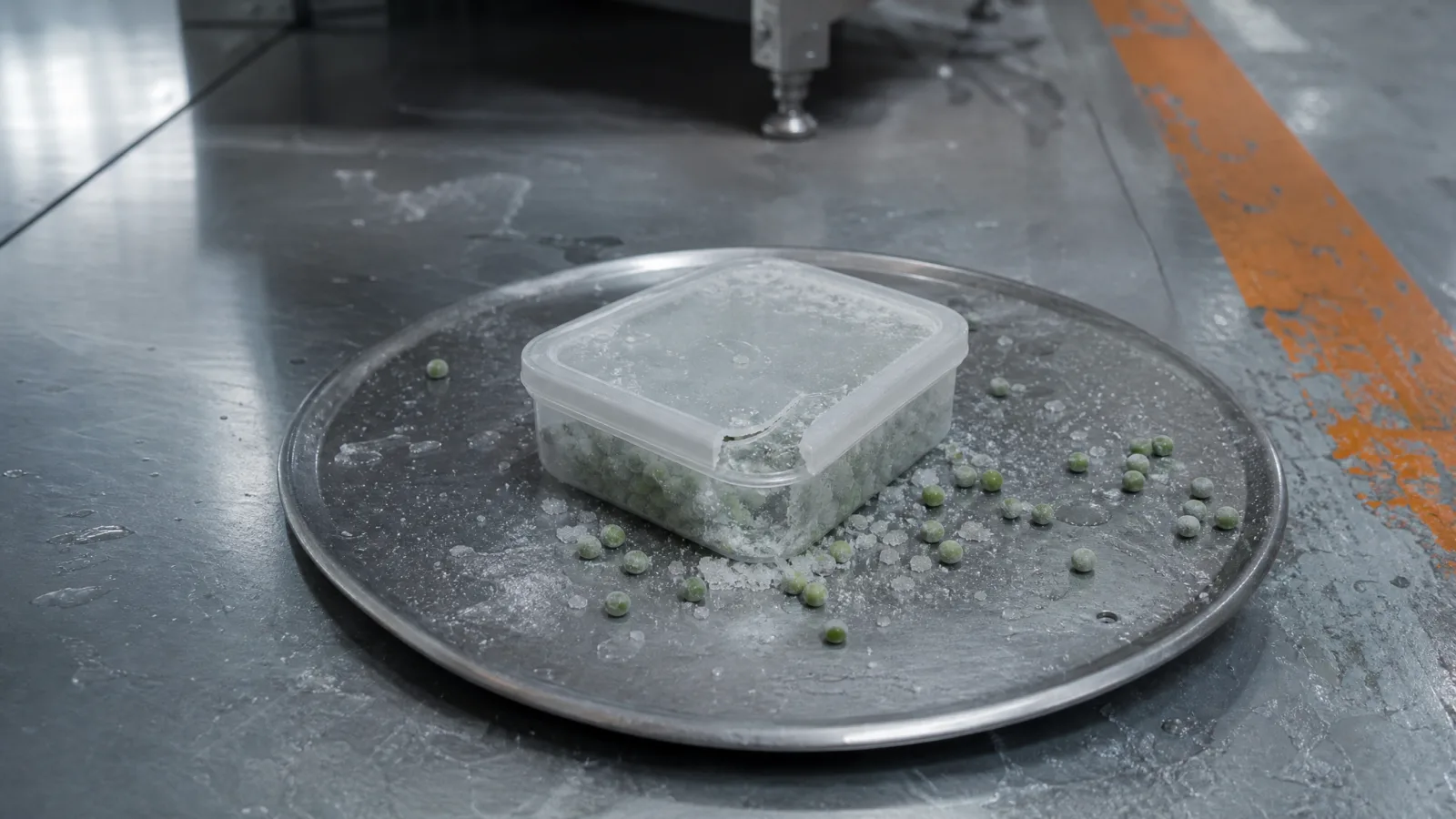
Freezer safe is a low-temperature property. It asks whether the material still absorbs an impact when cold. The failure is brittle fracture: the box is dropped while frozen — on a counter, out of a delivery tote, out of a crowded freezer drawer — and the wall cracks instead of flexing. That is an equilibrium property. Hold the part at temperature long enough and it either has toughness there or it does not.
Freezer-to-reheat is a rate-of-change property. It asks whether the part survives a fast change of temperature, not a temperature. The box leaves the freezer at −18 °C and is in a hot, wet, often fatty environment minutes later. Nothing has time to equalise. That is a transient property, decided at the interfaces — base to lid, rim to gasket, substrate to printed decoration — where two materials are asked to expand and contract at their own rates while clipped to each other.
Two consequences follow. Freezer-safe does not imply freezer-to-reheat: a part can hold its toughness at −18 °C and still craze or distort when the gradient hits it, because the two demands pull in different directions — a stiffer formulation can be stable through a hot cycle and brittle when cold, a softer one can take the cold drop and still warp through the reheat. And the reverse is also true: a thin-walled container that reheats cleanly may crack when a frozen one is dropped. The two claims are not two points on one scale.
It is the same separation the site already draws for the neighbouring claims: the microwave-safe failure modes that belong in contract clauses are not the freezer's, and the dishwasher-safe specification is a third demand again.
What "Plastic Container Freezer Safe" Really Measures: Cold Impact and Brittleness Temperature
The property underneath the freezer claim is low-temperature impact toughness, and it is governed by the polymer's glass transition.
Above the glass transition, polymer chains can move enough to dissipate the energy of a blow — the part bends, whitens and survives. Below it, that mechanism is largely gone and the part behaves more like a rigid solid: it does not deform, it fractures. For polypropylene the transition is not far from ordinary temperatures: it sits close enough to ordinary room and storage conditions, which is why a box that feels tough on a worktop can behave like a different material a day later in a freezer.
The recognised test for that property is the brittleness temperature: ASTM D746, Standard Test Method for Brittleness Temperature of Plastics and Elastomers by Impact. It clamps specimens as cantilever beams in a cooled bath, strikes them at a specified speed, and reports the temperature at which half of them would probably fail — the T50. The ISO equivalent, ISO 974, uses the same 50 % failure definition.
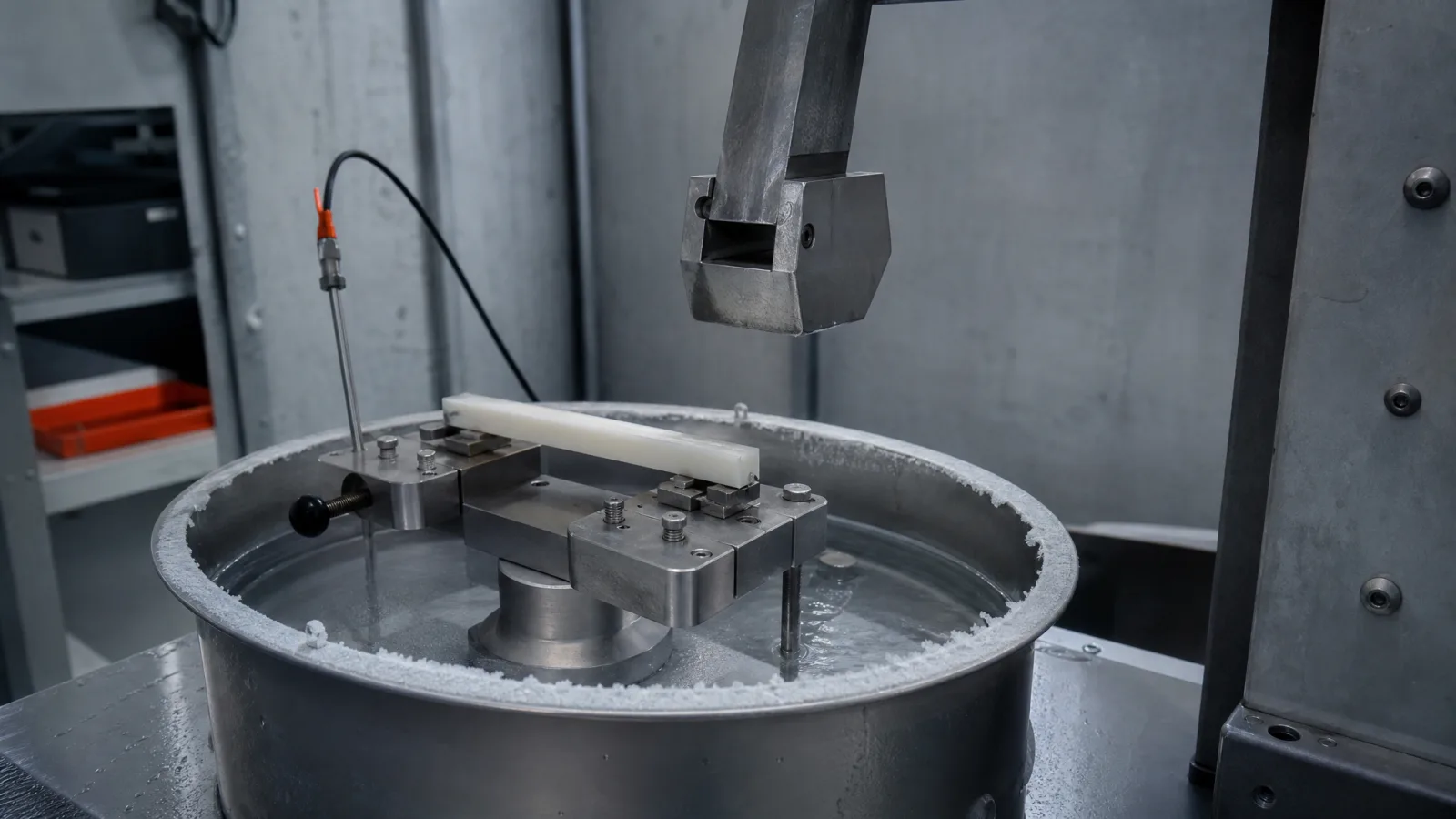
Two details on that standard are routinely over-read. The first is what the number is not: ASTM's own scope says the test "has been found useful for specification purposes, but does not necessarily measure the lowest temperature at which the material is suitable for use." A brittleness temperature tells you which grade is tougher when cold; it does not certify your finished box for a freezer drawer.
The second is that the figure belongs to a material and a build, not to a product name. PP homopolymer and impact-modified PP copolymer behave differently at low temperature — the copolymer route exists precisely to buy cold toughness — and so does the same grade at two wall thicknesses. So the useful question is not "is it freezer safe" but "what is the brittleness temperature of the grade you are running, at the wall you are quoting, and where is that recorded?" If your spec has no temperature on it, you have specified the freezer and nothing about the cold. The note on which plastic materials are BPA-free covers the formulation side of the same grade question, and whether PP is safe for food storage the polymer side.
What "Freezer-to-Reheat" Really Measures: a Rate of Change, Not a Temperature
Freezer-to-reheat is a thermal-shock demand: survive a rapid change of temperature without cracking, crazing, warping or losing the closure.
The mechanism is differential expansion under a steep gradient. The outside of a wall and the inside are at different temperatures for a while; base, lid and gasket are three materials. Each wants to move by a different amount, and while the closure holds them together, the difference becomes stress. Where geometry concentrates it — corners, the base of a rib, the root of a clip — you get a crack, or the fine surface network the trade calls crazing.
There is a food-contact test method for thermal shock, and naming it shows how the industry frames the demand: EN 1183 is titled Materials and articles in contact with foodstuffs — Test methods for thermal shock and thermal shock endurance. Read its scope before you rely on it: it is written for brittle materials — glass, glass-ceramic, ceramics — rather than plastics. That is the reason a plastic container's "thermal shock" evidence so often turns out to be a lab's general durability programme rather than a pass/fail against your cycle.
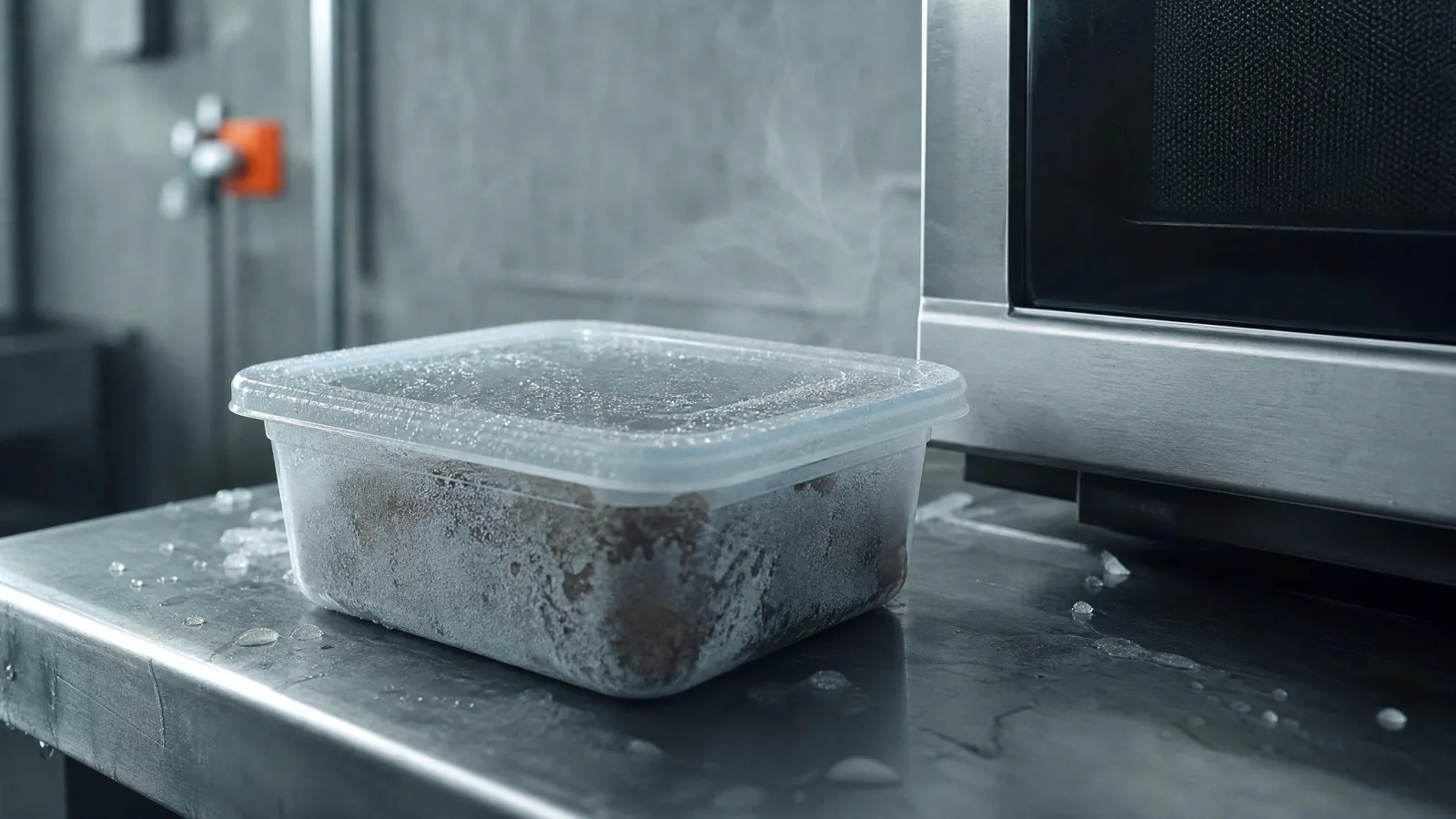
So the buyer writes the cycle, and the cycle is the whole test. What matters is not the words "thermal shock" but four parameters: the cold temperature the part starts from, the hot condition it moves into, how fast the transfer happens, and how many times the cycle repeats. A container that survives one reheat may not survive twenty — and a claim that says "freezer to microwave" without a cycle count is a claim about an unstated number of uses.
There is a chemical half to this claim that no mechanical test will show you. Reheating is also the harshest food-contact condition the article sees — hot, wet and often fatty — exactly the combination that drives migration out of the plastic and into the food. So the reheat claim needs a migration result measured at the reheat condition, not a room-temperature result standing in for it. The site's five-market map of food-contact compliance documents sets out which markets ask for what, and where a container's non-PP parts carry their own compliance explains why a lid is not one material.
The Spec Table: Which Claim Maps to Which Parameter, Which Test and Which Standard
This is the table the page exists for. The left column is what you write; the rest is what a factory and a lab read back to you.
Claim you print | The property it names | What to measure | The test method | What the report can show |
|---|---|---|---|---|
Freezer safe | Low-temperature impact toughness (brittleness) | The brittleness temperature of the grade, at the wall you are buying | ASTM D746 / ISO 974 — brittleness temperature by impact | The temperature at which half the specimens fail under the specified impact |
Freezer-to-reheat | Resistance to a fast change of temperature (thermal shock) | Cracking, crazing, warping, closure loss after a defined cold-to-hot cycle | No plastic-container pass/fail covers this directly; EN 1183 is written for brittle materials, so specify your own cold-to-hot cycle and add migration at the hot condition | Pass or fail against your stated cycle, plus a migration result at the reheat condition |
Freezer safe in handling | Survival of a knock while frozen | Drop height, surface and count, after cold conditioning | ASTM D5276 — drop test of loaded containers by free fall | Whether the filled, frozen container survives the stated drop |
Nothing in the middle column is a style preference. Each line is the minimum that makes the word in the left column checkable.
And this is what happens when the left column is the only column you write:
What the spec says | What the factory hears | What you did not get |
|---|---|---|
"Freezer safe" | nothing specific | No temperature, no impact criterion, no test |
"Freezer safe to −18 °C" | a storage temperature | Still no drop or impact criterion at that temperature |
"Freezer-to-reheat safe" | a reheat claim | No cycle profile, no cycle count, no pass criterion |
"Drop tested" | a drop happened | No conditioning temperature, so it says nothing about frozen handling |
"Drop tested" is the most expensive line in the spec: it sounds like evidence and carries none of the information you need.
The Cold Drop Test: the Cheapest Honest Proxy You Can Ask For
Most importers will not buy a brittleness-temperature test for a houseware line, and they do not need to. A cold drop test costs far less and answers the question the freezer claim actually raises: does the filled container survive being dropped while frozen?
The method exists: ASTM D5276, Standard Test Method for Drop Test of Loaded Containers by Free Fall covers loaded boxes and other containers dropped by free fall and, up to about 50 kg, aligns with the ISO packaging drop standards of the same family.
But the standard is about the drop. A drop test run on a warm container says nothing about frozen handling — and a "drop tested" line on a supplier datasheet usually means exactly that. The conditioning is the test. Write five things into the spec:
- Filled with the intended load, not empty.
- Conditioned at your storage temperature and held long enough to reach it.
- Dropped at that temperature, from a stated height, onto a stated surface.
- Repeated a stated number of times, on stated faces or corners.
- Judged against a written criterion — no fracture, no lid release, no leakage, no visible crazing.
Factories already keep records at that level for other properties. The packing data this site publishes is a fair illustration: the bulk freezer storage line (models BX1094–BX1099, PP, 1.4 L) is quoted at 72 pieces per carton in a 59.5 × 43.5 × 53.5 cm box, and the OEM frozen-food rectangular set (model 3332, PP) at 56 pieces per carton, 16.1 kg gross — figures as published on the product record, with the carton basis still to be confirmed. Those are packing figures, not drop figures — but they show a factory record can be exact about a number it has committed to. A freezer claim with no temperature is a number nobody committed to. If the packing side matters, stacking, nesting and carton maths for freezer and fridge containers picks it up, and packaging tips for kitchen storage containers covers how tight a carton can be built.
The Documents to Demand — and What Each One Actually Proves
Buyers usually ask for "the certificate". There is no such single document, which is why so many folders contain the wrong paper. Two families exist, and they answer different questions.
Food-contact documents say what the material is allowed to be. For a PP container sold into the United States, that is the olefin-polymer rule at 21 CFR 177.1520; for the European Union, Regulation (EU) No 10/2011 for plastics, under the framework rules for food-contact materials, together with the Declaration of Compliance the supplier issues for the article. These are about formulation and migration. They are not statements that the finished container survives a freezer drop.
Performance documents say what the article did in a test. A brittleness-temperature result, a defined cold-to-hot cycle result, a cold drop result — one article, one method, one set of stated conditions.
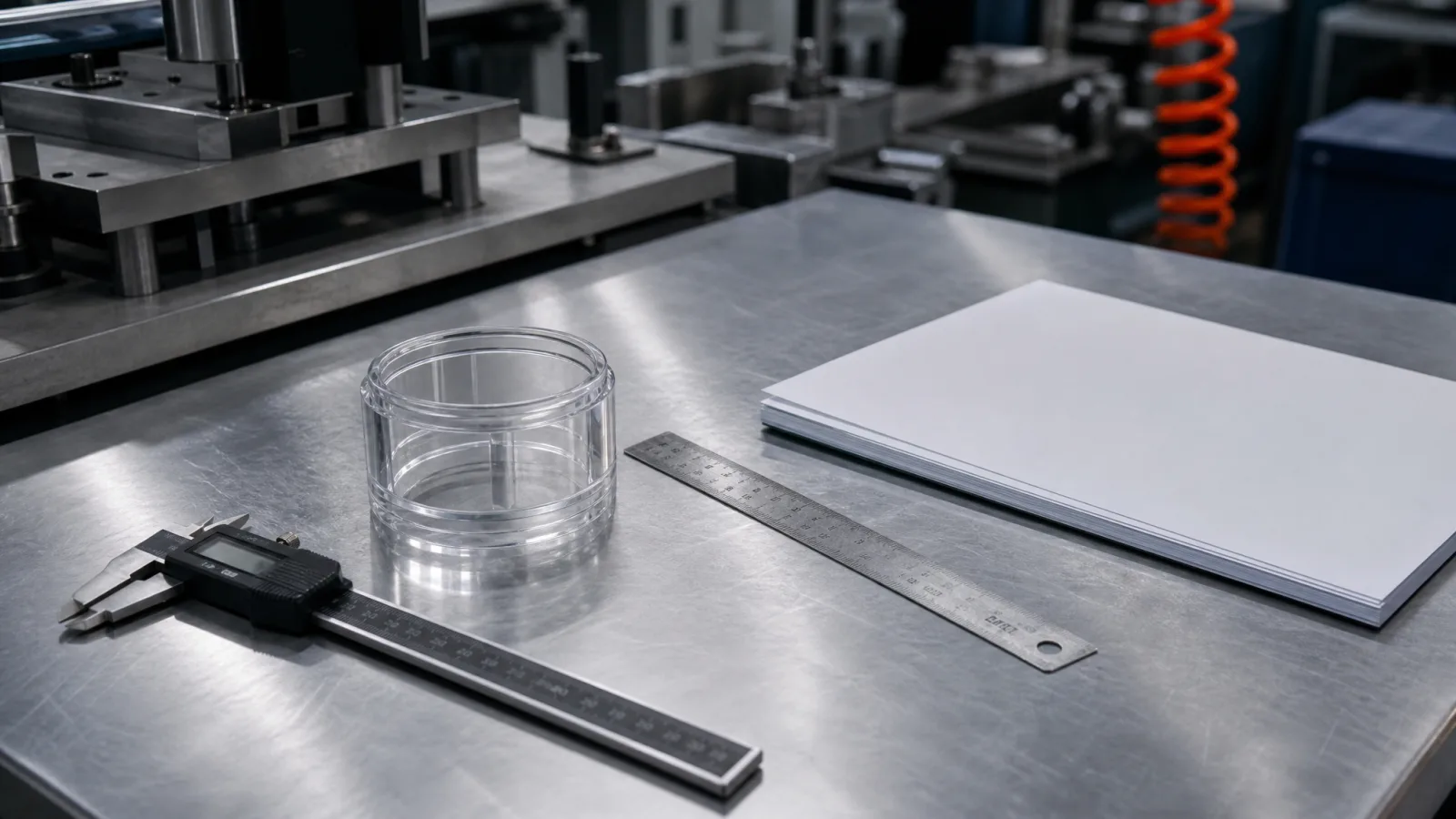
So the ask splits cleanly. Per claim, demand the document that matches it:
- Freezer claim → the brittleness temperature of the recorded grade, at the quoted wall, or a cold drop result with the conditioning temperature stated.
- Freezer-to-reheat claim → a cold-to-hot cycle result with the cycle profile stated, plus a migration result measured at the reheat condition.
- Both claims → the Declaration of Compliance naming the resin grade and the masterbatch actually used, checked against the sample you approved.
The paperwork side has a map of its own: which compliance documents to request from a food-container factory walks the request line by line, and the seven certifications buyers actually see decodes the abbreviations.
Where the Two Claims Get Confused on a Purchase Order
The confusion is rarely deliberate. It happens in four predictable places, each with a cheap fix.
One word, two claims. The spec says "freezer safe"; the retail card says "freezer to microwave"; neither is backed by a named test. Write the two claims as two lines, one test attached to each.
The temperature that is not there. A freezer claim with no temperature and no impact criterion is unenforceable — there is nothing for a QC check to fail.
The report in the wrong folder. A migration report filed as evidence of thermal-shock performance. Label each document with the claim it supports.
The claim that drifts in the supply chain. A process note that says a part is low-temperature resistant becomes "freezer safe" in an English catalogue — a broader promise to a retail buyer than the note ever made. Define the English claim in the same sentence as the test behind it.
One structural warning belongs here too. Because brittle behaviour belongs to a material and a build, a change of wall thickness is a change of qualification — the same grade at a thinner wall is a different part, and a drop result on the old wall does not carry over. If your freezer claim sits on a model you are about to re-tool, that re-qualification is part of the tooling conversation: when to modify an existing mould and when to build a new one covers the fork in the road, and reading an injection-mould quote is the note on what a tool change costs.
What We Run, and What We Do Not Test In-House
The honest version of a factory's position is more useful to you than a claim, so here it is.
We mould the reusable PP freezer lines this page is about: the bulk freezer storage containers (models BX1094–BX1099 — PP, 1.4 L, cream, 72 pcs per carton, packing basis as published and to be confirmed) and the freezer storage container set (models BX1131–BX1136 — PP with PET lids, cream white and transparent). The OEM frozen-food rectangular set is model 3332, PP, white and transparent, 56 pcs per carton, packing basis as published and to be confirmed. Alongside the storage range we mould lunch boxes and bento boxes, drinkware and organizers, with the stainless-steel drinkware line supplied rather than moulded in-house.
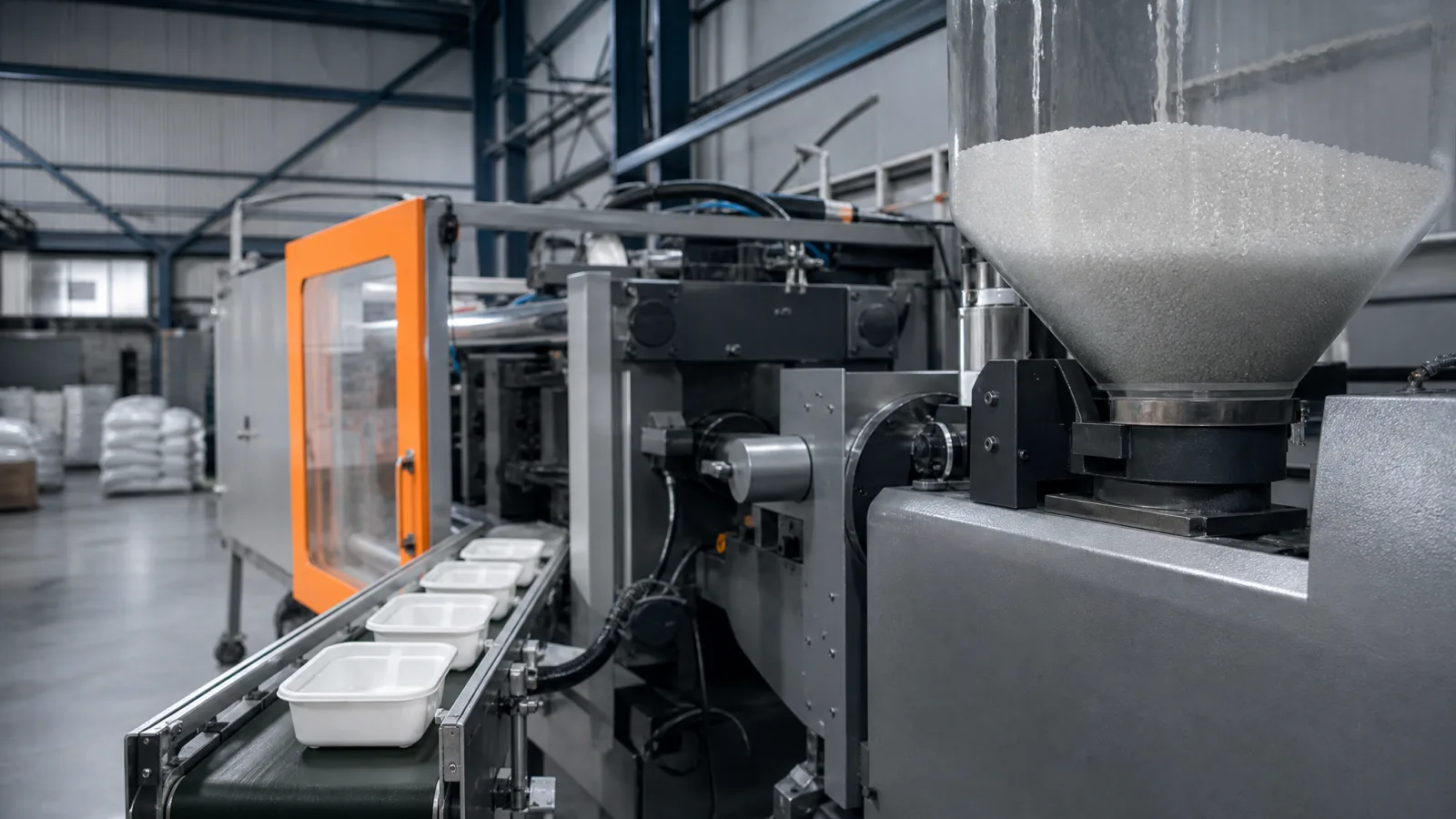
What a moulding plant controls is the grade, the masterbatch, the wall thickness, the tool and the dimensional result. What it does not own is an accredited brittleness-temperature or thermal-shock report — that report is what you demand, and where the moulder does not run the test in house it comes from an accredited third-party laboratory, against a method, on a submitted sample; a factory that hands you one signed by itself is handing you something other than what you asked for.
So the request splits in two: ask us for the grade and masterbatch records and the wall and dimensional data, and ask the accredited laboratory for the report on the sample we mould. That is the division the site describes when it explains how an order ships globally from the plant and how a one-stop sourcing arrangement assembles the document pack. If your specification covers several product lines at once, the combined programme note is the place to start.
A Spec You Can Copy: Nine Lines to Put in Writing
If you take nothing else from this page, take the list. These nine lines turn "freezer safe" from a word into a requirement.
# | Line | Why it is on the list |
|---|---|---|
1 | The claim, in words, separately — freezer-safe and freezer-to-reheat are two lines, never one | The two demands are different tests; a merged claim cannot be evidenced |
2 | The storage temperature, in °C | Gives the freezer claim a reference point |
3 | The drop criterion: height, surface, count, after cold conditioning | Turns handling into something QC can fail |
4 | The reheat cycle: from which temperature, to which condition, how fast, how many cycles | A reheat claim without a cycle is a claim about nothing |
5 | The resin grade and the masterbatch, recorded | The material figure belongs to a formulation, not a product name |
6 | The wall thickness / model the result applies to | Brittle behaviour changes with the build |
7 | The document per claim — brittleness or cold drop for the first, cycle plus migration for the second | One document cannot answer two questions |
8 | The pass criterion: fracture, lid release, leakage, crazing, migration limit | A result with no criterion is an observation |
9 | Who signs: factory internal gate, or accredited third-party report | The signature determines what the document is worth |
That list is also the fastest way to find out whether a supplier understands the difference. Send it and see which lines come back answered.
Questions Buyers Ask Before the Spec Goes Out
What does "plastic container freezer safe" actually mean?
In engineering terms it means the material keeps enough impact toughness at your storage temperature that a knock does not fracture it — a brittle-fracture property, measured as a brittleness temperature. In commercial terms it means very little until a temperature, a test and a criterion are attached. A container that passes at one storage temperature is not thereby qualified at a colder one, and a freezer-safe container is not thereby freezer-to-reheat safe.
Can I put a freezer-safe container in the microwave?
Only if it carries a reheat claim of its own. Freezer-safe and freezer-to-reheat are separate specifications, and the freezer one says nothing about the gradient a reheat applies. If reheat is how the product will be used, the box needs the second claim, with a cycle profile and a migration result measured at the hot contact condition. Whether meal-prep containers are microwave safe covers that side in more detail.
Is the lid as freezer-safe as the base?
Not automatically. The base, the lid and the gasket can be three materials with three low-temperature behaviours, and the closure is where a thermal cycle concentrates stress. Ask for the result per component, and if the lid is a different polymer from the base, ask for its own line. Which containers suit refrigerator storage is the practical companion for what actually goes inside.
What to Take Away
- Two claims, two properties. Freezer-safe is low-temperature impact toughness, decided at equilibrium. Freezer-to-reheat is thermal shock, decided by a rate of change across interfaces. Neither implies the other.
- Give each claim its own test and its own number. Brittleness temperature (ASTM D746 / ISO 974) or a cold drop test after cold conditioning for the first; a defined cold-to-hot cycle plus migration at the reheat condition for the second.
- "Drop tested" and "freezer safe" are not evidence until they carry a temperature and a criterion.
- Ask for two documents, not one. A declaration of compliance naming the grade answers the food-contact question; an accredited performance report on a submitted sample answers the survival question.
- A wall change is a re-qualification. Brittle behaviour belongs to a grade and a build, so a thinner wall means the old result no longer describes the new part.
If you are drafting the spec now, send the split you are considering — the claim, the storage temperature and the reheat cycle — and we will come back with the grade and packing data we can put behind it, and an honest answer on which half belongs at the laboratory rather than here. The plant's custom solutions page shows how a private-label storage programme is set up end to end, and the food-safety notes for reusable containers are the right first stop if the claim you are writing is a consumer-facing one.
Continue reading
Related sourcing guidance
More practical context for your food storage container sourcing conversation.
Discuss your product range
Need help selecting or customising containers?
Share the product type, market and sourcing requirements with the Xinghui team.