
Sourcing & OEM
Where Reusable Containers Actually Leak: Gasket Groove, Latch Force and Rim Flatness — and How to Write a Leak Spec
A reusable container leaks where three tolerances meet: the gasket groove, the latch clamp and the rim's flatness. How to write a leak spec a factory can meet.
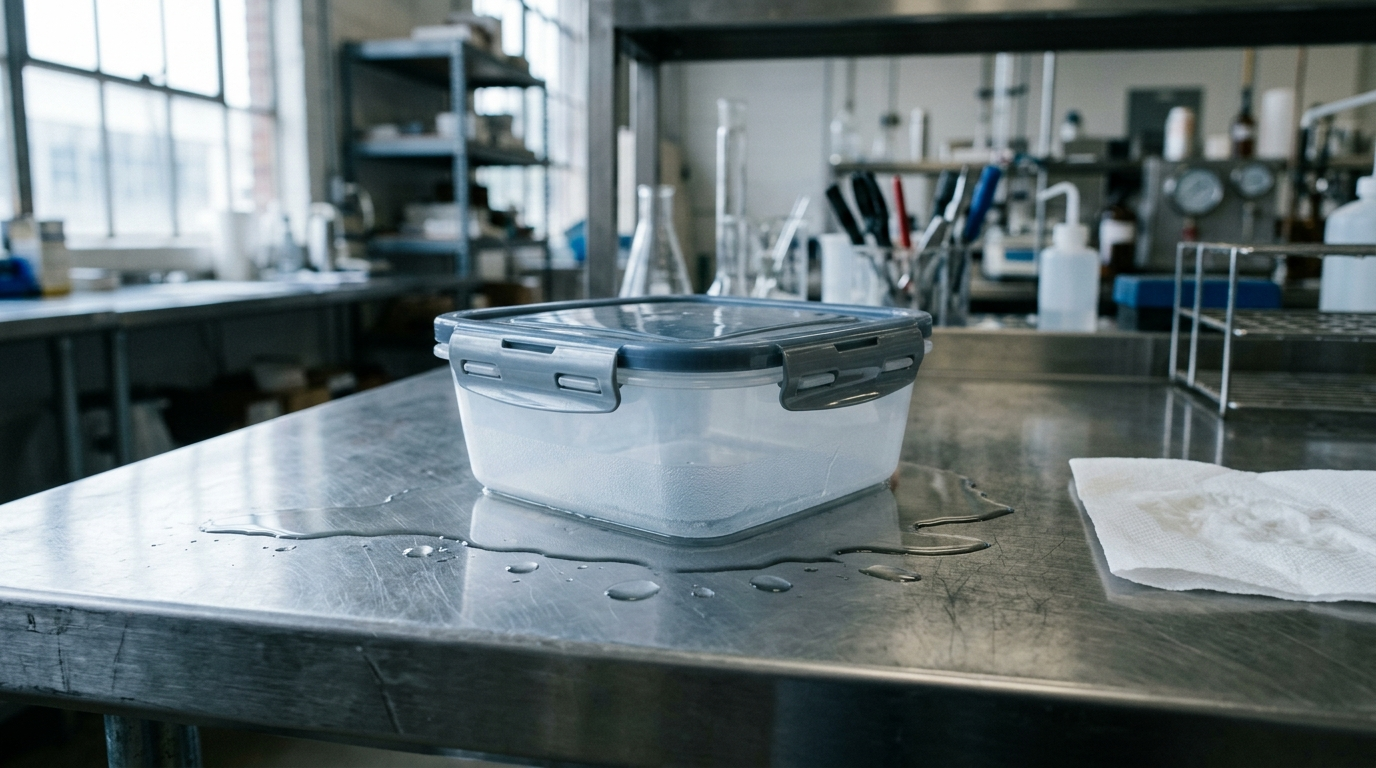
A container that leaks in a customer's bag almost never leaks in the factory's sample room. It leaves the line dry, passes a visual check, ships, and returns as a review with a photograph of a rucksack full of soup. The buyer concludes "bad batch"; the factory concludes "the sample passed".
The lid is where that argument is settled, which is why plastic container lids get blamed for failures that begin in a groove, a hinge or a warped rim. This page separates the three leak paths, gives each a dimension you can hold a supplier to, and turns the result into a leak spec.
A Leak Needs Three Tolerances to Line Up
Liquid escapes when a continuous path, a pressure difference and time all line up. The pressure is ordinary: a box on its side, a hot fill cooling, four cartons stacked. The path is built from three interfaces:
- Gasket to groove. Whether the seal is compressed into its working range at all.
- Lid to body. Whether the clamp that produces that compression survives a thousand cycles.
- Rim to gasket. Whether the surface the gasket presses against is flat enough to close on.
Test the assembled container and you get one verdict for three variables. That is how a factory can truthfully report "no leak" on a sample that fails in the field: it passed that day, with that gasket batch, and nothing says which interface was marginal. The first distinction to fix in your own spec is that airtight and leakproof are not the same claim.
Path One: Gasket Groove Geometry and Seal Compression
A gasket seals by being squeezed, and the squeeze is set by two moulded dimensions: groove depth and the gasket's free height before the lid closes.
Groove too deep and the rim never reaches the gasket's working range. The latch clicks, the container feels sealed, and the gasket is merely touching. It passes a static test at room temperature and fails as soon as anything moves: a stacked carton flexes the lid, contact is lost mid-side, liquid walks out.
Groove too shallow and the gasket is over-compressed, takes a permanent set and stops springing back. It also has nowhere to displace to, so it pushes the lid up against the latches — the lid sits proud, the latch is pre-loaded before it carries any load, and the seal line becomes a high point instead of a channel.
Three things decide the rest.
- Groove fill. The gasket must fill most of the groove, not all of it: too little and it migrates and seals unevenly, too much and it lifts the lid. A static groove usually runs at roughly 70–85 % fill — indicative, and the figure belongs to the gasket supplier's datasheet.
- Corner behaviour. A closed-loop gasket moulded slightly smaller than its groove is stretched onto the lid, which thins the cross-section at the corners — where a rectangular container leaks first.
- The seal land. The band the gasket presses on should be a continuous flat strip. If the groove's inner wall sits on the parting line, flash sits on the seal land, and flash under a gasket is a shim with a leak path along it.
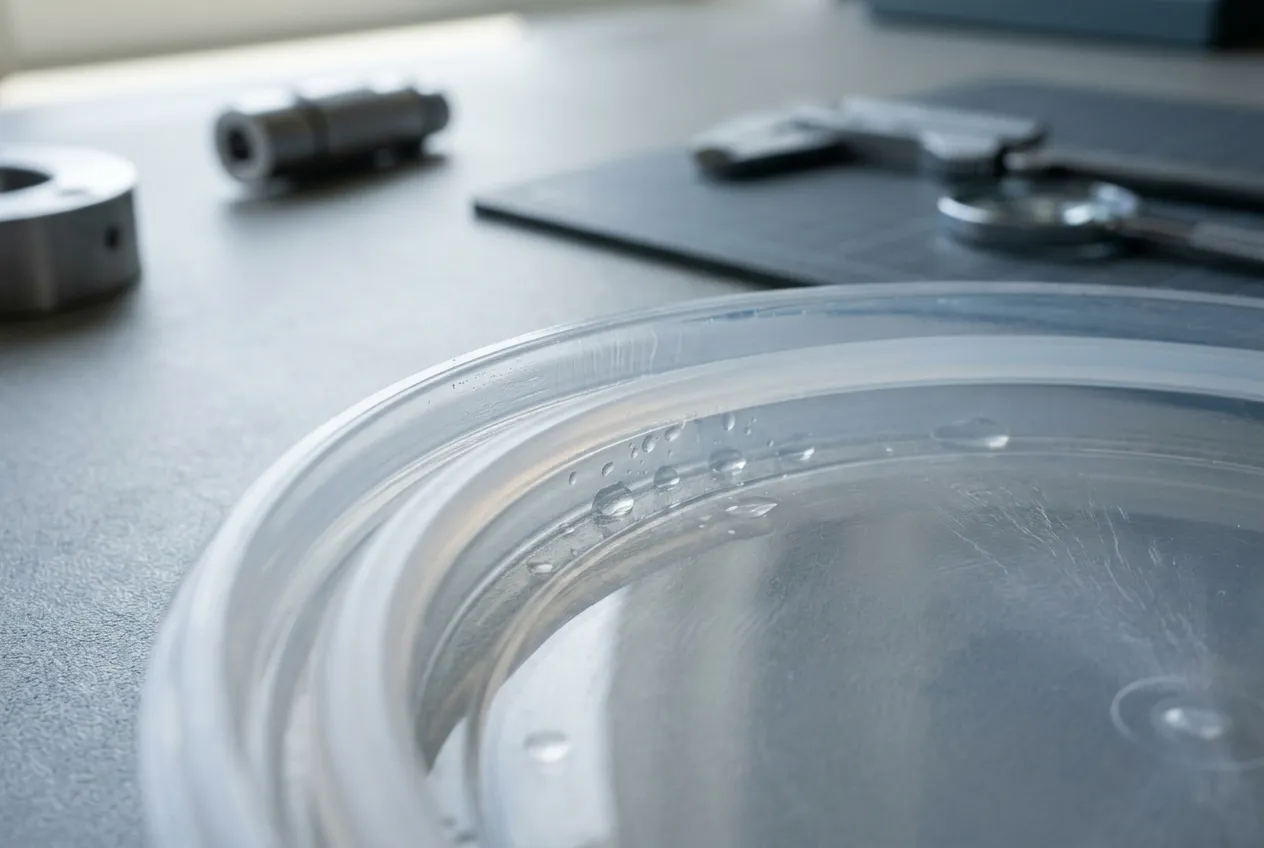
This page is about the seal, not the polymer: the chemistry questions buyers ask about plastic in contact with food belong to the material pages.
The gasket is a bought-in part with its own paperwork: silicone for repeated food contact sits under 21 CFR 177.2600, the polypropylene body under 21 CFR 177.1520. The evidence file for bought-in parts is in this guide to gaskets and glass inserts; the seal types in the seal-structure guide.
Path Two: Latch Force, Hinge Fatigue and the Lid That Stops Closing
The latch has three ways to stop clamping.
It never reaches its toggle. A good snap latch is over-centre: the cam passes a high point and drops into a stable position, which is the click you feel. A latch that closes too easily may not have passed the toggle, and it will open under load. In Which?'s test of six popular containers, only three survived a one-minute inverted shake plus a 30-minute commute, and after five drops from 1.2 m even the two intact ones had their lids come off and leak.
The force is not distributed. Two latches on the long sides clamp the middle and leave the short sides unloaded; four corner latches clamp the corners and leave mid-side bowed. The lid behaves like a plate, not a rigid frame. Close and latch the container, then try a 0.05 mm feeler gauge at mid-side: if it goes in, the gasket there is not compressed.
The hinge wears out. Most one-piece PP lids use a living hinge: a thin web that survives bending because the polymer chains are oriented across it during moulding. A bend radius that is too sharp, or a gate at the hinge (the weld line there is the weakest material in the part), turns it into a crack after a few thousand closures. A lunch box opened twice a day for three years is about 2,200 cycles, so the cycle test belongs in the thousands — and the leak test must be repeated after cycling. Heat and detergent from dishwasher cycles and cold from freezer use both move the same numbers.
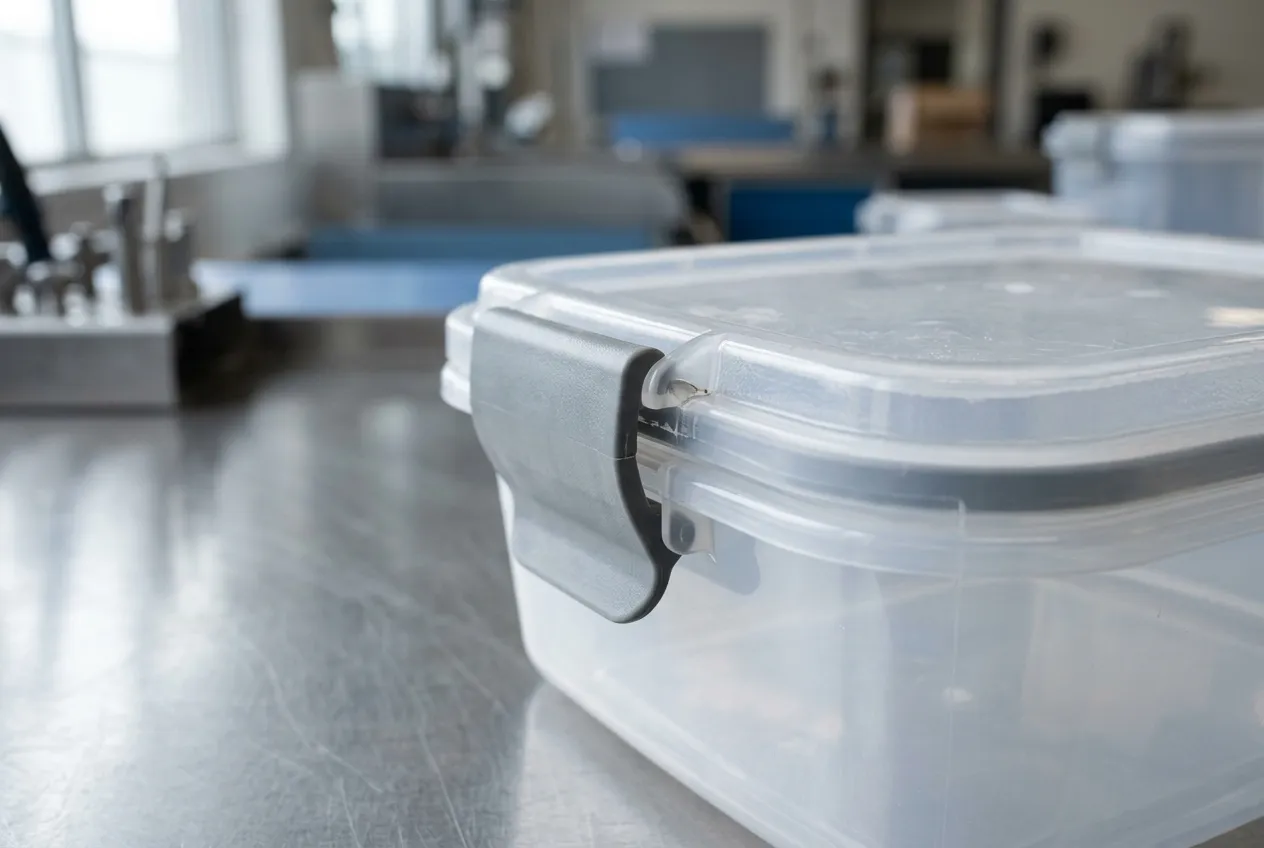
Path Three: Rim Flatness and What the Mould Does to It
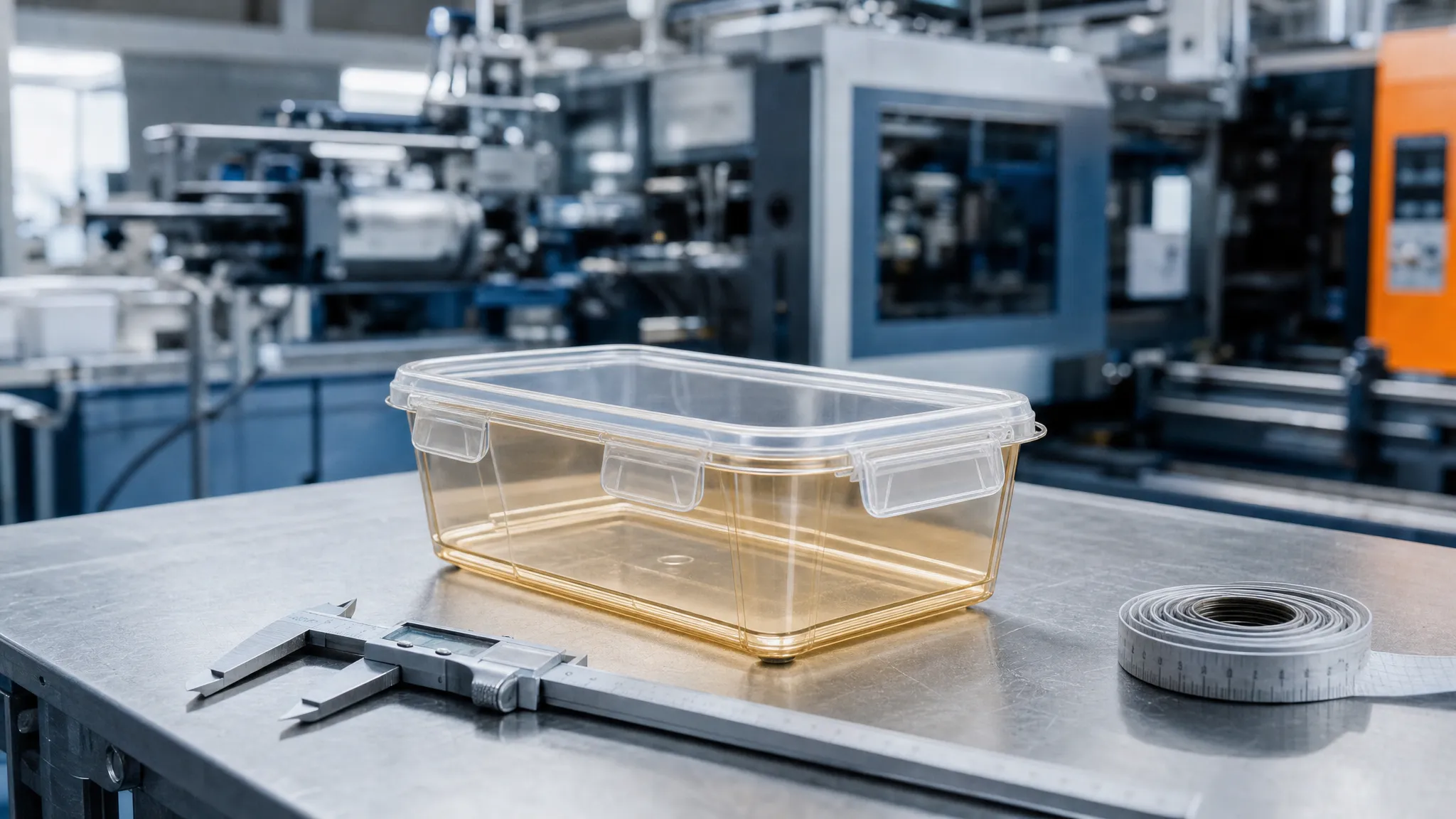
The rim is the seal land. If it is not planar, the gasket has to absorb the error, and its whole working travel is a fraction of a millimetre: a rim that waves 0.4 mm over 200 mm has used the compression budget before the latch does anything.
Warp comes from the mould, not the resin batch. A thick rim and a thin wall shrink at different rates and pull against each other. A cavity and core running at different temperatures bend the part toward the hotter side, making flatness a set-up variable that drifts between shifts. A gate that freezes early lets the rim shrink away from the tool, ejectors that fire early leave a high point under the seal, and flash on the rim is a step under the gasket — worse when inserts are mismatched, which is why some units leak on one edge only.
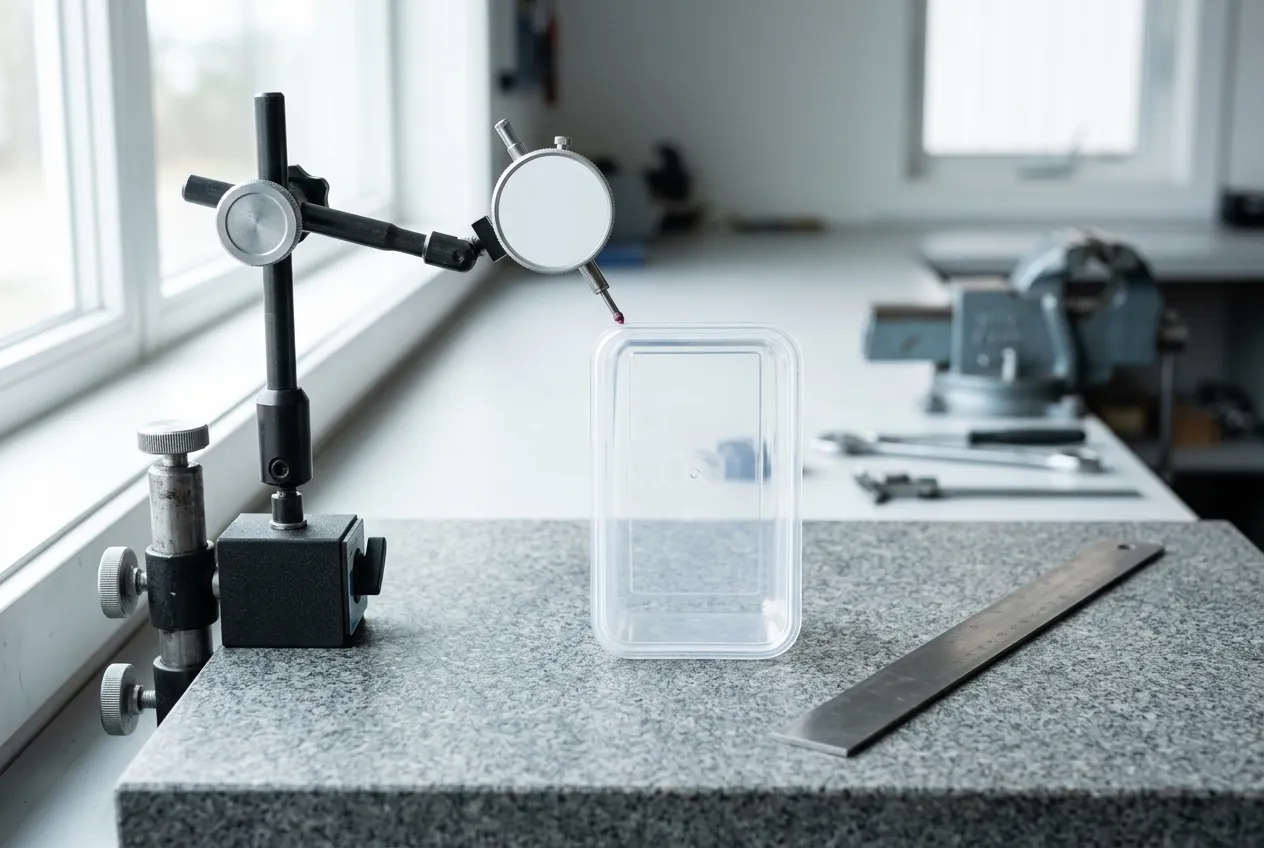
Flatness is also a moving target, which is where incoming inspection goes wrong. Polypropylene keeps shrinking for a day after ejection, so a rim measured at the machine is flatter than the rim in the carton, and a hot fill can bow a rim that was flat when empty. The spec has to say when the measurement happens: surface plate, lid off, unclamped, at least 24 hours after moulding, points named.
A workable starting point for a container around 200 mm across is 0.3 mm total flatness across the rim, tighter for anything sold as screw-threaded. A supplier who cannot say how flatness is measured cannot hold it either — and if the fix is steel, that is a mould change with a mould change's cost, which is the subject of when to modify an existing mould and how the change appears in a quotation.
How to Write a Leak Test Spec: Seven Fields
A leak test a second person on a second shift cannot repeat is not a test, it is an anecdote. Seven fields make it repeatable, and every one belongs in the purchase order rather than in the factory's habit. The values below are deliberately generic.
Parameter | Typical method or starting value | What to settle with the supplier |
|---|---|---|
Article under test | Model, cavity, body + lid + gasket as shipped; gasket batch recorded | Which cavity made the samples, and whether the report names it |
Fill medium and level | Water with food dye at 0.1 %, to nominal capacity minus headspace | The real fill level and product — a fatty sauce is not water |
Orientation and agitation | Inverted, static, 60 min; plus an inverted 60 s shake | Whether your case is a bag, a carton or a shelf |
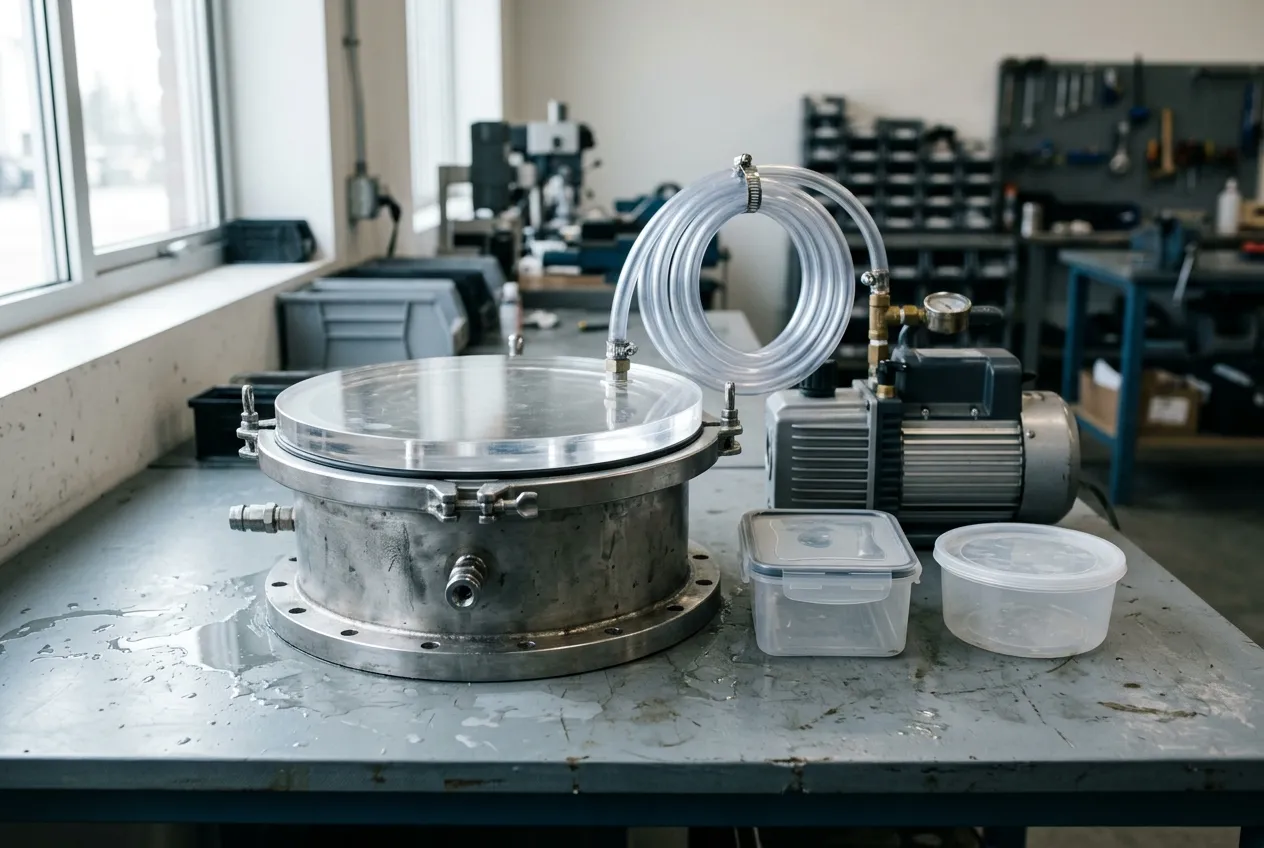
Pressure or head | Vacuum at −50 kPa for 60 s; or 300 mm hydrostatic head | Which one resembles your distribution |
Temperature | 23 °C ambient; plus one run at 4 °C and one after an 85 °C hot fill | The temperatures the product actually meets |
Duration | 60 min static; 8 h for a transit-equivalent claim | Whether the claim is "carries lunch" or "survives a parcel network" |
Sample size and acceptance | 3 units per cavity at pilot; your sampling plan at production; no seepage on white paper, or ≤ 0.5 g loss per unit | The AQL, the inspection level and who signs the result |
Two fields are where specs quietly fail.
Pressure. ASTM D4991 covers leakage testing of empty rigid containers by vacuum and establishes the point at which leakage begins, at a limit of approximately 95 kPa differential — the method's representation of air-transport conditions. A container can pass that and fail a bench inversion, or the reverse.
Duration. If the claim is about a parcel network, the reference is a distribution protocol, not a shake. ISTA 3A covers individual packaged products shipped through a parcel system, and its integrity block includes an eight-hour leak test, required for liquids only. For the carton, ASTM D5276 is the free-fall drop test for loaded containers: it tests the packaging system, not the seal.
Acceptance Criteria: What Counts as a Failure
The commonest defect in a leak spec is not a missing method but a missing definition of failure.
- Dye and paper. Dye the water, invert over white absorbent paper for the stated time, fail any unit wicking beyond 3 mm from the seal line. Cheap, visual, photographable.
- Weight loss. Weigh, invert, reweigh to 0.01 g, fail above a stated loss — slower, but it gives a number when a customer disputes a batch.
Then decide what "a batch passes" means before the samples arrive, on a sampling plan you nominate rather than one the factory chooses. Seal failures are rarely random — usually one cavity, one gasket batch or one shift — so a sample not stratified by cavity can pass while a quarter of the order leaks. The same discipline runs through the checks used on incoming lunch box orders.
What Evidence to Demand, and What Our Records Actually Show
Ask for five documents, not five assurances.
- A leak test report per model naming the method, conditions, cavity, sample size and result per unit.
- A flatness record from the actual cavity, with the measurement date relative to moulding and the points used.
- The gasket datasheet: durometer, compression set (ASTM D395 is the usual reference) and the food-contact declaration for the compound, separate from the body's. In the EU the plastic parts answer to Regulation (EU) No 10/2011 and its written declaration of compliance; the market-by-market version of that paper trail is in the five-market document map.
- A hinge cycle log: cycles completed, latch force before and after, and a leak test after cycling.
- Signed golden and limit samples retained by both sides, so "acceptable" has a physical reference — the discipline described in golden samples and mass production.
Add change control in writing: gasket compound or supplier, resin grade, steel repair, polishing of a seal land. Any of those can move a seal that was fine last month.
Every figure below comes from the product data file; where a field is blank there, it is blank here.
Model | Family | Material as recorded | Capacity as recorded | Carton as recorded | What its leak spec must name first |
|---|---|---|---|---|---|
BX1041–BX1043 | Round storage container, snap lock | PP + silicone | not recorded | not recorded | Groove depth and gasket free height |
BX1044–BX1046 | Large round storage container | PP + silicone | not recorded | not recorded | Flatness at the larger rim diameter |
BX1047–BX1049 | Snap-lock meal-prep / salad box | PP + silicone | not recorded | not recorded | Latch force and hinge cycle count |
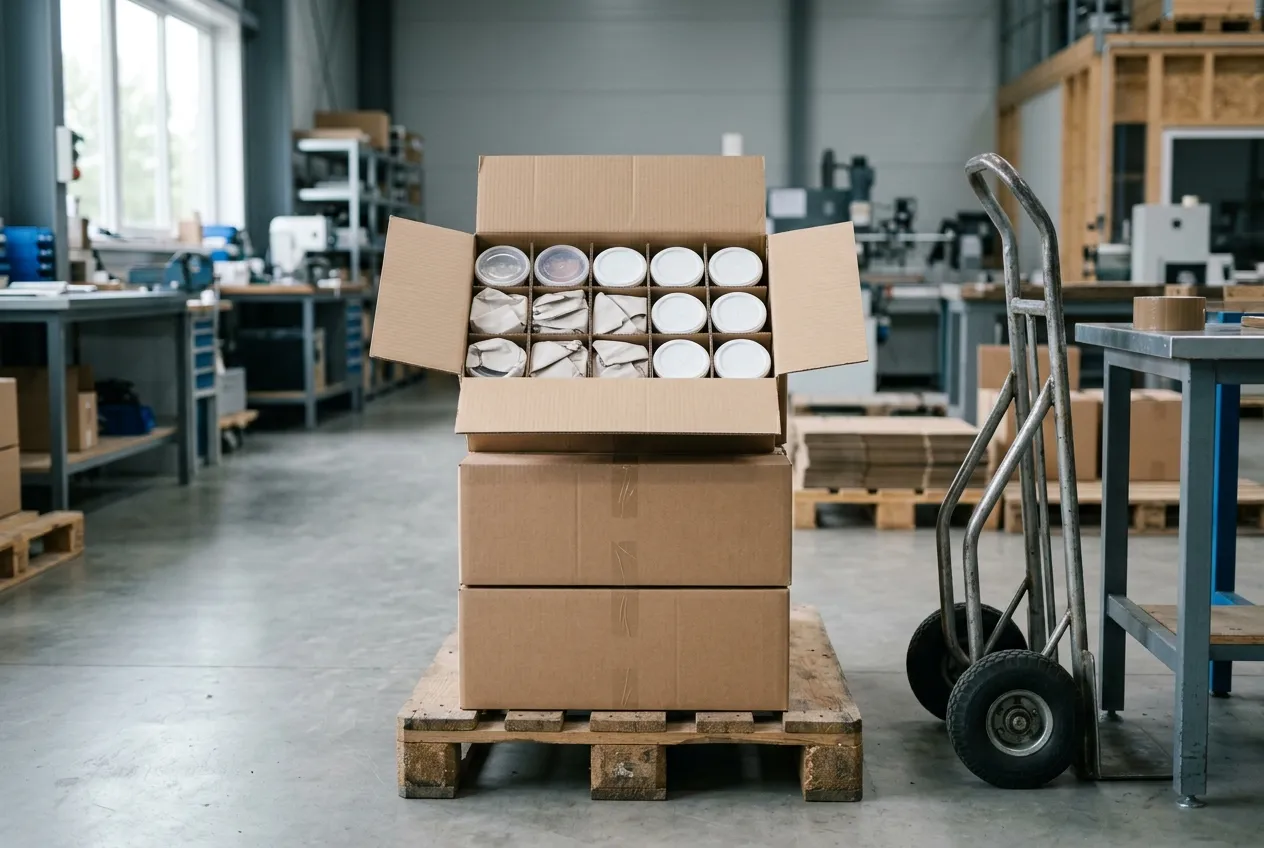
BX1051 | 1.3 L three-compartment lunch box | PP + silicone | 1.3 L (43.96 US fl oz) | 72 pcs; 62 × 47.5 × 58.5 cm; 14.3 kg gross (packing basis unconfirmed) | Which compartment wall carries the seal land |
BX1052 | Round food storage set | PP + silicone | not recorded | 48 pcs; 68 × 36 × 56.5 cm; 16.2 kg gross (packing basis unconfirmed) | Lid-to-body concentricity, not only flatness |
BX1053 | Three-piece round airtight set | PP + silicone | not recorded | 24 pcs; 61 × 30 × 57 cm; 12.4 kg gross (packing basis unconfirmed) | Gasket retention in the channel after washing |
BX1069 | Round ramen bowl, airtight lid and handle | PP + silicone | 1,200 ml (40.58 US fl oz) | 60 pcs; kraft paper box (basis unconfirmed) | How the lid behaves when filled hot |
Seven lines, seven different first questions — a snap-lock round box and a handled bowl with a round airtight lid fail in different places, and a category-level spec cannot express that.
Five Questions That Expose a Weak Seal Spec
- Which dimension is the seal's, and what is its tolerance on the drawing? If the answer is "the lid fits well", there is no dimension.
- How many latches, and what is the measured gap at mid-side when closed? A feeler gauge takes a minute and tells you more than a photograph.
- What is the flatness number, measured how, and at what age? "Flat" is not an answer; "0.25 mm, surface plate, 24 hours after moulding" is.
- What cycle count does this hinge survive, and was the leak test repeated afterwards?
- Which cavity made the samples I am holding, and does the report name it?
Four numeric answers mean the factory measures; five assurances mean it does not.
Where Our Responsibility Ends
Xinghui Plastic has moulded houseware in Jieyang, Guangdong since 2000, with design, tooling, moulding and assembly under one roof — which is where a seal is decided, because groove depth, gate position and cooling layout are cut into steel before the first part exists. The factory background page covers what that means for a buyer; the point here is that these are dimensions we can change, and changing them after the tool is cut is the expensive route.
What we can hand you is the record from the tool: drawings with the seal dimensions toleranced, cavity-level dimensional checks, the gasket compounder's datasheet, samples from the cavity that will run your order, and a straight statement of which fields in our records are blank. What we cannot hand you is an accredited transit or migration report from our own four walls — ISTA and food-contact testing belong to third-party laboratories, and a factory document dressed as a laboratory report is worse than none. That half is listed in which compliance documents to request.
A leak spec is short: one page, seven fields, three dimensions, and a pass definition somebody has to hit. Write it before the tool is cut, not after the first container comes back wet. If you want to see those dimensions on a finished line, the 1.3 L three-compartment lunch box is the model whose records are most complete. This page describes methods and dimensions, not legal advice; claim wording belongs with the market you sell into.
Continue reading
Related sourcing guidance
More practical context for your food storage container sourcing conversation.

Discuss your product range
Need help selecting or customising containers?
Share the product type, market and sourcing requirements with the Xinghui team.