
Sourcing & OEM
Injection Molding Unit Cost, Decomposed: Eight Lines, One FOB Price, and Four Numbers You Can Check
An FOB price for a molded container is eight cost lines wearing one number. What drives each line, which you can verify yourself, and how volume moves them.
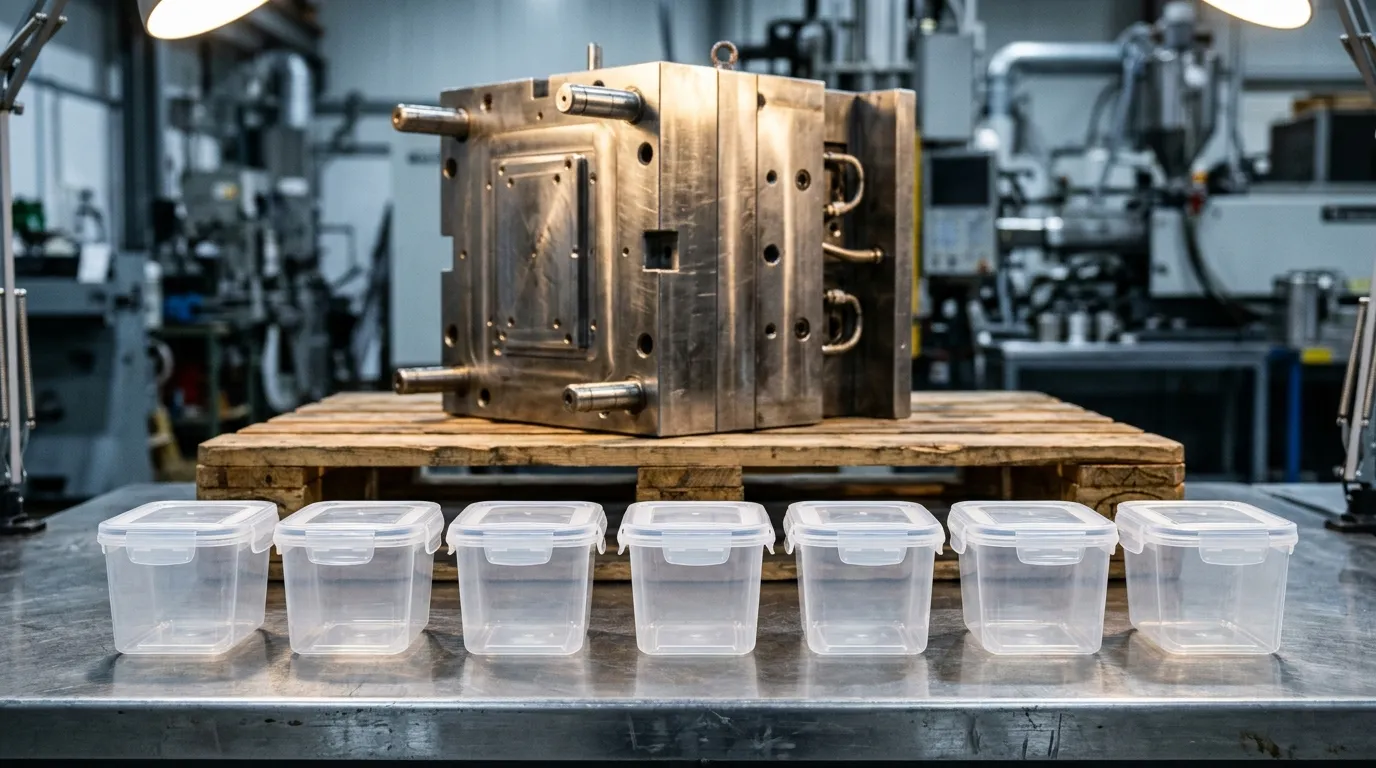
Two quotes arrive for the same 1.4-liter polypropylene box. Both are FOB, both are per piece, and the second is 11% higher. Neither email says where the difference lives.
Injection molding cost is usually taught as five terms: material, machine time, scrap, tooling amortization, packaging. The arithmetic is correct and useless, because every term is a rate you would only know from inside the molder's books. You do not have the press rate. You have one number per piece and a tooling bill.
This is the same decomposition from the buyer's side: eight lines, what drives each, what you can check without their books, and which lines move when volume does.
The Eight Lines Behind One FOB Price
A piece price is a sum, not a material cost with a margin on top — and the injection molding cost you are quoted is negotiable line by line, if both sides are discussing the same lines. The margin has not disappeared; most of it sits in the conversion rate, because a press rate already carries the operator, plant overhead and the molder's return — which is why that line is negotiated as a rate, not challenged as a cost.
The tooling side of what a mold quote is actually paying for is a separate conversation; this table is the piece-price side.
Line | What drives it | What you can verify without their books | How volume moves it |
|---|---|---|---|
| Grammage × resin price, plus runner share | Weigh a sample; fix the basis (body, assembled, bagged) | Flat; follows resin |
| Cycle seconds ÷ cavities × press rate | Ask cycle seconds and cavity count; check the output | Flat, but cavities change it |
| Good parts ÷ parts molded | Ask body yield and lid yield separately | Flat |
| Tool price ÷ pieces in the program | Ask tool price, mold class, amortization count | Falls fastest with volume |
| Polish and insert intervals, in shots | Ask the interval and who pays | Flat, arrives as a lump |
| A second operation and a second yield | Ask for it as its own line, with its yield | Setup amortizes |
| Units per carton, dividers, bag, sleeve | Printed on the carton | Mildly declining |
| Carton cube, gross weight, HS code | Compute from dimensions × units per carton | Flat per cubic meter |
Read the last column first. Six lines are flat or nearly flat, per piece. Only line 4 is proportional to volume; line 6's setup amortizes the same way from a much smaller base, and nothing else moves far. That asymmetry is what makes a small order feel expensive, and it is also why FOB against CIF against EXW changes which of the last two lines you own, not the structure.
Line One: Material, the Only Line You Can Weigh
Every injection molding cost estimate starts with a number a receiving clerk can produce in four seconds on a bench scale.
Start with the basis. "Grammage" can mean the bare body, the assembled body-plus-lid, or the bagged and sleeved unit, and on a small box those three readings do not agree. The grammage and wall-thickness arithmetic is a separate argument; for a cost sheet one question is enough — which weight, measured how.
Then the runner. A cold-runner tool leaves a sprue attached to every shot, bought at the same price per kilogram as the part, and the feed system does not shrink with the part. A hot-runner tool removes it from every shot and adds to line 4 instead — the one place where a higher tooling bill buys a lower piece price.
Regrind is where the generic model breaks on food-contact work. Cost write-ups treat scrap as an allowance that is recovered: grind it, feed it back, lose little. On a container that will touch food, do not assume that. Ask whether regrind is used at all, at what ratio, and whether the compliance file covers material that has been through the process twice. If your specification names 21 CFR 177.1520 — the section covering olefin polymers such as polypropylene — the supplier's declaration has a citation to answer to. In the EU the anchor is Regulation (EU) No 10/2011, where the positive list and migration limits live. Resin price is the one input nobody in the chain sets: watch its direction on the Producer Price Index for plastics material and resin manufacturing, and ask whether the quoted price is firm for the order or indexed to resin at shipment.
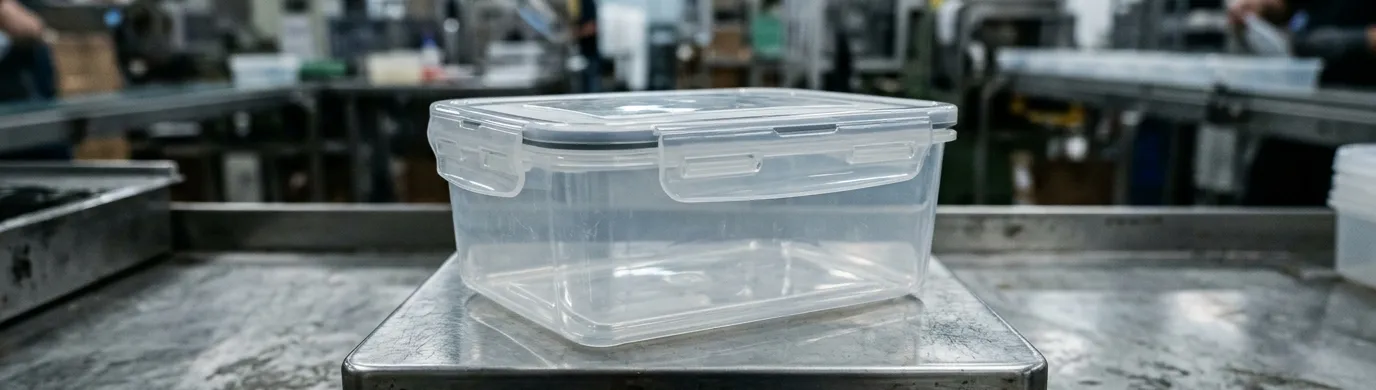
Line Two: Machine Time, and Where Cavitation Stops Paying
Machine time has one formula, the same in every article on this subject: parts per hour equals 3,600 divided by cycle seconds, times cavity count; machine cost per part is the press rate divided by parts per hour.
You cannot see the rate, but you can see the two numbers that multiply it: cycle seconds and cavity count. Thirty-second cycles on a four-cavity tool is 480 parts an hour before downtime; if that cannot produce your order in the promised window, one of the three numbers is decoration.
Cavitation is where generic advice goes wrong for containers. The standard claim is that a four-cavity tool makes four parts per cycle at nearly the same hourly cost as a single-cavity tool, so machine cost falls by close to four. It stops holding when the part is large, because the press is chosen by clamp tonnage, which rises with the projected area of everything in the shot. A four-cavity tool for a 1.4-liter box does not run on the machine that molds a 300 ml box four-up. Ask what tonnage the tool is designed for; a supplier who answers has thought about it.
Cycle time is set mostly by cooling, and cooling by the thickest wall. That is why a wall decision is a piece-price decision, and why gate position, draft angle and parting line are cost items rather than drafting details.

Line Three: Scrap, the Line With No Column
No quote you receive will have a scrap rate column. The loss is inside the price, and a container has an unusual yield structure.
Body and lid only work as a pair. A lid that fails its seal check scraps the body molded to fit it, and the body may have passed every check it was given. Paired yield is the product of two yields, not the average: two operations at 97% each deliver about 94% of the pairs you paid for. On a snap-lock box with a silicone gasket that is the difference between a comfortable margin and a thin one, and it is invisible from outside. Start-up shots on a cold tool add to it, so ask for the scrap rate at your run length rather than a plant average.
The inspection standard that decides what counts as a good part is a cost parameter too: tighten the level and effective yield falls, so the price moves. The sampling plan and AQL discussion is filed under quality; on a cost sheet it belongs to line 3.
Line Four and Five: Tooling, and the Bill That Comes After It
The tool should be amortized over the program, not the first purchase order. The harder question is what "the program" means before you have committed to one, and the answer belongs in writing — it is the line whose behavior you have to define.
The container-specific complication is that one tool often serves several sizes. A family tool with interchangeable cores produces a range from one mold base, and each size then amortizes over its own share of the program. If the smallest size is 8% of your pieces, it still carries a full share of the tooling bill, so its per-piece line can look unreasonable beside a larger size. That is fair and negotiable; the conversation is about the split, not the total. Who owns the tool, and what happens if you move, is a separate document — the choice between reusing an existing mold and cutting a new one belongs there too.
Line 5 is the one buyers forget until year two. Polishing, cooling-channel cleaning and insert replacement are real costs on real intervals, counted in shots. "Maintenance included" is worth nothing as a phrase and something as a number: how many shots between services, and who pays. And a silicone seal has its own tool — liquid silicone and compression tooling are different capital items with different per-part economics.
Lines Six and Seven: Decoration, and the Carton
Decoration is not a rate added to the piece price. It is a second operation with its own setup, yield loss and schedule slot. Ask for it as its own line, then ask what yield it carries, because a print step rejecting 3% is a cost on the decorated part even when the molding was perfect. The ranking of logo methods by unit cost and turnaround covers which process suits which artwork.
A sleeved or boxed unit takes more space and often fewer units per carton, moving lines 7 and 8 at once — neither of which appears in the decoration price. That is how a private-label program discovers at packing-list stage that landed cost is not what the quote implied.
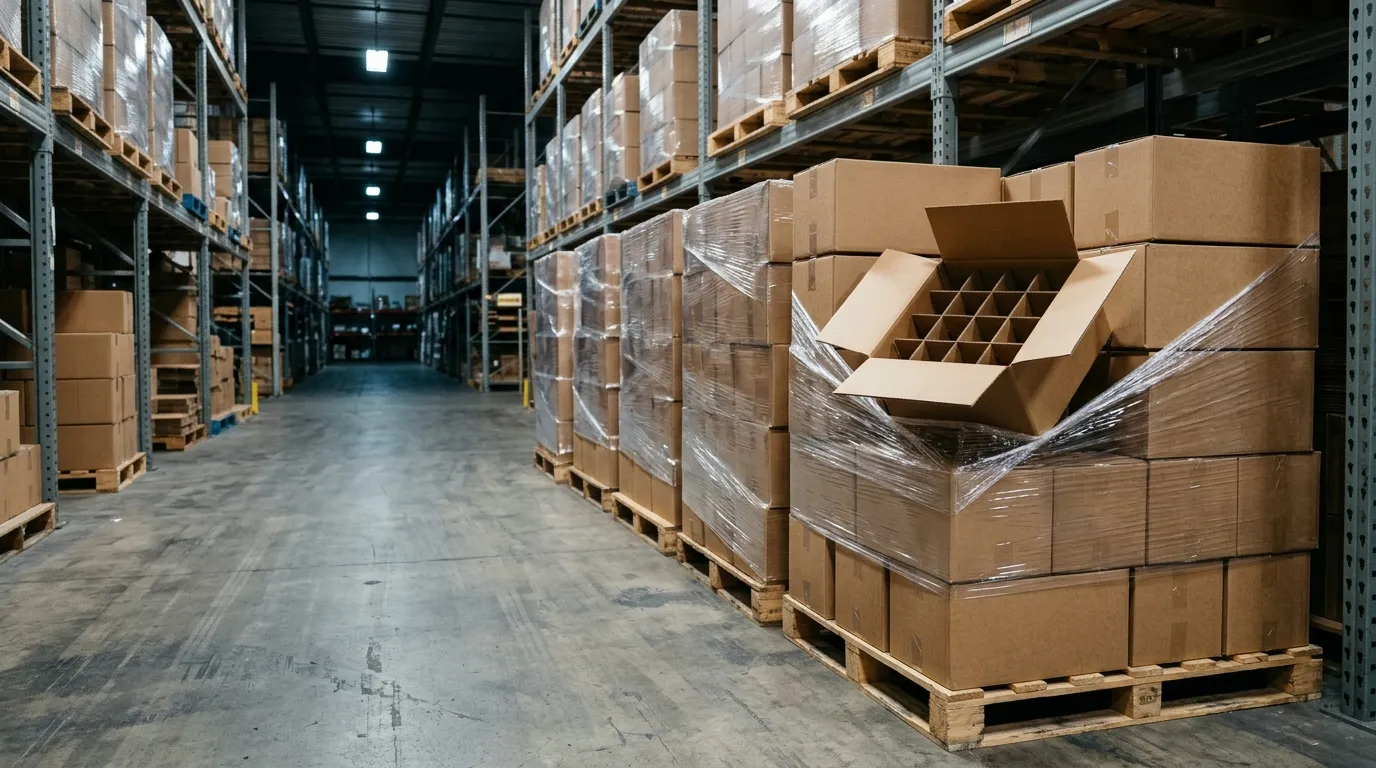
The carton is a cost line and the cheapest one to audit: units per carton, dimensions, gross weight, and whether a divider or molded pulp tray sits inside, since two cartons with identical outside dimensions can differ in cost by the divider alone. Cheaper board is usually a false economy: a carton that crushes takes the contents with it; ASTM D642 is the standard method for compressive resistance, and a stated stack height makes it mean something. Once you have the cube, the LCL-versus-FCL decision becomes arithmetic. And a stricter seal requirement raises the reject rate on line 3, so a specification that mixes up airtight and leakproof makes you pay for a test the product never needed.
Four Records, Six Numbers: Where the Injection Molding Cost Actually Sits
The two lines buyers audit least are the two that depend on figures printed on the carton. Our own records make the point: of sixty-three products, only three carry enough of the right fields to do this arithmetic — and a fourth has a weight and a carton count but no dimensions, which is the more common case.
Model | Recorded grammage | Units per carton | Carton cube (m³) | Gross weight per piece |
|---|---|---|---|---|
BX1051 | 182 g | 72 pcs | 0.172 | 199 g |
BX1052 | 298 g | 48 pcs | 0.138 | 338 g |
BX1053 | 425 g | 24 pcs | 0.104 | 517 g |
BX1069 | 135 g | 60 pcs | not recorded | not recorded |
Cube and gross weight per piece are computed from each record's own carton data; grammage is as recorded.
All four records use polypropylene as the body material, and the spread in carton density is not small: pieces per cubic meter run 418 for BX1051, 347 for BX1052 and 230 for BX1053, with shipped weight per piece at 199 g, 338 g and 517 g on the recorded basis. The three are not the same class of product — a lunch box, a container set, a three-piece round set — and a BX1053 carton may hold 24 sets rather than 24 pieces, so those ratios only mean something once the basis is fixed. Fix the basis and the point stands: two cartons from one factory family can move very different weight per piece, and that difference lands in the freight line.
Lines 7 and 8 are priced per carton and per cubic meter, so a per-piece figure hides what decides whether a cheap part is a cheap shipment.
That is the argument for asking for the carton. The table also shows the state of the data you will be quoted: BX1053's own title describes it as a three-piece set, so whether 425 g is one piece or one set changes the material line by a factor of three, and the field in our database is labeled "confirm unit basis" — our own admission that the question is open. Expect the same from a supplier, and ask three questions rather than accepting the table: the weight basis, the units per carton, and the carton dimensions and gross weight.
The Same Quote at Two Volumes, and Seven Lines for the Next RFQ
Volume changes one line materially. If the tooling line is x per piece at 20,000 pieces, it is x/4 at 80,000, because the tool price is fixed and the divisor is not; the other seven barely move. A fourfold volume increase therefore removes three quarters of one line, and the gain depends on how large that line was to begin with — which you can isolate by asking for the same specification at two volumes and subtracting. Where the difference is small against material and machine time, tooling is not worth negotiating; where it is large, the piece count behind it belongs in the contract.
Seven lines for the next RFQ:
- Grammage, with its basis, and the runner share per shot.
- Cycle time, cavity count and design tonnage for the quoted tool.
- Body yield and lid yield, separately, at your run length, and what happens to the rejects.
- Tool price, mold class, amortization count, ownership, and the maintenance interval in shots.
- Decoration as a separate line, with the yield it carries.
- Units per carton, carton dimensions, gross weight, divider type.
- Whether the resin price is firm for the PO or indexed, and which compliance document covers the material.
Two quotes become comparable once both can be read line by line; the arithmetic after that is the easy part. If the tooling decision is still open — whether a dedicated mold is justified at your annual volume — the RFQ-to-shipment sequence puts that question in order, and how minimum quantities are counted decides which lines you are actually negotiating when you ask for a smaller first order.
Continue reading
Related sourcing guidance
More practical context for your food storage container sourcing conversation.



Discuss your product range
Need help selecting or customising containers?
Share the product type, market and sourcing requirements with the Xinghui team.