
Lunch Boxes & Bento
Meal Prep Container Sets as Corporate Gifts: What One Gift Unit Contains, Where Your Logo Can Go, and the Carton Maths Behind 500 Sets
How to buy meal prep container sets as corporate gifts: gift-unit composition, where your logo can go, carton maths for 500 sets, and the documents to request.
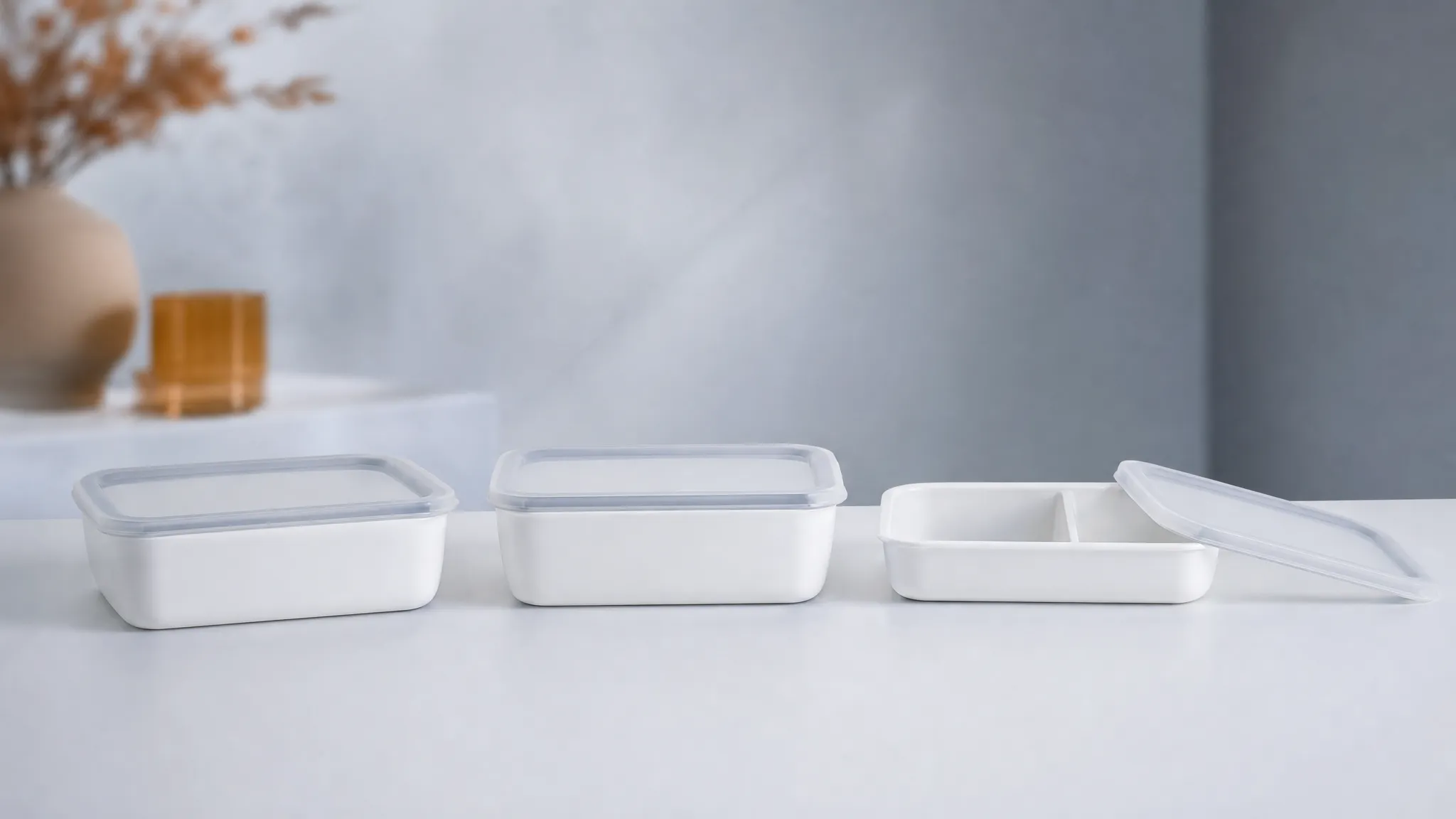
A meal prep container set bought as a corporate gift is not a retail purchase repeated five hundred times. It behaves like a small packaging and decoration programme that happens to contain a kitchen product, and the first sign that a buyer has misjudged it is usually a question about freight weight that nobody can answer.
That is the gap this page fills. Almost everything written about meal prep containers is written for a household — one set, one fridge, one person deciding whether a lid leaks. Very little of it is written for the person who has to hand 500 identical sets to employees, put a distributor's logo on them, get them through customs, and account for the cost per gift to a finance team.
The figures used below are the factory's own published model records, quoted verbatim — capacities, materials, pieces per carton, carton dimensions and carton weights. They are here to show what a filled-in specification looks like, not to sell a particular set. Where a record is silent, this article says so instead of filling the gap, because that is exactly what you will be doing with your own supplier.
Why a Meal Prep Container Set Is a Harder Gift to Buy Than It Looks
Start with what the retail mental model gets wrong. A shopper choosing a set for themselves optimises for three things: does it fit in my bag, does it leak, is it cheap. A buyer choosing 500 of them optimises for a different list entirely, and the two lists barely overlap.
The first difference is that the gift is not the container. It is the container plus whatever it is presented in plus whatever is printed on it, and it arrives as one unit that has to survive a courier, a reception desk and a train home. A reusable container line packed loose in an OPP bag is a perfectly good wholesale product and an incomplete gift — something has to close that gap, and the decision about what closes it belongs to you, not to the supplier's default.
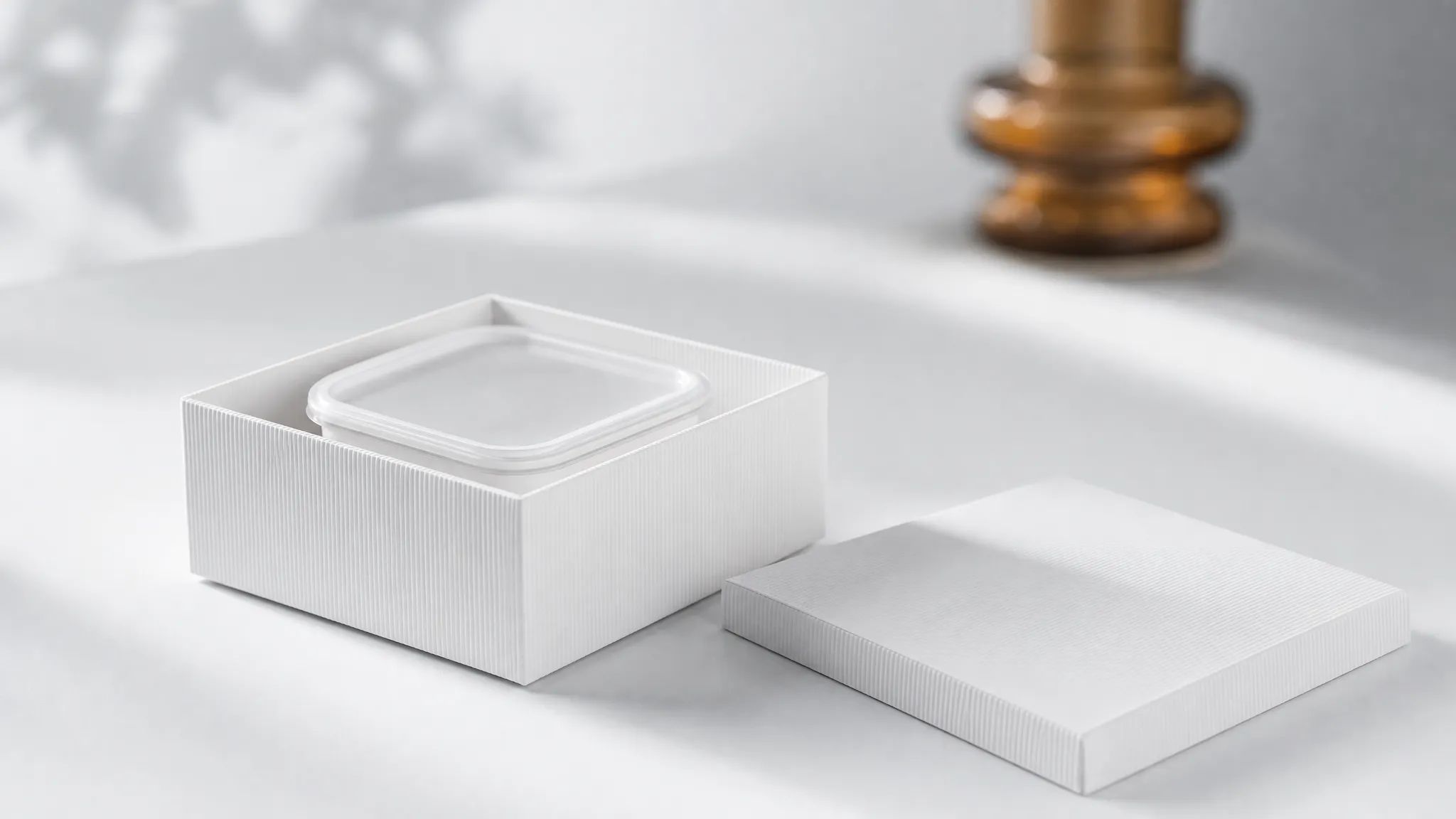
The gift is the container plus its presentation: the box a reusable set arrives in is part of the unit you are buying, not an afterthought.
The second difference is that the piece count multiplies silently. When you approve a three-piece set you have not approved one item; you have approved three moulds' worth of parts, three packing positions, and three chances for the set the recipient opens to be missing a lid.
The third difference is decoration. A plain set and a printed set are different products with different sample loops, different minimum quantities and different failure modes, and the artwork usually arrives after the specification is already frozen.
A fourth difference is worth naming because it costs buyers time on forums and in email threads: the words drift. A meal prep gift set, a corporate gift lunch box and a customisable container programme are often described as one thing by the people requesting them and quoted as three things by suppliers, because each phrase implies a different amount of packaging and printing. Write the phrase your supplier can price.
If you are reading this because you want one meal prep container set for your own kitchen, the honest answer is that this page is not aimed at you: the material and capacity questions you care about are covered in the retail-range SKU and capacity work instead, and the four consumer questions that dominate Google's "people also ask" panel for this topic — what is the best container, what is good for home meal prep, where is the cheapest supply — are answered for a household, not for a purchase order. Everything below assumes a programme.
What One Gift Unit Actually Contains
Before anything can be quoted, "one gift unit" has to be written down. It is the single most useful sentence in the whole brief, and it is the sentence most often left out.
A usable definition has four parts: how many pieces, what each piece holds, how the pieces divide internally, and what the pieces are packed in. Get those four into a document and the rest of the programme — cost, freight, decoration, lead time — becomes arithmetic. Leave them implicit and every supplier will quote a different thing while calling it the same name.
How many pieces. Two-, three- and five-piece configurations are all normal in this product class, and the factory's own records show both ends: a three-piece round storage set under one model range, and a six-model range of single 1.4 L rectangular boxes that a buyer assembles into whatever set size they want. The trade-off is not price per set but price per useful set. A three-piece unit reads as a considered gift; a five-piece unit reads as a meal-prep kit for someone who actually cooks. Neither is wrong — but a five-piece unit is five times the freight of a single-piece one, and that shows up in the carton maths later in this page.
What each piece holds. For a lunch-scale gift, the capacity band that recurs across the records is 1.3 to 1.4 L per main piece — that is a full adult lunch with room for a side, and it is where about half of the lines that record a capacity sit. Below 1 L you are gifting a snack box; above 1.5 L you are gifting a batch-cooking container, which is a different gesture.
How the pieces divide. Compartment count is the variable buyers under-specify most often, and it is the one the recipient notices first. The records run from rectangular storage boxes through two-, three-, four- and five-compartment lunch boxes. A practical rule: if the gift is going to office workers, two or three compartments is enough; if it is going to a fitness or wellness programme, the four- and five-compartment units communicate the intent better. Note that on some ranges the dividers are removable, which lets one model serve two audiences — worth asking about, because it is cheaper than two models. Compartment logic is also what turns a storage box into a portion-control tool, and a gift that helps someone portion a week of lunches gets used; a gift that does not, does not.
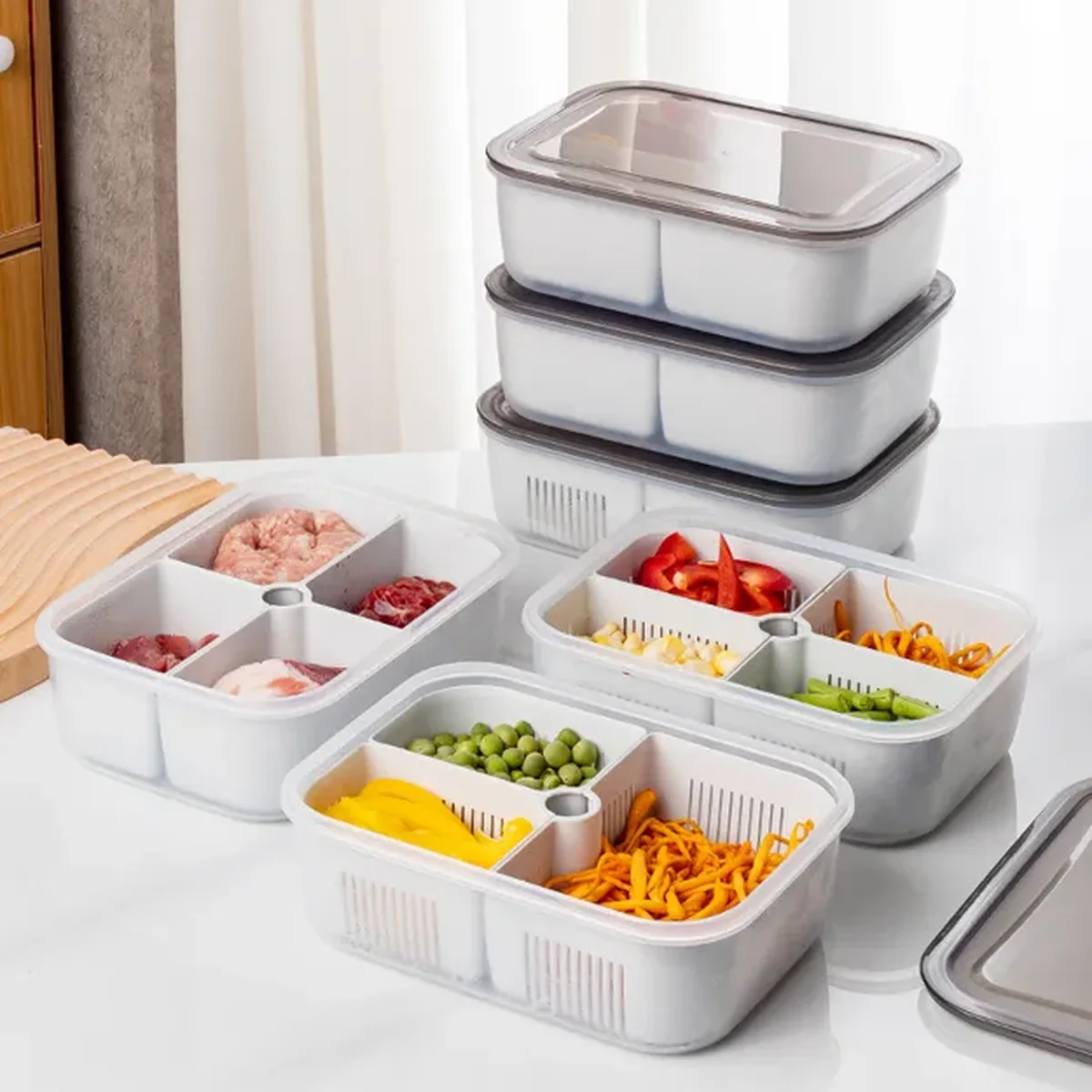
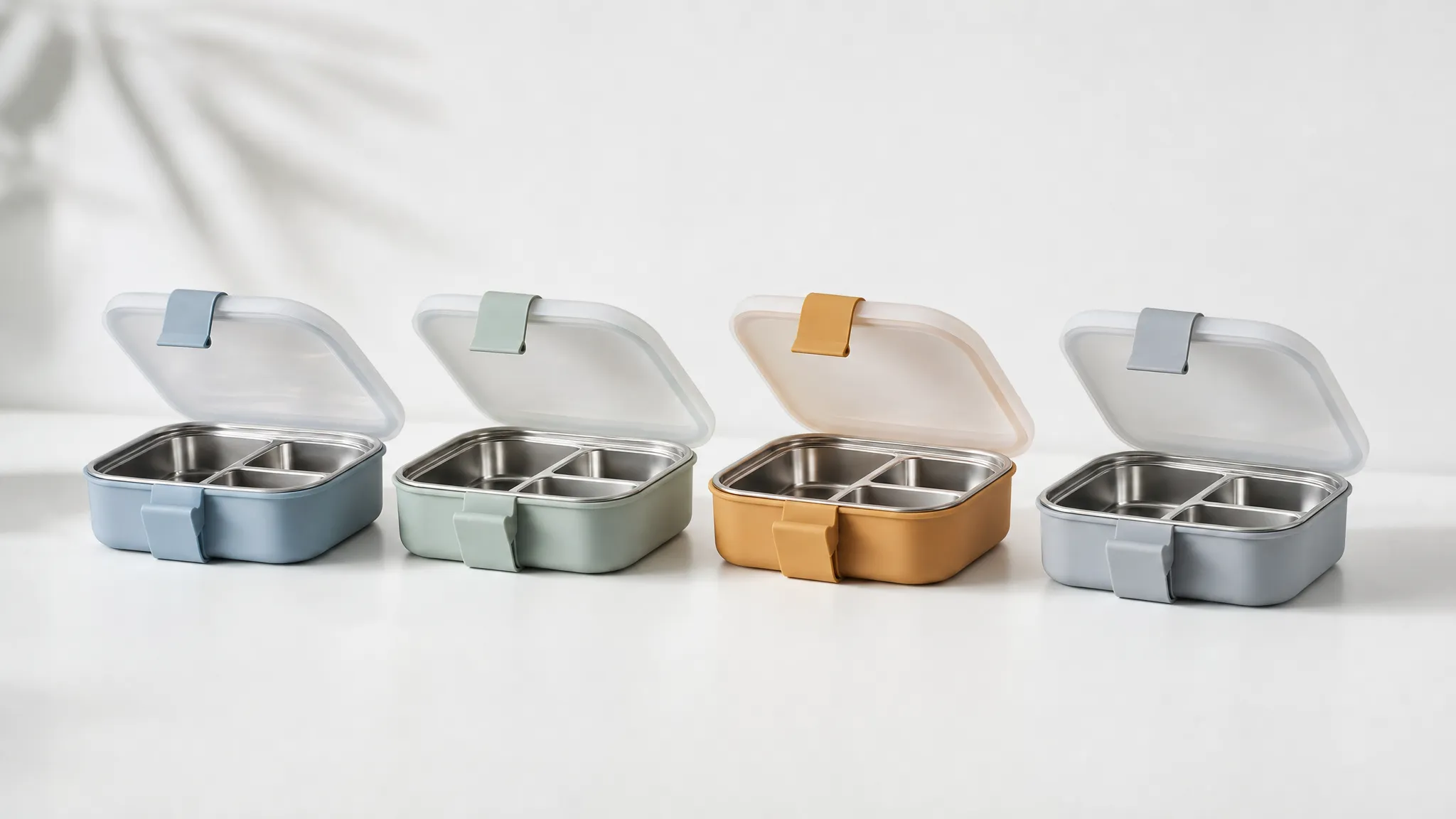
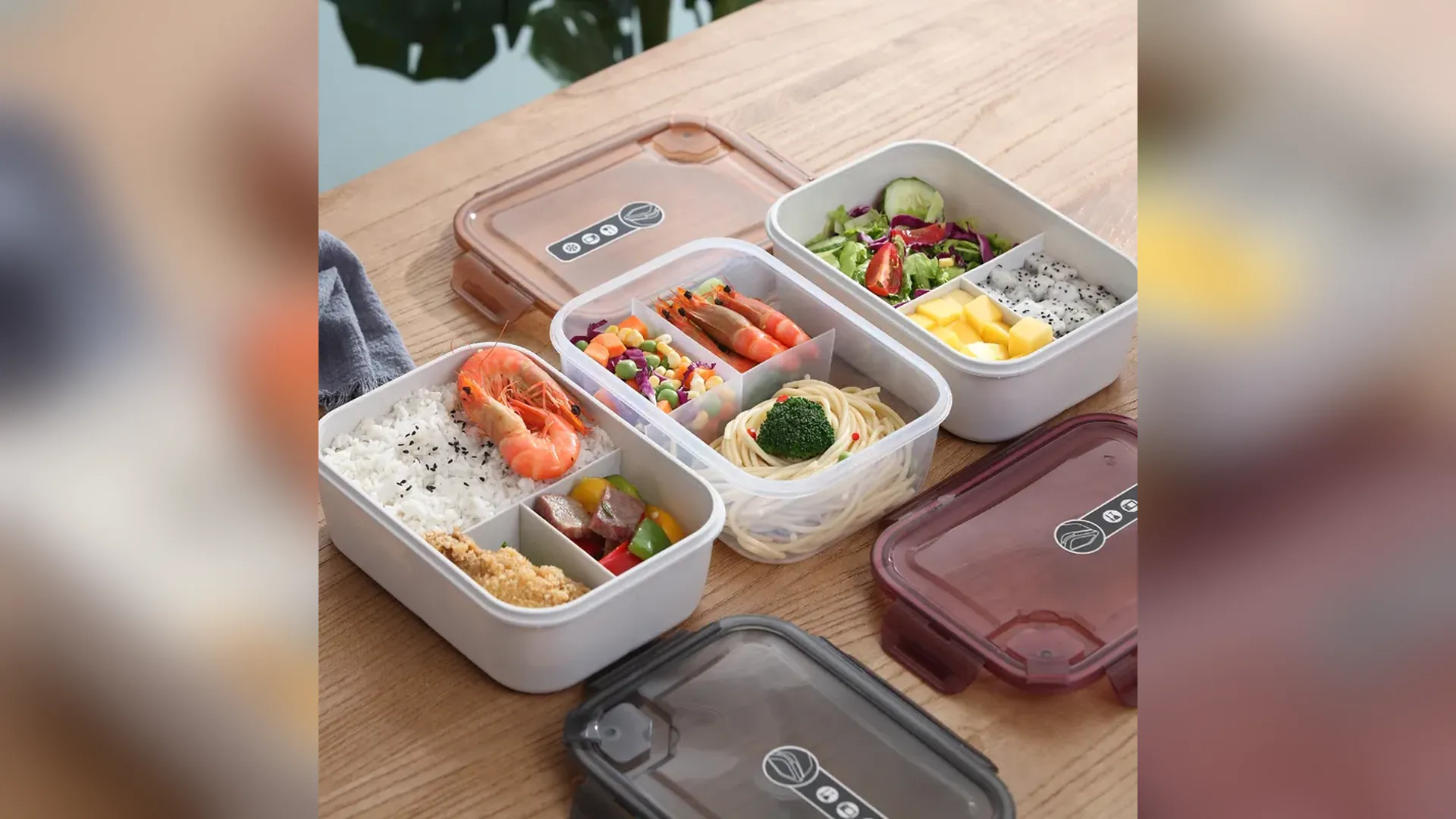
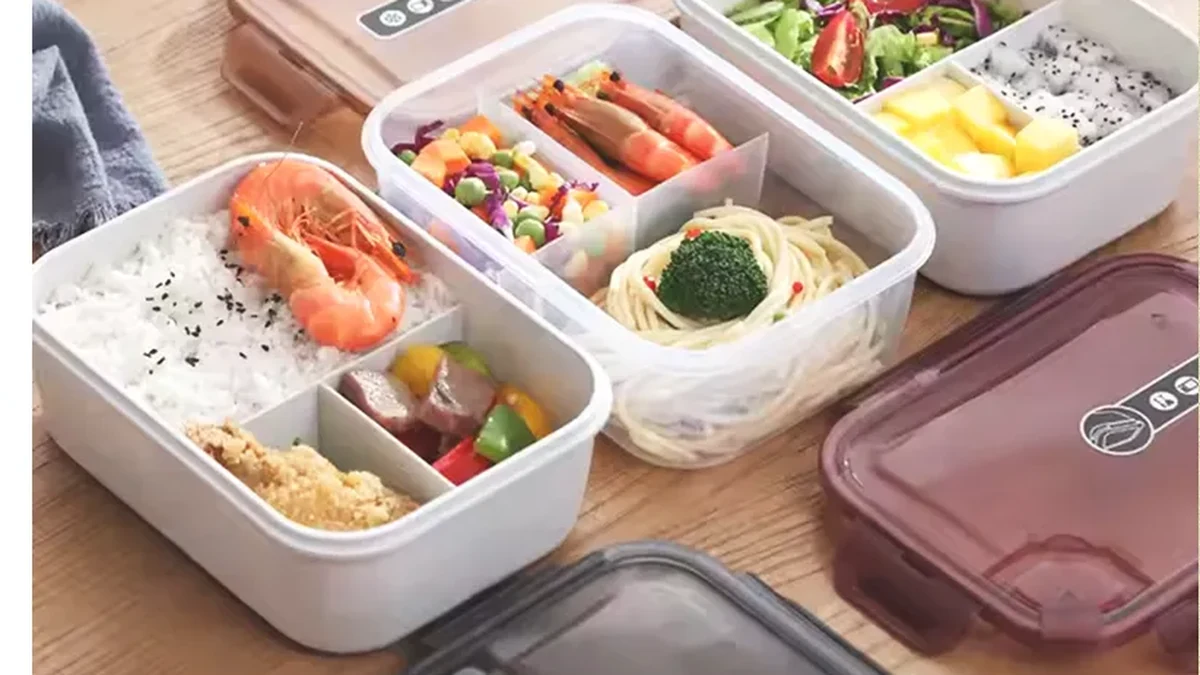
What a gift unit physically is: divided containers, each one a piece that has to be counted, packed and accounted for.
What it is packed in. This is where a gift programme and a wholesale order diverge most sharply, and it is visible in the records. Packing terms across the factory's lines include plain OPP bags, OPP bag plus colour carton, colour carton alone, and — on one group of meal-prep lines — a term recorded only as "Paper bid", which is exactly the kind of ambiguous field a buyer should refuse to accept. If your supplier's quotation says something you cannot picture, ask for a photograph of the packed unit rather than a description of it.
A carton figure is a negotiation point, not a constant. If a quotation says "Paper bid" and you cannot picture the packed unit, you have not been quoted a gift — you have been quoted a container.
One more clarification, because the vocabulary in this category is genuinely muddy. Looking for wholesale meal prep containers and looking for bulk meal prep containers or meal prep containers in bulk often returns the same product pages, but they are not the same request. The bulk phrasing usually means a large household pack; the wholesale phrasing usually means a trade buyer. Neither tells a supplier whether you want a plain container or a packed, printed gift unit — and a supplier who supplies a private label meal prep containers programme will assume packaging, documentation and artwork are in scope, while a supplier selling loose packs will assume they are not. Say which one you are.
For reference on how bulk-storage programmes are usually structured for importers, the airtight bulk-storage guide covers the supply side; the product family these records belong to is listed at the meal prep plastic food container set page.
The Specification Table: Models, Materials, Cartons
This is the table a corporate-gift brief should be able to fill in before it goes to a supplier. Every figure is as recorded in the factory's own product data, including the parts that say "not recorded".
Model range | Material as recorded | Capacity as recorded | Pieces per carton | Carton dimensions as recorded |
|---|---|---|---|---|
BX1094–BX1099 | PP | 1.4 L (47.34 US fl oz) | 72 pcs | 59.5 × 43.5 × 53.5 cm |
BX1051 | PP + silicone | 1.3 L (43.96 US fl oz) | 72 pcs | 62 × 47.5 × 58.5 cm |
BX1052 | PP + silicone | not recorded per piece | 48 pcs | 68 × 36 × 56.5 cm |
BX1053 | PP + silicone | not recorded per piece | 24 pcs | 61 × 30 × 57 cm |
6529 | PP + silicone | 1,300 ml (43.96 US fl oz) | 48 pcs | 51 × 46 × 62 cm |
6521 | PP + silicone + stainless steel 304 | 1,400 ml (47.34 US fl oz) | 18 pcs | 47 × 31 × 73 cm |
Two things are worth noticing before the material question. First, the carton is a real variable: 0.104 m³ on the BX1053 line against 0.172 m³ on the BX1051 line, so the larger of the two cartons is 65 % bigger — a difference you pay for on every container shipped. Second, the factory's own data labels these fields "confirm packing scope" — a reminder that carton figures are a negotiation point, not a constant, and the honest version of any spec table keeps that flag visible.
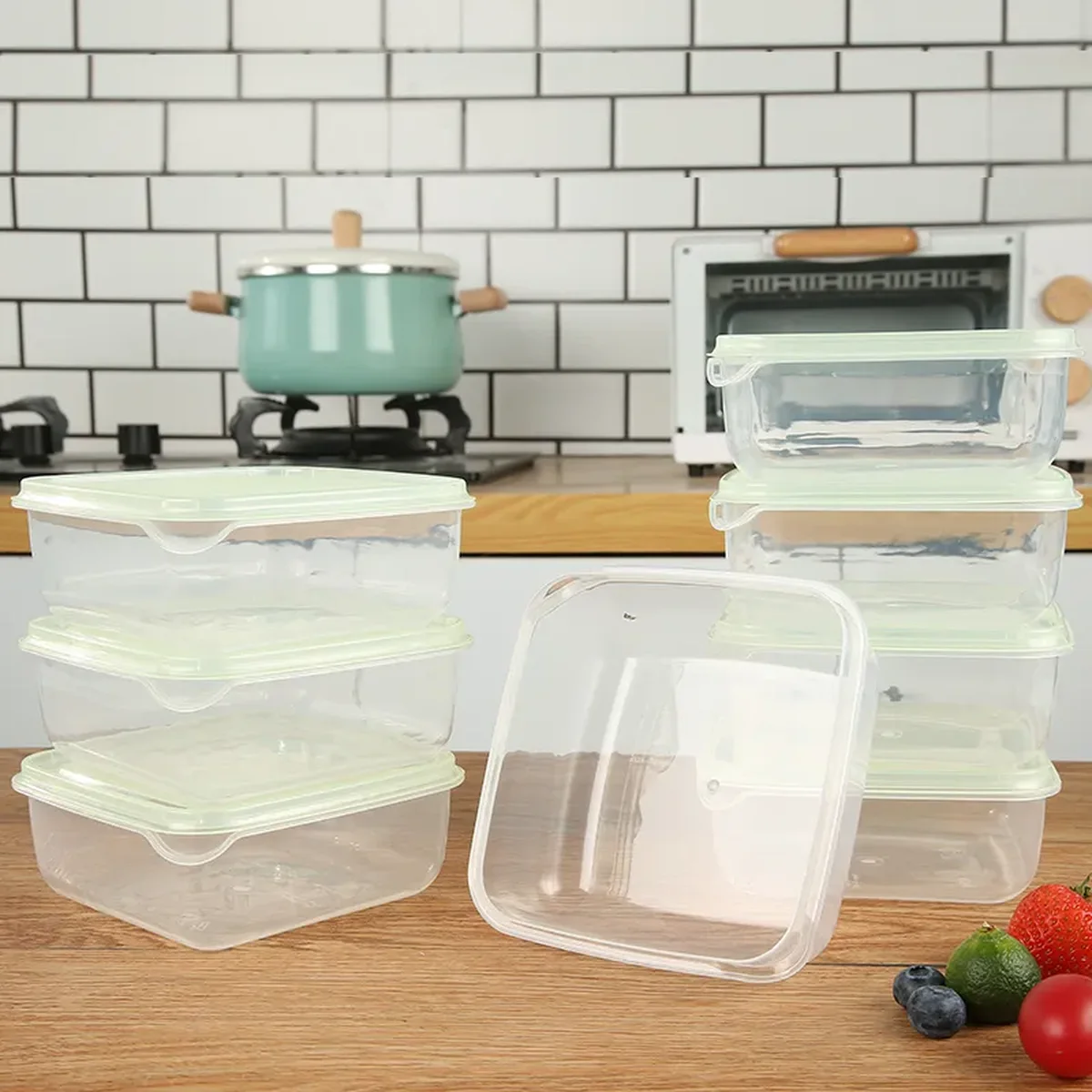
What the material decision looks like before anything is printed: the same container form in a clear body reads very differently from an opaque one.
Carton weight tells a second story, and it is the one buyers forget to ask for:
Model range | Carton gross weight as recorded | Unit grammage as recorded |
|---|---|---|
BX1051 | 14.3 kg | 182 g |
BX1052 | 16.2 kg | 298 g |
BX1053 | 12.4 kg | 425 g |
6529 | 15 kg | not recorded |
6521 | 15.2 kg | not recorded |
Divide carton gross weight by pieces per carton and you get the weight you actually ship per piece — 199 g on the BX1051 line against a 182 g product, 338 g on BX1052 against 298 g, and 517 g on BX1053 against 425 g. In other words, between roughly 8 % and 18 % of what you pay to move is carton and packing, and the share grows with the size of the unit. That single division is the difference between estimating freight from the product weight and estimating it correctly. The same arithmetic on storage lines is worked through in the stacking, nesting and carton-math note.
Now the material choice, which for a gift programme is less about the polymer's reputation and more about what the recipient sees through the lid:
Programme variable | PP | PP + PET | PP + silicone + stainless steel 304 |
|---|---|---|---|
What the recipient sees | opaque or translucent body | a clear, visible content | an opaque tray with a translucent lid |
Per-piece shipped weight | lightest — 199 g shipped on the 1.3 L line | not recorded on these ranges | heaviest; the 1,400 ml line ships 15.2 kg per carton at 18 pcs per carton |
Freight per set | lowest | middle | highest |
What it implies as a gift | everyday, practical | "look how organised I am" | a considered, higher-value gift |
Claim burden before printing | microwave, freezer and dishwasher claims all need a test basis | same | same, plus the lid/body materials differ |
Where it breaks | thin walls age against a hot dish-machine cycle | clarity dulls with abrasive washing | denting, and lid/body separation in the wash |
The stainless line is where a gift programme often ends up, for a simple reason: the unit feels like money. The cost of that feeling is freight, and freight is where gift programmes quietly go over budget. The rest of the material and colour decisions — how colour is introduced, and what changes when it is — are gathered in the note on colouring plastics.
Glass belongs in the same conversation and rarely wins it. The factory's own records do include a borosilicate glass storage line with plastic lids, spanning 320 ml to 1,040 ml — and for a retail shelf or a direct-to-consumer listing, glass is the premium choice. For a shipped corporate gift it usually loses on three counts: it is the heaviest option per litre, it is the only option that can arrive broken, and printed decoration onto glass is a different process from anything above. Worth pricing once, so the decision is made on numbers rather than instinct.
Two smaller items belong on the same page because buyers ask for them by name and get given adjectives instead. "Stackable" is a packing and warehousing property before it is a kitchen property — the factory's own feature notes treat stackability as something to confirm in the stacked dimensions for packing and warehousing, which is exactly the version of the claim a gift programme can use. "BPA-free" is the most requested line item in this category and the one most often supplied as a sentence rather than a document; if it matters to your programme, it belongs on the list of named documents in the section below, not in the product description.
Where Your Logo Can Actually Go on a Meal Prep Set
Decoration is usually discussed as a choice of method. It is more useful to discuss it as a choice of surface, because the surface decides the method far more often than the method decides the surface.
A lidded container set gives you four candidate surfaces, and they behave differently:
Surface | What it can carry | Methods that suit it | Watch-out |
|---|---|---|---|
Lid face (top) | The largest flat area, and the one the recipient sees first | Heat transfer, UV print, silk screen | Curvature and lid ribs break fine detail; a moulded logo already in the tool crowds the space |
Body wall | A wrapping area that survives handling | Silk screen, heat transfer, label | Thin walls distort print; a curved wall shortens the legible line length |
Base or underside | Low-visibility marking — batch, date, compliance text | Pad print, moulded-in | Not a branding surface; put logistics here and keep the front clean |
Sleeve or gift box | Full colour, no polymer constraints | Any print process, plus embossing | It is packaging, so it is discarded — the gift loses its identity the moment it is opened |
That last row is the decision most gift programmes get wrong. A printed sleeve is cheap, looks excellent in a photograph, and disappears in the bin. If the point of the gift is that the recipient keeps using branded containers, the mark has to be on the object, not on the box — and that means paying for a decoration method that survives a dishwasher cycle.
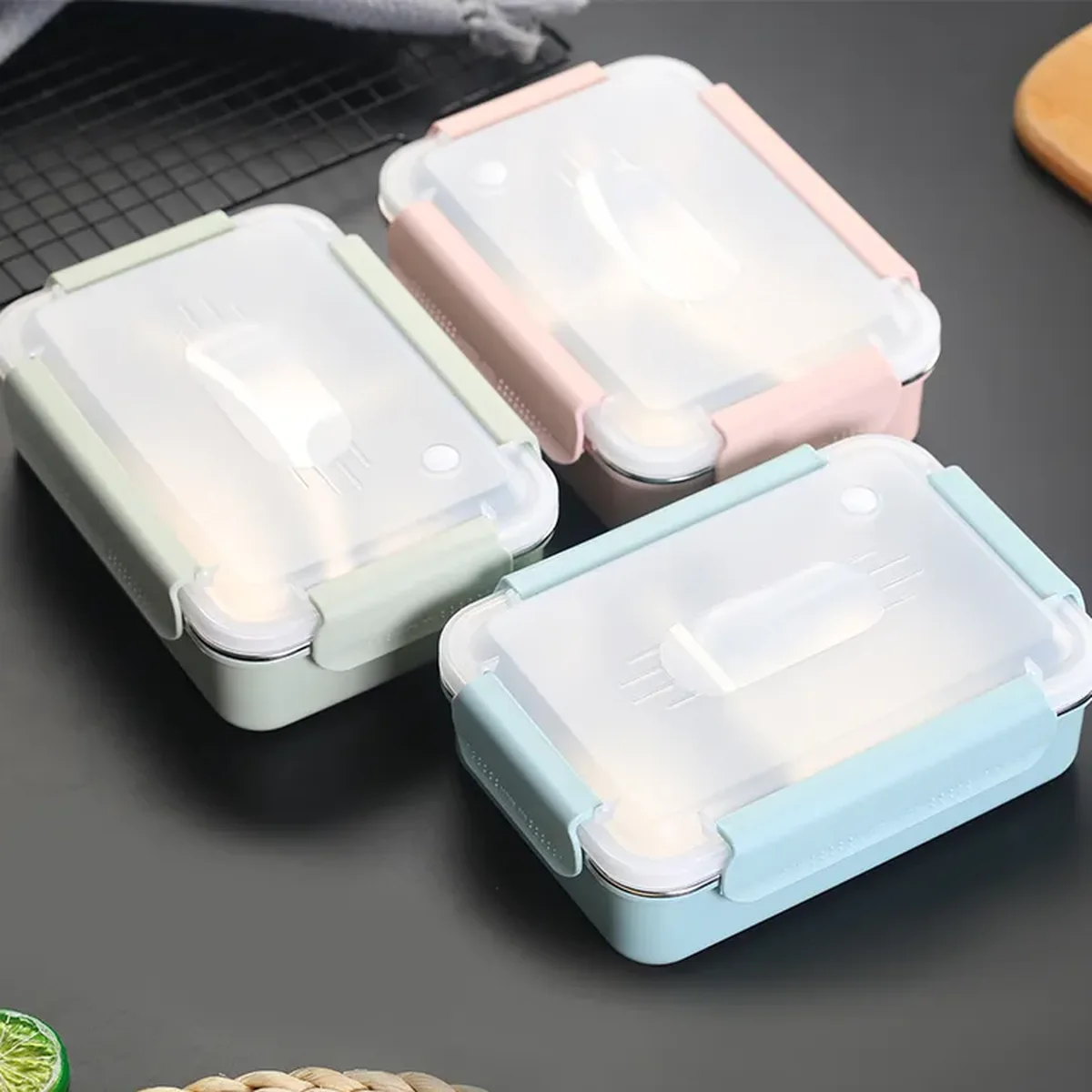
The lid face is the largest flat area and the first thing the recipient sees — which is why it is also where the artwork detail most often fails.
The four methods that dominate this product class behave differently on each of those surfaces. Heat transfer handles multi-colour artwork and curved faces well, and is the usual answer for a lid. UV print holds fine detail and can be run on demand, which suits short runs but depends on the ink system. Silk screen is the durable one-colour workhorse and the best candidate for a mark that has to survive a dishwasher cycle, at the cost of one screen per colour. Laser engraving marks the surface itself rather than adding to it, which means no ink and no adhesive on a food-contact object — and also means it works on the opaque materials, not on clear PET. Which of the four fits is a function of your artwork's colour count, its line weight and the surface you chose, and it is the single question worth settling with your supplier in writing before a sample is ordered.
What matters at programme level is narrower: what the artwork has to be, and when it is needed.
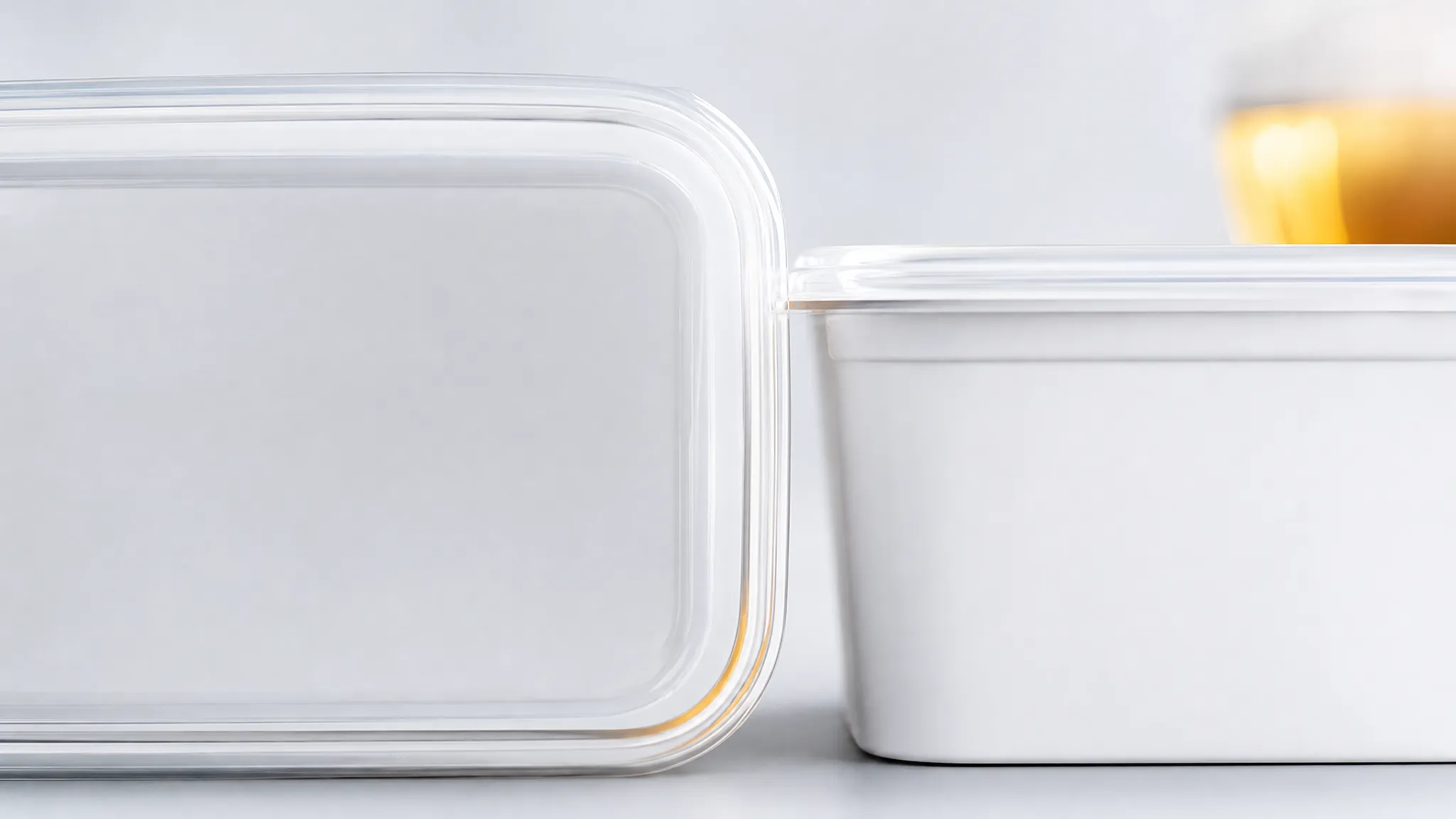
Two of the four candidate surfaces, empty: the lid's top face and the body wall are different shapes and tolerate different artwork.
Artwork requirements, in the order suppliers ask for them. A vector file rather than a raster screenshot — a photograph of a logo cannot be colour-separated. A stated colour reference, because "our blue" is a screen colour and a spot colour are different things. A defined print area with dimensions in millimetres, not "centred on the lid". A decision on how many colours, because one-colour and four-colour jobs have different tooling, minimums and sample loops. And a named approver, because every decoration failure traced back through a programme ends at the same place: two people thought the other one had approved the proof.
On a multi-piece set, add one more requirement that single-item orders never surface: state which pieces carry the mark. A logo on three of three pieces, on the lid only, or on the largest piece only are three different quotations, and a supplier reading "put our logo on the set" will choose for you. The customisation options recorded on the factory's own lines — colour, size, logo and package, all listed as available — are a menu, not a specification; the specification is the document you write.
Note also that custom meal prep containers and branded meal prep containers are two different orders wearing one phrase. Custom can mean a bespoke mould, which is a tooling project. Branded usually means decoration on an existing model, which is a print project. Both are legitimate; neither is cheap to discover at the wrong end of the process, and the tooling question is bounded in the note on whether to modify an existing mould or build a new one.
For buyers running the same logic on the lunch-box side of the catalogue, the custom lunch-box programme write-up covers how a decorated programme is scoped, and it is the closest structural analogue to what a meal-prep gift set needs.
From Pieces per Carton to Cost per Gift
Here is where a gift programme stops being a design conversation and becomes arithmetic. Everything needed is already in the two tables above; the work is dividing and multiplying correctly. One caution before the numbers: a retail price per set is not a proxy for programme cost, because it is quoted against one unit shipped to one person, while a programme is quoted against cartons, freight weight and decoration. Mixing the two is how a spreadsheet ends up light against the freight invoice.
Take a programme of 500 gift units, each unit a three-piece set, and run it against three of the recorded carton lines:
Gift units (3 pieces each) | Pieces needed | Cartons at the recorded rate | Volume shipped | Shipped weight |
|---|---|---|---|---|
500 units — BX1051 line (72 pcs/ctn) | 1,500 pcs | 21 cartons | 3.62 m³ | 300 kg |
500 units — 6529 line (48 pcs/ctn) | 1,500 pcs | 32 cartons | 4.65 m³ | 480 kg |
500 units — BX1053 line (24 pcs/ctn) | 1,500 pcs | 63 cartons | 6.57 m³ | 781 kg |
The same 500 gifts occupy 3.62 m³ on one line and 6.57 m³ on another — the tightest of those lines needs 45 % less shipped volume than the loosest, for the same number of gifts. At 2,000 units the spread widens to 14.47 m³ against 26.08 m³. Nothing about the recipient's experience changes across that range; only the freight does. This is the number to bring to a specification meeting, because it is the one that turns "which set is nicer" into a decision with a price attached.

Carton count is the gift programme's real unit of cost: the same gift count fills very different volumes depending on the carton it ships in.
Three consequences follow, and they are the reason this section exists:
Carton rounding is not a rounding error. 1,500 pieces at 72 per carton needs 21 cartons, not 20.8 — there is no such thing as a partial carton, and the last carton carries 60 of its 72 positions while paying the same freight as a full one. Choosing a line whose carton size divides your programme cleanly is worth more than a small unit-price difference.
Minimum order quantities interact with gift-unit composition. Several of the factory's lunch-box and bento lines record a minimum order of 2,000 Pieces. If that minimum is counted in pieces, then a 500-unit programme of three-piece sets needs 1,500 pieces and falls short; if the same programme is specified as single-piece sets it reaches 500 pieces and falls further short. Whether the minimum applies per order, per colour, per model or per artwork is the question that decides whether your programme is viable at all, and it is covered properly in the note on how minimum quantities get counted. Ask it before you design the set, not after.
Weight is what an air-freight quote is built on. A 500-unit programme shipping 300 kg of cartons on one line and 781 kg on another is not a 2.6× difference in cost until you notice that the heavier line is also the one whose pieces are larger. The 8 %–18 % packaging share computed earlier is the floor of what you cannot avoid; the line choice is the part you control.
The Documents to Ask For Before You Print
A decorated food-contact gift puts two separate compliance questions on the table, and buyers routinely treat them as one. The first is whether the material may contact food. The second is whether the decoration changes that answer. Printing introduces inks, adhesives and heat onto a surface that will hold someone's lunch, so the print decision is a food-contact decision even though it arrives in the brief as a branding decision.
This page is not the place to tell you which documents your market requires, and it is not a legal opinion. What it can do is name the documents so you can ask for them by name — and the rule for reading them is the same in every market: the certificate that matters is the one that names your material and your product, not the supplier's general capability.
Question you are answering | Document to ask for | Where the underlying rule is written |
|---|---|---|
Is this plastic permitted for food contact in the United States? | The supplier's declaration plus the relevant regulation citation for the polymer. Polypropylene is covered under 21 CFR 177.1520, olefin polymers | |
What about the clear PET components? | The same declaration, citing the polyethylene phthalate polymer section | |
Is the material permitted in the EU, and what testing is expected? | A declaration of compliance covering the plastic and its components, plus migration test data | |
What is the EU framework the national rules sit under? | The framework regulation that all EU food-contact materials are measured against | |
What does the US regulator publish about food-contact substances generally? | The FDA's own food ingredients and packaging pages, for orientation | |
Is the German market a target? | LFGB documentation and the relevant BfR recommendation for the material | Ask the supplier — the national documents must be named, not assumed |
Two habits make this section useful rather than decorative. First, ask for the document that covers the printed unit, not the unprinted one; the sample that was tested and the sample you ship must be the same construction. Second, keep the request list in the purchase order, not in an email thread — the specific documents a factory can actually produce, and the ones it cannot, is exactly what the guide to requesting compliance documents from a container factory walks through. Whether a supplier offers a certificate or a test report, and who issued it, is a question about the supplier, and it is answerable in one email if you ask it by name.
The finished request pack is a folder of named documents, not a PDF of general certificates — ask for the ones that name your material and your printed construction.
Running the Sample Loop — and What to Settle Before Artwork Is Sent
The sample loop is where gift programmes lose time, and it loses time in a predictable way: the buyer asks for a decoration sample, receives something the factory calls a pre-production sample, treats it as approval, and discovers at mass production that nobody signed a measurable standard.
There are three distinct checkpoints, and they are not interchangeable. The structure sample proves the set physically assembles and seals as specified — this is the one to abuse before you approve it, using the cycle the recipient will actually subject it to. The decoration proof proves the artwork is legible and correctly coloured at the real size; a PDF proof tells you about layout, and only a physical print tells you about a curved lid face. The golden sample is the signed unit that mass production is measured against, retained by both sides and referenced by number in the purchase order — the process is set out in the golden-sample and mass-production note, and it is the single document that turns a decoration disagreement into a fact.

The sign-off is a document, not a conversation: a named approver and a retained sample are what make a decoration dispute arguable.
Budget the loop before you need it. The factory's own records show a sample lead time of "within 3 days" on one line, which tells you what a plain sample costs in time — and a decorated, gift-boxed sample is a different animal, because the artwork has to be prepared, the print positioned, and the packing built. Add the buyer's own approval time, which is usually longer than the supplier's, and the honest sequence for a first gift programme is: freeze the gift-unit definition, freeze the print area, approve a physical decoration proof, then approve the golden sample, then place the production order. Reversing any two of those steps is how a programme ends up shipping 2,000 correct containers with the wrong blue on the lid.
If the gift set is going alongside other product lines from the same factory — a bento box, a storage container, a drinkware item — one more lever is available: the shared-carton question. Lines that pack at 72 pieces per carton and lines that pack at 24 behave differently in a mixed container, and the branded-programme work on custom stainless steel lunch boxes for brands shows how a decorated run is scoped when it shares a container with other products.
What to Settle First, in Order
If the programme is real, the order of decisions is fixed, and every reordering costs money:
- Write the gift-unit definition — piece count, capacity band, compartment logic, packed form. One sentence, four parts.
- Choose the carton line before the design — the volume and shipped-weight difference between recorded lines is large enough to change what the gift can afford to be.
- Ask how the minimum is counted — per order, per colour, per model or per artwork — and confirm your programme shape clears it before you design anything.
- Decide on which surface the mark goes, then let the surface pick the method.
- Request the documents by name, covering the printed construction.
- Book the three checkpoints — structure sample, physical decoration proof, golden sample — and name the person who signs each one.
None of that requires a supplier to agree with you in advance, which is why it can be done before any quotation arrives. What it does require is a specification that a factory can quote against and a factory can be held to, and the model, carton and weight tables above show what that document looks like when it is complete — including the fields that say "not recorded", because a brief that admits its own gaps gets answered, and a brief that hides them gets a quotation nobody can compare.
Continue reading
Related sourcing guidance
More practical context for your food storage container sourcing conversation.
Discuss your product range
Need help selecting or customising containers?
Share the product type, market and sourcing requirements with the Xinghui team.