
Sourcing & OEM
FOB, CIF or EXW on a Houseware Quote: What Each Price Includes, and Which Costs Still Land on You After the Goods Leave
FOB, CIF and EXW stop the seller's invoice in three different places. A twelve-line cost table, a quote-conversion method, and what still lands on you.
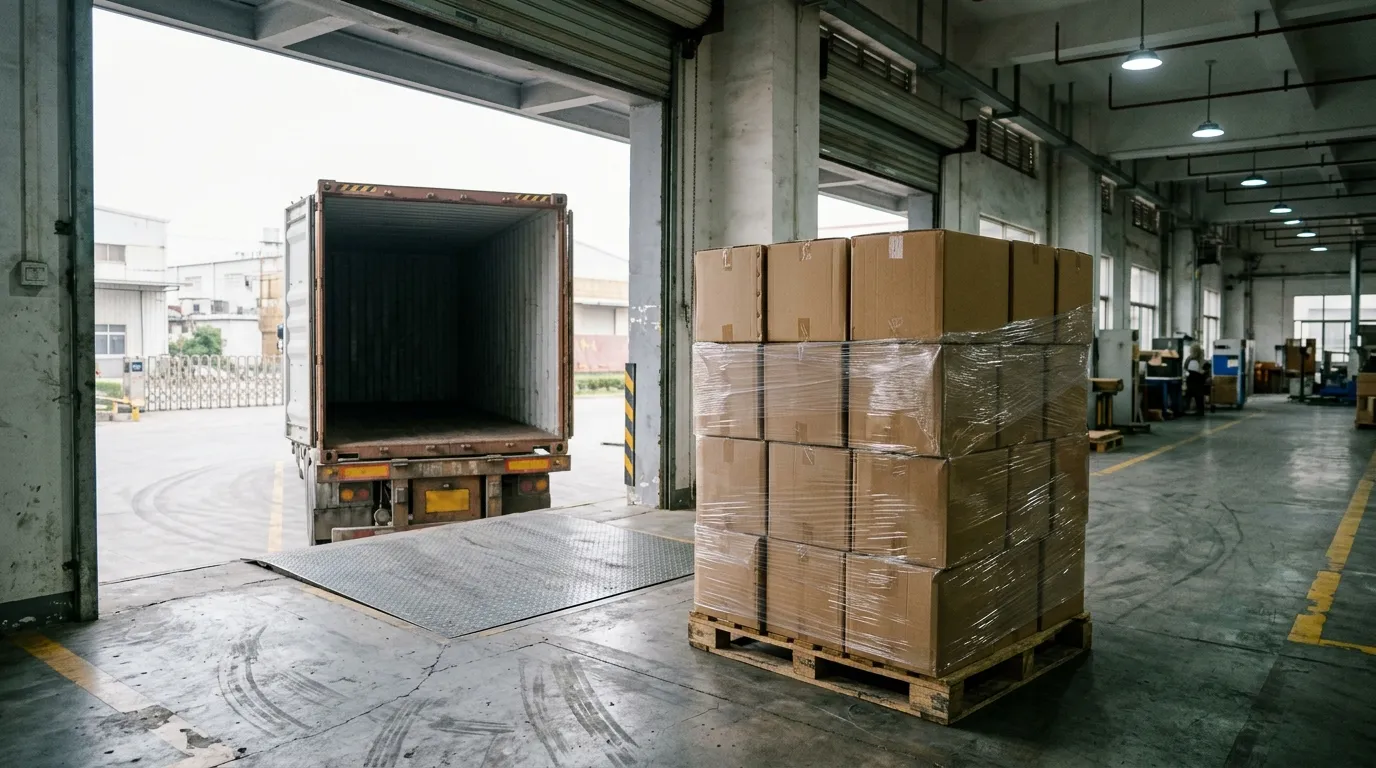
FOB vs CIF vs EXW is the first decision on a houseware quote, and on most orders it gets made by accident. The supplier sends a number, the buyer reads three letters as a formality, and the difference surfaces a month later, when invoices from companies nobody mentioned arrive after the container.
Under EXW and FOB those two points coincide — the seller's cost ends where the buyer's risk begins. Under CFR and CIF they come apart: cost runs to the destination port, risk changes hands on board at origin. Everything on your side of the line is yours to arrange and pay for; everything beyond it is still yours to receive.
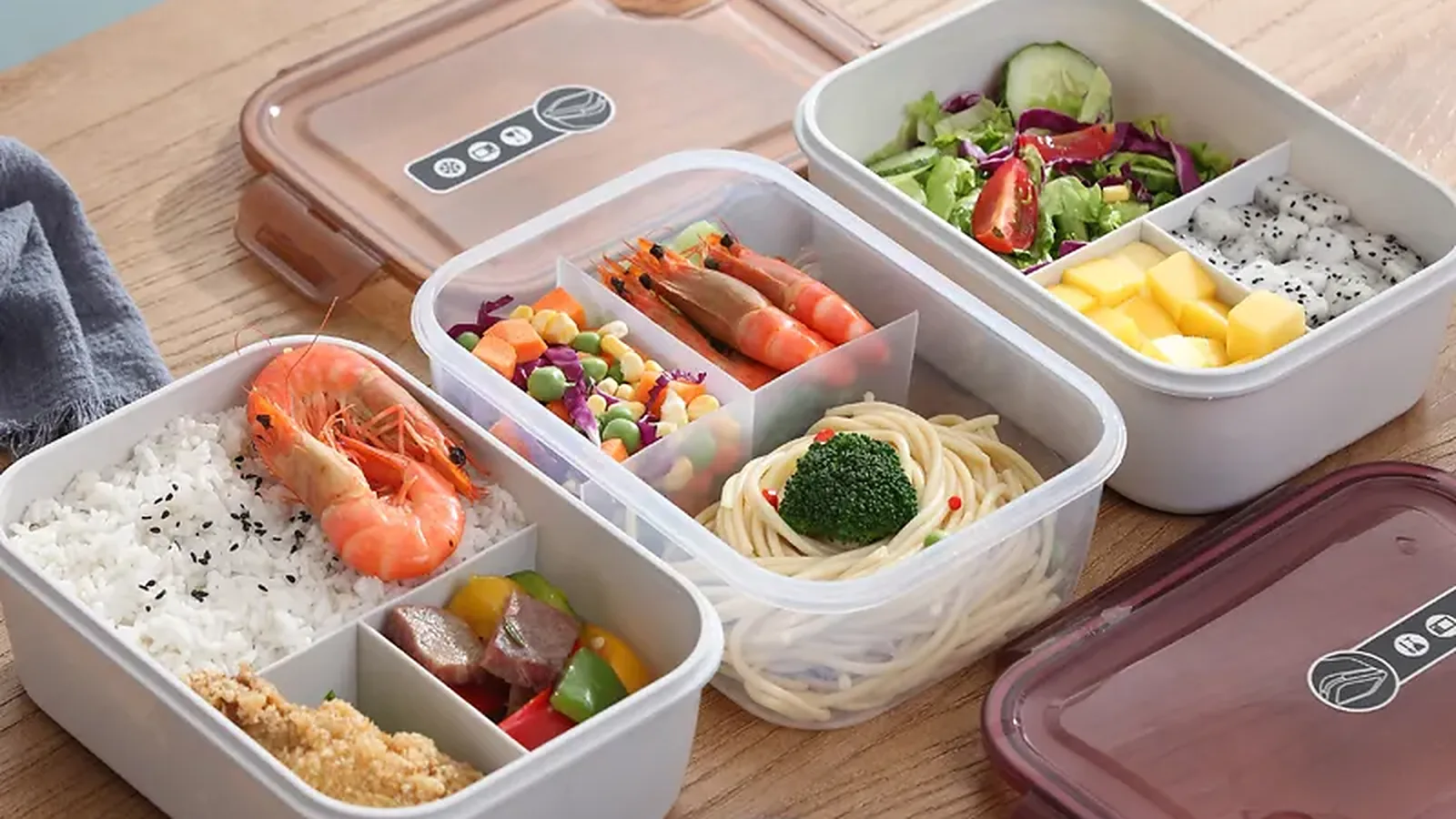
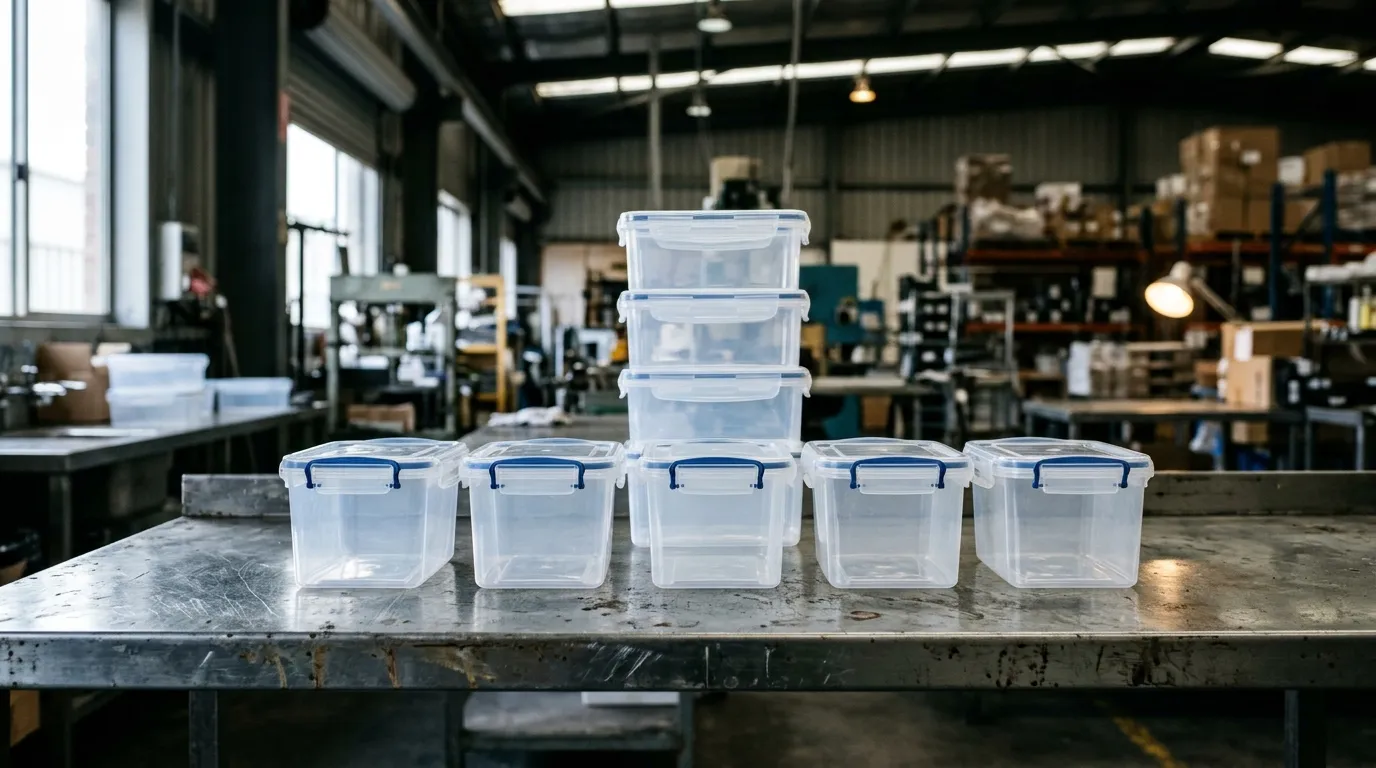
This page is written from the quoting side. We mould PP food-storage containers and lunch boxes in Jieyang, Guangdong, and quote on FOB or CIF terms. It carries no freight rates, duty rates or percentages: those depend on your lane, product and month.
FOB vs CIF vs EXW: three price points on the same carton
Take one master carton of 72 lunch boxes — model BX1051, about a sixth of a cubic metre.
EXW — ex works. The price ends at the factory door. The seller makes the goods available at its premises, packed as agreed, and stops: no loading, no export clearance, and it may never see the port. Under EXW the export declaration is the buyer's obligation.
FOB — free on board, with a named port of loading. The price ends when the carton is on board. The seller packs, hauls the goods to the port, clears them for export and pays the origin handling that gets them over the rail; risk passes at that moment.
CFR and CIF — cost and freight; cost, insurance and freight, with a named port of destination. Both extend the seller's cost to the destination port; neither moves the risk, so if the container is lost mid-ocean, under CIF the claim runs on the policy the seller arranged. CIF differs from CFR by insurance alone, at the minimum tier — the C clauses of the Institute Cargo Clauses — unless the contract agrees more.
FOB, CFR and CIF are sea-and-inland-waterway rules; air and rail use FCA, CPT and CIP. All need a named place; "FOB China" is not a term but a hope. Where the cargo is containerised and handed over at a terminal, the ICC's guidance prefers FCA to FOB: the seller gives up the container before it is on board.
The cost-scope table: twelve lines, and who owns each one
Cost line | EXW | FOB | CFR | CIF |
|---|---|---|---|---|
Goods packed at the factory | Seller | Seller | Seller | Seller |
Loading onto the collecting truck | Buyer | Seller | Seller | Seller |
Inland haulage to the port of loading | Buyer | Seller | Seller | Seller |
Export customs declaration | Buyer | Seller | Seller | Seller |
Origin terminal handling and port charges | Buyer | Seller | Seller | Seller |
Ocean freight to the named port | Buyer | Buyer | Seller | Seller |
Marine cargo insurance | Buyer | Buyer | Buyer | Seller, minimum cover |
Destination terminal handling and port charges | Buyer | Buyer | Buyer | Buyer |
Import declaration and brokerage | Buyer | Buyer | Buyer | Buyer |
Duty and import VAT | Buyer | Buyer | Buyer | Buyer |
Inland delivery to your warehouse | Buyer | Buyer | Buyer | Buyer |
Demurrage and detention at destination | Buyer | Buyer | Buyer | Buyer |
CIF adds two lines to FOB — ocean freight and insurance — and removes none of the buyer's obligations; rows eight to twelve read Buyer throughout. Seller means inside the supplier's price; Buyer means yours.
The table says where the rule puts the cost, not what arrives on your desk; on a mixed LCL load fewer lines apply.
The costs that land on you after the goods leave the factory
Even on a clean FOB deal, charges land on you before the vessel sails — not on the supplier's invoice or the forwarder's headline quote, but at booking.
- Origin terminal handling — the FOB rule assigns it to the seller, but when the buyer's forwarder books, the terminal bills the booking party.
- Documentation and bill of lading fees — issuing the B/L, amending a shipper name, telex release.
- CFS and consolidation — only for less-than-container loads.
- Weighing, security filings and certificates — charged to whoever holds the booking: the container's verified mass, the destination's advance cargo filing, the certificate of origin.
A forwarder earns on both ends of a lane, and the origin end is invoiced to whoever opened the account. Buy FOB and that party is you — the mechanism behind sample courier charges too.
The question before booking is narrow: which origin charges sit inside your FOB unit price, and which will be invoiced to your forwarder? A supplier who answers precisely is quoting. One who says "FOB is FOB" is passing the question downstream.
A term defines where the seller's invoice stops. It does not define where your spending stops — that edge is set by which costs you have priced yourself.
Why a CIF number is not a landed cost
A landed cost is the CIF number plus everything between the destination quay and your racking — the costs listed below, plus the inland leg the CIF price never covers, duty included. A CIF quote feels delivered, and that feeling is expensive: the rule ends the seller's cost at the destination port, and this half of the journey is the least predictable.
- Destination terminal handling and release fees — the mirror of the origin charges, billed locally; nobody hands over the container until the paperwork is released.
- Import declaration, duty and VAT — the EU's description of importation notes that goods are released into free circulation only after import duty is paid and the goods checked. VAT is usually recoverable if you are registered; duty is not.
- Demurrage and detention — charged when the container overstays free time, on a clock you did not set under CIF.
US Customs says the same. A 1997 ruling in CBP's published database reads: Normally, duty, brokerage charges and domestic freight costs are not included in C.I.F. terms of sale (CBP ruling 546363). The importer guidance points the same way, and the statute behind it is explicit: 19 U.S.C. § 1484 puts entry — and the filing of the declared value, classification and rate of duty — on the party qualifying as the importer of record. The freight a supplier buys usually stops at the port gate; if a CIF rate includes destination handling, get it in writing.
Who arranges and who pays are two different questions
CIF vs FOB, line by line: who does the work, and whose invoice it arrives on.
Line | Under FOB: arranged by | Under FOB: invoiced to | Under CIF: arranged by | Under CIF: invoiced to |
|---|---|---|---|---|
Origin terminal handling, shipping documents and CFS (not the export declaration) | Forwarder holding the booking | Buyer, in practice (rule: Seller) | Supplier's forwarder | Seller |
Ocean freight | Forwarder holding the booking | Buyer | Supplier's forwarder | Seller |
Cargo insurance | Buyer | Buyer | Supplier | Seller, minimum cover |
Destination terminal handling and release | Buyer's agent | Buyer | Buyer's agent | Buyer |
Import declaration | Buyer's broker | Buyer | Buyer's broker | Buyer |
Duty and import VAT | Buyer's broker | Buyer | Buyer's broker | Buyer |
Inland delivery | Buyer's trucker | Buyer | Buyer's trucker | Buyer |
Demurrage and detention at destination | Nobody, until it happens | Buyer | Nobody, until it happens | Buyer |
Five of these eight lines are the same under both terms. The term moves three, two of them only as far as the destination port.
Insurance is the line buyers assume rather than check. The C clauses cover fewer perils than the A clauses, so a CIF quote sold at that minimum tier (ICC, Incoterms 2020) can still leave you under-insured: ask for the certificate before the vessel sails, check it names you as claimant and where a claim is paid.
The US Commercial Service's overview of the rules also lists what Incoterms do not cover, and the documents your broker needs for import clearance.
What is actually inside the FOB price of a lunch box
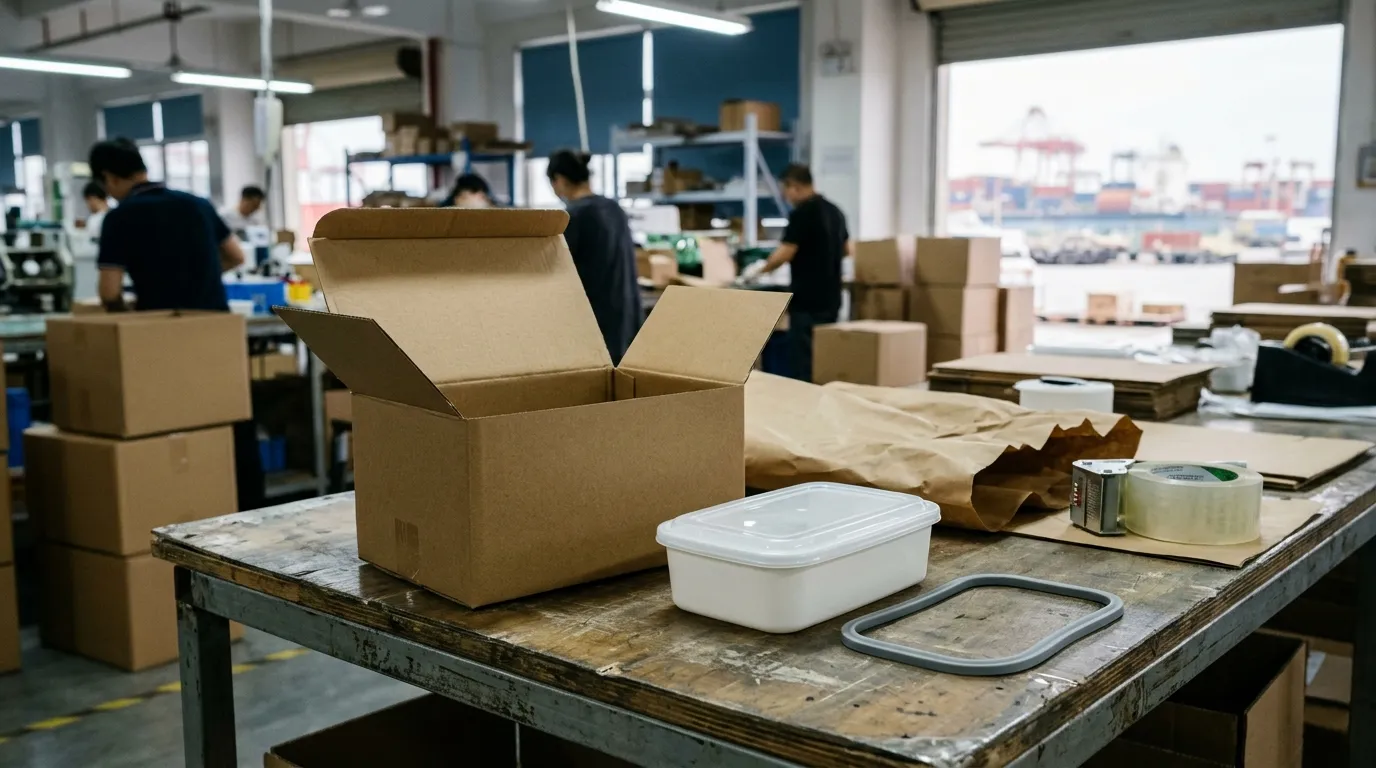
A buyer comparing FOB with CIF is often comparing different components. Inside an FOB unit price, in the order a factory builds it:
- Resin, by part weight — grammage × resin price, divided across the cavities. A 182-gram lunch box and a 135-gram ramen bowl are not the same object at the same price.
- Machine time — cycle time over cavities, plus scrap and start-up, where a thin-wall part earns its advantage (thin-wall moulding and grammage).
- Part count — body, lid, seal: three purchasing lines, three inspections.
- Decoration and packing — printing per impression and colour; carton, inner bag or retail box, and the labour to fill them.
- Loading, inland haulage, export declaration and origin handling — the four lines that leave the price when you ask for EXW.
Swap FOB for CIF and lines one to five do not move; two are added, both the supplier's estimate of somebody else's cost. Swap for EXW and four are subtracted — and you acquire a Chinese export declaration.
Packaging also changes the freight maths before freight is quoted: a retail colour box adds cube and a second carton dimension, so the retail packaging decision is a freight decision. When a CIF number comes in below your own FOB-plus-forwarder arithmetic, the gap is rarely ocean freight — it is the carrier, the routing, or a unit price reduced to absorb the difference.
Carton cube, not unit weight, is what your freight is buying
Houseware is light and bulky, which decides what the carrier charges on: in LCL the greater of tonnes or cubic metres, in FCL how much of the box the carton lets you use.
Model | Product | Capacity | Pcs/carton | Carton (cm) | Pcs per m³ |
|---|---|---|---|---|---|
BX1051 | Lunch box, three-compartment | 1.3 L | 72 | 62 × 47.5 × 58.5 | 418 |
BX1094–BX1099 | Freezer and meal-prep box | 1.4 L | 72 | 59.5 × 43.5 × 53.5 | 520 |
BX1052 | Round storage set | not stated | 48 | 68 × 36 × 56.5 | 347 |
BX1053 | Three-piece airtight set | not stated | 24 | 61 × 30 × 57 | 230 |
BH4439B | Mini ice tray, 6-grid | not stated | 180 | 52 × 28 × 33 | 3,746 |
8121 | Ice mould, 6-grid | not stated | 165 | 42 × 36.5 × 48 | 2,242 |
One thousand BX1051 lunch boxes is fourteen cartons and about 2.4 m³. One thousand BH4439B trays is six cartons and about 0.27 m³. Same piece count, roughly nine times the volume — and the lunch box is just under three times the weight per piece, measured on gross carton weight (14.3 kg for 72 pieces against 13.2 kg for 180). Under CIF that difference sits inside a number you did not build; under FOB it is the first thing your forwarder asks you for.
The not stated cells are deliberate: those records carry carton data without a capacity figure, and guessing one would defeat a table whose every cell can be checked.
Every lever here is pre-order: nesting, lids shipped assembled, bag versus printed box, carton sized to the pallet. The models sit across the lunch box range and the food storage container range.
How to compare two quotes that use different terms
1. Write down what each number is, in words. Not "the FOB price" but "goods on board at this port"; not "the CIF price" but "goods at this port, freight and minimum insurance paid". If the two do not name the same kind of place, stop.
2. Strip the CIF quote to the same basis. Ask for freight and insurance as separate lines. A supplier who can split them is quoting; one who cannot is selling an unpriced bundle.
3. Price the remainder once. One forwarder quote for the lane, door to door, origin and destination itemised.
4. Compare per SKU, per carton and per cubic metre. A lower unit price in a carton holding fewer pieces is not a lower price.
5. Add the unchanged costs once, outside the comparison. Duty, VAT, brokerage and inland are the same under any term; folding them in hides the choice.
Two quotes written CIF against different ports are not comparable, nor two written against different Incoterms versions. Sourcing food storage containers from China sets out the rest of the RFQ document.
The commercial-decision checklist before you sign the PI
Write these into the PI.
- The term, the named place and the version — "CIF, [port], Incoterms 2020", on the PI and the commercial invoice.
- Who books the ocean freight, and whose forwarder appears as shipper on the bill of lading.
- Which origin charges are inside the unit price and which will be invoiced to your forwarder.
- Insurance: cover tier, insured value, whose name is on the certificate, where a claim is paid.
- The document list by name — commercial invoice, packing list, bill of lading, certificate of origin, insurance certificate, compliance file.
- Who files the export declaration, and which entity is recorded as exporter. In China the refund attaches to that party, and an overseas buyer with no Chinese entity usually cannot be it — hence "EXW" quotes that are quietly FCA at the gate.
- Free time at destination, and who pays demurrage when it runs out.
- What happens if the sailing is rolled — a cost question dressed as a service question.
None of this ranks the terms: FOB suits a buyer with a forwarder and enough volume to make the freight line worth controlling; CIF suits a buyer who wants one number and will pay for it; and the EXW vs FOB question is usually decided by who can file the export declaration in China. None of them ends your exposure where the seller's invoice ends.
DDP and DAP sit past where this page stops: under both the seller delivers to a named place in your country, and under DDP also clears import and pays the duty — which is why a DDP number can only be set beside a CIF number once the duty assumption inside it is known.
If the quote in your hand does not separate those lines, ask for it split. Minimum quantities and how they are counted is the other half of the same first-order conversation.
Xinghui Plastic Life quotes FOB and CIF from Jieyang; an enquiry naming the term, the port, the carton count and the target market is enough to start.
Continue reading
Related sourcing guidance
More practical context for your food storage container sourcing conversation.

Discuss your product range
Need help selecting or customising containers?
Share the product type, market and sourcing requirements with the Xinghui team.