
Lunch Boxes & Bento
Insulated Stainless-Steel Lunch Boxes for Private Label: What Changes in MOQ, Unit Weight and Carton Count Versus an All-PP Box
An insulated bento box order moves three numbers, not one: the minimum, the kilos per piece and the pieces per carton. The records and arithmetic behind them.
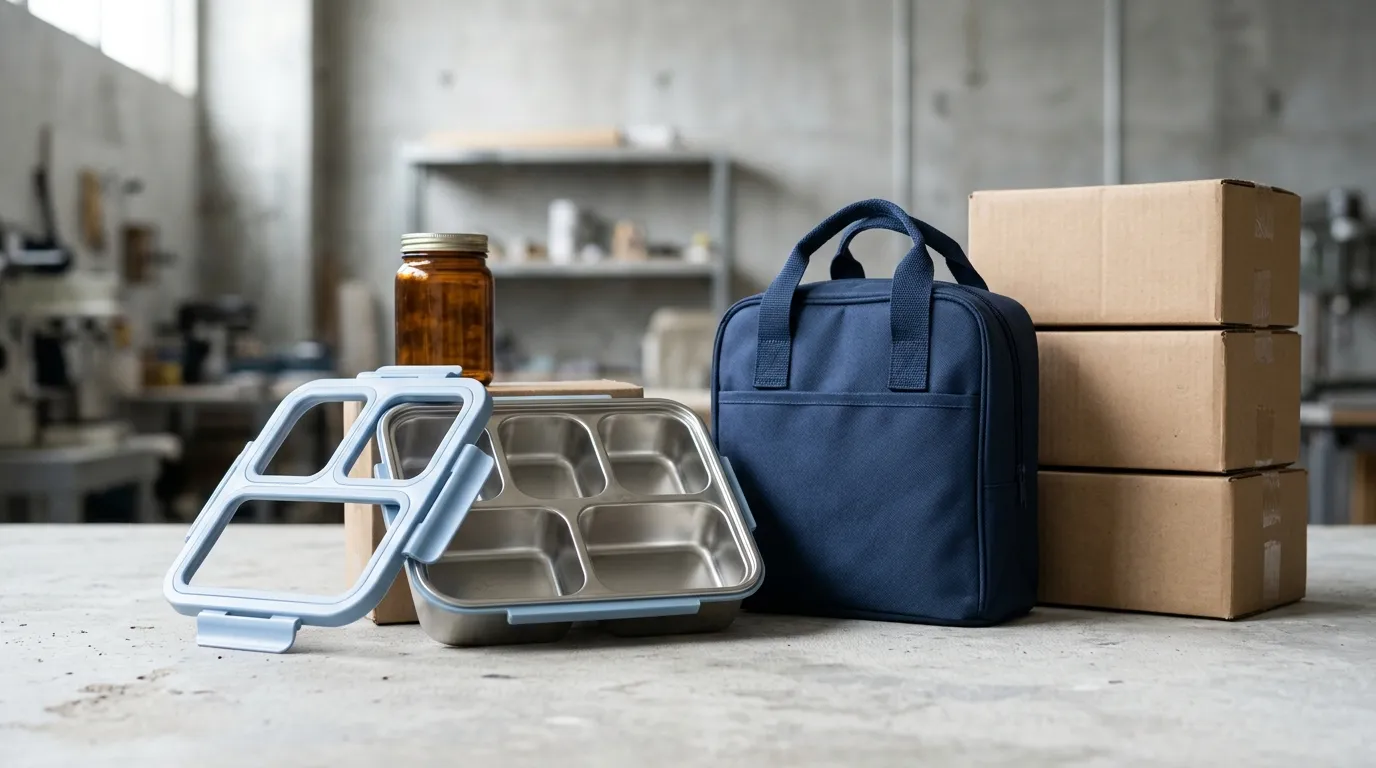
An insulated bento box is bought on three numbers — the minimum quantity, the weight of one piece as it actually ships, and how many pieces go in a carton — and buyers usually arrive at a supplier holding only the first one. The third is the one that decides what the order costs to move, and on a stainless-steel box it is not a rounding difference from a plastic one: it is most of the freight. On the minimum itself the honest comparison with an all-polypropylene box is not a number but a counting basis: the steel line publishes 2,000, the PP line publishes none, so on MOQ what changes is how the minimum is counted, not how large it is.
This page is for the private-label buyer who has already decided the product should be a steel bento with some form of insulation, and now has to put numbers into a quotation request that a factory can answer and a finance team can approve. It works from the published model records behind this site — six stainless models with full carton data, the insulated model, and one all-polypropylene box — and does the carton arithmetic that the records make possible. It does not describe a consumer shopping decision; readers choosing one lunch box for one kitchen are better served by the Lunch Boxes & Bento index.
The article takes the three numbers in the order they cause trouble: what "insulated" has to mean before any number is quoted, how the minimum is counted on a three-material box, what one piece really weighs when it ships, and what the carton count does to a container. Then it shows what happens where the carton numbers are missing altogether — on the insulated model — and the lines to put in the RFQ so that they are not missing in yours.
What "Insulated" Has to Mean Before You Quote
In this category the word covers at least three constructions, and they are not interchangeable on a purchase order. The first is a double-wall body: a steel liner inside a plastic shell with an air gap or a foam layer between them, so the box itself holds heat. The second is a padded bag: a single-wall steel box sold with a zip-up carrier that does the insulating, which is how a lot of school and commuter sets are sold. The third is a vacuum body — the sealed double-wall flask construction — and it is the rarest of the three and the one that adds the most tooling.
Each reading changes a different number. A double-wall body adds a molding, an assembly step and a second wall, so the unit weight and the carton volume both go up before any bag is counted. A bag reading leaves the box almost unchanged and moves the weight into a soft item that is packed and cartoned separately. A vacuum body changes what the factory has to be able to test, because a hold-time claim then rests on a vacuum integrity check rather than on a wall thickness.
Reading of "insulated" | What it changes in the box | What it changes in the carton | The evidence to ask for |
|---|---|---|---|
Double-wall body, air gap or foam | Adds a shell, a second wall and an assembly step; the piece gets thicker, so fewer fit a carton | Carton count falls and carton volume per piece rises before any accessory is packed | Cross-section drawing with the gap dimension; the foam or gap specification in writing |
Padded bag supplied with the box | Box unchanged; a soft item joins the set and is packed and cartoned separately | Adds a second carton line, or a set carton with a larger count per carton | Whether the bag is in the unit price, in the same carton, and whether it carries its own test report |
Vacuum body | Sealed double wall; the factory needs a vacuum and leak check, not just a molding line | Heaviest of the three per piece; carton count is the lowest | Hold-time test protocol and the results on a production sample, not on a prototype |
This is not a definition argument. If the quotation says "insulated" and the sample arrives as a single-wall steel tray in a bag, nothing on the paperwork is wrong — the word was simply never defined, and the freight budget was built on the wrong reading.
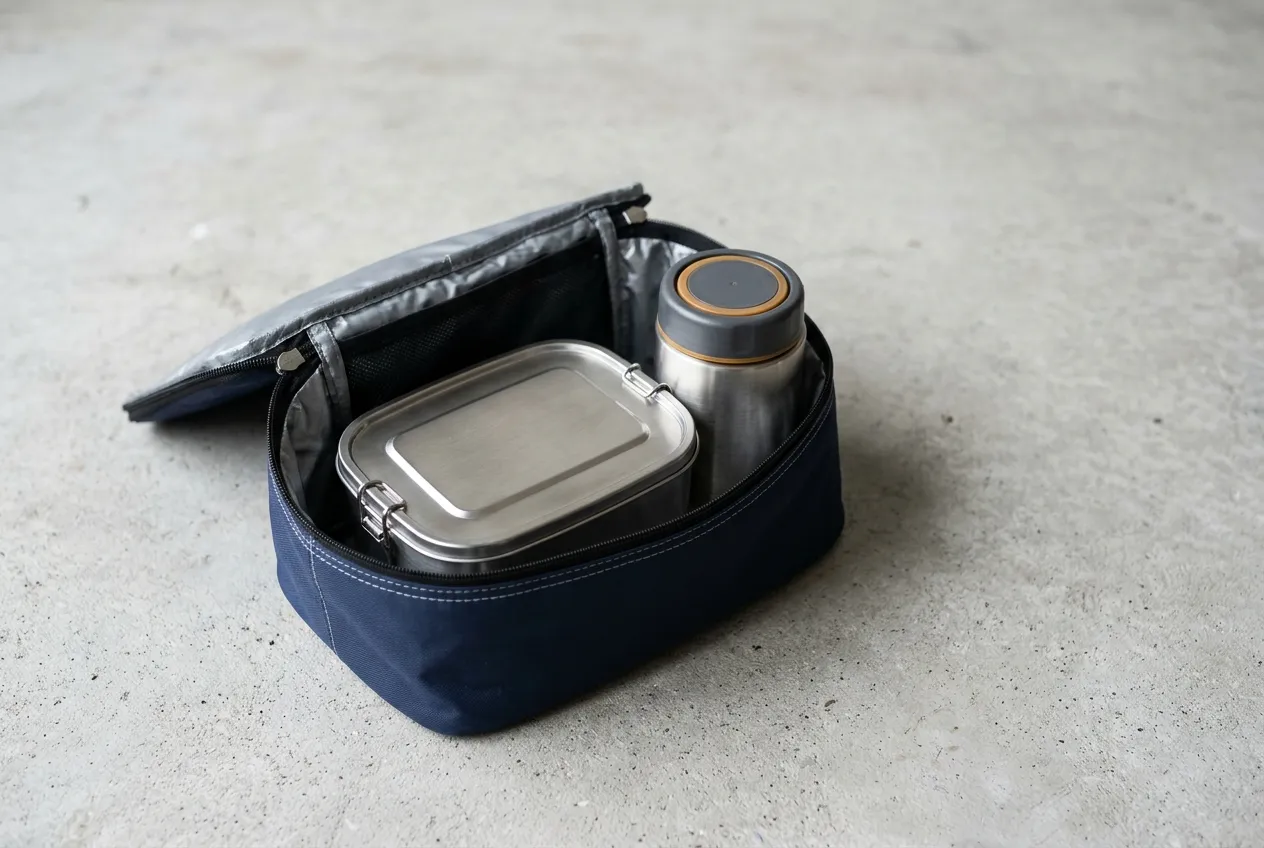
The two consumer-facing questions that buyers ask most often, whether such a box can go in a fridge and how long it actually holds heat, are answered for the box and the bag separately in the fridge question and in the hot-food question, because they have different answers.
MOQ: What the 2,000 Pieces Are Counted Against
Every stainless-steel lunch-box model in the record set carries the same published minimum — 2,000 pieces — and the insulated model carries it too. The all-polypropylene box in the same records publishes no minimum at all; its record states that no public price or fixed MOQ is shown and that the factory quotes according to the selected specification.
Model line | Body | Published MOQ | Sample lead time |
|---|---|---|---|
6521 / 6522 / 6523 / 6527 / 6533 / 6536 | Steel body + PP lid + silicone (304 in the material field on three of the six records and in the description on the other three) | 2,000 pieces each | Not stated in the record |
6639 (insulated) | PP + silicone + 304 steel | 2,000 pieces | Not stated in the record |
BX1051 (all-PP) | PP + silicone, no steel | None published | Within 3 days |
So the honest answer to "does the minimum change when you move from PP to steel" is that the two lines cannot be compared from published data — one publishes a number and the other does not. What does change is the structure of the minimum, and that is what to interrogate.
A steel bento is three materials in one assembly: a formed steel body, a molded polypropylene lid frame, and a silicone gasket. The records list one color set — pink, blue and green — against all six steel models, and the material line on each names steel, but no field says which part is molded in that color. If the color sits on the lid, which is how this construction is usually built, the steel run is shared across colors and the plastic runs are not; that is a factory reading, not a record fact, and confirming which part is color-critical is worth one line in the email. It matters because the counting basis is the single most expensive sentence in the quotation: a minimum of 2,000 counted per color turns a 2,000-piece order into 6,000 pieces — 6,000 steel bodies and 6,000 matching lids and gaskets — while counted per model it stays at 2,000 pieces. That is the difference between the order a buyer thinks they placed and one three times its size. The counting rules behind that distinction are set out in how minimum quantities are counted per order, per color and per model, and the seven specification lines that a bento box should be signed off on before that count is agreed are in the bento specification article.
Two follow-on questions belong in the same email. Is the minimum counted per carton-packed finish, so that a mixed carton of two colors counts against both? And does a trial run below the minimum exist as a paid exception, which is the subject of the sample section further down.
Unit Weight: Gross Weight Divided by Pieces per Carton
There is one per-piece weight a buyer can act on before a sample exists, and it is not the factory's gram figure — it is the carton's gross weight divided by the number of pieces in it. That number is what the forwarder prices, what a pallet plan is built on, and what the landed-cost sheet actually uses.
For the all-polypropylene box the records give both figures, which is a useful check on the method. BX1051 publishes a 182 g unit weight, flagged in the record as needing its unit basis confirmed, and its carton of 72 pieces grosses 14.3 kg. That is 0.199 kg per piece shipped — 182 g of product plus the bag and the carton's share, which is the expected direction and magnitude. The method holds.
The steel models publish no unit weight at all. Their per-piece figure exists only as the carton arithmetic below, which is why the table is worth keeping rather than memorizing.
Model | Body | Capacity | pcs/ctn | Carton L×W×H (cm) | Carton m³ | Gross weight | kg per piece shipped | Liters shipped per piece | Pieces per 20 ft at 28 m³ |
|---|---|---|---|---|---|---|---|---|---|
6521 | 304 steel + PP + silicone | 1,400 ml | 18 | 47 × 31 × 73 | 0.106 | 15.2 kg | 0.84 | 5.9 | 4,734 |
6522 | 304 steel + PP + silicone | 1,100 ml | 24 | 54 × 32 × 60 | 0.104 | 14.5 kg | 0.60 | 4.3 | 6,480 |
6523 | 304 steel + PP + silicone | 800 ml | 24 | 54 × 32 × 50 | 0.086 | 11.5 kg | 0.48 | 3.6 | 7,776 |
6527 | Steel + PP + silicone (304 in the description, grade absent from the spec field) | 1,300 ml | 24 | 51 × 46 × 62 | 0.146 | 11.0 kg | 0.46 | 6.1 | 4,608 |
6533 | Steel + PP + silicone (304 in the description, grade absent from the spec field) | 1,100 ml | 24 | 50 × 36 × 47 | 0.085 | 13.0 kg | 0.54 | 3.5 | 7,920 |
6536 | Steel + PP + silicone (304 in the description, grade absent from the spec field) | 1,100 ml | 24 | 47 × 34 × 47 | 0.075 | 11.0 kg | 0.46 | 3.1 | 8,928 |
6639 | PP + silicone + 304 steel, insulated | 850 ml | Not recorded | Color carton | Not recorded | Not recorded | Not recorded | Not recorded | Not recorded |
BX1051 | PP + silicone, no steel | 1,300 ml | 72 | 62 × 47.5 × 58.5 | 0.172 | 14.3 kg | 0.20 | 2.4 | 11,664 |
Everything except capacity, pieces per carton, carton dimensions and gross weight is computed here: carton volume from the three dimensions, kilos per piece from gross weight divided by pieces, and pieces per 20 ft from a floor division of 28 m³ usable volume by carton volume. The gross-weight figures carry the record's own caveat that the packing scope needs confirming — whether the weight is per carton or per piece is exactly the kind of thing a quotation letter leaves ambiguous — and the derived columns inherit that caveat.
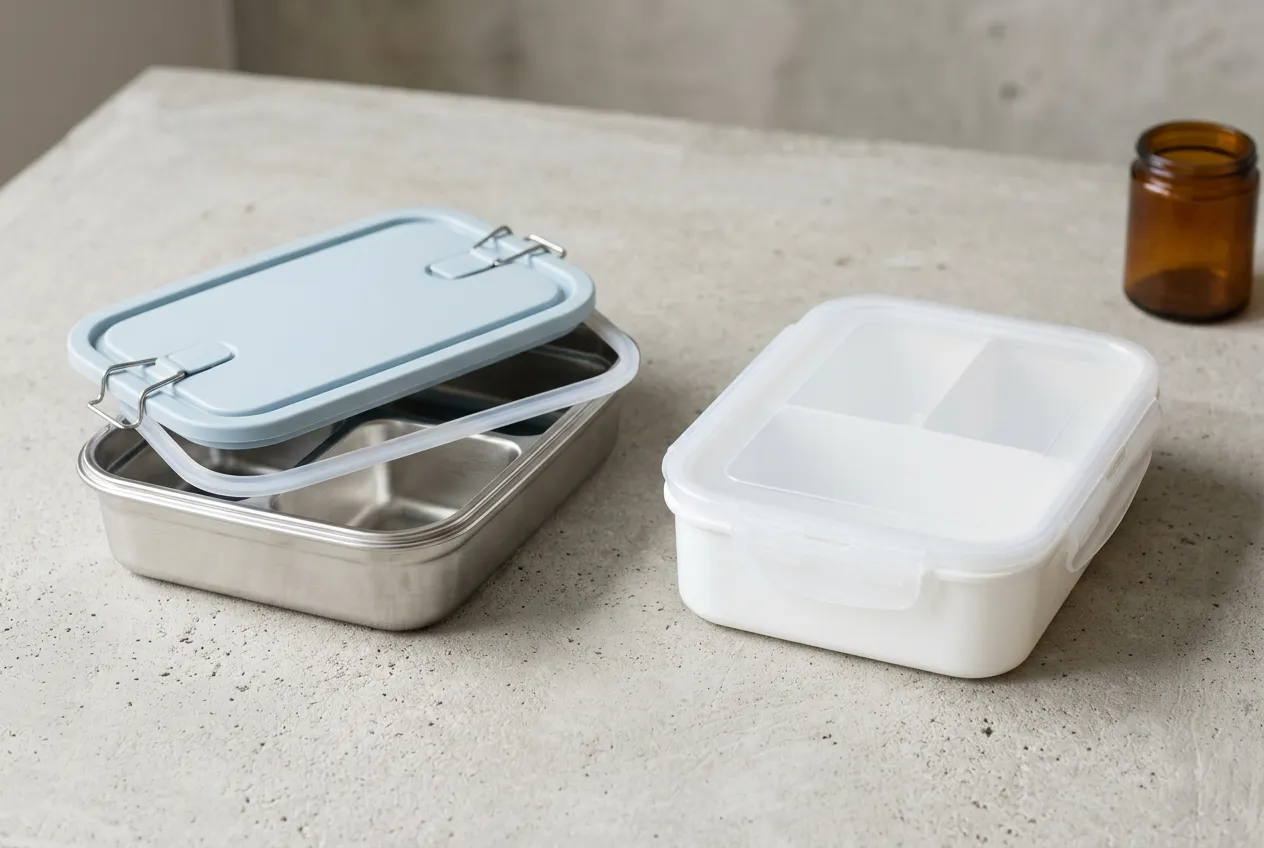
Read the liters-shipped column against the capacity column and the important finding is not that steel is heavy. It is that a steel body does not nest into itself, so the carton carries air. The worst case in the set is not the biggest box: 6527 ships 1,300 ml of product in 6.1 liters of carton per piece, while the 4-compartment 6522 ships 1,100 ml in 4.3 liters, because its carton is packed differently. Carton geometry moves this number more than the material does, which is why the carton dimensions belong in the RFQ next to the unit price. The same record set and the same carton logic were used for the institutional version of this question in the staff-canteen fit-out article.
Carton Count: From 72 Pieces Down to 18
On the two lines compared here, the number of pieces per carton falls from 72 to somewhere between 18 and 24. That is not a packing preference; it follows from a rigid shell that does not deform and a lid assembly that cannot be nested under pressure.
The practical effect on a first order is arithmetic a buyer can do before writing the email:
A 2,000-piece order of… | Cartons | Gross weight | Carton volume | Share of a 28 m³ 20 ft |
|---|---|---|---|---|
BX1051, all-PP, 72 per carton | 28 | 400 kg | 4.8 m³ | 17% |
6522, steel, 24 per carton | 84 | 1,218 kg | 8.7 m³ | 31% |
6521, steel, 18 per carton | 112 | 1,702 kg | 11.9 m³ | 43% |
Three things follow. A 2,000-piece steel order is not a small shipment — 84 to 112 cartons is a palletized LCL booking, not a parcel. The order fills less than half of a container even in the best case — 43% of a 28 m³ box at 18 per carton, 31% at 24 — which means the second order, not the first, is where the freight rate per piece becomes respectable. And the volume is what binds long before the weight does: a 20 ft at 28 m³ usable carries roughly 4,700 pieces of 6521 at 4.0 metric tons gross, nowhere near a payload limit, so the container is priced on air, not on kilos.
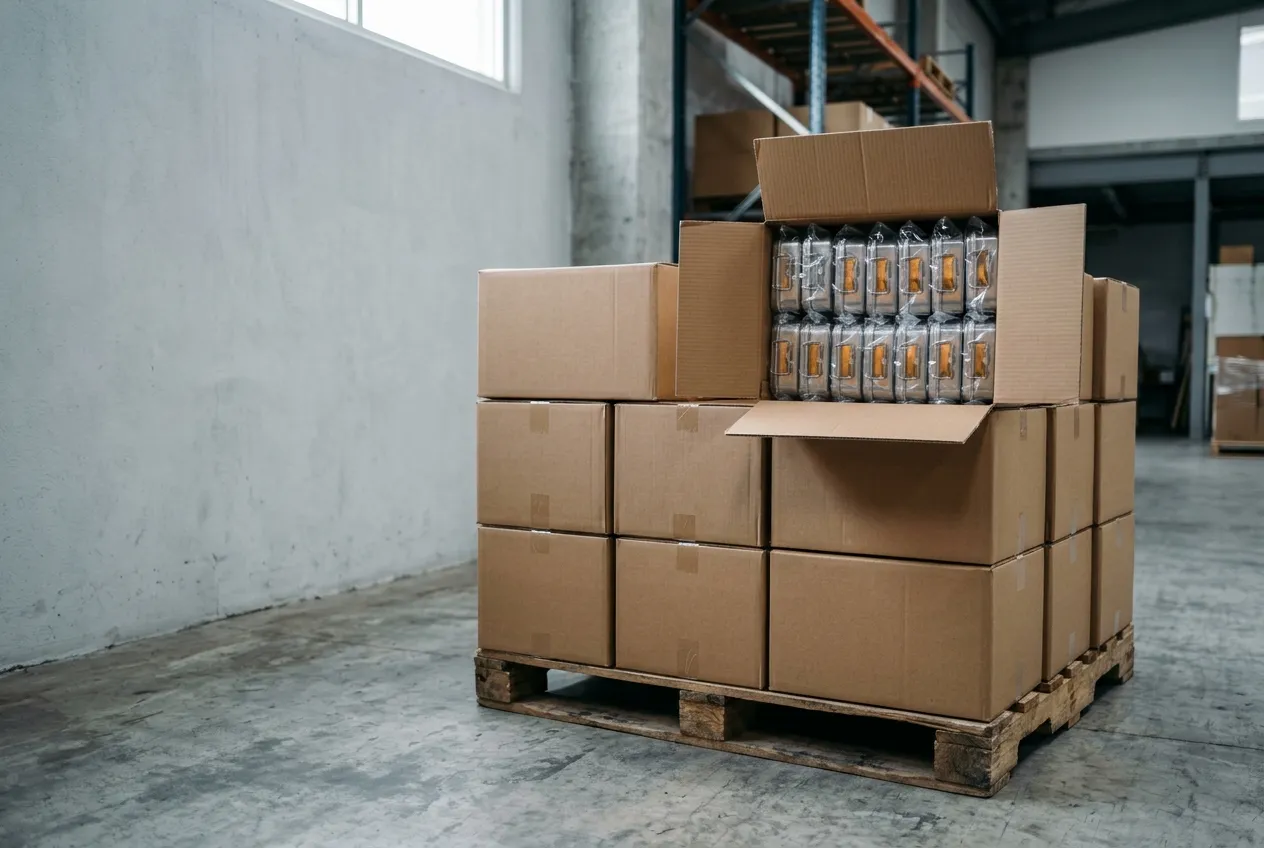
That last point is the one that changes a quote. A forwarder prices a 20 ft on the box, not on the weight, so a product that ships at 5.9 liters per piece costs about two and a half times the freight per unit of a product that ships at 2.4 liters — and no factory can quote that away. The stacking and nesting arithmetic that governs the carton plan is worked through in the stacking and nesting carton article, and the choice between consolidating with other lines or paying for a partly filled box is the subject of the mixed-container loading article.
A concrete example of how fast this catches people: 5,000 pieces of 6521 is 278 cartons and 29.6 m³, which does not fit a 20 ft at 28 m³ usable. The same 5,000 pieces of BX1051 is 70 cartons and 12.1 m³, less than half a container. The order sizes sound similar; the shipping decisions are not.
The Insulated Model Is Where the Record Goes Blank
The record for the insulated model, 6639, is seven lines long: model, material (PP, silicone, 304 stainless), color (white and blue), packing, OEM/ODM availability, a 2,000-piece minimum, and the customization options. Its description adds the construction detail — 850 ml, two compartments, a pre-installed silicone seal ring, four snap locks and cutlery storage built into the lid — and its page summary refers to an insulated bag.
What it does not carry is every number this article has spent three sections computing: no pieces per carton, no carton dimensions, no gross weight, and the capacity lives in the description rather than in the specification list. That is not a criticism of one record. It is the normal state of an insulated program before a buyer forces the issue, and it is why the RFQ matters more on this product than on any molded box in the range.
The model page itself is the custom insulated lunch box page; the private-label route for steel boxes generally is covered in the stainless steel private-label article. Neither can substitute for the six lines below, which turn a description into a quotation:
Line | What the record carries today | What to write into the RFQ |
|---|---|---|
Pieces per carton | Nothing | Pieces per carton for the shipping configuration, and whether the bag is packed inside the same carton |
Carton dimensions and gross weight | Nothing | Carton L×W×H in cm, gross weight, and a statement of whether that weight is per carton or per piece |
Construction of "insulated" | The word, plus a bag reference in the page summary | Cross-section drawing; gap or foam specification; whether the body is single wall |
Hold-time basis | Nothing | Test protocol and result on a production sample, at a stated ambient temperature and fill temperature |
Unit weight | Nothing | Nominal unit weight and its unit basis, weighed on the approved sample |
Capacity basis | 850 ml in the description only | Capacity at the fill line, per compartment, written into the specification list |
None of these are hard to answer inside a factory. All of them are hard to answer after the carton has been booked, which is the point.
Sample and Trial Run: What You Sign Off Before Volume
On a three-material box the sample is where the specification stops being a description. The sample fee, who pays the courier, and whether the fee is credited against the production order are commercial terms, and they are worth settling in the same email as the specification because they are the buyer's only lever on a program that has not started. The terms that importers usually meet, and how to keep the credit from disappearing, are set out in the sample fee and courier credit article.
What to sign off on an insulated box is a shorter list than on a plain molded box, because the steel and the gasket fix most of the variables. Four things carry the decision: the construction — open the sample and confirm whether the wall is single or double, in writing, with a photo; the seal — on 6639 that is four snap locks and a silicone ring — checked with a leak test at a stated angle and duration; the cutlery storage, if the lid carries it, because it is a mold feature and expensive to add later; and the carton, weighed and measured rather than assumed, because that number is the one this whole article turns on.
The golden-sample discipline that keeps production honest after sign-off — the retained unit, the sealed carton, and what a second sample is allowed to differ on — is described in the golden sample article. It matters more on a steel program than a plastic one, because a changed steel gauge is invisible on a photograph and obvious on a scale.
The Documents, Framed as Questions to Ask
Compliance on a steel bento with a plastic lid and a silicone gasket splits by part, not by product, and the split is the reason a single certificate never covers the whole box. Which parts count as direct food contact and which do not is the subject of the direct versus indirect food contact article; for the steel itself, the regulatory position is that there is no section of the food-additive regulations that clears stainless steel as a food-contact article in the way a resin is cleared, which is why the mill certificate carries the burden — see the 21 CFR 177 stainless steel article.
Four questions cover most of what a retail customer's compliance team will ask, and each one is answerable with a document rather than an assurance. Is the steel grade stated on a mill certificate with a heat number, and does the chemistry match the grade it claims? The grade table that a 304 claim is checked against is published by the British Stainless Steel Association — nominally 18 percent chromium and 8 percent nickel is the composition the number commits you to, not a marketing adjective. Is the polypropylene lid covered by a resin clearance under 21 CFR 177.1520, and is the gasket covered under 21 CFR 177.2600, which is written for repeated-use rubber articles? For an EU destination, is there a declaration of compliance against the framework regulation 1935/2004 and, for the plastic parts, the plastics measure 10/2011? And for Germany specifically, the LFGB documentation that a retailer will ask for is itemized in the LFGB certificate article, which is a different pack from the EU declaration even though both are "EU".
The one claim with no regulation behind it is the insulation itself. Every other line on this page ends in a document; insulation ends in a protocol and a result. Ask for the protocol, agree it in writing before the sample, and put the number it produces into the specification instead of the adjective.
A 2,000-Piece Order, End to End
Put the numbers in one place and the order looks like this. Two thousand pieces at a 2,000-piece minimum, in three colors, on a 24-per-carton steel model: 84 cartons, about 1.2 metric tons gross, 8.7 m³, roughly a third of a 20 ft. That is the per-model reading; take the same minimum per color and the identical program is 6,000 pieces and 250 cartons — 3.6 metric tons and 25.9 m³, or 93% of the same container, which is the arithmetic behind the warning in the MOQ section. (The table above rounds each order up to a whole carton; at 6,000 pieces the division into 24-per-carton units is exact.) Add one carton as the retained golden sample, and a second as the inspection reference. Book the freight after the carton dimensions are confirmed, not before, because a 2 cm change in one carton dimension moves the container math.
Inspection before shipment is where the count is verified rather than trusted: cartons counted, pieces per carton opened and checked against the approved sample, and the carton weighed. The checklist for a lunch box pre-shipment inspection is in the pre-shipment inspection article, and if the program later spans several product lines, the loading question becomes the one in the mixed-container article linked above.
If the volume justifies it, the next decision is not a bigger order but a second carton design: a set carton holding the box and the bag together changes both the count per carton and the retail presentation, and it is a packing change rather than a tooling one.
Where to Start
The three numbers this article is built on are the three lines that should be in the first email. Fix what "insulated" means — body, bag, or vacuum — because everything else is downstream of it. Ask how the 2,000 is counted, per model or per color, because that is the difference between a viable program and one that is three times too large. And ask for pieces per carton, carton dimensions and gross weight before the quotation is compared, because two quotes for the same product at the same unit price can differ by more than a third in what the order costs to move.
The insulated lunch box model page carries the published specification for 6639; the wider range of PP and steel lunch boxes is on the manufacturer page and in the bento category. Send the six-line RFQ from the middle of this article with your target quantity and destination market, and the reply will be a quotation rather than a price list.
Continue reading
Related sourcing guidance
More practical context for your food storage container sourcing conversation.

Discuss your product range
Need help selecting or customising containers?
Share the product type, market and sourcing requirements with the Xinghui team.