
Compliance & Food Safety
Framework Regulation 1935/2004 vs Plastics Regulation 10/2011: Which One Your Supplier Is Actually Tested Against
1935/2004 sets the safety and labeling duty; 10/2011 sets the authorized substances, migration limits and the declaration of compliance. What to ask for.

A buyer sends a Chinese supplier a specification that says "EU food contact compliant" and gets back a PDF. The PDF has a company letterhead, a date, a table of standards, and a signature. It looks like proof. The question that decides whether it is proof never gets asked: which of the two European instruments is this document answering?
There are two, and they do different jobs — the EU's food contact material regulation is a pair of instruments, not a single document. Regulation (EC) No 1935/2004 is the framework: it says what every food-contact material must achieve, how it must be labeled, and that a written declaration must accompany it where a specific measure exists. Regulation (EU) No 10/2011 is the specific measure for plastics: it names the substances that may be used, fixes the migration limits, assigns the food simulants, and states what the declaration of compliance has to contain. The full map of which document each export market runs on is in the five-market document map; this page stays inside the EU pair.
The confusion is expensive in a specific way. A test report written against 10/2011 can be perfectly valid and still leave the labeling duty of 1935/2004 unanswered; a declaration that cites 1935/2004 by name can be silent on every limit that a retail customer's laboratory will actually measure. Both failures survive a document review and surface at the port, at the retailer's QA desk, or in a marketplace listing suspension. They are also visible in about twenty minutes if you know which article each sentence belongs to, which is what the rest of this page is for.
One Framework, One Specific Measure
The relationship is written into the first line of the plastics regulation, and it is worth reading once because it settles most arguments about which document is "the" compliance document.
Article 1(1) of Regulation (EU) No 10/2011 states that the regulation "is a specific measure within the meaning of Article 5 of Regulation (EC) No 1935/2004" (consolidated text, EUR-Lex). Article 5 of the framework regulation is the enabling provision: it allows specific measures to be adopted for the groups of materials listed in its Annex I, and it lists what those measures may contain — a list of authorized substances, specific limits on migration, an overall migration limit, purity standards, conditions of use, and rules for checking compliance, among other things (consolidated 1935/2004).
Two consequences follow, and both matter to a buyer:
The framework regulation does not contain the numbers. If you search 1935/2004 for a migration limit expressed in mg/kg or mg/dm², you will not find one. It sets an obligation ("shall not transfer their constituents to food in quantities which could…") and delegates the quantification. Any supplier document that claims to show "1935/2004 compliance" by listing limits is either quoting a different instrument or has not read the one it names.
The specific measure does not replace the framework. Article 4 of 10/2011 says plastic materials and articles may be placed on the market only if they comply with Article 3 of 1935/2004 (the safety requirement), Article 15 of 1935/2004 (labeling), Article 17 of 1935/2004 (traceability), the good manufacturing practice regulation, and Chapters II to IV of 10/2011 itself. The plastics regulation restates the framework obligations as conditions of placing on the market; it does not absorb them.
The Commission's own legislation overview for food contact materials lists the specific measures adopted under that enabling article; 10/2011 is the one for plastics, and its existence is the reason a plastics question can be answered with numbers while a silicone or ink question cannot.
That is the whole architecture. Everything below is the consequence of it.
The Table: What Each Instrument Covers and What Proves It
This is the table to keep next to the supplier's PDF. Read down the "document that proves it" column and ask which of those artifacts you actually hold.
Instrument | What it covers | The document that answers it | Who is responsible | Where it is written |
|---|---|---|---|---|
Regulation (EC) No 1935/2004 | The general safety duty: no transfer of constituents in quantities that endanger health, change food composition unacceptably, or degrade organoleptic properties; plus labeling, traceability and the requirement that a declaration exist where a specific measure applies | A written declaration of compliance (where a specific measure exists), plus labeling and a traceability trail | The "business operator" — the natural or legal person responsible for ensuring the requirements are met within the business under their control | Articles 3, 15, 16, 17 |
Commission Regulation (EC) No 2023/2006 | Good manufacturing practice for materials and articles intended to come into contact with food | A GMP statement or quality manual section covering the food-contact line, not a certificate of product compliance | The manufacturer | Referenced by Article 4(d) of 10/2011 |
Regulation (EU) No 10/2011 | Which substances may be used (Union list), the specific and overall migration limits, food simulants and test conditions, and the content of the declaration | The declaration of compliance with its Annex IV content, plus the supporting test reports and calculations behind it | The business operator issuing the declaration; the manufacturer holds the supporting documentation | Articles 5, 11, 12, 15, 16; Annexes I, III, IV |
Regulation (EU) 2022/1616 | Recycled plastic materials and articles, and the technologies and processes for recycling them | Separate authorization and monitoring documentation for the recycling process | The recycling operator and the operator placing the recycled article on the market | Referenced by Article 4(f) of 10/2011 |
The fourth row is the one buyers discover last. If any part of the article is made from recycled plastic, the paperwork set is not the same set — the recycling technology itself needs to fall inside 2022/1616. Ask early, because a factory that has only ever run virgin resin will usually answer "yes, recyclable" to a question you meant as "recycled content".
What 1935/2004 Actually Requires
Four articles carry almost all of the framework's operational weight. Reading them in order is the fastest way to understand why the EU system produces the paperwork it produces.
Article 3 — the safety duty, and the word "could". Article 3(1) requires that materials and articles "be manufactured in compliance with good manufacturing practice so that, under normal or foreseeable conditions of use, they do not transfer their constituents to food in quantities which could: (a) endanger human health; or (b) bring about an unacceptable change in the composition of the food; or (c) bring about a deterioration in the organoleptic characteristics thereof." Two details in that sentence do real work in a dispute. "Foreseeable" pulls in the use the customer will actually make of the box, not only the use the factory imagined — a container sold for hot soup is judged on hot soup. And "organoleptic" makes taste and odor a compliance question, which is how a chemically compliant article with a plastic taint still fails.
Article 3(2) then turns marketing copy into a regulated statement: labeling, advertising and presentation of a material or article must not mislead consumers. A claim printed on a sleeve, a bullet on a listing, a phrase in a brochure are all inside that sentence.
Article 15 — labeling, in four elements. For materials and articles not yet in contact with food when placed on the market, Article 15(1) requires that they be accompanied by:
- the words "for food contact", or a specific indication of use (the regulation's own examples are a coffee machine, a wine bottle, a soup spoon), or the symbol in Annex II;
- special instructions for safe and appropriate use, where necessary;
- the name or trade name and the address or registered office of the manufacturer, processor or seller responsible for placing the article on the market and established in the Community;
- adequate labeling or identification to ensure traceability, as described in Article 17.
Article 15(2) then removes the first element for articles which, by their characteristics, are clearly intended to come into contact with food — which is why a lunch box may ship with no "for food contact" mark and still comply, a point that regularly gets argued in reverse by buyers who assume the absence is a defect.
Article 15(8) is the one that matters most for importers: at marketing stages other than the retail stage, the Article 15(1) information must be displayed on the accompanying documents, or on the labels or packaging, or on the articles themselves. In practice that means the commercial invoice, packing list or delivery note is a lawful place for the food-contact particulars. Keep those documents; they are part of the compliance file, not just the freight file.
Article 16 — the declaration, and where the evidence sits. Article 16(1) provides that the specific measures "shall require that materials and articles covered by those measures be accompanied by a written declaration stating that they comply with the rules applicable to them", and that appropriate documentation be available to demonstrate such compliance and be made available to the competent authorities on demand. That second half is the sentence buyers under-read: the evidence is owed to the authority, not automatically to you. Your contractual right to see it has to come from your purchase contract, not from the regulation.
Article 17 — traceability, one step each way. Operators must have systems and procedures allowing identification of the businesses from which and to which materials and articles were supplied, and those materials and articles must be identifiable by labeling, documentation or information. This is the article that makes a batch code on a carton a compliance feature rather than a warehouse convenience.
Which article splits responsibilities inside one box is worked through in direct vs indirect food contact — the short version is that the food-contact side of a part attracts the full document set and the outside face usually does not, and importers routinely pay for reports on the wrong face.
What the Plastics Food Contact Material Regulation Adds: Union List, Limits, Simulants, Declaration
The specific measure converts the framework's obligations into numbers. Four mechanisms do it.
The Union list of authorized substances. Article 5 of 10/2011 provides that only substances included in the Union list set out in Annex I may be used in the manufacture of plastic materials and articles, and specifies what the list contains: monomers and other starting substances; additives excluding colorants; polymer production aids excluding solvents; and macromolecules obtained from microbial fermentation.
Substances reach that list after a safety assessment by the European Food Safety Authority, whose published material on the area sits at EFSA's food contact materials topic page — useful when you want to know whether a substance was assessed rather than merely listed.
That parenthetical "excluding" is not a footnote. Article 6(2) provides that, by way of derogation from Article 5, colorants and solvents may be used in the manufacture of plastic layers subject to national law. The Union list does not authorize your colorant. If a supplier answers a colorant question with an Annex I reference number, the answer is about something else. The same article lets polymer production aids outside the list be used subject to national law, and Article 6(4) recognizes non-intentionally added substances as present in plastic layers — which is why the modern conversation about NIAS exists at all.
Article 8 adds a duty that no list can perform: substances used in the manufacture of plastic materials and articles "shall be of a high degree of purity and shall be of a technical quality suitable for the intended and foreseeable use of the materials or articles", and the composition "shall be known to the manufacturer of the substance". The half of that duty that faces the regulator sits one article further on, in Article 16(1), second subparagraph: for substances used in the manufacture of plastic materials and articles, "documentation on the composition shall be made available to the competent authorities on request, together with any documentation regarding their degree of purity." Article 9(2) closes a modern gap by allowing substances in nanoform only where explicitly authorized and mentioned in the Annex I specifications.
The two limits, which are not interchangeable. Article 11(1) provides that plastic materials and articles shall not transfer their constituents to foods in quantities exceeding the specific migration limits set out in Annex I, expressed in mg of substance per kg of food. A specific migration limit is therefore a per-substance number that lives in a table row you can look up.
Article 12(1) sets the overall migration limit: plastic materials and articles "shall not transfer their constituents to food simulants in quantities exceeding 10 milligrams of total constituents released per dm² of food contact surface (mg/dm²)". Article 12(2) then creates a single, narrow derogation — for materials and articles intended to come into contact with food for infants and young children, the figure is 60 milligrams of total constituents per kg of food simulant.
Read those two paragraphs together and the distinction most supplier paperwork blurs becomes visible. The overall migration limit is 10 mg/dm². 60 mg/kg is the same limit expressed against a weight of food, and it is also the figure Article 12(2) sets for infants and young children. The conversion is the regulation's own, not a coincidence: recital 26 states that "the overall migration limit of 10 mg per 1 dm² results for a cubic packaging containing 1 kg of food to a migration of 60 mg per kg food", and it is why Article 12(2) links the children's limit to the food rather than to the surface of the packaging. Article 17 makes the same conversion for everything else, allowing results per kilogram of food at a surface-to-volume ratio of at least 6 dm² per kg for containers holding less than 500 ml or more than 10 liters, among other cases. So 60 mg/kg is neither a second allowance nor the general limit for a small container: it is 10 mg/dm² restated at 6 dm² of contact surface per kg of food. The two forms are not interchangeable on their own, which is why Annex IV item 8(iii) requires the declaration to give the highest surface-to-volume ratio for which compliance was verified.
Article 17 also handles the case that matters for closures: for caps, gaskets, stoppers and similar sealing articles, migration may be expressed in mg/kg using the actual content of the container, or in mg/dm² over the total contact surface of seal plus container, or in mg per article where the intended use is unknown. A gasket tested "per article" and a container tested "per dm²" are not comparable numbers, and comparing them is a common way to conclude wrongly that a supplier failed.
Food simulants, which decide whether the test was relevant. Annex III assigns the simulants and the foods they stand for. The list is short: simulant A is 10 % ethanol by volume, B is 3 % acetic acid, C is 20 % ethanol, D1 is 50 % ethanol, D2 is vegetable oil, and E is poly(2,6-diphenyl-p-phenylene oxide) for dry foods. The assignment logic is the part buyers should read: A, B and C for foods of hydrophilic character, with B for foods below pH 4.5 and C for alcoholic foods up to 20 % and for foods with enough organic ingredients to become more lipophilic; D1 and D2 for lipophilic foods, with D1 above 20 % alcohol and for oil-in-water emulsions, and D2 "for foods which contain free fats at the surface"; E for dry foods.
So a migration report is only responsive if it names the simulant and the conditions. A report on simulant A at 70 °C for two hours says nothing useful about a container sold for olive-oil-based dressings, because D2 is what stands for free surface fat. This is the single most common mismatch between the document a factory owns and the document a buyer's customer asks for.
The Declaration of Compliance, Annex IV Line by Line
Article 15(1) of 10/2011 requires that, at the marketing stages other than at the retail stage, a written declaration in accordance with Article 16 of 1935/2004 be available for plastic materials and articles, for products from intermediate stages of manufacture, and for the substances intended for manufacturing them. Article 15(2) requires that it be issued by the business operator and contain the information set out in Annex IV. Article 15(3) requires that it permit easy identification of what it covers and that it be renewed when substantial composition or production changes alter migration, or when new scientific data appears.
Two statements follow that surprise buyers. The declaration is a business-to-business instrument by construction — it exists at the stages before retail, which is exactly the stage an importer, brand owner or distributor occupies. And it is a living document: the renewal trigger in Article 15(3) means a declaration dated before your last colorant change is not merely old, it is answering a question about a product that no longer exists.
Annex IV lists eleven required elements — items 10 and 11 were inserted by Regulation (EU) 2025/351. Read them as a checklist against whatever PDF you have:
# | What Annex IV requires | What it looks like when present | What its absence costs you |
|---|---|---|---|
1 | Identity and address of the business operator issuing the declaration | Your supplier's legal entity, not a trading name on a letterhead | No one to hold responsible when the article fails |
2 | Identity and address of the operator that manufactures or imports the article, or the substances | Often a second entity — the actual molder | You cannot trace the batch back to a plant |
3 | Identity of the materials, articles, intermediate products or substances covered | Model, material, sometimes the article's intended food contact face | The declaration may not be about your SKU at all |
4 | The date of the declaration | A date you can compare with your last formulation change | Renewal under Article 15(3) cannot be enforced |
5 | Confirmation that the article meets 10/2011 and 1935/2004 | An explicit statement citing both instruments | A declaration that only names one instrument is incomplete on its face |
6 | Adequate information allowing the downstream operator to comply, for the substances used that carry restrictions or specifications in Annexes I and II — including on the presence of non-intentionally added substances | The Annex I or Annex II rows that apply to this formulation, plus a statement on NIAS | You cannot tell whether a restriction, or an NIAS risk, was considered |
7 | Information on substances restricted in food, from experimental data or theoretical calculation of specific migration | A migration figure per restricted substance, with the method | Nothing to compare against the limit in the Annex I row |
8 | Specifications on use: food types, time and temperature of contact, surface-to-volume ratio | The scope sentence, stated as limits on use | The declaration is being used outside its scope and nobody knows |
9 | For multi-layer articles with a functional barrier, confirmation of Article 13 or 14 compliance | A specific statement about the barrier layer | A barrier claim with no substance |
10 | Where the material is a batch intended for reprocessing: confirmation that it meets Articles 10(1) and 10(2) and was collected and used under point C of the Annex to Regulation (EC) No 2023/2006, plus composition and reprocessing instructions where appropriate | A reprocessing specification, or a plain statement that no reprocessed material is used | You cannot tell regrind from virgin material, or whether the offcuts met Article 10(2) |
11 | Where Union-list substances manufactured from waste were used: confirmation that those substances comply with Article 8(1) | A sentence naming the waste-derived substances and the confirmation | You cannot tell whether the grade is virgin, which is what a virgin-content claim turns on |
Items 7 and 8 are where these documents usually fail. Item 7 can legitimately be satisfied by calculation rather than testing — Article 16(2) explicitly covers "calculations, including modelling" as part of the supporting documentation — but the calculation has to be about your formulation. Item 8 is the scope line, and the scope line is the part that gets skipped: a declaration that declares compliance for aqueous food at room temperature does not cover a container sold for hot, fatty reheating, and the operator who issued it was not wrong to omit it.
Everything behind those eleven lines is Article 16 documentation: conditions and results of testing, calculations, other analysis, and reasoning demonstrating compliance, available to the competent authorities on request. That asymmetry is the practical answer to "can I demand the test reports?" — you can demand them by contract, and the regulation only obliges the supplier to hold them for the authority. A wider view of what to request, artifact by artifact, is in which compliance documents to request from a food container factory.
Where the Two Regulate Different Parts of the Same Box
Here is where the pair stops being academic. A reusable container is rarely one material, and each material has its own instrument path.
The PP body and lid. Fully inside 10/2011. The polymer, the additives other than colorants, the polymer production aids other than solvents, the specific migration limits in Annex I, the overall limit in Article 12, and the declaration under Article 15. The recycling code molded into the base is a different matter entirely — it identifies a resin family for sorting and certifies nothing, which is why the seven resin codes belong in a specification conversation and not in a compliance file.
The silicone gasket or seal. Outside 10/2011. Article 2(2)(c) states that the regulation does not apply to silicones, which are to be covered by other specific measures. Where no such specific measure has been adopted, the rules that apply to the silicone part are national ones. This is the single most useful sentence on this page for a buyer with a leak-proof box: a declaration that covers "the article" under 10/2011 does not, by its own terms, cover the silicone ring that touches the food. The component split is worked through in non-PP parts: gasket, base and glass insert.
Print and coatings. Article 2(3) provides that 10/2011 is without prejudice to EU or national provisions applicable to printing inks, adhesives or coatings. A decorated lid therefore has a separate paper trail; the UV inks on a lid rim are not authorized by an Annex I row.
A glass insert or a steel tray. Different instrument logic again, and different tests. Comparing a glass storage box against a PP one on the strength of a single certificate is comparing two citation structures, not two grades of the same document — a distinction that shows up in the glass-versus-PP comparison and in the wider PP and PS material comparison.
The practical instruction is short. On a multi-material article, ask for a declaration per material, and check that each one names its own instrument. One PDF covering "the product" under 10/2011 leaves the gasket, the print and any glass unaddressed, and the food touches all of them.
Labeling Is Two Obligations, Not One
Most buyers treat labeling as the framework's business and stop at Article 15. There is a second layer that applies specifically to plastics and is easy to miss because it was added to the regulation later than the version most summaries quote.
Article 14a(1) of 10/2011 requires the manufacturer or other operator responsible for placing on the market a final plastic food-contact article intended for repeated use to provide its users, in accordance with Article 15(7) and (8) of 1935/2004, with three things: appropriate instructions designed to slow down deterioration of the article; a description of observable changes that may indicate deterioration; and a warning where specific damage or foreseeable misuse would cause increased migration or otherwise make the article unsuitable for further food contact.
Article 14a(2) then adds a consumer-facing duty: plastic materials and articles not yet in contact with food must be accompanied, at the moment of sale or supply to consumers at retail, by instructions of use where they are manufactured with Union-list substances whose column 10 restrictions relate to specific foods or groups of foods, to contact time and temperature, or to heating conditions such as oven and microwave use. Those instructions must state the restrictions and give the consumer enough information to avoid using the article outside them.
For a private-label program this converts a leaflet into a compliance document. A box sold as microwave-reheatable is a box whose instructions of use are part of the compliance case, not part of the packaging design; and a box sold without any instruction where the underlying substance carries a temperature restriction is a labeling failure regardless of how the migration test came out. The relationship between use claims and test evidence is the subject of tell if a container is really microwave safe, and the "repeated use" wording in Article 14a(1) is why deterioration language belongs on a reusable product and not on a single-use one.
What a Chinese Factory Can and Cannot Issue
This is the part buyers ask about most and find least documented, so it is worth stating plainly — as process, not as advice.
The declaration is issued by "the business operator" (Article 15(2)), and Annex IV items 1 and 2 contemplate two entities: the operator issuing the declaration, and the operator that manufactures or imports the article. On an export order those are usually different companies. The factory manufactures; the importer places the article on the EU market and is a business operator in its own right, with its own obligations under Articles 3, 15, 16 and 17 of the framework regulation. A factory can issue a declaration for what it manufactures, and it can hold the Article 16 documentation for it. It cannot take over the importer's responsibility for the article as placed on the market, and a document that pretends otherwise is describing an arrangement the regulation does not create.
Four artifacts are realistically obtainable, and each answers a different sentence:
- A resin specification sheet or certificate of analysis for the grade actually run — density, melt flow, melting point. This is evidence about a material, not about an article, and it is the thing that lets you sanity-check a polymer claim without a laboratory.
- A declaration of compliance with the Annex IV content, dated, scoped to your article, naming the food types and the time and temperature conditions.
- A migration test report naming its simulant, its conditions and its sample — whether the sample was the article as supplied or pellets. Pellets tested and article sold is the gap where most claims quietly fail.
- A GMP statement covering the food-contact line, answering the good manufacturing practice condition in Article 4(d) of 10/2011 by reference to Commission Regulation (EC) No 2023/2006 (EUR-Lex).
What is not obtainable from anyone is an EU "food contact certificate" of the kind buyers imagine, because no such instrument exists: the framework regulation creates a declaration and a documentation duty, not a certification scheme. The same misunderstanding in the US market is dissected in there is no FDA-approved plastic, and the underlying logic is identical on both sides of the Atlantic — the regulator authorizes substances and tests articles, it does not certify products. Our own position, as a manufacturer, is on the site's materials and food safety page: the polymer families and grades we run are documented, and the food-contact documents are obtained from the resin and additive suppliers we buy from, per market — because the answer genuinely differs by destination.
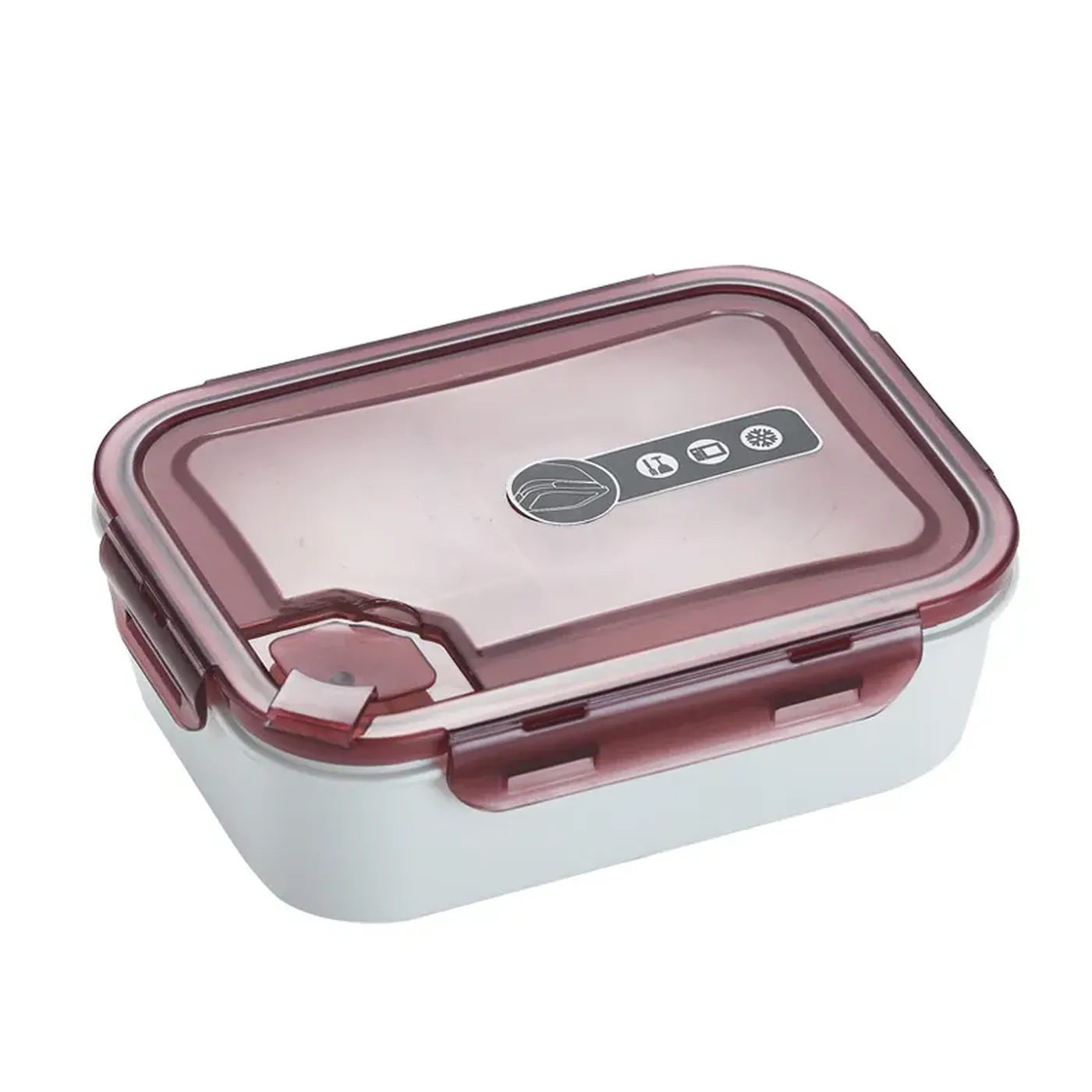
Everything visible on that lid is a use symbol. None of it is a statement of compliance, and none of it can be — which is why the paper, not the part, is where the two regulations are answered.
Ten Lines to Put in the Specification
The efficient fix is not a longer compliance annex. It is a shorter one, with each line pointing at an instrument so that the answer has a shape. These are drafting prompts for a purchase specification, not legal advice.
# | Line to write | Instrument it answers | What should come back |
|---|---|---|---|
1 | "Article 3 of Regulation (EC) No 1935/2004 applies to the article under the conditions of use in Schedule A" | Framework safety duty | A declaration that names Article 3 and the schedule |
2 | "A declaration of compliance containing the Annex IV information of Regulation (EU) No 10/2011 shall be provided before first shipment and within 10 business days of any formulation change" | Articles 15(1)–(3) and Annex IV | A dated, scoped declaration with all eleven elements |
3 | "The declaration shall state the food types, contact time and temperature, and the surface-to-volume ratio on which compliance is based" | Annex IV item 8 | A scope sentence you can check against your own use |
4 | "Migration test reports shall name the food simulant, test conditions, method and the sample tested (article or pellets)" | Articles 11, 12, 17; Annex III | Reports that can be compared with the limits |
5 | "Where any component is silicone, printing ink, adhesive, coating or glass, a separate declaration for that component under the applicable instrument shall be provided" | Article 2(2)(c) and 2(3) of 10/2011 | One document per material, not one for "the product" |
6 | "Colorants and solvents shall be declared, with the national provision under which each is used" | Article 6(2) | A colorant list, not an Annex I reference |
7 | "The article shall be manufactured according to Commission Regulation (EC) No 2023/2006 and a GMP statement shall be provided" | Article 4(d) | A GMP statement covering the food-contact line |
8 | "Labeling shall meet Article 15 of Regulation (EC) No 1935/2004, and repeated-use articles shall carry the Article 14a(1) instructions, deterioration description and misuse warning" | Articles 15 and 14a | Artwork and insert reviewed as documents |
9 | "Where the article is intended for microwave or oven use, instructions of use meeting Article 14a(2) shall be supplied" | Article 14a(2) | An instruction text scoped to the restrictions |
10 | "Any recycled plastic content shall be declared, with the Regulation (EU) 2022/1616 documentation for the recycling process" | Article 4(f) | Either "no recycled content" or a separate file |
Line 5 and line 6 are the two that change outcomes most often, because they are the two the standard "EU compliant?" email never asks. Contract mechanics around these lines — who warrants, who pays on failure, what triggers a re-test — follow the same logic as any other clause set, worked through in microwave-safe failure modes and contract clauses.
Red Flags in the Paperwork You Receive
Six things to look for in the first twenty minutes. Each one is checkable against the regulation text, and none requires a laboratory.
The declaration cites one instrument only. A declaration that names 10/2011 but not 1935/2004 is missing Annex IV item 5's confirmation, which covers both. A declaration that names only 1935/2004 is not a plastics declaration at all.
The overall migration limit is written as "60 mg/kg" with no surface-to-volume ratio. The general limit is 10 mg/dm² (Article 12(1)); 60 mg/kg is that same limit expressed per kilogram of food at 6 dm²/kg (recital 26), and it is also the infants-and-young-children figure in Article 12(2). A declaration that says "60 mg/kg at 6 dm²/kg" is correct, and flagging it wastes everyone's afternoon. A declaration that gives the number alone, or that applies the children's figure to an adult product, has skipped the one line that lets you check it against your own container.
There is a migration number with no simulant. Annex III assigns simulants to food types, and a result without the simulant cannot be compared to anything. This is the most common single defect in reports received from trading companies.
The scope line declares aqueous food at room temperature, and your product is sold for hot fat. Annex IV item 8 exists precisely so this is visible. It is not a supplier lie; it is a scope you have to match.
The declaration predates a color, additive or resin-supplier change. Article 15(3) makes renewal mandatory when substantial changes alter migration. A stale declaration is a document about a discontinued article.
The word "certified" appears. The EU system produces declarations and documentation; it does not certify plastic articles. A page that offers a "1935/2004 certificate" is offering something the instrument does not create, and the German layer is a good illustration of how quickly the document names multiply — the LFGB paper trail is a national-law test-report request sitting on top of the same EU framework, not a competing certificate.
Four Pairs Buyers Confuse
Confused pair | How they differ | Why it costs money |
|---|---|---|
1935/2004 vs 10/2011 | Framework obligations (safety, labeling, traceability, declaration duty) vs the plastics-specific list, limits and declaration content | A supplier can satisfy one and fail the other; you need both, and a single "EU compliant" line hides which is missing |
Declaration of compliance vs test report | The declaration is a statement of conformity with defined content (Annex IV); the test report is evidence behind it (Article 16) | A declaration without supporting reports is a claim; reports without a declaration do not discharge Article 15 |
Overall migration limit vs specific migration limit | OML is total constituents per area (10 mg/dm²); SML is one substance per kg of food, from its Annex I row | Quoting one when the customer asked the other is a routine cause of failed dossier reviews |
Union list vs national rules for colorants | Annex I authorizes monomers, additives excluding colorants, PPAs excluding solvents and fermentation macromolecules; colorants and solvents sit under national law | A colorant question answered with an Annex I number has not been answered |
What This Means for Your Order
Three sentences to carry into the next supplier conversation. The framework regulation tells you what the law demands of the article; the plastics regulation tells you what the paperwork must contain. A declaration is a B2B document with eleven required elements, one of which is the scope you have to match to your own use. And the material split inside a single box — PP body, silicone seal, print, glass insert — is the reason "one certificate for the product" is the wrong ask.
The mechanism that makes all of this checkable is a table you already own. Take the ten specification lines above, put them in the RFQ, and read what comes back against Annex IV. That is roughly twenty minutes of work per supplier, and it is the difference between holding a document that answers a question and holding a PDF that answers none.
At Xinghui Plastic Life in Jieyang, we run PP, PS, HIPS, TPE, silicone, PET and 304 stainless steel across the food container range, which means a single inquiry can produce a multi-material article where each component has its own instrument path. What we can do is state, per component, what the material is, what document we can obtain for it from the resin or additive supplier, and what our own declaration covers — labeled by the market it answers, because the answer differs by destination. What no factory can do is certify an article for you: the declaration describes what was made, and the compliance case is the file you build around it. The document-level view of the whole cluster sits in the compliance and food safety section of this blog.
This page describes the instruments and the documents they produce. For the area as a whole, the Commission's food contact materials hub is the entry point that stays current. This page is not legal advice, and where the text of a regulation and this page differ, the text governs — the EUR-Lex links above are the ones to read.
Continue reading
Related sourcing guidance
More practical context for your food storage container sourcing conversation.

Discuss your product range
Need help selecting or customising containers?
Share the product type, market and sourcing requirements with the Xinghui team.