
Compliance & Food Safety
There Is No FDA-Approved Plastic: How to Word the Food-Contact Compliance Clause in a Supplier Agreement
There is no FDA approval for a plastic article. What the five US clearance routes really produce, and how to word the compliance clause so it can be proven.
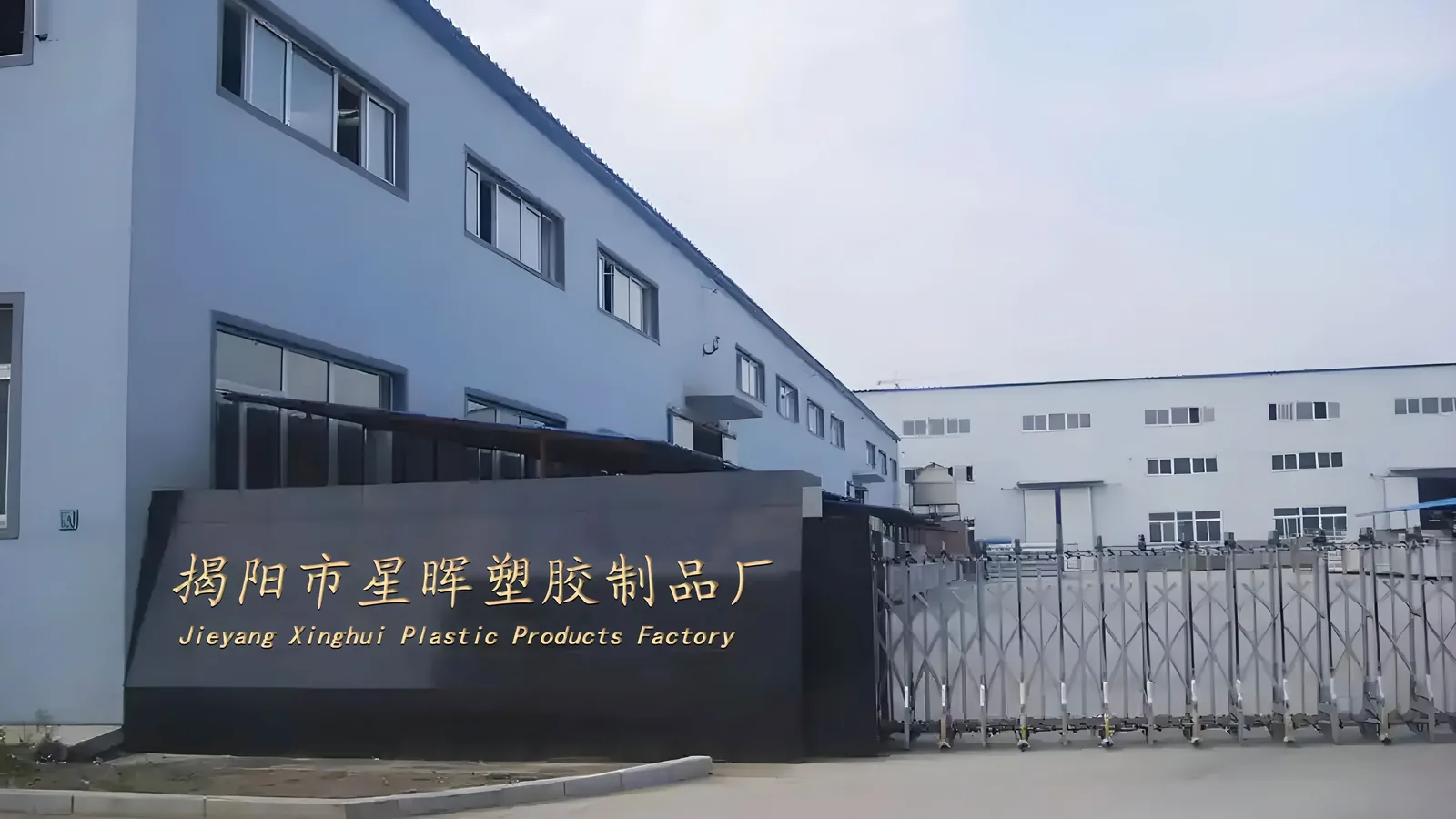
Somebody in your organization has written the words FDA approved plastics for food contact into a purchase specification, and somebody at a supplier has agreed to them. Both parties now believe a clearance exists. It does not.
There is no FDA approval for a plastic article. There is no certificate, no registration number, no register a tub appears in, and no agency letter that says a particular lunch box may hold food. What exists is a set of rules about substances — the polymer, the additives, the colorants, the processing aids — and a paper trail produced by the companies involved, not by the agency.
That distinction looks like pedantry until it reaches a contract. A clause promising "FDA approved" is either impossible to perform or trivially satisfied by a PDF of unknown provenance, and both outcomes cost the buyer money in the same place: at the moment a retail customer's quality team asks for the evidence behind the sentence. The deeper map of which document each market actually runs on is the five-market document map; this page stays on the clause itself — what to write, what to stop writing, and what each line can be proven with.
"FDA Approved" Is Not a Status Any Plastic Can Hold
The US regulates food-contact materials as indirect food additives. A substance that is expected to become a component of, or otherwise affect the characteristics of, food is a food additive unless it falls inside one of the exceptions, and the operative list of ways a food-contact substance may lawfully be used sits in one paragraph: 21 CFR 174.5(d).
Five routes, and every one of them is about a substance:
Route in 21 CFR 174.5(d) | What it means for the part you are buying | What evidences it |
|---|---|---|
(1) Generally recognized as safe in or on food | The substance is GRAS for direct food use; no listing needed | A published GRAS conclusion you can read |
(2) GRAS for its intended use in food packaging | GRAS in the packaging context, which is narrower than (1) | A published safety assessment, not a certificate |
(3) A prior sanction or approval | Use predates the 1958 food additive amendments and was sanctioned then | The sanction itself, cited by section |
(4) A regulation in Parts 175, 176, 177, 178 or §179.45 | The substance is listed with conditions — this is where polypropylene lives | The citation, e.g. 21 CFR 177.1520 |
(5) An effective food contact notification (FCN) under §409(h) | A notification for that substance is in effect for the described use | The FCN number, matching FDA's inventory |
None of the five issues a document about your container. Four of them issue nothing at all: they are legal statuses you assert and a regulator can test. The fifth produces an FCN number that belongs to a substance and a described use, not to a model, a mold or a shipment.
FDA maintains three separate inventories that make this concrete: substances listed in 21 CFR, effective FCNs, and Threshold of Regulation exemptions. The agency's own Packaging & Food Contact Substances hub links all three, and the page on determining the regulatory status of a component exists precisely because "is this approved" has to be answered by walking a decision tree, not by reading a stamp.
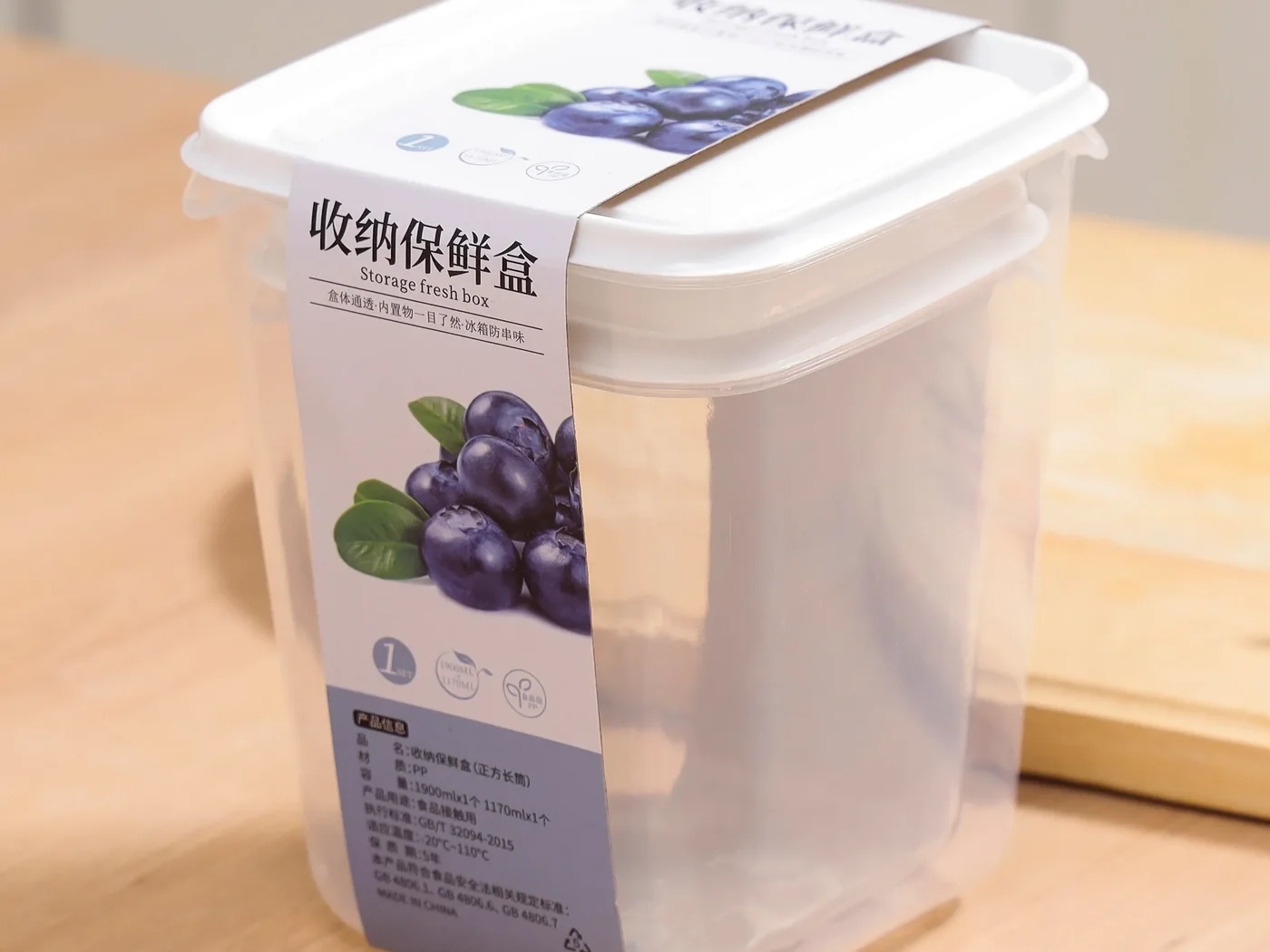
Everything printed on packaging like that sleeve is a claim made by the seller. Some of those claims point at real instruments you can open and read; the rest of this page is about telling the two apart before you sign.
What 21 CFR 177.1520 Actually Constrains — and What It Leaves to You
Polypropylene is the polymer most reusable food containers are molded from, and its listing is worth reading once, because it shows what a real clearance looks like: narrow, numeric, and about the resin.
The section opens by defining the material — "Polypropylene consists of basic polymers manufactured by the catalytic polymerization of propylene" — and then sets specifications in a table. For the ordinary polypropylene row (item 1.1a) the numbers are: density 0.880–0.913 g/cm³, melting point 160–180 °C, maximum extractable fraction in n-hexane 6.4 percent at reflux temperature, and maximum soluble fraction in xylene 9.8 percent at 25 °C (21 CFR 177.1520).
Read those four numbers again with a buyer's eye. They describe a resin grade. They say nothing about the shape you are buying, the lid, the gasket, the print, the microwave instruction on the label, or the fatty food you intend to put in it. Polystyrene has its own section with its own conditions (21 CFR 177.1640), and the two are not interchangeable — a supplier who answers a polystyrene question with a polypropylene citation has told you something useful about how the paperwork was assembled.
Two further provisions matter more than buyers expect, and both sit in the general part rather than the polymer part.
Purity is a duty, not a property of the listing. 174.5(a)(2) requires that any substance used as a component of a food-contact article "shall be of a purity suitable for its intended use." A compliant polymer made with a non-compliant additive batch is a non-compliant article, and nothing in the resin's CFR citation detects that for you.
A listing does not exhaust the law. 174.5(b) states that a regulation prescribing safe conditions "shall not be construed to relieve such use of the substance or article from compliance with any other provision of the Federal Food, Drug, and Cosmetic Act," and gives the example of a material that imparts odor or taste and thereby renders food unfit. Translation for a spec sheet: "made from 21 CFR 177.1520 polypropylene" is a true statement about the polymer and a weak statement about the product. The recycling number molded into the base is a separate matter again — it names a resin family for sorting purposes and certifies nothing, which is where the seven resin codes become a specification question rather than a bin question.
The steel alternative is worth naming here only to keep the comparison honest: 304 stainless has its own food-contact listing logic, worked through in the 21 CFR 177 note on stainless containers, and a buyer comparing a steel bento against a PP box is comparing two different citation structures, not two grades of the same certificate.
The Four Documents That Stand Behind "Food-Contact Compliant"
If no certificate exists, what should actually arrive when you ask for proof? In the US market, four artifacts do most of the work, and each one proves a different sentence.
A resin specification sheet, or a certificate of analysis for the grade. It should carry density, melt flow and melting point. Two of those are checkable against the 177.1520 table row without a laboratory: a density of 0.905 g/cm³ sits inside 0.880–0.913, and a stated melting point of 166 °C sits inside 160–180. Melt flow is not a field in that row for this polymer, so use it to confirm batch-to-batch consistency rather than compliance. A sheet that reports a density outside the band, or reports no density at all, ends the conversation early.
A cited paragraph on letterhead. Not "FDA compliant" — the actual citation, with the grade and the food-contact side named. "Polypropylene, 21 CFR 177.1520(c), item 1.1a, food-contact surface, all food types except those excluded by the section" is a sentence a lawyer can test. "FDA approved" is not.
An extractables or migration report that names its method. A laboratory report referencing the method in 177.1520(d) and reporting a measured extractable fraction against the 6.4 percent limit is evidence about a batch. Two details decide whether it is evidence about your batch: the report date relative to the last formulation change, and whether the sample was the article or pellets. Pellets tested; article sold — the gap between those two is where most claims quietly fail.
An FCN reference, where one applies. If a novel additive or a recycled feedstream is involved, the supplier should give you the FCN number, and you should find that number in FDA's inventory of effective FCNs. A number that is not in the inventory is a number, not an authorization. The 21 CFR inventory covers the listed substances, and the pair together is the closest thing to a public register that this system has.
None of those four documents is issued by FDA. That is the whole point, and it is why the clause has to be built around documents the supplier genuinely controls. A wider list of what to request, line by line, is in which compliance documents to request from a food container factory; the question here is which of them can carry a contractual warranty.
Europe Replaces the Question With a Document You Can List
The EU solves the problem that the US leaves open, and the difference is the single most useful thing to understand before drafting one clause for both markets.
The framework is Regulation (EC) No 1935/2004, which requires that materials not release constituents into food at levels harmful to health and not change food composition, taste or odor unacceptably, and which obliges operators to provide compliance documentation and traceability. Plastics then get a specific measure, Regulation (EU) No 10/2011, which establishes a Union List of permitted substances and sets restriction limits: specific migration limits per substance, and an overall migration limit of 60 mg/kg food or 10 mg/dm² of contact material. The European Commission's food contact materials legislation page sets out all of it, including the testing regime with food simulants and the GMP regulation that sits underneath.
The operational consequence is a named deliverable: the Declaration of Compliance. The Commission describes it as a declaration that "needs to be provided," based on supporting documentation that records the reasoning on safety and that must be produced to enforcement authorities on request.
So there is a document to put on a schedule — and, critically, a document that is itself a claim rather than a test report. A DoC that does not tell you which food simulants were used, at what time and temperature, and for which article, has answered a different question than the one your customer will ask. Germany layers national law and the BfR recommendation series on top of the same EU framework, which is why a German retail buyer may ask for both the EU DoC and a national test report in the same email; the LFGB paper trail is the piece that explains what that second request is.
What "FDA Approved" Costs You When It Reaches the Contract
Three failure modes, in the order they usually show up.
The clause becomes unperformable, so it becomes worthless. A supplier who understands the regulation will either refuse the representation or qualify it into meaninglessness. A supplier who signs it cheerfully has just demonstrated that signatures in that document are not evidence of anything. Either way you have paid for a warranty you cannot enforce, and you have learned nothing about the supplier that you did not already know.
The representation gets satisfied by the wrong document. "FDA approved" is loose enough to be met with a supplier's own declaration letter, a trade-association membership, an ISO 9001 certificate, or a lab report for a different grade. All four will be presented as compliance, and none of them engages the question of whether the polymer and additives in this article are authorized for this food contact.
Liability moves without evidence moving. Indemnities and recall-cost clauses allocate money after a failure; they do not create the file that a customs broker, a retailer's QA auditor or a plaintiff's lawyer will ask for. If your customer's technical file needs a cited paragraph, a batch-linked extractables report and a formulation change log, an indemnity clause in your supply agreement does not produce any of the three. The clause shapes what gets made and shipped — which is why failure modes belong in the clause rather than only in the remedy section.
The mirror-image mistake is worth naming too: a buyer who has been burned once writes a forty-page compliance annex copied from a different product category, the supplier prices the risk rather than the work, and the price that comes back is uncompetitive for reasons nobody can point to. Seven lines do more than forty pages if they are the right seven.
Seven Clause Lines That Do the Work
A food-contact compliance clause is not a warranty paragraph. It is a small system: a definition of the applicable instrument, a representation at the right level, a document schedule, a change-control trigger, a testing right, a verification right and a remedy. Miss the change-control line and the rest decays within one product cycle, because the formulation that was compliant in March is not necessarily the one shipping in September.
# | Clause | What it is for | The sentence to avoid |
|---|---|---|---|
1 | Applicable instrument, defined per market | Names the statute, regulation and standard the rest of the clause refers to | "all applicable food safety laws" |
2 | Representation at substance level | Warrants the polymer, additives, colorants and processing aids are authorized for the stated food contact | "products are FDA approved" |
3 | Document schedule with versions and dates | Converts the representation into deliverables you can audit | "supplier will provide certificates on request" |
4 | Change control and notification | Catches formulation, additive, colorant, resin-supplier and sub-supplier changes before shipment | "supplier may improve the product without notice" |
5 | Sampling and test rights | Lets you test the article, not just accept a pellet report | "supplier's test results are final" |
6 | Records and verification | Sets retention period and audit access, including sub-suppliers | "records available at supplier's discretion" |
7 | Non-conformity, containment and recall cost | Says who pays for what, and who decides, when a batch fails | "supplier's liability limited to invoice value" |
Line 2 is the one that does the most work, and it is the one most often written wrong — because the natural English sentence ("the products comply with FDA requirements") is the one that cannot be tested. The next two sections give the wording and the market variants.
The Wording, Market by Market
United States. Name the route, not the outcome. A workable formulation is: "each food-contact article supplied under this Agreement is manufactured from substances authorized for food-contact use under 21 CFR Parts 174–178 or an effective food contact notification under section 409(h), and the polymer complies with the specification table of the applicable section, including 21 CFR 177.1520(c) item 1.1a for polypropylene." Then add the sentence that makes the whole thing honest: "the parties acknowledge that FDA does not approve, register or certify plastic articles, and that no certificate of FDA approval exists for the Products." Buyers resist adding it. Suppliers relax visibly when they see it, because it is the first sentence in the document that describes their actual legal position.
European Union. Point at the DoC and pin down its scope: "supplier shall provide, before first shipment and on each formulation change, a Declaration of Compliance for the article under Regulation (EU) No 10/2011, stating the food types and conditions of use for which compliance is declared, the substances subject to restriction, and the migration testing performed." The scope line is the part buyers skip and later regret: a DoC declaring compliance for aqueous food at room temperature does not cover a container sold for hot-fatty reheating, and the supplier who issued it was not wrong.
Germany. Add the national layer explicitly: "in addition to the EU Declaration of Compliance, supplier shall provide test reports against the parameters of LFGB section 30 and 31 for the article as supplied, from a laboratory accredited for the method, with report number and date." Naming the laboratory and the method turns "we are LFGB certified" into a document you can call about.
Japan. The obligation here is different in kind: a positive list for synthetic-resin utensils, containers and packaging, in force since 1 June 2020, with the transition period for existing substances closing on 31 May 2025. From that point the question is not "is it approved" but "is each base polymer and additive on the list." The MHLW page on utensils, containers and packaging publishes the system and the list tables. A clause for the Japanese market should therefore require a substance-level listing statement, not a certificate — and should require the supplier to state which revision of the list it checked against.
China. Domestic production is governed by the GB 4806 series, and export buyers meet it on the packaging: a retail sleeve will print the standards the product is made to alongside the product standard and the temperature range. That is a claim by the packer, verifiable by opening each number, and it is exactly the kind of claim a compliance clause should force onto paper with a revision date attached.
The general point across all five: a clause written for one market fails in the next, because four of the five run on documents with different names and different addressees. This is the reason the site keeps a category page for food-contact compliance rather than a single "certificates" page — the answer changes with the destination, and a clause that does not change with it is decorative.
Three Clauses Written Out
These are drafts, not legal advice, and they are written to be adapted by whoever drafts your supply agreement. What matters is the shape.
Representation.
Supplier represents and warrants that each Article supplied under this Agreement, and each substance used in its manufacture that is intended to remain in the finished Article, is authorized for food-contact use in the Territory under the instrument named in Schedule C for that Territory, and complies with the conditions and restrictions of that instrument for the food types and conditions of use stated in Schedule A. Supplier does not represent that any Article has been approved, registered or certified by any regulatory authority, and Buyer acknowledges that no such approval exists for plastic articles in the United States.
Document schedule.
On or before the first shipment, and again within ten business days of any change notified under Clause 4, Supplier shall deliver: (a) the resin specification sheet for each grade used, stating density, melt flow index and melting point; (b) a written statement identifying the paragraph or notification under which each substance is authorized; (c) test reports for the Article as supplied, naming the method and the laboratory, dated within twelve months; (d) where the Territory is the European Union, a Declaration of Compliance stating the declared food types and conditions of use; (e) where the Territory is Japan, a statement that each base polymer and additive appears on the positive list, naming the list revision relied on.
Change control and remedy.
Supplier shall notify Buyer in writing at least thirty days before shipping any Article in which the polymer grade, additive package, colorant, or the identity of the resin or masterbatch supplier has changed, and shall supply updated documents under Clause 3 before shipment. Articles shipped without such notice may be rejected at Supplier's cost. Where a batch is found not to conform to the representation in Clause 2, Supplier shall bear the cost of containment, return freight, and any recall reasonably required, up to the limits stated in Schedule D.
That third clause is where most of the commercial value sits, and it is where the plastic-versus-steel trade-off becomes visible in a way the price list never shows: a heavier material that needs a different citation structure is not automatically the lower-risk option, and a compliance annex should make the comparison explicit rather than leaving it to the material comparison in the specification table.
Nine Phrases to Strike From Your Own Template
Most of the damage is done by sentences the buyer wrote, not the supplier. These nine appear in real purchasing templates and each one can be replaced with something provable.
Phrase | Why it fails | Write instead |
|---|---|---|
"FDA approved" | No such status exists for a plastic article | "authorized under 21 CFR 177.1520(c) item 1.1a for the grade supplied" |
"FDA food grade certificate" | Neither the certificate nor the legal term exists in US law | "resin specification sheet plus extractables report naming the 177.1520(d) method" |
"FDA registration number" | Facility registration is not product clearance | keep it in a separate supplier-identity clause, never in the compliance schedule |
"CE marked for food contact" | CE marking does not cover food-contact materials | "EU Declaration of Compliance under Regulation (EU) No 10/2011" |
"LFGB certified" | LFGB is a law, not a certification scheme | "test report to LFGB §30/31 parameters, report no. and date, named laboratory" |
"SGS certified" | Laboratories test and report; they do not certify compliance | "test report no. X, dated Y, method Z, sample identified as the article" |
"BPA free certificate" | Names an absent substance, not a clearance for the article | "declaration of composition: no bisphenol A in resin or additives, with the additive list attached" |
"Food safe plastic" | No legal meaning in any of the five markets | name the instrument and the market |
"Meets all international standards" | Unfalsifiable | list the instruments, one line per market |
Two of those deserve a note. "BPA free" is a genuine buyer concern and a poor legal test: the useful document is a composition declaration you can compare against the additive list, and the site's note on which plastics are BPA free covers why the phrase travels better in marketing than in a warranty. And "CE marked for food contact" is worth striking from templates now, because it invites a supplier to produce a declaration of conformity for an unrelated directive and call the matter closed.
Checking the Paperwork in Twenty Minutes
A compliance clause is only as good as the twenty minutes you spend on the first set of documents that arrives under it. Six steps, in order.
- Open the citation. Paste the CFR section into eCFR and read the table row the supplier named. If the density or melting point on the resin sheet falls outside the band, stop.
- Check the route. If the supplier relies on an FCN instead of a listing, search the number in FDA's inventory. If it relies on a prior sanction, ask for the section. "It's covered" is not a route.
- Read the report's method line. It should reference the method in the regulation, and the sample should be the article as supplied. A pellet report is a starting point, not the answer.
- Compare dates. Report older than the last formulation change is stale. Report older than twelve months on a product line that has had a mold or resin change is decoration.
- Read the scope line. Food types and conditions of use. Aqueous at room temperature does not cover fatty at 100 °C, and this single line explains most of the disputes that end in a rejected container.
- Check the market count. If the article ships to two markets, there should be two instruments represented. One document offered as the answer for five markets is the clearest possible sign that nobody has read any of them.
None of these steps requires a laboratory or a lawyer. All of them require that the clause asked for the right artifact in the first place, which is the argument for spending the drafting time on Clause 3 rather than on the indemnity.
What the Clause Cannot Do
Three limits, stated plainly, because a buyer who expects more will over-draft the clause and under-read the documents.
The clause cannot transfer the regulator's interest. In every one of these markets the enforcement authority tests the article that is on the shelf, not the file in your office. A perfect paper trail does not immunize a bad batch, and a missing file does not create a violation where the article itself is compliant — but it makes the conversation after a failed test considerably shorter and worse.
The clause cannot make a marketing claim legitimate. Whether "microwave safe" may be printed is a separate question with its own test reports, and the site treats it that way in the microwave-safe test question. A compliance clause about food contact should not be stretched to cover use claims; they have different evidence and different failure modes, and one document asserting both is a document asserting neither.
The clause cannot substitute for a specification. If the drawing does not name the polymer grade, the colorant system, the gasket material and the food types, the compliance clause is warranting an object that has not been described. The written specification and the clause are two halves of one instrument.
What This Means for the Order You Are About to Place
The practical consequence for a buyer is smaller than the legal theory suggests and more useful than any certificate. Ask for four things, in writing, before the first shipment: the resin sheet with density and melting point, the citation with the paragraph, the extractable or migration report that names its method and its sample, and the change-notification commitment. Then check them in the twenty minutes described above.
At Xinghui Plastic Life, in Jieyang, the food-contact position is presented the way a factory can honestly present it: the polymer families we run and the grades behind them, the specification and carton data for each model, and the resin documents we can obtain from the suppliers we buy from — each labeled with the market it answers, because the answer differs by destination. What we cannot offer is a certificate of FDA approval, and any supplier who offers you one is describing a document that does not exist. The full container range and specification data is where that comparison starts, and the compliance-documents checklist is what to send with the first inquiry.
Continue reading
Related sourcing guidance
More practical context for your food storage container sourcing conversation.


Discuss your product range
Need help selecting or customising containers?
Share the product type, market and sourcing requirements with the Xinghui team.